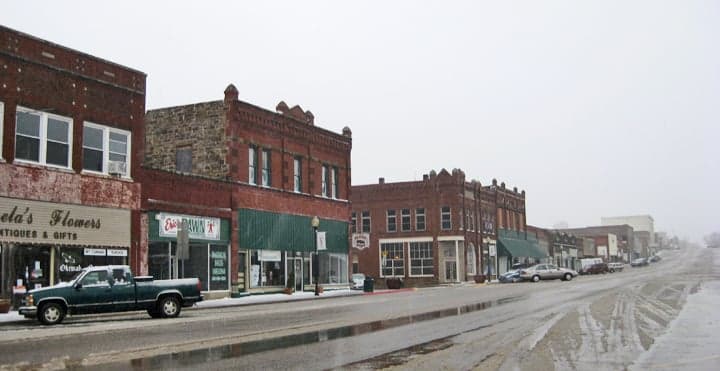
Photo: Wikipedia
Political ClimatePolitical Climate in Okemah, OK
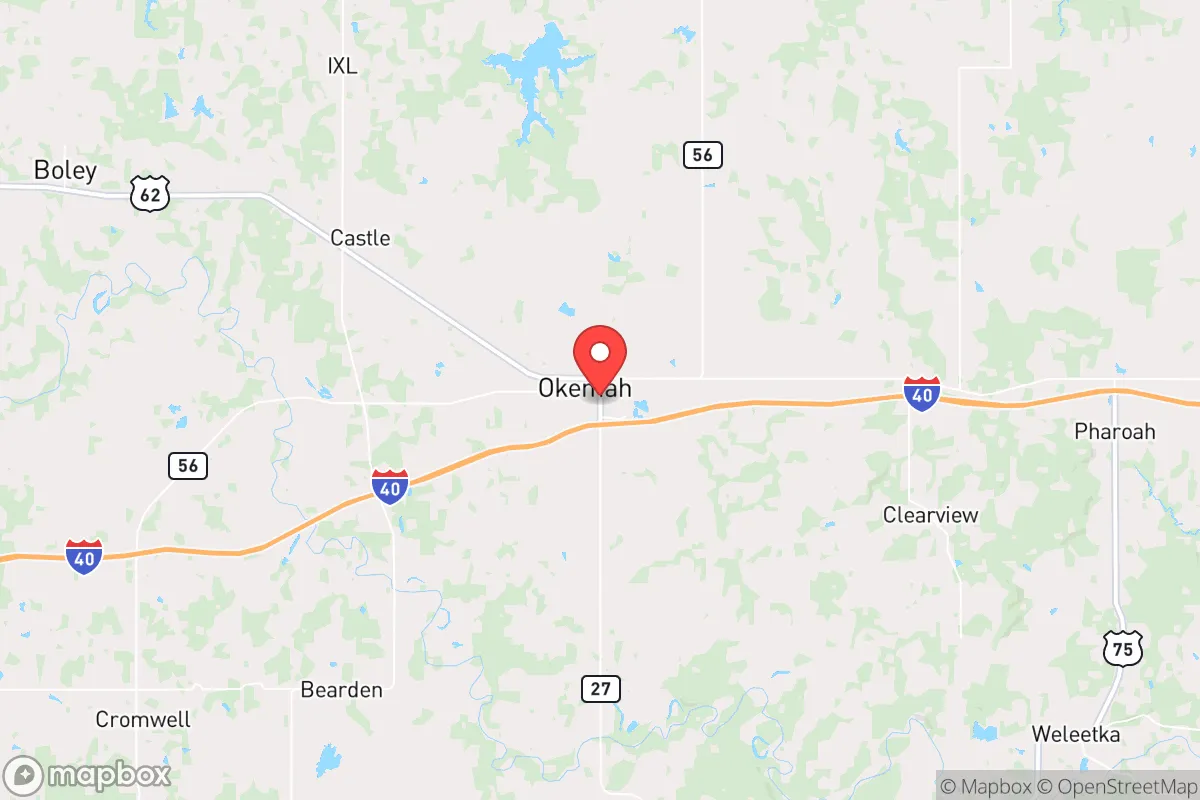
District shown is the primary district for this city’s centroid. Cities may span multiple districts.
Local Political AnalysisPolitical Analysis of Okemah, OK
Okemah, Oklahoma, sits deep in the heart of what used to be reliably conservative country, and for the most part, it still is—but you can feel the winds shifting if you pay attention. The Cook PVI here is R+28, which means Republicans hold a massive 28-point advantage over the national average, and that number hasn't budged much in recent cycles. But what worries a lot of us who’ve lived here a while isn’t the voting totals; it’s the creeping sense that the old-school, live-and-let-live conservatism we grew up with is being challenged by outside influences, especially from the college towns and bigger cities to the east and west.
How it compares
Drive thirty minutes east to Okmulgee, and you’ll start to see a different political flavor—still red, but with a noticeable purple tint, especially in the city limits where younger voters and university folks lean more progressive. Head west toward Shawnee, and you’re still in solidly red territory, but the local government there has been more willing to accept federal grants and programs that come with strings attached, which a lot of us in Okemah see as a backdoor for government overreach. The contrast is sharpest when you compare Okemah to Norman or Oklahoma City, where you see city councils pushing zoning changes and diversity initiatives that feel like they’re imported from the coasts. Here in Okemah, we still vote like it’s 1990, but the cultural pressure to “modernize” is real, and it’s coming from school boards and county commissions that are slowly being filled by folks who don’t remember when this town was a stronghold for personal liberty and minimal government interference.
What this means for residents
For the average family in Okemah, the political climate means you can still go to the county courthouse and get a building permit without a dozen signatures, and your property taxes stay low because the county commission isn’t eager to fund new programs. But there’s a growing unease about what happens next. The school board has started talking about “equity training” for teachers, which sounds an awful lot like the kind of progressive indoctrination that’s been creeping into rural districts across the state. A few years back, nobody would have dreamed of a mask mandate or a vaccine passport in Okemah, but during the pandemic, you saw some local businesses voluntarily post signs requiring masks—a small thing, but it signaled a willingness to accept government overreach that would have been unthinkable in the 90s. The real concern is that as the older generation passes on, the younger folks moving in from Tulsa or Stillwater bring with them a tolerance for bigger government, and that’s how you lose the freedom to raise your kids, run your business, and live your life without someone in a government office telling you how to do it.
One thing that still sets Okemah apart is its fierce independence when it comes to local law enforcement and gun rights. The sheriff’s office here doesn’t enforce federal gun laws that they see as unconstitutional, and the city council has passed resolutions affirming the Second Amendment as a bedrock of personal liberty. That kind of local pushback against federal overreach is exactly what keeps this town from sliding into the kind of progressive dystopia you see in places like Norman or Tulsa. But you have to stay vigilant—every election cycle, there’s a new candidate running on a platform of “modernization” and “inclusivity,” which is code for more government control. If you’re thinking about moving here, know that the political climate is still solidly conservative, but it’s not immune to the national trends. The fight to keep Okemah free and independent is ongoing, and it’s going to take people who remember what real freedom looks like to keep it that way.

State Political ClimatePolitical Climate in Oklahoma
State Political AnalysisPolitical Environment in the State
Oklahoma has been a reliably red state for decades, but the political climate here is more layered than a simple Republican label suggests. The state leans solidly conservative, with Republicans holding every statewide office and supermajorities in both legislative chambers, but the last 10-20 years have seen a notable shift from a more moderate, rural Democratic tradition to a hardline conservative dominance, driven by the collapse of the old "Blue Dog" Democrat base in rural areas and the rise of a more assertive, liberty-oriented wing within the GOP. For a conservative-leaning individual or family, Oklahoma offers a policy environment that is broadly aligned with traditional values, though the devil is in the details — especially when it comes to local control and the pace of cultural change.
Urban vs. rural divide
The political map of Oklahoma is a classic tale of two worlds. The major urban centers — Oklahoma City and Tulsa — are the engines of the state's economy and population, but they are also the most politically competitive areas. Oklahoma City proper leans Republican but has a sizable and growing Democratic base, particularly in the central core and around the University of Oklahoma Health Sciences Center. Tulsa is similar, with a more pronounced Republican tilt in the suburbs like Broken Arrow and Jenks, while the city itself has a strong progressive activist presence. The real story is in the rural and exurban counties. Places like Canadian County (west of OKC) and Rogers County (northeast of Tulsa) are among the most Republican in the nation, routinely voting 80%+ for GOP candidates. Meanwhile, the southeastern part of the state — counties like McCurtain and Pushmataha — were historically Democratic but have flipped hard red over the past two decades, driven by cultural conservatism and a rejection of national Democratic policies. The only reliably blue areas are a handful of precincts in Norman (home to the University of Oklahoma) and Stillwater (Oklahoma State), plus the core of Oklahoma City and Tulsa. This urban-rural split means that while the state is overwhelmingly red, the political conversation in the cities is noticeably different from the rest of the state.
Policy environment
Oklahoma's policy environment is a mixed bag for a conservative. On the positive side, the state has one of the lowest tax burdens in the nation. There is no state property tax (only local), and the state income tax is a flat 4.75% as of 2026, with ongoing efforts to phase it out entirely. The regulatory posture is business-friendly, with right-to-work laws and a tort reform system that has made the state a destination for companies like Canoo and Google data centers. Education policy is a major flashpoint. The state has a robust school choice system, including the Oklahoma Parental Choice Tax Credit (passed in 2023), which provides up to $7,500 per child for private school expenses. However, public school funding remains a perennial issue, with teacher pay raises often coming after contentious battles. Healthcare is a sore spot: Oklahoma has not expanded Medicaid (though a 2020 ballot initiative forced a partial expansion), and the state's rural hospital closures are a real concern. Election laws are solid, with voter ID requirements and a clean voter roll maintenance process, though the state has not gone as far as some others in restricting mail-in voting. The biggest red flag for a liberty-minded person is the state's heavy reliance on federal funding — roughly 40% of the state budget comes from Washington, which creates a vulnerability to federal policy shifts.
Trajectory & freedom
Oklahoma has been on a clear trajectory toward more personal freedom over the past decade, particularly in areas that matter to conservatives. The Oklahoma Second Amendment Association (OK2A) has been a powerful force, pushing through permitless carry in 2019 (HB 2597) and preemption laws that prevent cities from enacting their own gun restrictions. Parental rights have been strengthened with the Parents' Bill of Rights (SB 1646, 2022), which gives parents explicit authority over their children's education and medical decisions. On medical autonomy, the state passed a near-total abortion ban in 2022 (SB 612) that took effect immediately, with no exceptions for rape or incest — a hardline stance that reflects the legislature's priorities. Property rights have been bolstered by the Oklahoma Homeowner Association Act, which limits HOA overreach. However, there are concerning trends. The state's cannabis industry — medical marijuana was legalized in 2018 via State Question 788 — has been a battleground, with the legislature repeatedly trying to tighten regulations and even considering a ban on home grow. This has created a tension between the will of the voters and the legislature's desire for control. Additionally, the state's tax burden on cigarettes and alcohol is among the lowest, but there is a growing push for a state sales tax on services that could expand the government's reach.
Civil unrest & political movements
Oklahoma has seen its share of political flashpoints, but they are generally less intense than in coastal states. The most visible recent movement was the 2022 teacher walkout, which shut down schools for two weeks and forced a $6,000 average teacher pay raise — a rare example of organized labor flexing muscle in a right-to-work state. On the right, the Oklahoma County Republican Party has been a hotbed of internal factionalism, with the "Freedom Caucus" style wing pushing for more aggressive action on immigration and election integrity. Immigration politics are relatively quiet, as the state has a small foreign-born population, but there have been symbolic resolutions supporting Texas's border efforts. The Ten Commandments monument controversy at the state capitol (2012-2015) was a major cultural flashpoint, with the state Supreme Court ordering its removal, leading to ongoing legislative efforts to bypass the ruling. Election integrity has been a focus since 2020, with the state passing HB 2663 in 2021, which requires absentee ballots to be notarized or witnessed — one of the strictest laws in the nation. There is no serious secessionist movement, but the Washita County area has seen some local "constitutional sheriff" rhetoric. A new resident would notice that political activism is more visible in the suburbs — places like Edmond and Yukon have active Republican clubs and frequent candidate meet-and-greets.
Projection
Over the next 5-10 years, Oklahoma is likely to become more conservative, not less, but with a twist. The in-migration from blue states — particularly Texas and California — is bringing people who are often more libertarian than traditional conservative, which could create friction on issues like marijuana legalization and property rights. The state's demographic trends show a growing Hispanic population, particularly in the Oklahoma City metro and Guymon in the panhandle, which could shift the political calculus over time. However, the rural areas are emptying out, which means the urban and suburban areas will gain more political weight. The legislature is likely to continue pushing for a flat tax or no income tax, which would make the state even more attractive to businesses. The biggest wild card is education funding — if the school choice movement succeeds in draining public school resources, it could lead to a backlash from rural communities that rely on their local schools. For a new resident, expect the state to remain a safe haven for conservative values, but with ongoing battles over the scope of government power, particularly in the areas of health freedom and local control.
Bottom line for a new resident: Oklahoma is a solid choice if you value low taxes, strong gun rights, and a government that generally stays out of your personal life. The trade-offs are a less robust public infrastructure (roads, healthcare access in rural areas) and a political environment that can feel like a constant tug-of-war between the legislature and the voters. If you're moving here, get involved in your local precinct — that's where the real decisions are made. The state is what you make of it, and for a conservative family, it's one of the few places left where you can still feel like your vote actually matters.
* Values derived from national, state, county, city and local statistics and may differ in a specific area. Last updated: 2026-04-11T19:47:19.000Z
Narrative content on this page is AI-generated and may contain mistakes. Verify any details that matter before acting on them.
ReloMaps may earn a commission from affiliate links at no extra cost to you.

