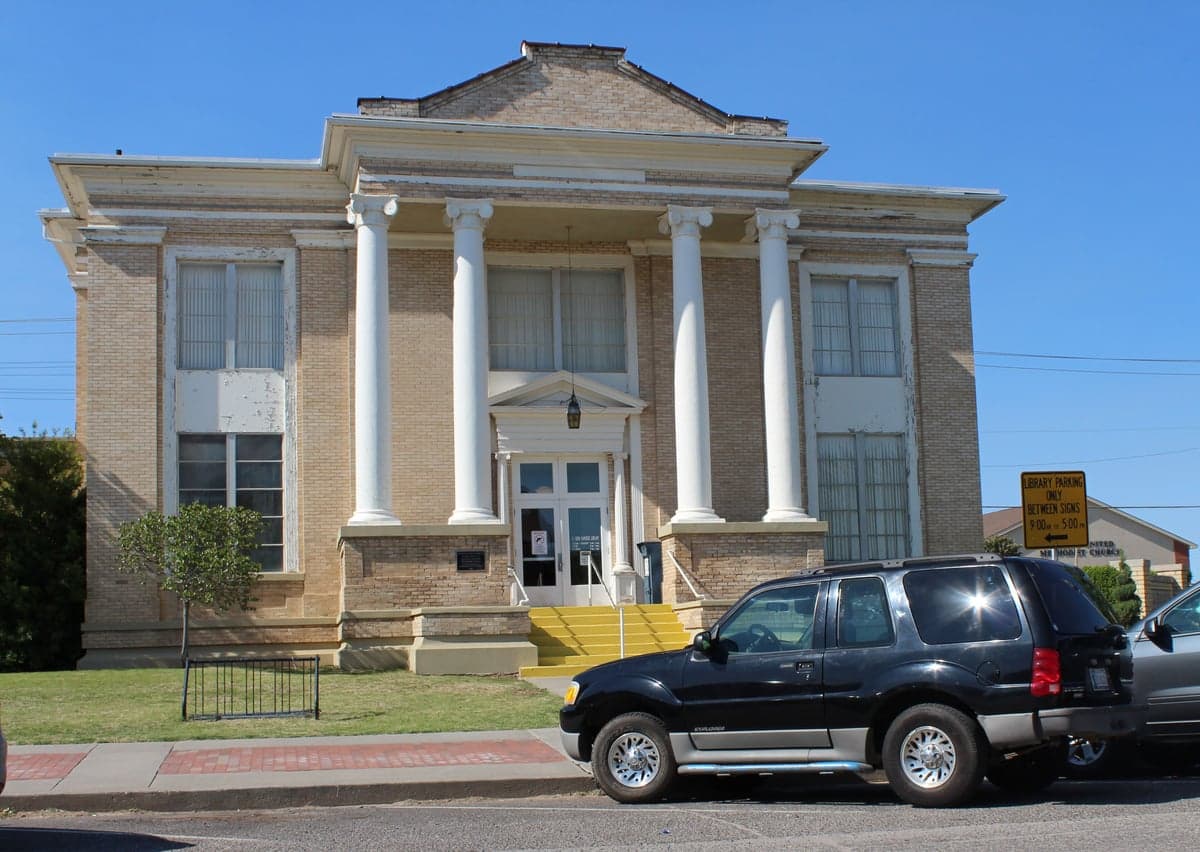
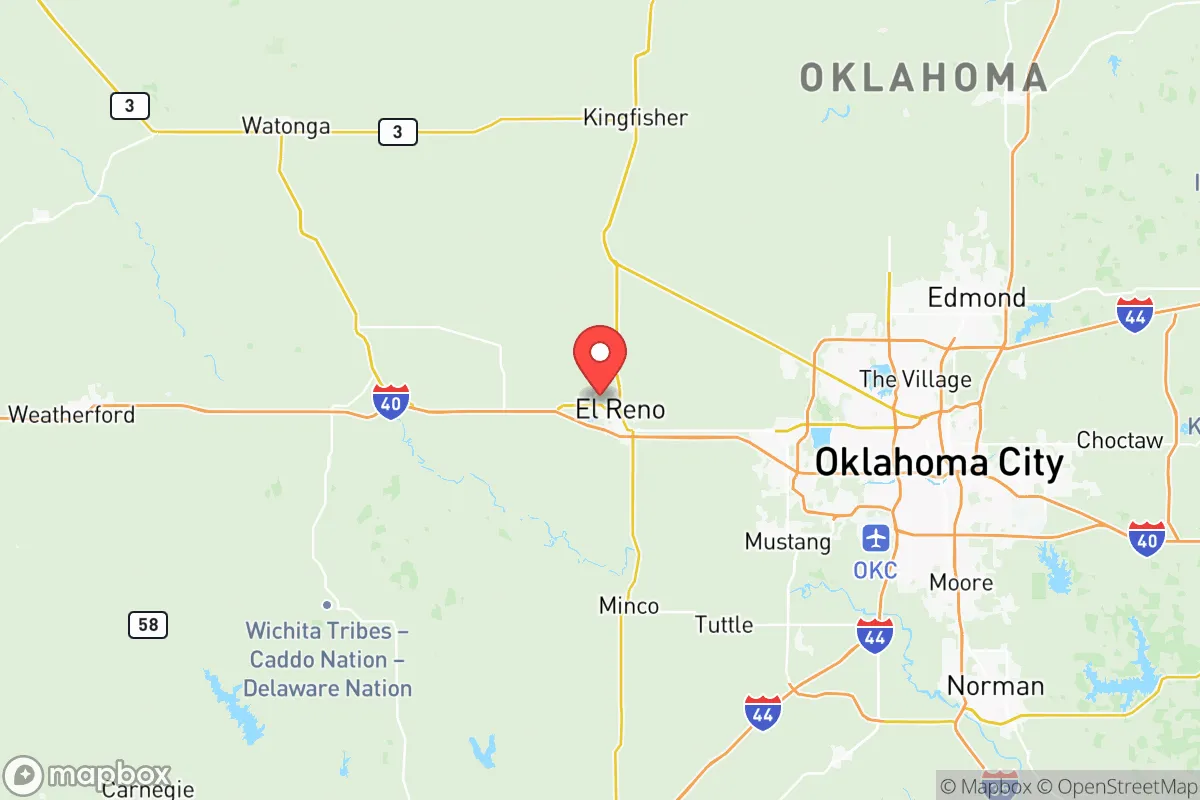
Photo: Wikipedia
Political ClimatePolitical Climate in Canadian County
Showing district-level results — no local-only data available.
Local Political AnalysisPolitical Analysis of Canadian County
Canadian County, Oklahoma, has long been a rock-solid conservative stronghold, and the numbers back that up with a Cook PVI of R+23. That’s five points redder than the state of Oklahoma itself, which sits at R+18, and it’s a shift I’ve watched happen over the last couple of decades. The county used to be reliably Republican, but now it’s trending even harder that way, especially as folks from more progressive areas move in and then quickly get turned off by the overreach they see elsewhere. The local vibe is very much “leave us alone, let us live our lives,” and that sentiment has only strengthened since 2020.
How it compares
When you stack Canadian County against the rest of Oklahoma, the difference is real but not dramatic—it’s more a matter of intensity. The state as a whole is already deep red, but Canadian County is the kind of place where you’ll see Republican candidates win by 70-80% in some precincts, especially in the rural stretches around Calumet and Union City. Meanwhile, the state’s urban cores like Oklahoma City and Tulsa have pockets of blue that drag the overall PVI down a bit. Inside Canadian County, the variation is mostly between the small towns and the newer suburbs. Yukon and Mustang are reliably red, but they have a few precincts near the school campuses that can swing closer to 50-50 during local elections—those are the ones to watch if you’re worried about creeping progressive influence. El Reno leans red but has a more working-class, independent streak that sometimes bucks the party line on specific issues like property taxes or school funding. Piedmont and Okarche are about as conservative as it gets, with strong ties to agriculture and the Catholic Church. The real contrast is with Oklahoma City proper, just across the county line, where you see more government intervention and progressive social policies—things that make most Canadian County residents shake their heads.
What this means for residents
For the people living here, the political climate means a government that mostly stays out of your business. You don’t see the kind of overreach that’s become common in blue states—no heavy-handed mandates on small businesses, no school boards pushing radical curricula, and no zoning laws that tell you what you can do with your own land. The county commission and local school boards are overwhelmingly conservative, which keeps things like property taxes low and gun rights firmly protected. That said, there’s a growing concern among longtime residents that the rapid growth—especially in the Mustang and Yukon school districts—could bring in new voters who don’t share those values. If you’re looking for a place where personal freedom and common sense still matter, Canadian County is one of the last holdouts in central Oklahoma. But you’ve got to keep an eye on those swing precincts, because a shift of just a few hundred votes in a local race could open the door to the kind of progressive policies that have wrecked other communities.
Culturally, Canadian County still feels like the Oklahoma of 20 years ago—church on Sunday, family dinners, and a general distrust of government telling you how to live. The biggest policy distinction from the rest of the state is the county’s aggressive push for constitutional carry and its resistance to any form of mask or vaccine mandates, even during the height of the pandemic. The local sheriff’s office made national news for refusing to enforce any state-level emergency orders, and that kind of backbone is exactly why people move here. If you’re worried about the direction of the country, this is the kind of place where you can still breathe free.

State Political ClimatePolitical Climate in Oklahoma
State Political AnalysisPolitical Environment in the State
Oklahoma is a deep red state with a Cook PVI of R+18, meaning it votes about 18 points more Republican than the national average in presidential elections. The dominant coalition is a mix of rural conservatives, evangelical Christians, and energy-sector workers, but the state has shifted even further right over the past 10-20 years—flipping from a competitive state in the 1990s to one where Democrats hold zero statewide offices and only a handful of legislative seats. The trajectory is unmistakably conservative, driven by in-migration from blue states and a political culture that prizes limited government, gun rights, and traditional values.
Urban vs. rural divide
The political map breaks down cleanly: Oklahoma City and Tulsa are the only real blue dots, but even they are purple at best. Oklahoma City’s core leans Democratic, but the suburbs—Edmond, Yukon, Mustang—are solidly red. Tulsa’s midtown and arts district tilt left, but the rest of the metro, including Broken Arrow and Jenks, votes heavily Republican. The rural areas are where the real firepower is: counties like Texas County (panhandle), Custer County (western), and McCurtain County (southeast) routinely deliver 80%+ Republican margins. The divide isn’t just cultural—it’s economic. Rural areas depend on agriculture, oil, and gas, while the cities have more white-collar and service jobs. That economic split reinforces the political one, and it’s not changing anytime soon.
Policy environment
Oklahoma’s policy environment is aggressively conservative. The state has a flat income tax of 4.75%, and lawmakers are actively pushing to eliminate it entirely—a bill to phase it out by 2028 is already in committee. Property taxes are among the lowest in the nation, capped by a constitutional amendment. The regulatory posture is business-friendly: Oklahoma is a right-to-work state, has no state-level minimum wage above the federal floor, and offers generous tax incentives for energy and manufacturing. Education policy is a flashpoint: the state passed the nation’s broadest school choice program in 2023, giving every family a $7,500 tax credit for private school tuition or homeschooling expenses. Healthcare is more mixed—Oklahoma expanded Medicaid in 2021 via a ballot initiative, but the legislature has since added work requirements and premiums. Election laws are strict: voter ID is required, absentee ballot drop boxes are banned, and early voting is limited to three days. For a conservative, this is a state that largely stays out of your wallet and your life—but the Medicaid expansion was a rare progressive win that rankles many.
Trajectory & freedom
Oklahoma is becoming more free by most conservative metrics. The 2023 school choice law (HB 1935) is a landmark: it lets parents direct tax dollars to the school of their choice, including religious and homeschool co-ops. Gun rights expanded in 2024 with SB 1200, which allows permitless carry of firearms in all public spaces, including college campuses and government buildings. On medical autonomy, the state passed a near-total abortion ban in 2022 (SB 612) with no exceptions for rape or incest—only to save the mother’s life. Property rights got a boost with the 2023 “Take Act” (HB 2666), which makes it harder for cities to use eminent domain for private development. Taxation is trending downward: the flat tax was cut from 5% to 4.75% in 2024, and the elimination push is real. The only area where freedom has contracted is on social issues: the state banned gender-affirming care for minors in 2023 (SB 613) and restricted drag performances (HB 2181). For a conservative, these are wins, not losses. The overall direction is toward less government interference in your business, your family, and your guns.
Civil unrest & political movements
Oklahoma has seen its share of political flashpoints, but they’re mostly on the right. The 2023 “Ten Commandments” monument controversy at the state capitol drew national attention, but it was a non-event locally—most Oklahomans supported it. The biggest protest movement in recent years was the 2022 teacher walkout, which shut down schools for two weeks and forced a $6,000 pay raise. That was a rare left-wing mobilization, and it succeeded, but the legislature has since pivoted to school choice, which undercuts the union’s power. Immigration politics are hot: Oklahoma passed a strict anti-sanctuary city law in 2024 (HB 4156), requiring local law enforcement to cooperate with ICE. There’s no serious secession or nullification rhetoric here—Oklahoma is too integrated into the national economy. Election integrity is a constant topic: the 2020 audit of Tulsa County’s results found no fraud, but the legislature passed a law in 2023 (SB 440) requiring hand-counting of all ballots in future elections. For a new resident, the political climate is stable but intense—you’ll see Trump flags and “Let’s Go Brandon” bumper stickers everywhere, but actual civil unrest is rare.
Projection
Over the next 5-10 years, Oklahoma will get redder, not bluer. In-migration is accelerating from California, Colorado, and Illinois—people fleeing high taxes and progressive policies. These newcomers are overwhelmingly conservative, settling in suburbs like Mustang, Owasso, and Bixby. The demographic shift is real: the state’s Hispanic population is growing fast (now 12% of the total), but they vote more conservative here than in Texas or California. The energy transition is the wild card—if green energy subsidies kill oil and gas, rural counties could collapse economically, which might shift some voters toward populist Democrats. But that’s a long shot. More likely: the flat tax will be eliminated, school choice will expand further, and gun laws will stay loose. The only risk is a backlash if the school choice law drains rural districts of funding—that could spark a moderate revolt. For now, the trajectory is clear: Oklahoma is doubling down on freedom as conservatives define it.
For a new resident, the bottom line is this: Oklahoma is a state where your vote actually counts in a Republican primary, your taxes are low and getting lower, and your kids can go to any school you choose. The trade-off is that public services are thin—roads are rough, mental health care is scarce, and the summer heat is brutal. But if you value personal liberty, gun rights, and a government that mostly leaves you alone, Oklahoma is one of the best bets in the country. Just don’t expect to find a Whole Foods in every town—you’ll be trading amenities for freedom, and that’s a trade most conservatives here are happy to make.
* Values derived from national, state, county, city and local statistics and may differ in a specific area. Last updated: 2026-05-28T04:02:23.000Z
Narrative content on this page is AI-generated and may contain mistakes. Verify any details that matter before acting on them.
ReloMaps may earn a commission from affiliate links at no extra cost to you.

