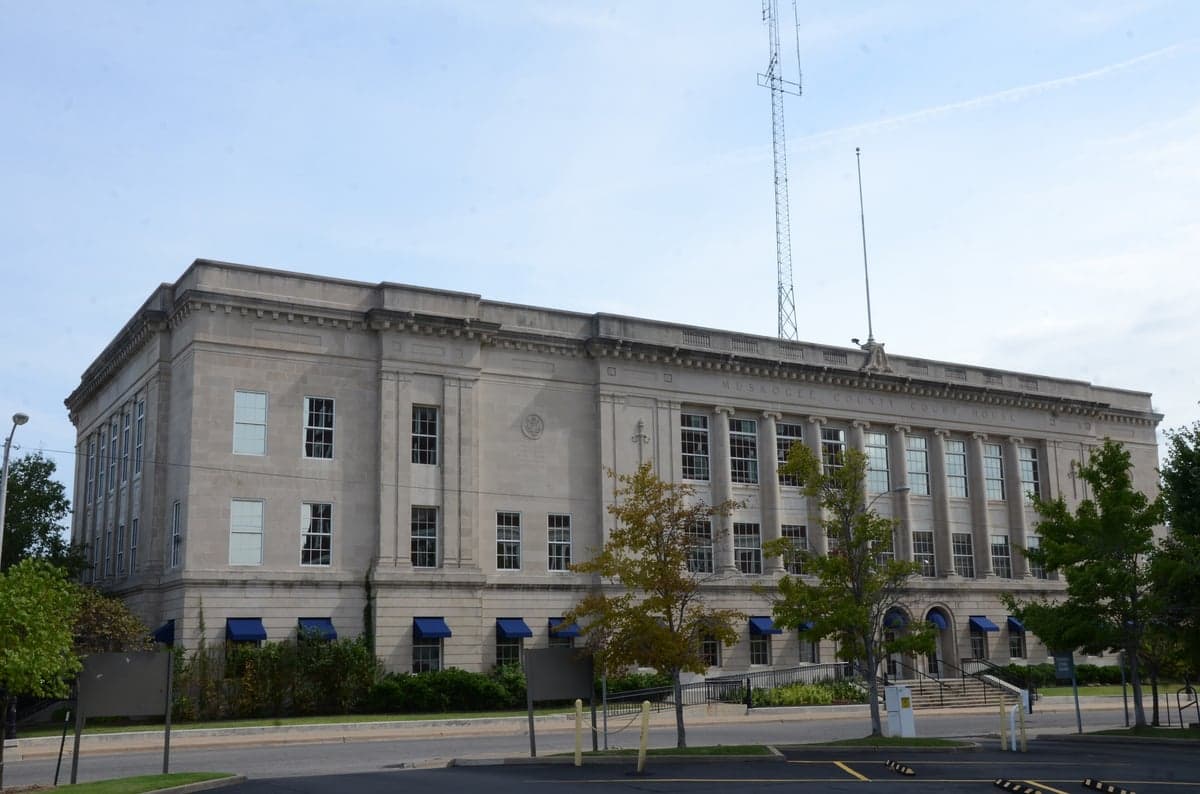
Photo: Wikipedia
Quality of Life in Muskogee County
A livable area that tracks near national norms for affordability, walkability, and neighborhood health.
What does Quality of Life tell us?
Quality of Life measures an area by evaluating factors like cost of living, nearby amenities, country club access, airport proximity, socioeconomic signals and neighborhood character. For large states, this is a general average — quality of life can vary dramatically between metro areas, suburbs, and rural communities within the same state.
What does this tell us?
Quality of Life measures an area by evaluating factors like cost of living, nearby amenities, country club access, airport proximity, socioeconomic signals and neighborhood character. For large states, this is a general average — quality of life can vary dramatically between metro areas, suburbs, and rural communities within the same state.
Cost of Living
38% below national average
131%
The Real Cost of Living in Muskogee County for 2026
| Tier | Individual | Family (4) |
|---|---|---|
| Survival | $13k | $25k |
| Comfortable | $27k | $40k |
| Luxury | $93k+ | $145k+ |
| Elite (Top 5%) | $110k+ | $170k+ |
Quality-of-Life Analysis
Muskogee County offers a broad spectrum of quality-of-life options, from the urban amenities of its county seat to the quiet, self-reliant rhythms of its rural towns and unincorporated communities. With a cost of living index of 62 — well below the national average of 100 — the county attracts a mix of retirees seeking affordable housing, commuters working in Tulsa or Fort Smith, and families drawn to its slower pace and lower crime rates relative to larger metro areas. The median home value of $138,800 and median rent of $824 make homeownership or renting feasible across most of the county, though lifestyle and access to services vary significantly depending on whether you choose the largest town, a smaller community, or a rural homestead.
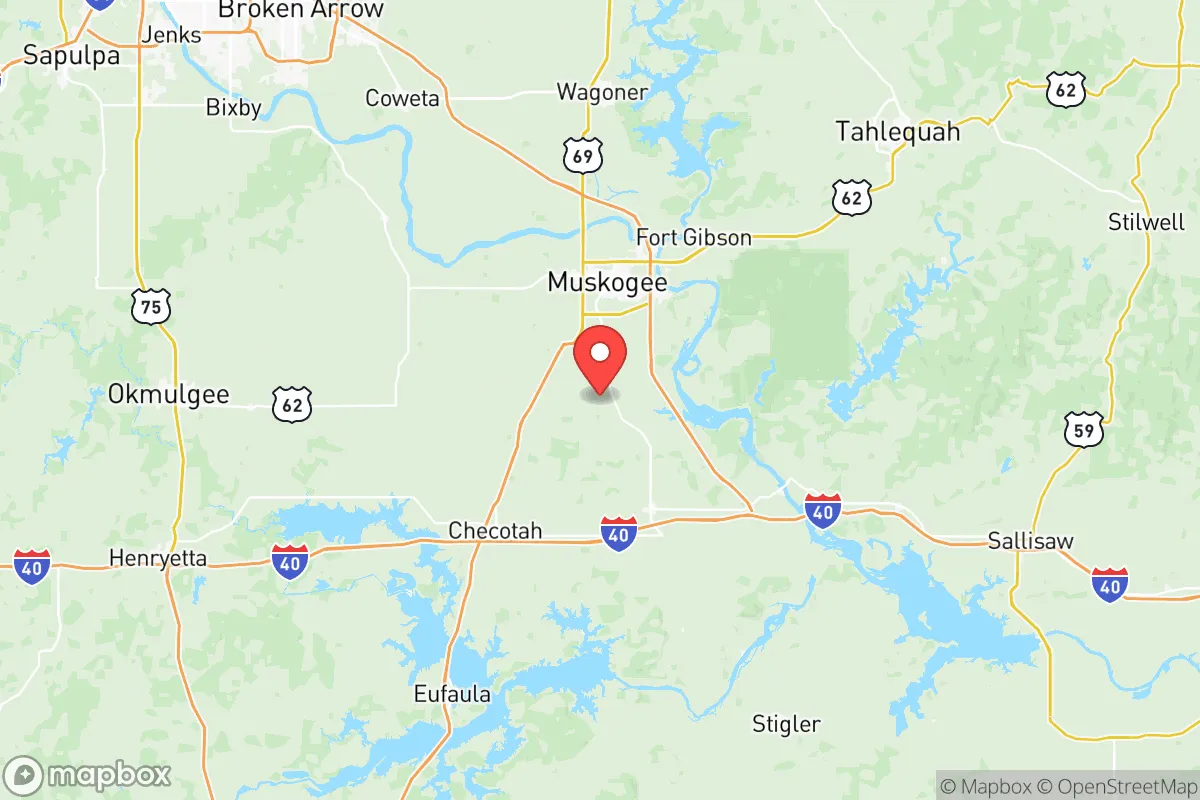
Largest town(s) & population centers
The county's primary population center is Muskogee (pop. ~36,000), which serves as the economic and cultural hub. Daily life here revolves around a mix of local employers like the Muskogee Regional Medical Center, Bacone College, and the Port of Muskogee industrial complex. Residents have access to a Walmart Supercenter, a regional hospital, and a modest downtown with restaurants and shops along Broadway. The average commute of 21.6 minutes is manageable for a town of this size, though traffic can bottleneck on US-69 and US-64 during peak hours. Housing in Muskogee ranges from historic homes near the Honor Heights Park area to newer subdivisions on the south side, with prices typically 10-15% below the county median. The town also hosts the annual Oklahoma Renaissance Festival and the Muskogee Azalea Festival, providing cultural anchors that smaller communities lack.
Smaller towns & rural pockets
Outside Muskogee, the county contains several distinct smaller towns. Fort Gibson (pop. ~4,000) sits along the Grand River and offers a historic downtown with a few antique shops and the Fort Gibson Historic Site. It attracts retirees and families who want a walkable village feel while still being a 15-minute drive to Muskogee. Warner (pop. ~1,600) is home to Connors State College and has a younger, student-influenced demographic, with rental housing near campus often below the county median rent. Haskell (pop. ~2,000) and Porum (pop. ~700) are more rural, with Haskell offering a small grocery store and a post office, while Porum is largely residential with limited services — residents typically drive 20-30 minutes to Muskogee for groceries or medical care. Unincorporated areas like Braggs and Council Hill are sparsely populated, with homes on acreage and no municipal utilities; residents rely on well water and septic systems.
Cost & lifestyle range
The cost of living and amenities vary sharply across the county. At the low end, rural properties in Braggs or Council Hill can be found for under $80,000, often on 1-5 acres, but with no nearby grocery store, gas station, or school — residents must commute 25-35 minutes for basic needs. At the mid-range, Fort Gibson and Warner offer homes in the $100,000-$150,000 range with access to a local school, a small market, and a post office, plus shorter commutes to Muskogee. The high end of the county is concentrated in Muskogee's newer subdivisions (e.g., near Arrowhead Mall or the Country Club area), where homes can reach $250,000-$350,000, still well below national averages. Rent follows a similar pattern: a one-bedroom in Muskogee averages $750-$850, while a similar unit in Haskell or Porum might rent for $600-$700 but with fewer amenities. Property taxes in the county are low — typically 0.8-1.0% of assessed value — which keeps carrying costs down across all areas.
Who thrives in Muskogee County? Retirees and remote workers who value low housing costs and a slower pace will find the most value in Fort Gibson or Warner, where they can stretch a fixed income. Families with school-age children often prefer Muskogee itself for its larger school system and extracurricular options, though some choose Haskell for its smaller class sizes. Commuters working in Tulsa (a 50-minute drive from Muskogee) or Fort Smith (60 minutes) can afford a rural lifestyle in Braggs or Council Hill that would be impossible closer to those cities. The county's diversity — from the urban amenities of Muskogee to the quiet self-sufficiency of its rural pockets — means that the right fit depends almost entirely on how much daily convenience one is willing to trade for space and lower costs.

Crime in Muskogee County
Crime rates similar to the national median for U.S. locations.
Violent CrimeViolent Crime Analysis
Property CrimeProperty Crime Analysis
Crime Analysis
Muskogee County, Oklahoma, presents a safety profile that demands careful attention from potential residents. With a violent crime rate of 410.4 per 100,000 residents and a property crime rate of 1,835 per 100,000, the county experiences crime at levels significantly above both state and national averages. These figures place Muskogee County among the higher-crime areas in Oklahoma, with the city of Muskogee itself serving as the primary driver of these statistics, while smaller communities like Fort Gibson, Warner, and Haskell often report lower incident rates.
Crime in context
To understand Muskogee County's safety landscape, it is essential to compare its rates to broader benchmarks. The national violent crime rate in 2023 was approximately 380 per 100,000, meaning Muskogee County's rate of 410.4 is roughly 8% higher. The gap widens with property crime: the national rate sits near 1,950 per 100,000, but Muskogee County's 1,835 is actually slightly below that national figure. However, when measured against Oklahoma's statewide violent crime rate of roughly 440 per 100,000, the county is slightly safer than the state average. The real concern lies in the city of Muskogee, where violent crime rates can spike to over 600 per 100,000, driven by aggravated assaults and robberies. In contrast, Fort Gibson (population ~4,000) and Warner (population ~1,600) consistently report violent crime rates below 200 per 100,000, making them notably safer enclaves within the county. The property crime picture is more uniform, with theft and burglary affecting both urban and rural areas, though vehicle theft is concentrated in Muskogee's commercial corridors.
What residents experience
Daily life in Muskogee County varies sharply by location. In the city of Muskogee, residents frequently cite concerns about property crime—particularly vehicle break-ins and package theft—along with a visible presence of drug-related activity, especially methamphetamine. The Muskogee Police Department has struggled with staffing shortages, which can delay response times in non-emergency situations. The judicial environment in Muskogee County is a significant factor: the district attorney's office for the 15th Judicial District, which covers Muskogee and surrounding counties, has faced criticism for a perceived leniency in plea deals and sentencing, particularly for repeat offenders. This progressive approach to prosecution, while intended to reduce incarceration, has led to a revolving-door effect where individuals arrested for property crimes or drug possession are quickly back on the streets. Residents in the county's unincorporated areas, such as those near Braggs or Council Hill, report fewer violent incidents but still deal with rural property crimes like equipment theft and trespassing. The Muskogee County Sheriff's Office covers these areas but has limited resources, meaning residents often rely on neighborhood watch groups and personal security measures.
Neighborhood-level variation is pronounced. The most dangerous areas are concentrated in central and eastern Muskogee, particularly around the downtown core and along the Shawnee Bypass corridor. Safer neighborhoods include the western parts of Muskogee near the Arkansas River, as well as the entire towns of Fort Gibson and Haskell. For those considering relocation, the safest choice is to look at Fort Gibson or the rural areas south of Muskogee near Porum, where crime rates drop to near-zero for violent offenses. However, even in these areas, property crime remains a persistent nuisance. The overall safety picture in Muskogee County is one of stark contrasts: the city of Muskogee itself requires vigilance, while its smaller satellite communities offer a much more secure environment for families and retirees.
* Values derived from national, state, county, city and local statistics and may differ in a specific area. Last updated: 2026-08-04T04:41:29.000Z
Narrative content on this page is AI-generated and may contain mistakes. Verify any details that matter before acting on them.
ReloMaps may earn a commission from affiliate links at no extra cost to you.

