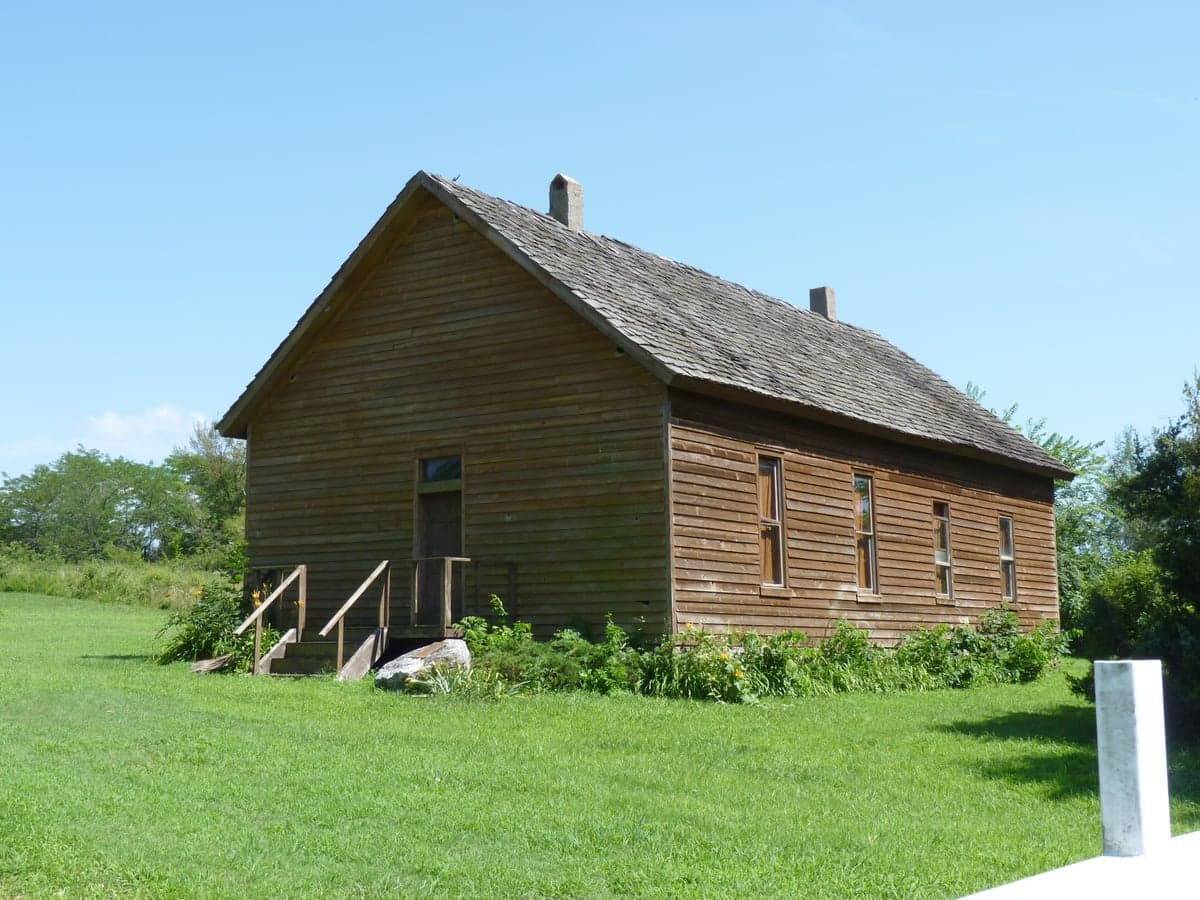
Photo: Wikipedia
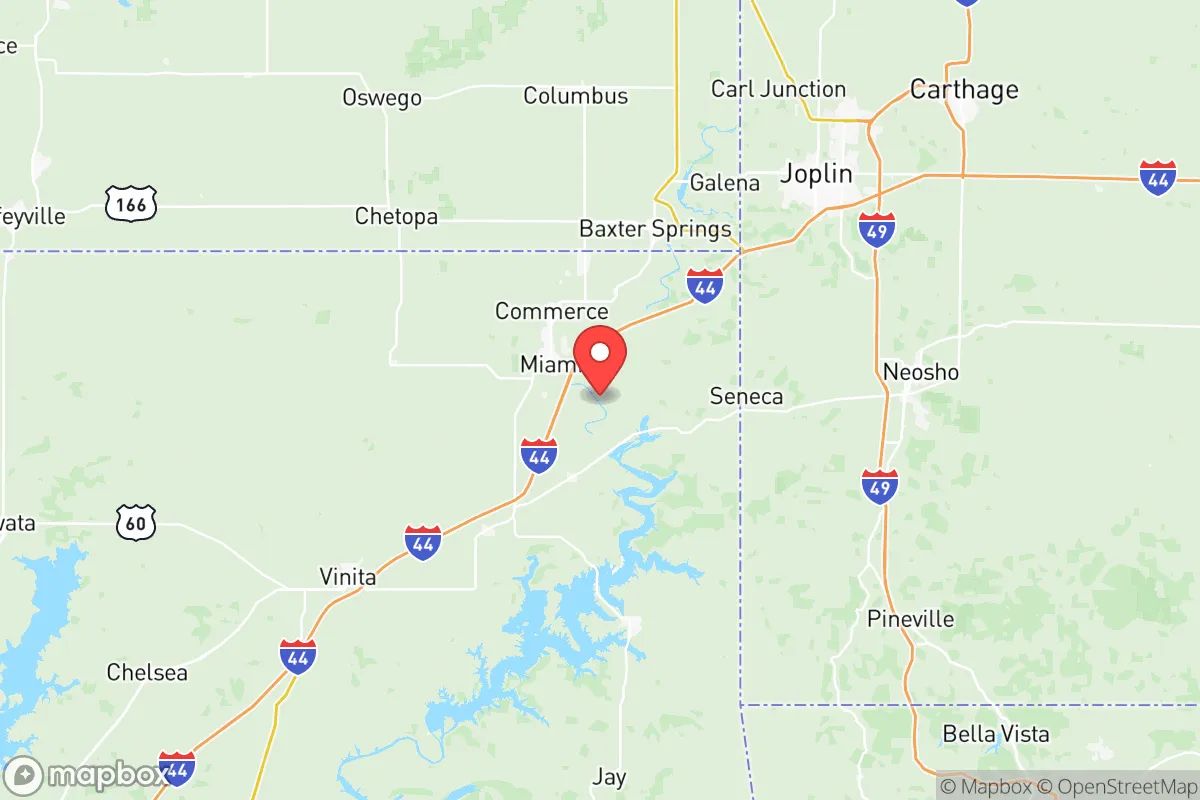
Political ClimatePolitical Climate in Ottawa County
Showing district-level results — no local-only data available.
Local Political AnalysisPolitical Analysis of Ottawa County
Look, if you're asking about the political leanings in Ottawa County, the numbers tell a pretty clear story: this place sits at a Cook PVI of R+28, which puts it a solid ten points to the right of Oklahoma as a whole—that's R+18 statewide. I've lived here long enough to watch the trends hold steady, but I've also seen some subtle shifts that give me pause. For years, this was straight-up Reagan Democrat country that flipped hard red and stayed there. But more recently, you'll find pockets in places like Miami—especially around the college—where younger folks are starting to lean a little more purple. Not enough to flip anything, but it's there. Meanwhile, towns like Commerce and Quapaw are as red as they come, and Afton along the highway still votes like it's 1984. The real swing precincts? Honestly, there aren't many—maybe a few rural spots near the state line that shift a couple points depending on the candidate, but nothing dramatic.
How it compares
The difference between Ottawa County and the rest of Oklahoma isn't huge, but it's meaningful. The state as a whole has enough urban blue in Oklahoma City and Tulsa to drag its PVI down to R+18. Up here in the far northeast corner, we don't have that. There's no big city influence, just small towns and open country. That R+28 rating tells you this county votes Republican more reliably than almost anywhere else in the state. You won't find many pushback on Second Amendment issues or property rights here, but what does worry folks is government overreach—especially from the federal level. The tribal nations around Wyandotte and Quapaw have their own sovereignty battles, and there's a growing unease about how much control distant bureaucrats have over our land and water. Compared to the state average, we're less willing to trust any outsider telling us how to live.
What this means for residents
If you're moving here, expect a community that values personal freedom and local control over just about everything. Taxes stay low, regulations are minimal, and your neighbors will expect you to mind your own business—and they'll do the same. That said, there's a real concern about progressive ideas creeping in through school curriculum changes or unfunded mandates from Oklahoma City. I've seen it happen slowly: a little more talk about "equity" in public meetings, a few more signs for candidates who promise to "modernize" things. Most people here see that as code for government sticking its nose where it doesn't belong. The cultural pulse stays rural, independent, and skeptical of any authority that isn't within a day's drive. That's what makes Ottawa County different from the rest of Oklahoma—we're not just conservative, we're stubborn about it.
On a practical level, this means your daily life won't be interrupted much by big policy changes from the capital. But keep an eye on school board elections and county commission races—that's where the real battles happen these days. The local culture is built around hunting leases, church potlucks, and knowing your county commissioner by name. If you value that kind of hands-off, roots-deep way of life, you'll fit right in. Just don't expect the political winds to shift quickly—this place has been red for a long time, and the folks here intend to keep it that way.

State Political ClimatePolitical Climate in Oklahoma
State Political AnalysisPolitical Environment in the State
Oklahoma is a deeply conservative state with a Cook PVI of R+18, meaning it votes about 18 points more Republican than the national average in presidential elections. The dominant coalition is a mix of rural traditionalists, evangelical Christians, and increasingly, suburban families fleeing higher-cost states, all of whom have pushed the state steadily rightward over the past 20 years. While the state was already reliably red, the shift since 2008 has been pronounced—Oklahoma went from voting +14 R for McCain to +33 R for Trump in 2020, and the GOP now holds supermajorities in both legislative chambers and every statewide office.
Urban vs. rural divide
The political map breaks down along a classic urban-rural axis, but with a twist: Oklahoma City and Tulsa are not liberal strongholds like Austin or Denver. Oklahoma City leans Republican overall, though its core (downtown, Midtown, the Paseo district) votes Democratic, while the sprawling suburbs—Edmond, Yukon, Mustang, and Moore—are among the most conservative in the nation. Tulsa is slightly more competitive, with its downtown and arts districts trending blue, but the surrounding suburbs like Broken Arrow, Jenks, and Bixby are deeply red. The real GOP firepower comes from the rural expanse: counties like Texas County in the Panhandle, Custer County in the west, and LeFlore County in the southeast routinely deliver 80%+ Republican margins. The only reliably blue counties are the ones containing the state’s tribal nations—Cherokee, Choctaw, and Osage counties—where Democratic registration remains strong due to tribal government influence and historical voting patterns. Still, those areas are too small to shift the statewide balance.
Policy environment
Oklahoma’s policy environment is aggressively conservative on nearly every front. The state has a flat income tax of 4.75%, with a path to reduce it further to 3.99% by 2027 if revenue triggers are met. There is no state estate tax, and property taxes are among the lowest in the nation—averaging about 0.9% of assessed value. The regulatory climate is business-friendly, with right-to-work laws and a tort reform cap on non-economic damages. On education, the state has a robust school choice program: the Oklahoma Parental Choice Tax Credit provides up to $7,500 per child for private school tuition, and the state has one of the nation’s most expansive charter school laws. In 2023, Governor Kevin Stitt signed a law requiring public schools to post all instructional materials online for parental review, and the state banned the teaching of critical race theory and “divisive concepts” in K-12 classrooms. Healthcare policy is similarly conservative: Oklahoma did not expand Medicaid until 2021 (via a ballot initiative, not legislative action), and the state has some of the strictest abortion laws in the country—a near-total ban with no exceptions for rape or incest, enforced by private civil lawsuits. Election laws include strict voter ID requirements, a ban on ballot harvesting, and no-excuse absentee voting only for those 65 or older or with a disability.
Trajectory & freedom
Oklahoma is becoming more free in several key dimensions, particularly on gun rights, parental rights, and tax policy. In 2019, the state passed constitutional carry—no permit needed to carry a concealed firearm—and in 2023, it passed a Second Amendment Sanctuary Act prohibiting state enforcement of any future federal gun bans. On parental rights, the 2022 “Parents’ Bill of Rights” (HB 1775) gives parents explicit authority over their child’s education and medical decisions, and a 2024 law requires schools to notify parents if a child requests a name or pronoun change. Medical autonomy has expanded in one direction: the state banned gender transition procedures for minors in 2023 (SB 613) and prohibits Medicaid from covering such care. On the other hand, the state’s medical marijuana program, approved by voters in 2018, remains one of the most permissive in the country—no possession limits, no dispensary caps—though the legislature has tightened regulations on licensing and testing. The biggest freedom concern is property rights: Oklahoma has a history of aggressive eminent domain for economic development, and the 2023 “Oklahoma Energy Discrimination Elimination Act” prohibits state contracts with companies that “boycott” fossil fuels, which some see as government overreach into private business decisions. Overall, the trajectory is toward more individual liberty on social and economic issues, but with a strong hand in regulating corporate behavior and medical procedures for minors.
Civil unrest & political movements
Oklahoma has seen relatively little civil unrest compared to coastal states, but there have been flashpoints. The 2020 George Floyd protests in Oklahoma City and Tulsa were largely peaceful, though Tulsa saw some property damage and a heavy police presence. The state has a strong grassroots conservative movement, particularly around the “Ten Commandments” monument controversy at the state capitol (which was removed in 2020 after a court ruling) and the ongoing fight over tribal sovereignty. The 2023 “Oklahoma Tribal Sovereignty Act” clarified that state law enforcement can enforce state laws on tribal land, a major flashpoint with the Cherokee, Choctaw, and Chickasaw nations. Immigration politics are less heated than in border states, but Oklahoma passed a law in 2024 requiring law enforcement to check immigration status of anyone arrested for a felony and to cooperate with ICE. Election integrity remains a live issue: the 2022 audit of Tulsa County’s election results (which found no significant discrepancies) did not quell concerns among activists, and the legislature passed a law in 2023 requiring all ballots to be hand-counted in future elections—a policy that has drawn both praise and criticism. A new resident would notice a strong “Don’t Tread on Me” ethos in rural areas, with Gadsden flags and “Let’s Go Brandon” signs common on pickup trucks and front porches, but the overall atmosphere is calm and orderly.
Projection
Over the next 5-10 years, Oklahoma will likely become even more conservative, driven by two demographic trends. First, in-migration from blue states—particularly California, Texas, and Colorado—is bringing families who are fleeing high taxes and progressive policies in their home states. These newcomers tend to be conservative-leaning or libertarian, and they are settling in the suburbs of Oklahoma City (Edmond, Mustang) and Tulsa (Broken Arrow, Bixby), reinforcing the existing political tilt. Second, the rural population is aging and shrinking, but the rural vote is becoming more concentrated and more Republican, so the net effect is a continued rightward shift. The state’s flat tax will likely drop to 3.99% by 2027, and there is talk of eliminating the income tax entirely within a decade. On social issues, expect further restrictions on abortion (possibly a full ban with no exceptions) and continued expansion of school choice. The biggest wildcard is tribal sovereignty: as the state and tribes clash over jurisdiction, a new resident should expect ongoing legal battles but no major disruption to daily life. The political climate will remain stable, predictable, and friendly to conservative values.
For a new resident, the bottom line is this: Oklahoma offers a low-tax, high-freedom environment where your rights to keep and bear arms, direct your children’s education, and run a business are protected by law and culture. You will not encounter the political friction or government overreach common in blue states. The trade-off is a slower pace of life, less cultural diversity, and a state government that is unapologetically conservative—which, if that aligns with your values, makes Oklahoma one of the most welcoming places in the country to call home.
* Values derived from national, state, county, city and local statistics and may differ in a specific area. Last updated: 2026-06-01T08:35:52.000Z
Narrative content on this page is AI-generated and may contain mistakes. Verify any details that matter before acting on them.
ReloMaps may earn a commission from affiliate links at no extra cost to you.

