Photo: Wikipedia
Quality of Life in Olathe, KS
A high quality of life with strong walkability, manageable living costs, healthy neighborhood signals, and solid amenity access.
What does Quality of Life tell us?
Quality of Life blends cost of living, nearby amenities, socioeconomic signals, and neighborhood character. City-level scores represent the whole municipality; individual neighborhoods can differ.
What does this tell us?
Quality of Life blends cost of living, nearby amenities, socioeconomic signals, and neighborhood character. City-level scores represent the whole municipality; individual neighborhoods can differ.
Cost of Living
16% above national average
The Real Cost of Living in Olathe, KS for 2026
| Tier | Individual | Family (4) |
|---|---|---|
| Survival | $21k | $39k |
| Comfortable | $66k | $97k |
| Luxury | $160k+ | $248k+ |
| Elite (Top 5%) | $189k+ | $292k+ |
115%
The Area Signal
A metric tracking the socioeconomic signals of the area.
Hobbies
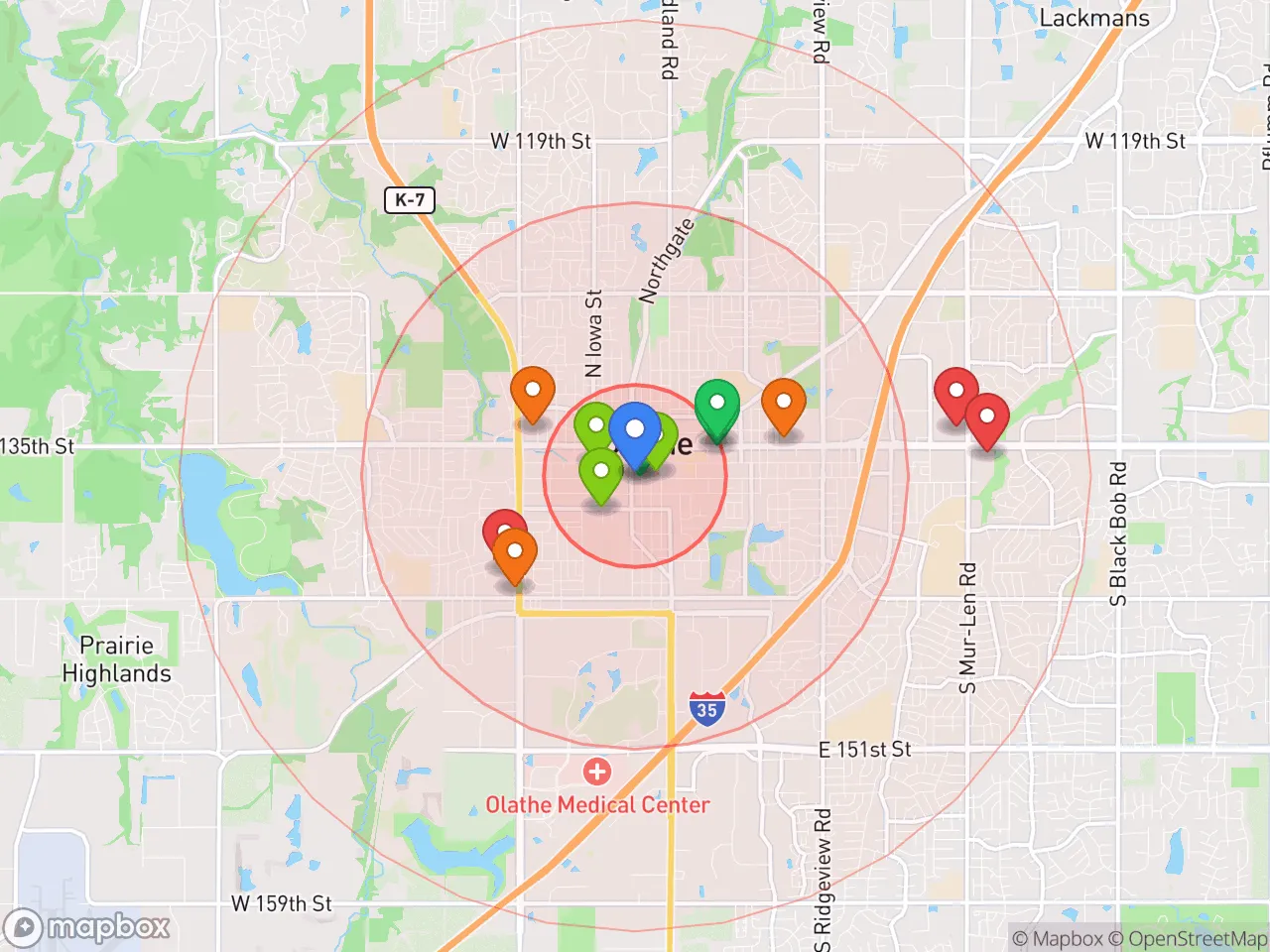
Explore the areaGroceries
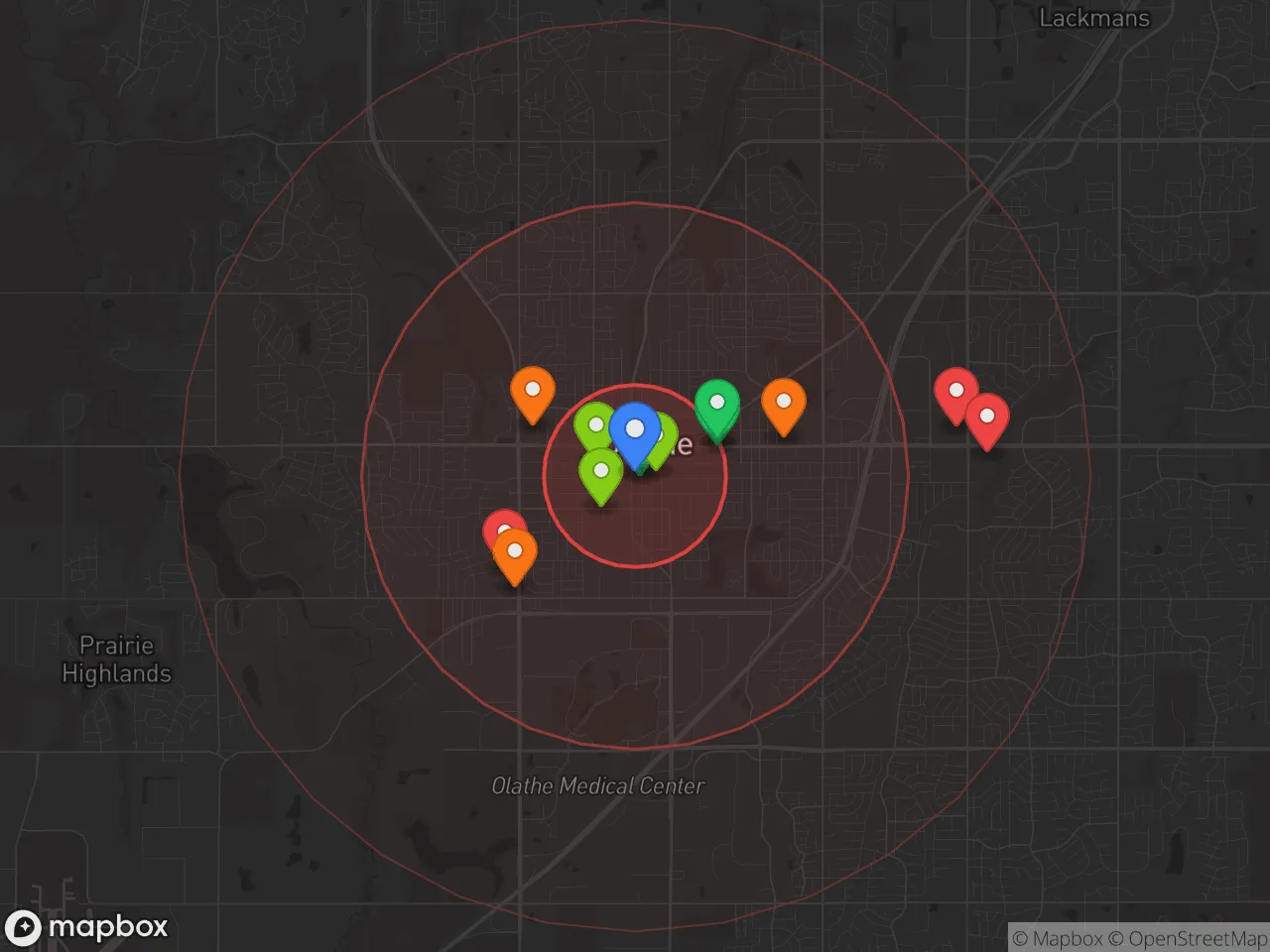
5 within 10 miles
Gas
20 within 10 miles
Hospital
20 within 20 miles
Airport
MCI — Kansas City International
Post Office
USPS — Olathe, KS
Critical Amenities
Quality-of-Life Analysis
Olathe, Kansas, presents a quality-of-life profile defined by upper-middle-class affluence, strong family orientation, and suburban stability within the Kansas City metropolitan area. With a cost-of-living index of 116 (16% above the national average), the city attracts professionals, executives, and families who prioritize excellent schools, low crime rates, and spacious housing over urban density or nightlife. The population skews toward married couples with children, and the median household income significantly exceeds state and national averages, reinforcing a community ethos centered on homeownership, youth sports, and civic engagement.
Cost of living, housing, and affordability compared to Overland Park and Lee’s Summit
Olathe’s cost of living is notably higher than the U.S. average but remains competitive within Johnson County’s affluent corridor. The median home value of $340,600 is roughly 10% below Overland Park’s median but about 5% above Lee’s Summit’s, positioning Olathe as a relative value for buyers seeking newer construction and larger lots. Median rent of $1,314 is affordable relative to local incomes, though it has risen 18% since 2020, reflecting strong demand. Property taxes in Johnson County average about 1.3% of assessed value, which is moderate for the region. The average commute of 20.7 minutes is shorter than the Kansas City metro average of 24 minutes, a meaningful advantage for workers employed at major local employers like Garmin, Honeywell, and the Olathe Medical Center. Compared to downtown Kansas City, Olathe offers roughly 30% more square footage per dollar, but residents pay for that space with higher utility costs and longer drives to cultural amenities.
Schools, parks, and what daily life is like for families
Daily life in Olathe revolves around the Olathe Public Schools district, the largest in Johnson County, which consistently earns GreatSchools ratings of 8–10 at the elementary and middle school levels. The district’s Olathe Northwest and Olathe East high schools are particularly noted for strong STEM and Advanced Placement programs. The city maintains over 50 parks, with the 80-acre Black Bob Park and the 160-acre Ernie Miller Nature Center providing hiking trails, sports fields, and environmental education. The Olathe Community Center offers a competitive swim program and senior activities, while the downtown area, anchored by the Mahaffie Stagecoach Stop & Farm, provides a historic counterpoint to the suburban sprawl. Retail is concentrated along 135th Street and I-35, with the Great Mall of the Great Plains and numerous big-box stores. Restaurants lean toward national chains and family-style dining, with local standouts like the Olathe Sweet Corn Festival drawing crowds each August. The rhythm of life is car-dependent but predictable: school drop-offs, weekend soccer tournaments, and evening commutes that rarely exceed 25 minutes.
Olathe is best suited for families and professionals who value top-rated public schools, low crime, and a predictable suburban routine over urban energy or walkability. Empty nesters and retirees may find the property taxes and home-maintenance demands burdensome, while young singles often prefer the nightlife and rental density of Overland Park or downtown Kansas City. For those seeking a safe, well-resourced environment to raise children or establish a career in engineering, healthcare, or logistics, Olathe delivers consistently high marks across the metrics that matter most to those life stages.

Crime in Olathe, KS
Lower crime rates than 75% of comparable U.S. locations.
Violent CrimeViolent Crime Analysis
Property CrimeProperty Crime Analysis
Crime Analysis
Olathe, Kansas, presents a mixed safety profile for prospective residents. The city's violent crime rate of 389.4 incidents per 100,000 residents and property crime rate of 1,587.4 per 100,000 place it above national averages, a reality shaped in part by its position within the broader Kansas City metropolitan area. As a large metro region with jurisdictions that have adopted progressive prosecutorial policies, the area faces challenges in maintaining public safety that potential movers should weigh carefully.
Crime in context
Olathe's violent crime rate of 389.4 per 100,000 is 11% higher than the national average of roughly 350 per 100,000, while its property crime rate of 1,587.4 per 100,000 exceeds the U.S. average by approximately 15%. These figures are notably elevated compared to Johnson County's overall rates, which typically run lower due to affluent suburban enclaves. The disparity reflects Olathe's role as a growing suburban hub that absorbs spillover crime from the Kansas City metro, where progressive district attorneys in nearby Jackson County, Missouri, and some Kansas jurisdictions have adopted policies like reduced cash bail and declination of certain drug and property offenses. Such approaches, while intended to reduce incarceration, can result in repeat offenders cycling back onto the streets, directly impacting suburban communities like Olathe that share regional transit corridors and retail centers.
What residents experience
For daily life, property crime is the most tangible concern. Auto theft, package theft from porches, and burglaries of unlocked vehicles are the most common incidents, particularly in neighborhoods near major highways like I-35 and K-10. Violent crime, while less frequent, is concentrated in specific areas: apartment complexes near 151st Street and Mur-Len Road and commercial strips along South Ridge Drive have reported higher rates of aggravated assault and robbery. Residents in single-family home subdivisions north of 119th Street generally report feeling safer, though they still take precautions like home security systems and neighborhood watch participation. The city's police department has responded with targeted patrols and a real-time crime center, but the underlying regional dynamics—where lenient sentencing in nearby jurisdictions allows offenders to reoffend—remain a persistent frustration for local law enforcement and residents alike.
Neighborhood-level variation is significant. The area around the Great Mall of the Great Plains (now largely redeveloped) and the older downtown core near Santa Fe Street have historically seen higher crime densities. In contrast, newer developments west of Ridgeview Road and south of 159th Street, such as the Cedar Creek and Stone Creek neighborhoods, report crime rates well below the city average. Prospective residents should examine block-level crime maps for specific subdivisions, as a difference of just a few blocks can mean a 50% or greater swing in incident rates. Overall, Olathe requires a cautious approach: it is not a high-crime city by national standards, but its metro-area context and progressive justice policies in surrounding counties create real safety considerations that demand attention.
* Values derived from national, state, county, city and local statistics and may differ in a specific area. Last updated: 2026-04-30T07:07:22.000Z
Narrative content on this page is AI-generated and may contain mistakes. Verify any details that matter before acting on them.
ReloMaps may earn a commission from affiliate links at no extra cost to you.

