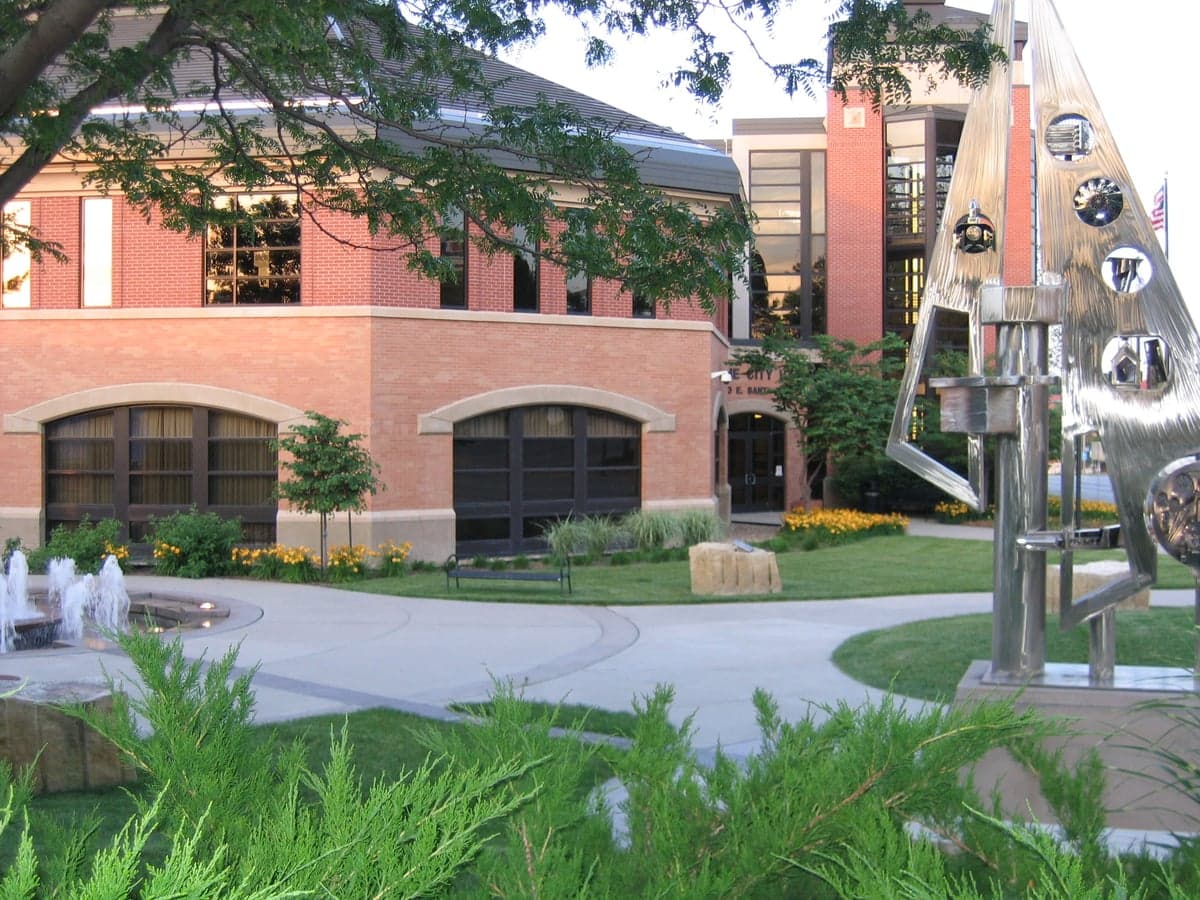
Photo: Wikipedia
Political ClimatePolitical Climate in Olathe, KS
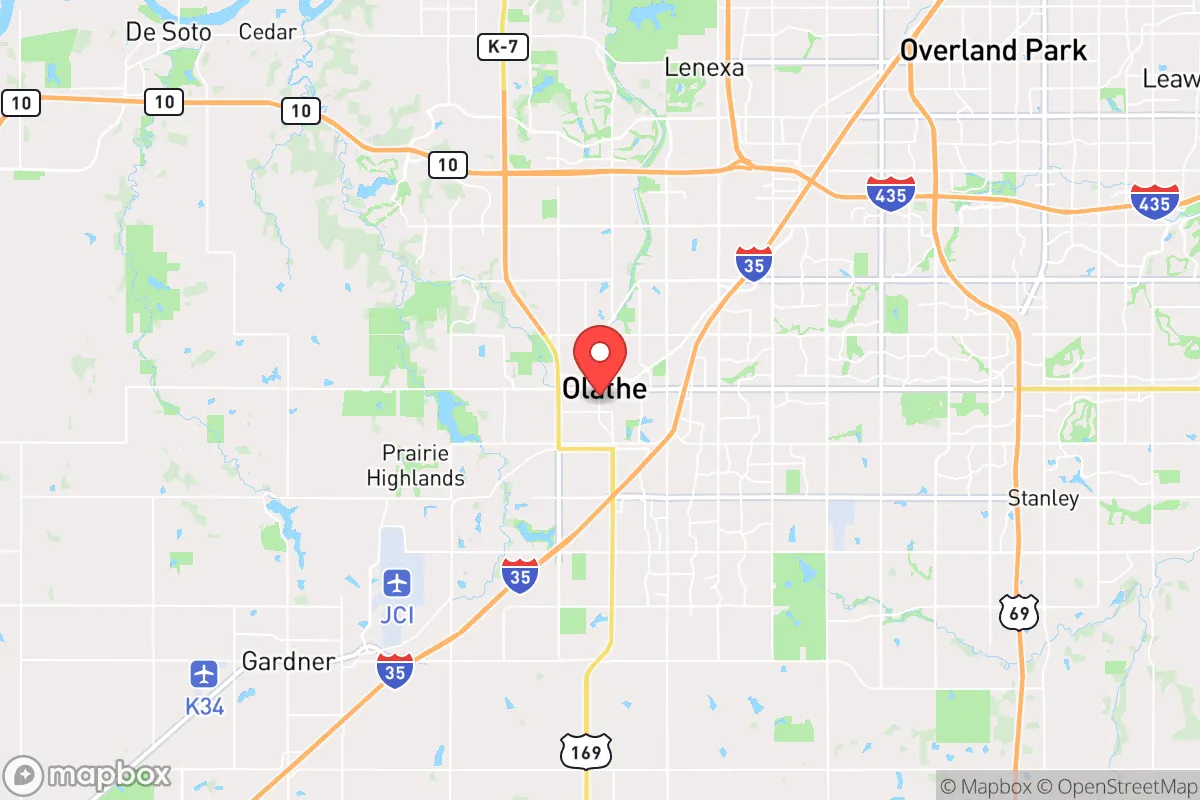
District shown is the primary district for this city’s centroid. Cities may span multiple districts.
Local Political AnalysisPolitical Analysis of Olathe, KS
Olathe’s political climate has shifted noticeably in recent years, and if you’ve lived here as long as I have, you can feel it. The Cook PVI now sits at D+2, which means the district leans slightly Democratic overall, but that number doesn’t tell the whole story for the city itself. Olathe has historically been a conservative stronghold in Johnson County, but the rapid growth from the Kansas City metro area has brought in a wave of new residents, many from bluer states, and that’s slowly changing the local voting patterns. The 2020 and 2022 elections showed tighter margins here than we saw even a decade ago, and the trend line is something to keep an eye on if you value limited government and local control.
How it compares
Drive ten miles east into Kansas City, Missouri, and you’re in a deep-blue urban core where progressive policies on taxes, policing, and zoning are the norm. Head west to places like Gardner or Edgerton, and you’ll find communities that still vote reliably red, with Republican margins of 15–20 points in most races. Olathe sits right in the middle of that spectrum. It’s not as conservative as it was in the 1990s, when it was a reliably Republican suburb, but it’s also not as liberal as Overland Park or Prairie Village to the north. The county commission and school board races here have become battlegrounds, with candidates pushing for lower taxes and parental rights often winning by slim margins. That’s a far cry from the comfortable wins conservatives used to take for granted.
What this means for residents
For folks who moved here to escape higher taxes and overregulation in places like California or Illinois, the shift is concerning. The city council has debated things like inclusionary zoning and diversity, equity, and inclusion initiatives in the school district—policies that sound good on paper but often lead to more government involvement in your daily life. Property taxes in Johnson County have crept up, and some residents worry that the push for “equity” will mean higher fees and more red tape for small businesses and homeowners. On the flip side, Olathe still has a strong conservative base that shows up for school board and city council elections, so the pendulum hasn’t swung all the way. If you’re the type who wants to keep government out of your backyard and your wallet, you’ll want to stay engaged in local races—especially the nonpartisan ones that get overlooked.
Culturally, Olathe still feels more like a traditional Midwestern suburb than a progressive enclave. The Johnson County Fair, the local 4-H clubs, and the strong presence of churches—especially evangelical congregations—keep a sense of community that resists the coastal trends. But the long-term trajectory depends on who moves in next. If the metro area keeps growing and attracting younger, more liberal professionals, the political center of gravity will keep shifting. For now, Olathe is a place where you can still have a say in how your tax dollars are spent and what your kids learn in school, but it takes showing up to keep it that way.

State Political ClimatePolitical Climate in Kansas
State Political AnalysisPolitical Environment in the State
Kansas has long been a reliably Republican state at the presidential level, having not voted for a Democratic nominee since Lyndon Johnson in 1964, but its internal politics are far more volatile than that streak suggests. The state’s dominant coalition is a mix of traditional fiscal conservatives, rural social conservatives, and a growing libertarian-leaning wing, but a significant moderate Republican and Democratic presence in the suburbs keeps the overall lean from being as deep red as, say, Oklahoma or Nebraska. Over the last 10-20 years, the state has swung dramatically — from the deeply unpopular 2012 Brownback tax experiment that slashed income taxes and cratered state services, to a period of legislative gridlock and tax hikes under Governor Laura Kelly, and now back toward a more aggressively conservative posture under the current supermajority.
Urban vs. rural divide
The political map of Kansas is a textbook study in the urban-rural chasm. The Kansas City metro area, anchored by Johnson County (Overland Park, Olathe, Lenexa), is the state’s most populous and politically competitive region. While it still leans Republican overall, Johnson County has been trending leftward for a decade — it voted for Biden in 2020 by a narrow margin, a seismic shift from its 20-point Romney win in 2012. This is driven by an influx of out-of-state professionals and a growing minority population. Wyandotte County (Kansas City, KS) and Douglas County (Lawrence) are the state’s deep blue strongholds, reliably delivering 60-70% Democratic margins. Meanwhile, the rest of the state is overwhelmingly red. Sedgwick County (Wichita) is a bellwether — it’s Republican but with a sizable moderate wing, and it often decides statewide races. The rural west and central plains, places like Garden City, Dodge City, and Hays, are deeply conservative, often voting 75-80% Republican. The divide isn’t just about party — it’s about worldview. Urban and suburban Kansans are more concerned with education funding and infrastructure, while rural voters prioritize agriculture policy, gun rights, and opposition to federal overreach.
Policy environment
Kansas’s policy environment is a mixed bag that reflects its internal tug-of-war. On taxes, the state has a flat income tax rate of 5.7% after the Brownback-era cuts were partially reversed, but the legislature is actively pushing for further reductions. Property taxes are a major pain point — they’re relatively high for the region, and there’s no statewide homestead exemption for primary residences, which hits retirees and families hard. The regulatory posture is generally business-friendly, with a right-to-work law and limited zoning in most rural areas. Education policy is a constant battleground: the state has been under court order for decades to adequately fund schools, leading to repeated tax hikes that conservatives resent. School choice is limited compared to states like Florida or Arizona, though charter schools and open enrollment exist. Healthcare is a sore spot — Kansas refused Medicaid expansion under the Affordable Care Act, leaving a coverage gap for low-income adults, but the state has a robust network of rural hospitals. On election laws, Kansas requires a photo ID to vote and has a voter registration deadline 21 days before an election, which is more restrictive than many states but not as strict as some in the South. The state also has a “no-excuse” absentee voting law, which was a point of contention during the 2020 election.
Trajectory & freedom
The trajectory of freedom in Kansas is a tale of two trends. On the positive side for conservatives, the state has seen significant expansions of Second Amendment rights. In 2021, Kansas became a constitutional carry state, meaning no permit is required to carry a concealed firearm. The state also has strong preemption laws that prevent local governments from enacting their own gun restrictions, which is a major win for gun owners. On parental rights, Kansas passed a Parents’ Bill of Rights in 2023 that requires school districts to notify parents of any changes to a student’s health or well-being, including gender identity issues. This was a direct response to progressive school board policies in Johnson County. However, there are concerning trends. The state’s medical freedom took a hit during the pandemic when Governor Kelly issued a statewide mask mandate and business closures, though these were largely resisted by rural counties. More recently, the Kansas Supreme Court has been a flashpoint — it ruled in 2019 that the state constitution protects a right to abortion, which led to a 2022 ballot measure that failed to remove that protection. This means abortion remains legal in Kansas, making it a regional destination for women from Texas, Oklahoma, and Missouri. For conservatives, this is a major loss of legislative freedom. Property rights are generally strong, with no statewide rent control and limited eminent domain abuse, but local zoning in suburbs like Overland Park can be restrictive.
Civil unrest & political movements
Kansas has not seen the kind of large-scale civil unrest that has hit coastal states, but there have been notable flashpoints. The most visible is the ongoing battle over abortion access. After the 2022 ballot measure failed, pro-life activists have focused on incremental restrictions, while pro-choice groups have mobilized heavily in Johnson County and Lawrence. There have been protests outside Planned Parenthood clinics in Wichita and Overland Park, but they remain mostly peaceful. Immigration politics are a hot-button issue in western Kansas, where meatpacking plants in Garden City and Dodge City have drawn large immigrant populations. There have been local debates over sanctuary policies, but no city in Kansas has declared itself a sanctuary city. The state did pass a law in 2023 requiring law enforcement to cooperate with federal immigration authorities, which was a win for conservatives. Election integrity has been a recurring theme — the 2020 election saw a surge in mail-in voting, and the legislature has since tightened rules around ballot drop boxes and signature verification. There was a brief but intense controversy in 2021 when a Republican county commissioner in Sedgwick County called for a full audit of the 2020 results, but it fizzled out. The most organized political movement on the right is the Kansas Republican Assembly, a grassroots group that pushes for more conservative candidates in primaries, often challenging incumbents they view as too moderate.
Projection
Looking ahead 5-10 years, Kansas is likely to become more polarized but not necessarily bluer. The demographic trends are mixed: Johnson County is growing and diversifying, which will continue to pull the state toward the center, while rural counties are shrinking and aging, which amplifies their conservative voting power. The big wildcard is in-migration. Kansas is not seeing the kind of explosive growth that Texas or Florida are, but it is attracting some remote workers and retirees from higher-tax states like California and Illinois. These newcomers tend to be more moderate or libertarian, not hard-left. The state’s political future will likely be decided by how the Republican Party handles its internal divisions. If the legislature continues to push hard-right policies on abortion, guns, and education, it could alienate suburban moderates and hand Democrats more wins in Johnson County. Conversely, if the party moderates, it could solidify its hold on the state for another generation. The most likely outcome is a continued stalemate: a Republican legislature that can pass conservative bills but faces a Democratic governor (or a moderate Republican one) who can veto them. The state’s freedom trajectory will depend on the courts — the Kansas Supreme Court is currently dominated by appointees of Democratic governors, and that won’t change soon.
For a new resident, the bottom line is this: Kansas offers a relatively low-cost, low-regulation environment with strong gun rights and a conservative culture outside of a few urban pockets. But it’s not a libertarian paradise. You’ll pay moderate income and property taxes, you’ll have limited school choice, and you’ll live in a state where abortion remains legal and the courts can override the legislature. If you’re looking for a place where your personal freedoms are broadly protected and your neighbors share your values, the rural and small-town areas — places like Hays, Garden City, or the outskirts of Wichita — are your best bet. If you move to Johnson County, expect a more politically mixed environment where you’ll need to engage in local school board and city council races to protect your rights. Kansas is a state where your vote truly matters, but you’ll have to stay vigilant to keep it moving in the right direction.
* Values derived from national, state, county, city and local statistics and may differ in a specific area. Last updated: 2026-04-30T07:07:22.000Z
Narrative content on this page is AI-generated and may contain mistakes. Verify any details that matter before acting on them.
ReloMaps may earn a commission from affiliate links at no extra cost to you.

