Photo: Wikipedia
Personal Sovereignty in Old Town, ME
Viable for self-reliance. Generally workable, though some barriers may limit total independence.
What does Personal Sovereignty tell us?
Personal Sovereignty measures your capacity for self-reliance and independence with minimal government friction. Higher scores mean fewer barriers between you and the way you want to live... but it assumes you have the space you need and good neighbors.
What does this tell us?
Personal Sovereignty measures your capacity for self-reliance and independence with minimal government friction. Higher scores mean fewer barriers between you and the way you want to live... but it assumes you have the space you need and good neighbors.
State Policy
Energy independence: Importer (30% of energy produced in-state)
Personal Liberty
Homesteading

Personal Liberty Analysis
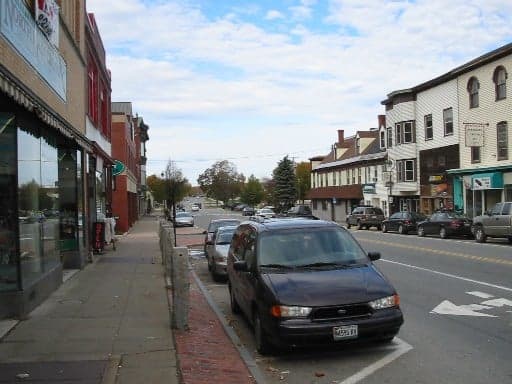
Old Town, Maine, offers a mixed bag for those prioritizing personal sovereignty, where the state’s progressive tilt clashes with a deep-rooted local culture of self-reliance. While Maine’s overall regulatory environment leans left—with strict gun laws and high taxes—the rural character of Old Town and its surrounding Penobscot County provides a buffer against the most intrusive aspects of state overreach. For a survivalist or prepper mindset, the area presents a trade-off: you gain significant space and a community that values independence, but you must navigate a state government that increasingly views personal freedoms as negotiable.
Tax burden and regulatory posture in Old Town
Maine’s tax burden is among the highest in the nation, and Old Town residents feel it directly. The state’s income tax is a flat 5.8% on most income, with a top marginal rate of 7.15% for high earners—a significant bite for anyone trying to build financial self-sufficiency. Property taxes in Penobscot County average around 1.3% of assessed value, which is moderate for Maine but still higher than many southern or midwestern states. Sales tax is 5.5%, with no local add-ons, but it applies to most goods. The regulatory posture is similarly burdensome: Maine has strict environmental regulations that can complicate land use, especially near waterways or wetlands, which are abundant around the Penobscot River. Building permits, septic system approvals, and shoreland zoning rules are enforced with little flexibility, meaning any off-grid or homesteading project will require navigating a thicket of state and local bureaucracy. For a prepper, this means planning for extra time and cost to comply with rules that feel more like control than common sense.
Self-defense and gun law specifics in Maine
Maine’s gun laws have tightened in recent years, and Old Town residents must adapt. The state now requires a permit to carry a concealed handgun in public, though open carry without a permit is still legal. Background checks are required for all firearm sales, including private transactions—a significant infringement on the traditional private sale market. There is no state-level magazine capacity ban or assault weapons ban, but the political climate in Augusta suggests these could be on the horizon. The good news is that Penobscot County is a Second Amendment stronghold, with local sheriffs generally supportive of gun rights and a culture where firearm ownership is the norm. Old Town itself has no local ordinances restricting firearms beyond state law, so you can keep and bear arms on your property without interference. For a survivalist, the key takeaway is that while you can still own and carry firearms, the legal landscape is eroding, and you should expect further restrictions. Stockpiling ammunition and training in defensive use is wise, but be prepared for potential future compliance costs.
Self-reliance and homesteading viability in Old Town
Old Town’s rural character makes it a viable location for homesteading and off-grid living, but with caveats. Lot sizes vary widely, from quarter-acre suburban plots to multi-acre parcels in the surrounding woods. Zoning in the town’s rural districts generally allows for livestock, gardens, and small-scale agriculture without special permits, though you must adhere to setback and nuisance ordinances. Off-grid feasibility is high: many homes already use well water and septic systems, and solar panels are common. However, Maine’s net metering laws are favorable to grid-tied solar, but going fully off-grid requires a significant battery investment and compliance with state building codes that mandate certain energy efficiency standards. Rainwater collection is legal but must not create a public health nuisance. The growing season is short—roughly 120 days—so food self-sufficiency requires careful planning, cold frames, or greenhouses. Old Town’s proximity to the Penobscot River and surrounding forests provides ample hunting, fishing, and foraging opportunities, but state licensing and bag limits apply. For a prepper, the land is workable, but you cannot simply disappear into the woods; the state’s regulatory reach extends to your property line.
Personal liberties in Old Town: parental rights, medical autonomy, speech, and property
Personal liberties in Old Town are a patchwork of local freedom and state constraint. Parental rights are relatively strong in Maine compared to some New England states, but the state mandates school attendance and has broad authority over child welfare. Maine does not have a parental bill of rights, and the Department of Health and Human Services has a reputation for aggressive intervention in family matters, so parents should be cautious about any perceived neglect or educational noncompliance. Medical autonomy is limited: Maine has strict vaccine mandates for school attendance and healthcare workers, and the state’s response to the COVID-19 pandemic included broad emergency powers that many conservatives viewed as overreach. Alternative medical treatments are legal but not protected from professional board oversight. Free speech is protected under the First Amendment, and Old Town’s small-town culture generally tolerates diverse political views, but the state’s political leadership in Augusta is hostile to conservative speech, with “hate speech” proposals and social media regulation attempts that chill expression. Property rights are the strongest liberty in Old Town: you can generally use your land as you see fit, subject to zoning and environmental rules, and eminent domain is rare. For a survivalist, the property is your castle, but the state’s reach into your family and medical decisions is a persistent threat.
Overall, Old Town offers a moderate level of personal sovereignty compared to other areas in the Northeast, but it falls short of the freedom found in states like New Hampshire or much of the rural South. The high tax burden and regulatory creep from Augusta are real liabilities, while the local culture of self-reliance and the availability of land provide genuine advantages. For a prepper or conservative individual, Old Town is a compromise: you can build a self-sufficient life, but you must remain vigilant against state overreach and plan for future restrictions. If you value maximum autonomy, you may find better options elsewhere, but if you are tied to Maine for family or work, Old Town is one of the more viable locations for maintaining personal sovereignty in a state that increasingly leans away from it.

* Values derived from national, state, county, city and local statistics and may differ in a specific area. Last updated: 2026-05-01T10:16:34.000Z
Narrative content on this page is AI-generated and may contain mistakes. Verify any details that matter before acting on them.
ReloMaps may earn a commission from affiliate links at no extra cost to you.

