
Photo by Jakob Rosen on Unsplash
Political ClimatePolitical Climate in Oneill, NE
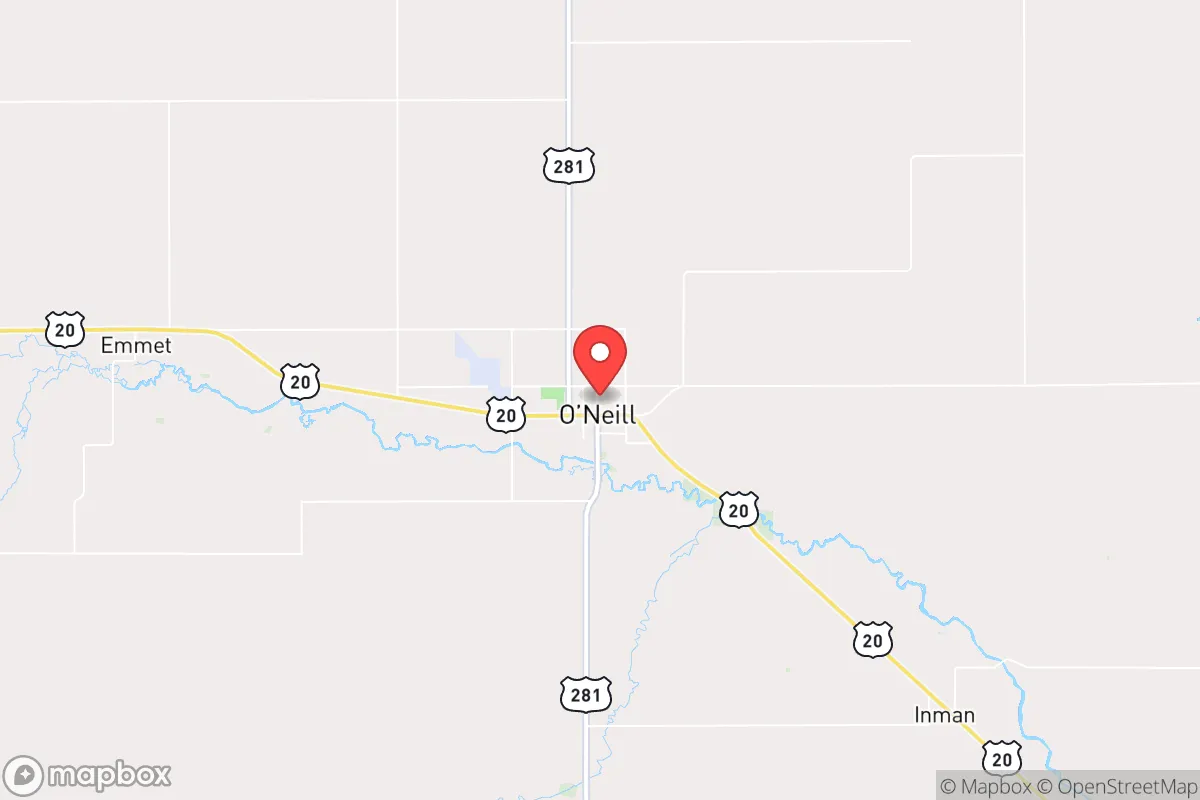
District shown is the primary district for this city’s centroid. Cities may span multiple districts.
Local Political AnalysisPolitical Analysis of Oneill, NE
Oneill, Nebraska, sits deep in the heart of the state’s conservative stronghold, and it’s been that way for as long as anyone can remember. The Cook PVI of R+27 isn’t just a number—it’s a reflection of a community that values personal responsibility, limited government, and the freedom to live life without a bunch of red tape. You won’t find much appetite here for the progressive experiments that have crept into bigger cities out west or even down in Lincoln. The political lean here is rock-solid Republican, and the trajectory hasn’t budged an inch in decades. If anything, folks have only gotten more skeptical of government overreach as they’ve watched other parts of the country lose their way.
How it compares
When you stack Oneill up against the rest of Nebraska, the contrast is pretty stark. Head an hour south to Norfolk, and you’ll still find a conservative vibe, but it’s a bit more tempered—more of a R+15 or so, with a few more folks willing to entertain moderate ideas. Drive two hours west to Valentine, and it’s a similar story, though the ranching culture keeps things pretty red. But the real eye-opener is when you compare Oneill to places like Omaha or Lincoln. Those cities have shifted noticeably left over the past decade, with Lincoln’s Cook PVI sitting around D+5 and Omaha’s at D+3. That’s a world away from Oneill’s R+27. The difference isn’t just in voting patterns—it’s in the whole mindset. Out here, people still believe the government’s job is to stay out of your business, not to manage your life. That’s a perspective that’s getting harder to find, and it’s something locals are proud to hold onto.
What this means for residents
For the folks living in Oneill, the political climate translates directly into daily life. You don’t have to worry about a bunch of new regulations popping up on your small business or your farm. The local government keeps its nose out of things like property rights and gun ownership, which is a big deal for a community where hunting and self-reliance are part of the culture. There’s no push for the kind of zoning overhauls or tax hikes you see in more progressive areas. That said, there’s a growing concern among residents about the direction of the state as a whole. With Lincoln and Omaha pulling left, there’s always the risk that state-level policies—like stricter environmental rules or mandates on local schools—could trickle down. Locals are keeping a close eye on that, because once the government gets a foothold, it’s hard to shake. The near-term outlook is stable, but the long-term worry is that outside influences could erode the freedoms that make Oneill a great place to raise a family.
One thing that sets Oneill apart is its strong sense of community self-reliance. You won’t find a lot of hand-wringing over national headlines here—people are more focused on what they can control. The local school board, for instance, has resisted the kind of curriculum changes that have stirred up debates in bigger districts. And when it comes to taxes, the county keeps them low, which is a direct reflection of the belief that you know how to spend your own money better than the government does. There’s a cultural pride in that independence, and it’s something that’s passed down through generations. If you’re looking for a place where your voice still matters and the government doesn’t treat you like a project, Oneill is it. Just don’t expect it to stay that way if the progressive wave keeps rolling—so enjoy it while it lasts, and keep fighting to keep it that way.

State Political ClimatePolitical Climate in Nebraska
State Political AnalysisPolitical Environment in the State
Nebraska is a reliably Republican state, but it’s not the deep-red monolith outsiders often assume. The state has voted for the GOP presidential candidate in every election since 1968, and its congressional delegation is currently a 3-0 Republican lock, but the political landscape is far more nuanced than a simple red-state label suggests. Over the last 10-20 years, the dominant coalition has been a mix of rural conservatives and suburban moderates, though a growing urban-liberal bloc in Omaha and Lincoln has been steadily pulling the state’s two largest counties to the left, creating a visible tension between the state’s traditional values and its emerging progressive pockets.
Urban vs. rural divide
The political map of Nebraska is a textbook example of the urban-rural split. The state’s two major population centers, Omaha (Douglas County) and Lincoln (Lancaster County), are the primary engines of Democratic votes. In 2024, Douglas County went for Joe Biden by about 7 points, while Lancaster County was a virtual toss-up, leaning slightly Democratic. These two counties alone account for nearly half the state’s population, meaning any statewide Republican candidate has to run up huge margins in the rest of the state to win. The rural areas, particularly the Sandhills and the Panhandle, are deeply conservative. Counties like Cherry, Box Butte, and Scotts Bluff routinely vote 75-80% Republican. The “Blue Dot” phenomenon in Omaha’s 2nd Congressional District is a real thing — it’s the only competitive federal race in the state, and it’s been a bellwether for national trends. Suburbs like Elkhorn and Gretna are reliably red, while the core of Omaha and the university neighborhoods of Lincoln are solidly blue. The divide isn’t just about geography; it’s about culture, economics, and lifestyle. A rancher in Valentine has almost nothing in common politically with a tech worker in downtown Omaha.
Policy environment
Nebraska’s policy environment is broadly conservative, but with some notable exceptions. The state has no income tax on Social Security benefits and a flat state income tax rate of 5.58% (down from 6.84% in 2020, thanks to LB 1107). Property taxes are a perennial headache, though, and are among the highest in the region — a constant source of frustration for homeowners and farmers alike. The state’s regulatory posture is generally light, with no state-level minimum wage above the federal $7.25 (though a ballot initiative in 2022 raised it to $15 by 2026). Education policy is a mixed bag: Nebraska has a strong tradition of local control, but the state’s school funding formula is complex and often criticized. School choice is limited compared to states like Florida or Arizona, though there’s a growing push for Education Savings Accounts. Healthcare is a flashpoint: Nebraska expanded Medicaid under the Affordable Care Act in 2020 via a ballot initiative, a move that many conservatives opposed. Election laws are solid — voter ID is required, and the state has a clean voter roll system, though there’s no early voting by mail without an excuse. The state’s unicameral, nonpartisan legislature is unique and often produces surprising coalitions, but the GOP caucus holds a supermajority.
Trajectory & freedom
On the freedom front, Nebraska is a mixed bag trending in the right direction, but with some concerning backsliding. The state has strong Second Amendment protections — permitless carry was signed into law in 2023 (LB 77), and there are no magazine capacity bans or “assault weapon” restrictions. Property rights are generally respected, though the state’s use of eminent domain for the Keystone XL pipeline was a sore spot for landowners. Parental rights have been a major battleground: in 2023, the legislature passed the “Let Them Grow Act” (LB 574), which bans gender-affirming care for minors and restricts abortion after 12 weeks — a clear win for traditional values. However, the state also saw a controversial “Safe Spaces” law (LB 108) in 2024 that some conservatives argue gives too much power to state agencies over religious private schools. Medical autonomy took a hit with the state’s COVID-19 mandates, which were largely enforced by private businesses but not by the state government. The biggest red flag for liberty-minded folks is the state’s tax burden — while income taxes are dropping, property taxes remain oppressive, and the state’s reliance on local levies feels like a slow creep of government control. Overall, Nebraska is moving in a more conservative direction on social issues, but the economic freedom picture is less clear.
Civil unrest & political movements
Nebraska has seen relatively little civil unrest compared to coastal states, but there have been notable flashpoints. The 2020 George Floyd protests in Omaha turned violent, with looting and fires in the Old Market district, leading to a heavy police response and a lasting distrust between the city’s progressive activists and law enforcement. The state’s immigration politics are relatively quiet — there are no sanctuary cities, and the state’s small immigrant population (about 7%) is concentrated in meatpacking towns like Grand Island and South Sioux City, where tensions occasionally flare over housing and wages. The “Blue Dot” movement in Omaha’s 2nd District has become a national symbol of Democratic organizing in a red state, with activists pushing for a more progressive agenda on climate and social justice. On the right, the Nebraska Republican Party has seen a growing populist wing, with figures like State Senator Steve Erdman pushing for a constitutional convention to rein in federal power. Election integrity was a hot topic after 2020, but the state’s system was largely seen as secure, and no major controversies erupted. The most visible political movement in recent years has been the fight over abortion — after the Dobbs decision, the legislature’s 12-week ban passed by a single vote, and pro-choice activists have vowed to keep fighting. A new resident would notice the strong presence of both pro-life and Second Amendment advocacy groups, but little in the way of street-level protests outside of Lincoln and Omaha.
Projection
Over the next 5-10 years, Nebraska is likely to become more politically divided, but the state’s overall conservative lean should hold. The key demographic shift is the continued growth of Omaha and Lincoln, which are attracting younger, more diverse populations from out of state. This will likely make the 2nd Congressional District more competitive, and could eventually flip the state’s electoral vote allocation if the “Blue Dot” becomes a permanent fixture. However, the rural areas are not shrinking as fast as in some neighboring states, thanks to a strong agricultural economy and a stable population base. The biggest wildcard is the state’s tax structure — if property taxes continue to rise, it could fuel a populist backlash that either pushes the legislature toward more aggressive tax reform or drives frustrated residents to lower-tax states like South Dakota. The state’s social conservatism is likely to deepen, especially on issues like parental rights and school choice, as the legislature’s GOP supermajority grows more comfortable with bold action. A new resident moving in now should expect a state that is culturally conservative and politically stable, but with a growing urban-liberal minority that will keep things interesting. The state’s low crime, strong economy, and traditional values make it a solid bet for families, but the property tax burden and the slow creep of urban progressivism are the two things to watch.
For a new resident, the bottom line is this: Nebraska offers a high degree of personal freedom on social and cultural issues, especially for those who value gun rights, parental authority, and local control. The state’s tax burden is a real drag, but the cost of living is still low compared to the coasts. The political climate is stable and predictable, with no major threats to personal liberty on the horizon. If you’re looking for a place where your values are respected and your voice matters, Nebraska is a solid choice — just be prepared to pay your property taxes and keep an eye on Omaha’s growing influence. It’s a good state to raise a family, start a business, or just live a quiet life, as long as you’re comfortable with a little winter and a lot of cornfields.
* Values derived from national, state, county, city and local statistics and may differ in a specific area. Last updated: 2026-05-01T05:25:59.000Z
Narrative content on this page is AI-generated and may contain mistakes. Verify any details that matter before acting on them.
ReloMaps may earn a commission from affiliate links at no extra cost to you.

