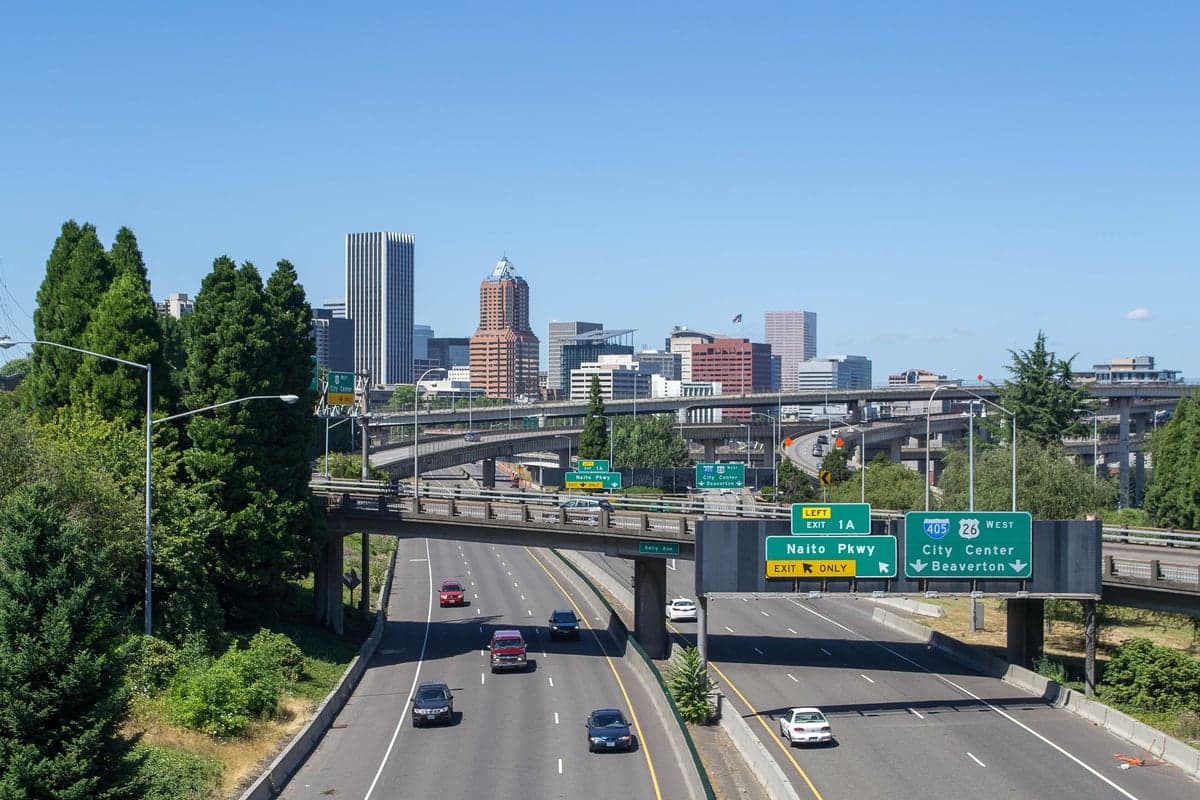
Photo: Wikipedia
Quality of Life in Multnomah County
A livable area that tracks near national norms for affordability, walkability, and neighborhood health.
What does Quality of Life tell us?
Quality of Life measures an area by evaluating factors like cost of living, nearby amenities, country club access, airport proximity, socioeconomic signals and neighborhood character. For large states, this is a general average — quality of life can vary dramatically between metro areas, suburbs, and rural communities within the same state.
What does this tell us?
Quality of Life measures an area by evaluating factors like cost of living, nearby amenities, country club access, airport proximity, socioeconomic signals and neighborhood character. For large states, this is a general average — quality of life can vary dramatically between metro areas, suburbs, and rural communities within the same state.
Cost of Living
57% above national average
57%
The Real Cost of Living in Multnomah County for 2026
| Tier | Individual | Family (4) |
|---|---|---|
| Survival | $25k | $47k |
| Comfortable | $103k | $151k |
| Luxury | $156k+ | $241k+ |
| Elite (Top 5%) | $196k+ | $304k+ |
Quality-of-Life Analysis
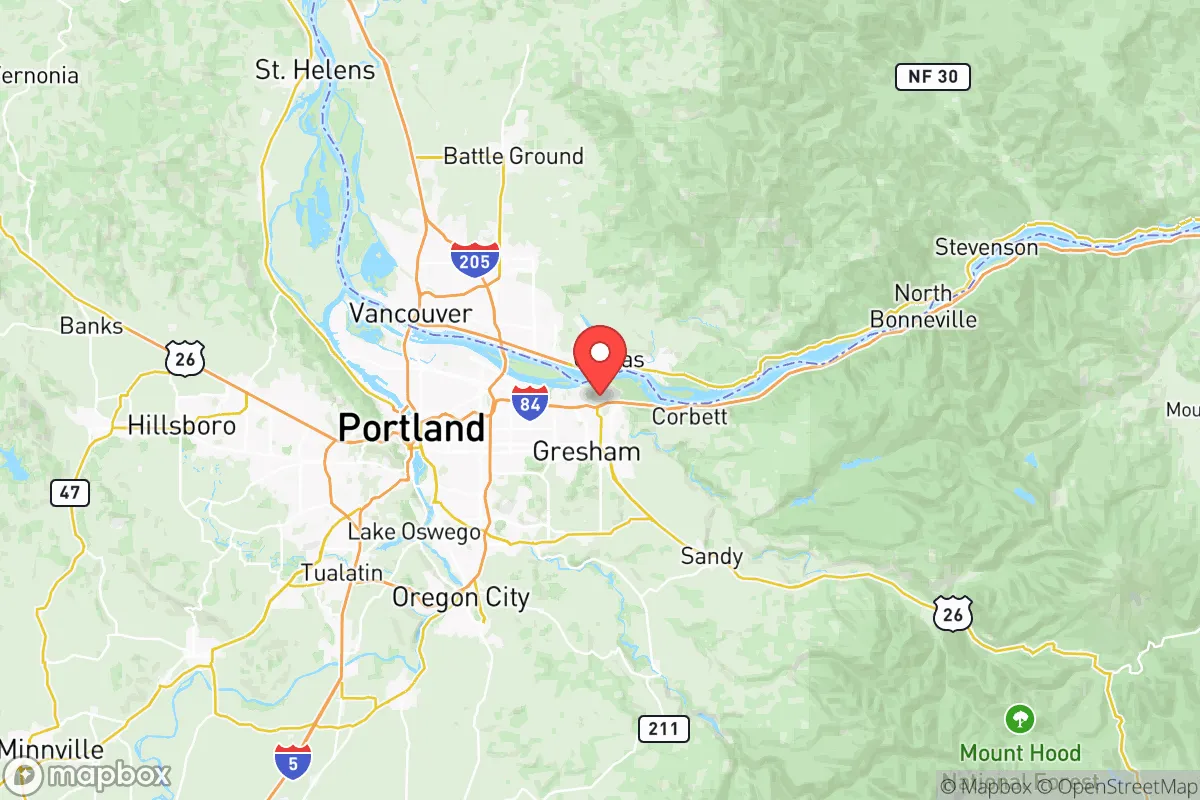
Multnomah County, Oregon, offers one of the most dramatic quality-of-life spectrums in the Pacific Northwest, ranging from the dense, transit-oriented core of Portland to the rural farmlands and Columbia River communities east of the city. The county draws a broad mix of residents: young professionals and creatives gravitate to Portland’s walkable neighborhoods, families and commuters seek more space in suburbs like Gresham, and those wanting a quieter, land-based lifestyle settle in unincorporated areas like Corbett or the small town of Fairview. This diversity means the county’s character shifts noticeably within a 30-minute drive.
Largest town(s) & population centers
Portland is the county’s dominant population center, home to roughly 650,000 residents and the region’s economic and cultural hub. Daily life here is defined by walkable neighborhoods, a robust public transit system (TriMet MAX light rail and buses), and a high concentration of restaurants, breweries, and arts venues. The city’s west side, including the Pearl District and Northwest, features high-density living with rents often exceeding $2,000 for a one-bedroom, while eastside neighborhoods like Hawthorne and Alberta offer a more eclectic, car-optional lifestyle. Gresham, the county’s second-largest city with about 110,000 residents, provides a more suburban experience with larger single-family homes, big-box retail, and direct MAX light rail access to downtown Portland in about 40 minutes. Life in Gresham is quieter and more family-oriented, with Mount Hood visible to the east and the Springwater Corridor trail popular for cycling and walking.
Smaller towns & rural pockets
East of Gresham, the county transitions into smaller communities and unincorporated rural areas. Troutdale, with a population around 16,000, sits at the gateway to the Columbia River Gorge and offers a small-town feel with historic downtown shops and easy access to hiking at the Sandy River Delta. Fairview, a compact city of about 10,000, is known for its affordable housing stock and the 200-acre Blue Lake Park, a popular spot for swimming and picnics. Further east, Corbett is an unincorporated rural community perched on the bluffs above the Columbia River, where residents live on acreage with sweeping gorge views and commute 30–40 minutes to Portland. The Columbia River Gorge National Scenic Area itself, while not a town, contains scattered homes and farms that represent the county’s most remote living option, with no public water or sewer and a strong reliance on private wells and septic systems.
Cost & lifestyle range
The cost of living across Multnomah County varies sharply by location. The county-wide cost-of-living index of 157 (100 = U.S. average) reflects Portland’s high housing costs, but that number masks a wide spread. In Portland’s inner neighborhoods, median home values exceed $600,000 and median rents hover around $1,800, while in Gresham and Troutdale, median home values drop closer to $450,000 and rents average $1,400. The countywide median home value of $528,000 and median rent of $1,582 are thus most representative of the middle-ring suburbs. At the low end, Fairview and parts of east Gresham offer the most affordable housing, with some homes under $400,000. At the high end, Portland’s West Hills and the Corbett area command premium prices for views and land. The average commute of 25 minutes is manageable for most residents, though those commuting from Corbett or far east Gresham into downtown Portland should budget 35–45 minutes each way. Amenities also scale: Portland offers world-class dining, music venues, and professional sports, while smaller towns provide basic grocery stores, local diners, and parks but require a drive for specialized shopping or healthcare.
Multnomah County best suits people who value proximity to urban energy but want the option to step away into quieter, greener surroundings. Young professionals and creatives will find Portland’s density and culture unmatched in the state, while families and outdoor enthusiasts can stretch their housing budget in Gresham, Troutdale, or Corbett and still be within 30 minutes of both downtown jobs and the Columbia Gorge’s hiking trails. The county’s range means that whether you need a walkable city loft or a five-acre farmstead, there is a specific place within its borders that fits.

Crime in Multnomah County
Crime rates similar to the national median for U.S. locations.
Violent CrimeViolent Crime Analysis
Property CrimeProperty Crime Analysis
Crime Analysis
Multnomah County, Oregon, presents a complex safety landscape where property crime rates significantly exceed both state and national averages, while violent crime remains closer to the national norm. The county, which encompasses Portland, Gresham, and several smaller communities, recorded a violent crime rate of 309.1 per 100,000 residents and a property crime rate of 2,123.5 per 100,000 in the most recent reporting period. These figures reflect the challenges of a large urban jurisdiction with a progressive criminal justice philosophy that has drawn both local and national attention.
Crime in context
Multnomah County’s violent crime rate of 309.1 per 100,000 is slightly below the national average of approximately 380 per 100,000 but notably higher than the Oregon state average of roughly 280 per 100,000. The property crime rate of 2,123.5 per 100,000, however, is a stark outlier — it is nearly double the national average of about 1,950 per 100,000 and significantly above the Oregon state average of roughly 2,400 per 100,000. This disparity is driven overwhelmingly by theft and motor vehicle theft, which have surged in Portland and its suburbs since 2020. The county’s progressive District Attorney, Mike Schmidt (elected in 2020 on a reform platform), has implemented policies that deprioritize prosecution for certain property crimes and drug offenses, a approach that critics argue has emboldened repeat offenders. In contrast, neighboring Clackamas and Washington counties, which maintain more traditional prosecutorial stances, report property crime rates roughly 30-40% lower than Multnomah’s.
What residents experience
For residents, the most visible manifestation of Multnomah County’s crime problem is property crime. Car break-ins, catalytic converter thefts, and package thefts are daily occurrences in many neighborhoods, particularly in Portland’s central city and along transit corridors. Gresham, the county’s second-largest city, has seen a notable uptick in property crime, with rates approaching 2,500 per 100,000 in some precincts. Troutdale and Fairview, smaller communities east of Portland, report somewhat lower property crime rates but still above state averages. Violent crime, while less common, is concentrated in specific areas: the Old Town/Chinatown district of Portland, parts of the Lents neighborhood, and sections of Gresham near the MAX light rail line. Homicides in Portland reached a record 92 in 2022, though they declined to 68 in 2024, still well above pre-2020 levels. The county’s approach to drug decriminalization (Measure 110, partially rolled back in 2024) has been linked by law enforcement to increased street-level disorder and opportunistic crime, particularly in downtown Portland and along the Interstate 205 corridor.
Neighborhood-level variation
Safety varies dramatically within Multnomah County. West Hills, Northwest Portland, and the Laurelhurst neighborhood consistently report the lowest crime rates in the county, with property crime rates often below 1,500 per 100,000. In contrast, the Hazelwood and Parkrose neighborhoods in east Portland, along with downtown Gresham, see property crime rates exceeding 3,000 per 100,000. The city of Maywood Park, a small enclave surrounded by Portland, benefits from its own police force and reports crime rates roughly half the county average. Suburban areas like the western slopes of the West Hills and the unincorporated areas near Corbett offer the safest environments, with violent crime rates below 100 per 100,000. Residents considering a move to Multnomah County should prioritize neighborhood-level research, as the difference between a low-crime pocket and a high-crime corridor can be just a few blocks. The county’s progressive judicial philosophy, while intended to reduce incarceration, has created an environment where property crime is effectively normalized in many areas, making proactive safety measures — from secure parking to neighborhood watch programs — essential for daily life.
* Values derived from national, state, county, city and local statistics and may differ in a specific area. Last updated: 2026-06-12T09:29:35.000Z
Narrative content on this page is AI-generated and may contain mistakes. Verify any details that matter before acting on them.
ReloMaps may earn a commission from affiliate links at no extra cost to you.

