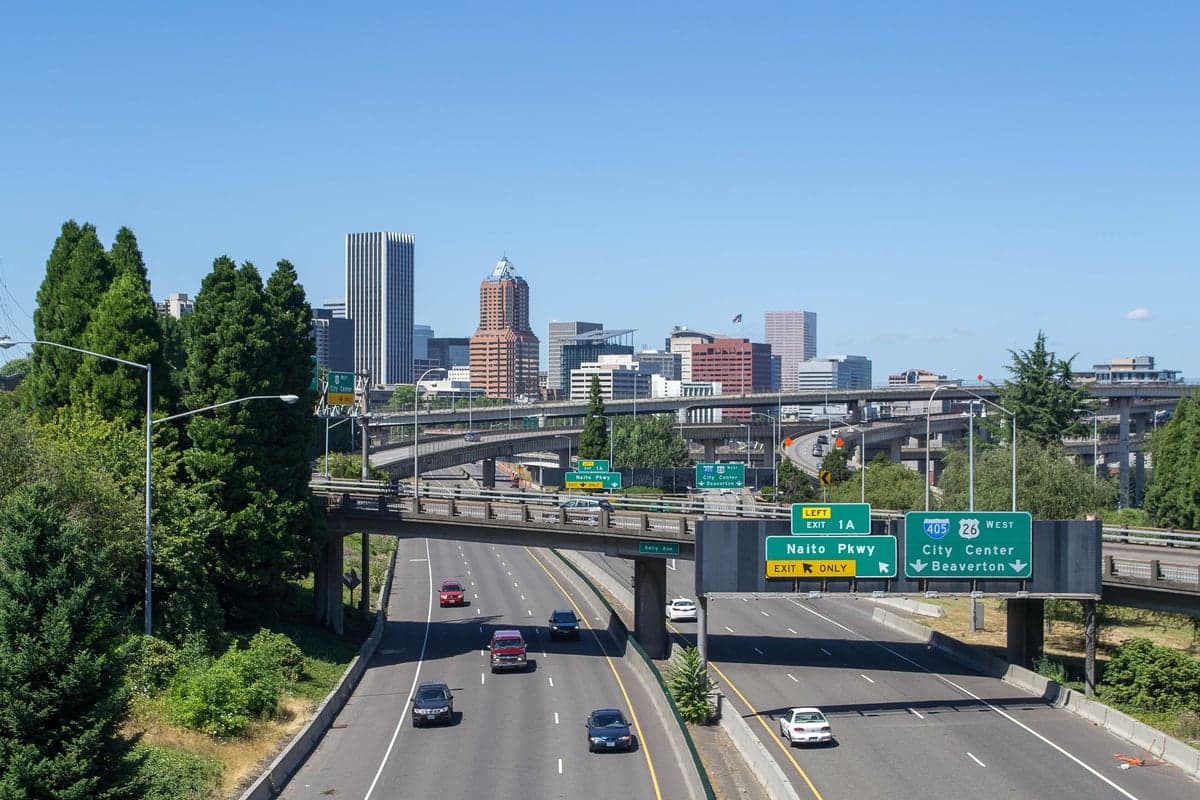
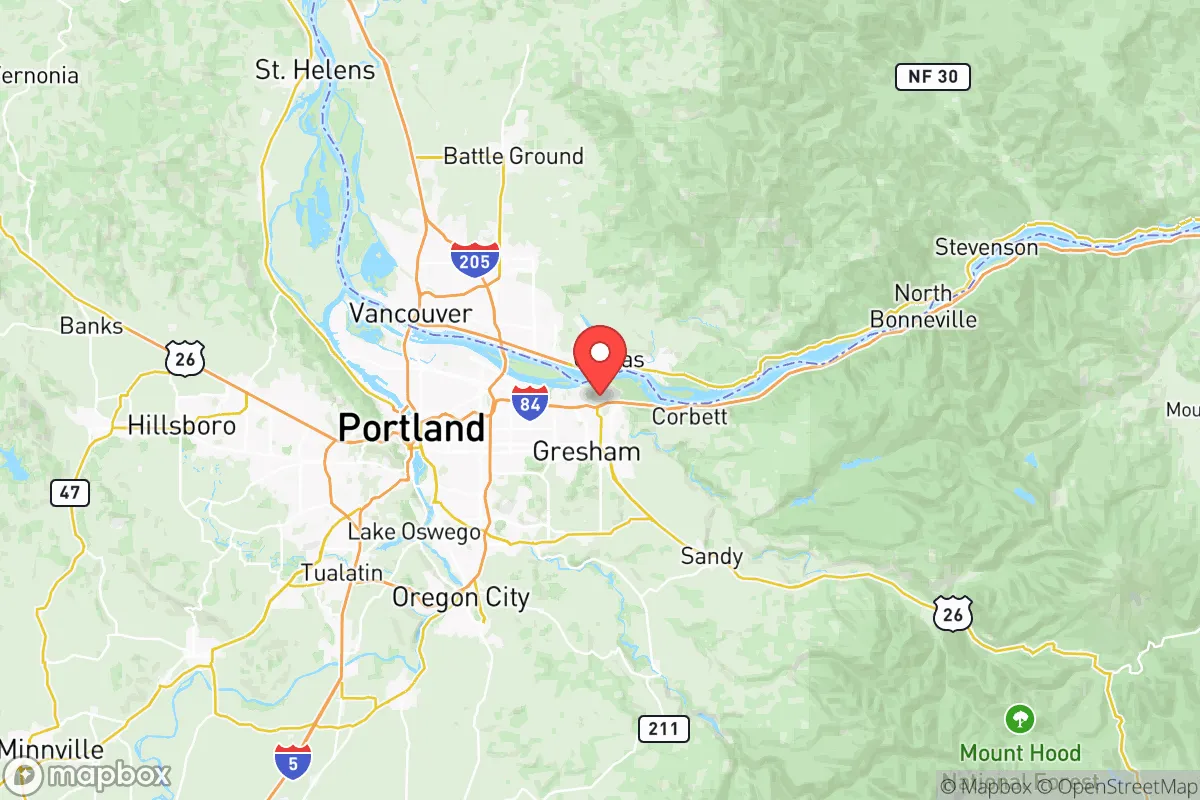
Photo: Wikipedia
Demographics of Multnomah County
Affluence Level in Multnomah County
A middle-class area roughly in line with national averages across income, home values, education, and employment.
People of Multnomah County
Multnomah County is home to 803,863 residents, making it Oregon’s most populous county and the urban heart of the Portland metropolitan area. Its population is notably white (66.2%) and college-educated (48.6%), with a foreign-born share of just 5.8%—well below the national average—giving it a distinctly native-born, Pacific Northwest character. The county’s identity is shaped by a history of successive waves: Native peoples, then Euro-American settlers drawn by land and timber, followed by 20th-century migrants from the American interior, and finally a modest but growing influx of Hispanic, East/Southeast Asian, and Indian communities.
Settlement & growth (pre-1960)
Long before European contact, the Multnomah area was home to the Multnomah people, a Chinookan-speaking tribe who lived in plank-house villages along the Columbia and Willamette rivers. Their primary settlement, known as Multnomah Village, sat near present-day Sauvie Island and the confluence of the Willamette and Columbia. The Lewis and Clark Expedition wintered at Fort Clatsop in 1805–1806 and recorded the Multnomah as a populous, trading-oriented people. By the 1830s, introduced diseases—particularly smallpox and malaria—had decimated the tribe, reducing their numbers from an estimated several thousand to fewer than 100 by the time Euro-American settlers arrived in force.
The first permanent Euro-American settlement began in the 1840s, driven by the Oregon Trail. Pioneers from the Midwest and Upper South—predominantly of English, Scots-Irish, and German stock—claimed Donation Land Claims along the Willamette Valley. The city of Portland was platted in 1845 on the Willamette’s west bank, and by 1850 it had become the region’s primary port and supply hub. The 1850 Donation Land Claim Act accelerated settlement, drawing families to what are now the neighborhoods of Portland’s West Hills, Gresham, and Troutdale. The county was formally created in 1854 from the western portion of Clackamas County, with Portland as its seat.
Through the late 19th and early 20th centuries, Multnomah County’s population grew steadily with domestic migration from the eastern United States. The completion of the transcontinental railroad to Portland in 1883 spurred a wave of Midwestern and Northern European immigrants—Germans, Scandinavians, and Irish—who settled in working-class neighborhoods like St. Johns and Alberta. The timber and shipping industries anchored the economy, and by 1900 Portland was the largest city in the Pacific Northwest. A smaller but notable wave of Black migrants arrived during World War I and the 1920s, drawn by shipbuilding and railroad jobs, settling primarily in the Albina neighborhood of North Portland. The Great Depression and Dust Bowl of the 1930s brought additional white migrants from the Plains states, many of whom found work in Portland’s expanding industrial base. By 1950, the county’s population had reached roughly 470,000, overwhelmingly white and native-born.
Modern era (post-1965)
The 1965 Hart-Cellar Act fundamentally altered U.S. immigration patterns, but Multnomah County’s foreign-born share remained low compared to gateway cities. The county’s modern demographic shifts have been driven more by domestic migration and suburbanization than by international immigration. The 1970s and 1980s saw a steady outflow of white families from Portland’s central city to suburbs like Beaverton, Hillsboro, and Gresham, a pattern common across the U.S. during the era of white flight. Meanwhile, the county’s Black population, which had concentrated in North Portland’s Albina district, began to disperse as urban renewal projects and rising property values displaced many residents to outer neighborhoods and suburbs.
Hispanic migration to Multnomah County accelerated in the 1990s and 2000s, driven by agricultural and construction jobs in the broader region. Today, Hispanic residents make up 13.1% of the county’s population, with significant concentrations in Portland’s Cully and Lents neighborhoods, as well as in Gresham and Troutdale. The community is predominantly of Mexican origin, with smaller numbers from Central America. East and Southeast Asian communities—comprising 6.8% of the population—include established Chinese and Japanese families dating to the 19th century, as well as more recent Vietnamese, Korean, and Filipino immigrants. The Old Town Chinatown neighborhood in Portland remains a historic anchor, though many Asian families now live in Beaverton and Hillsboro. The Indian subcontinent population is small (0.6%), concentrated among tech professionals in the western suburbs. The county’s Black population stands at 5.4%, with the largest concentrations in North Portland and Gresham.
Since 2000, Multnomah County has experienced a significant influx of domestic migrants from California, drawn by lower housing costs (historically) and Portland’s cultural reputation. This wave has been predominantly white and college-educated, accelerating the county’s gentrification and pushing long-term residents—particularly Black and working-class white families—to outer suburbs like Fairview and Wood Village. The county’s overall racial composition has shifted modestly: the white share declined from roughly 79% in 2000 to 66.2% in 2024, while the Hispanic share rose from 7% to 13.1% over the same period.
The future
Multnomah County is projected to become slightly more diverse over the next 10–20 years, but the pace of change is slow compared to the U.S. as a whole. The white population share is expected to continue declining gradually, while Hispanic and East/Southeast Asian shares will rise modestly. The Indian subcontinent population, though small, is likely to grow as tech employment in the Portland metro expands. The county’s low foreign-born share (5.8%) means that diversity gains will come primarily from domestic migration and natural increase among existing minority populations, not from large-scale immigration.
Suburbanization will continue to reshape where people live. Gresham and Troutdale in eastern Multnomah County are absorbing much of the county’s Hispanic and Black growth, while the western suburbs of Washington County—notably Beaverton and Hillsboro—attract Asian and Indian professionals. Portland’s central city is likely to remain predominantly white and highly educated, with rising housing costs pushing lower-income and minority residents outward. The county’s cultural identity will remain distinctly Pacific Northwest: progressive, environmentally conscious, and shaped by a native-born majority that values localism and outdoor recreation.
For someone moving into Multnomah County now, the region offers a highly educated, predominantly white urban core with growing Hispanic and Asian communities in the suburbs. The population is stable in size but shifting in distribution, with the most affordable housing and fastest diversification occurring east of Portland in Gresham and Troutdale. The county’s future is one of gradual demographic change within a firmly established cultural framework—a place where newcomers will find a well-defined local identity rather than a melting pot.

* Values derived from national, state, county, city and local statistics and may differ in a specific area. Last updated: 2026-06-12T09:29:35.000Z
Narrative content on this page is AI-generated and may contain mistakes. Verify any details that matter before acting on them.
ReloMaps may earn a commission from affiliate links at no extra cost to you.

