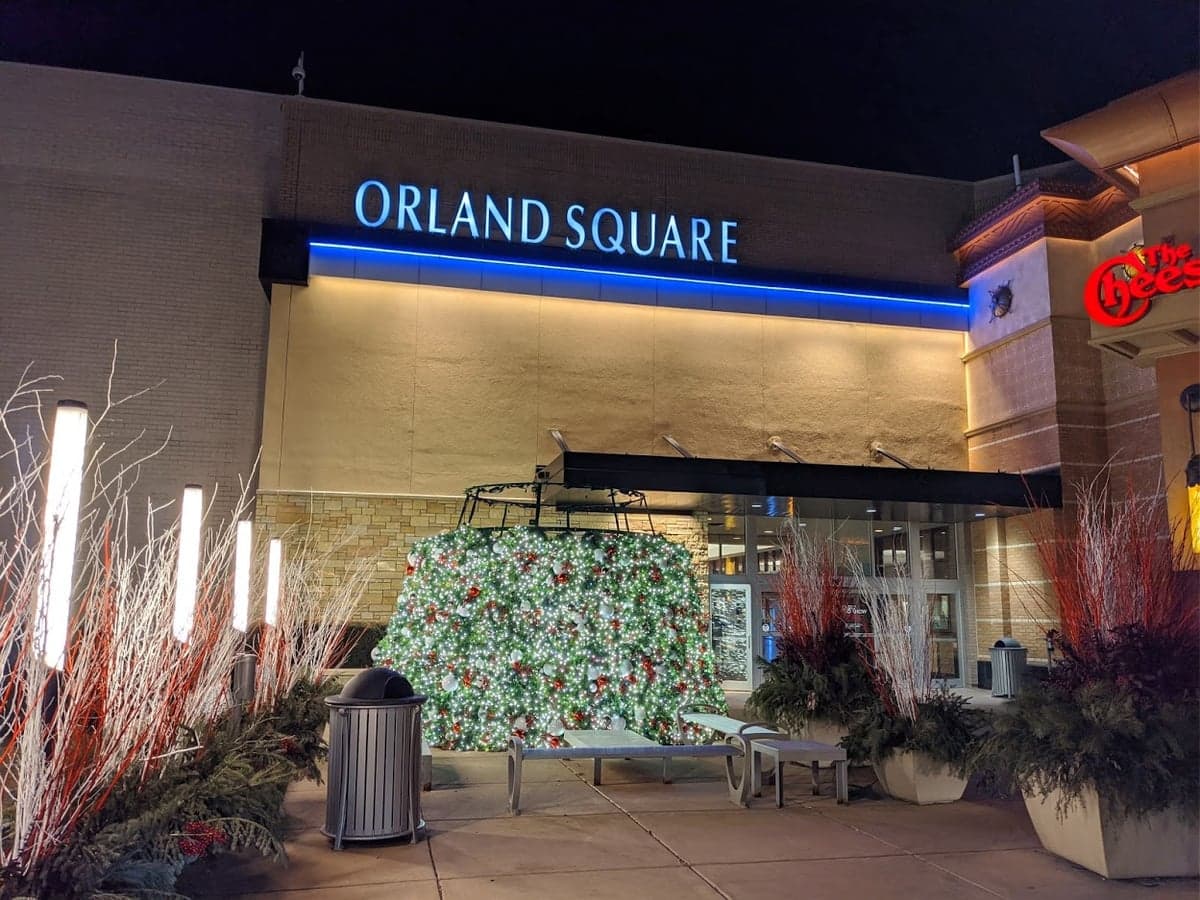
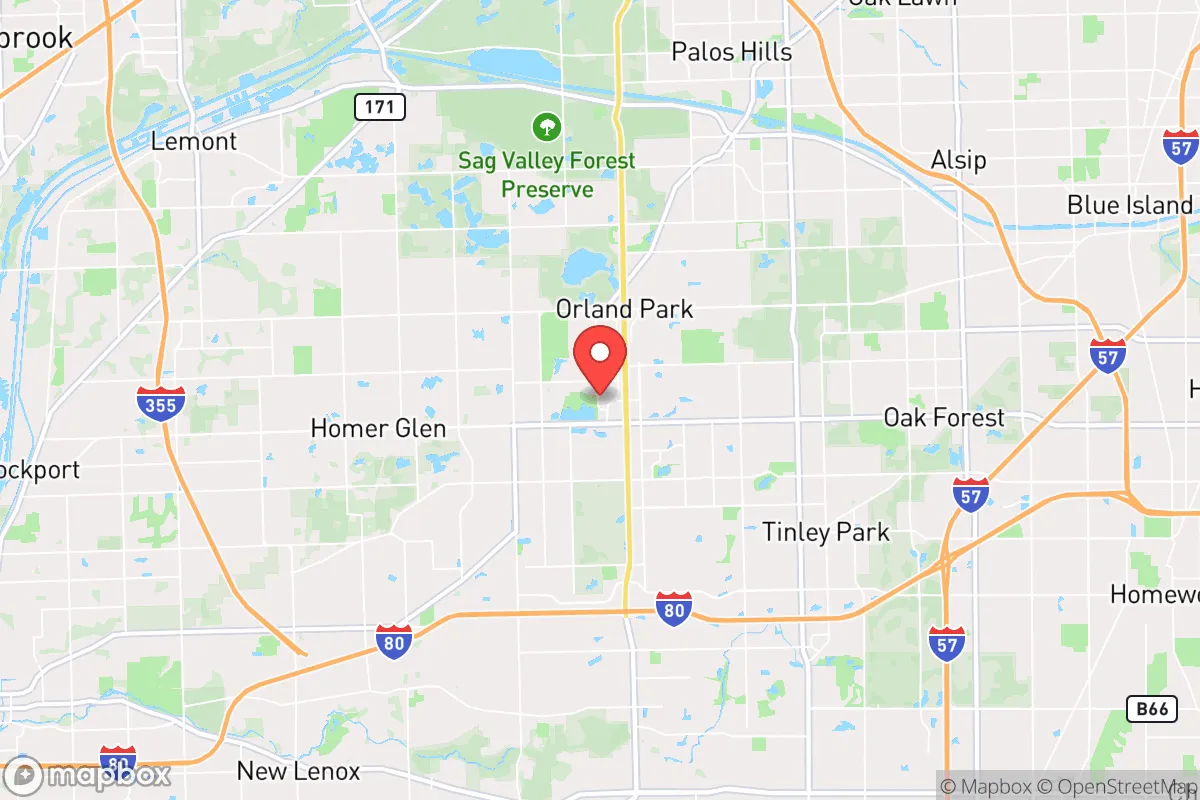
Photo: Wikipedia
Demographics of Orland Park, IL
Affluence Level in Orland Park, IL
A middle-class area roughly in line with national averages across income, home values, education, and employment.
People of Orland Park, IL
Orland Park, Illinois, is a predominantly white, upper-middle-class suburb of Chicago with a population of 57,961, where 79.4% of residents identify as white and 45.0% hold a college degree. The city is characterized by its family-oriented, conservative-leaning atmosphere, with a notably low foreign-born population of just 3.7% and a growing Hispanic community at 9.1%. Distinct identity markers include a strong sense of local community centered around the Orland Park Crossing shopping district and a population that skews older and more established than neighboring suburbs like Tinley Park or Oak Lawn. The city’s people are largely the product of successive waves of European-ethnic settlement, followed by a more recent, modest diversification that has not fundamentally altered its core demographic character.
How the city was settled and grew
Orland Park’s original population was drawn by the arrival of the Chicago, Rock Island and Pacific Railroad in the 1880s, which transformed a sparse farming hamlet into a commuter stop for Chicago’s growing industrial workforce. The earliest settlers were primarily of German and Irish descent, with a smaller contingent of Dutch farmers, who built the first homes along what is now Ravinia Avenue and near the historic Orland Park Village Center around 135th Street. These groups established the town’s foundational character: a tight-knit, Catholic-influenced community of tradesmen and small business owners. Through the early 20th century, the population remained small and homogeneous, with the 1950 census recording fewer than 2,000 residents, most of whom lived in the original downtown grid and the surrounding Lake Hills subdivision, which was developed for returning WWII veterans.
Modern era (post-1965)
The post-1965 era brought explosive growth as Orland Park became a prime destination for white ethnic families leaving Chicago’s southwest side neighborhoods like Beverly and Mount Greenwood. The construction of Interstate 80 and the expansion of 143rd Street opened vast tracts of land for development, and the population surged from 6,000 in 1970 to over 50,000 by 2000. This wave was overwhelmingly white and of Irish, Polish, and Italian ancestry, settling into planned subdivisions like Orland Hills and Silver Lake, which offered large single-family homes and top-rated schools. The 1990s and 2000s saw a modest influx of East/Southeast Asian families (now 2.8% of the population) and Indian-subcontinent families (now 3.2%), who concentrated in newer developments near Centennial Park and along the 159th Street corridor, drawn by the area’s reputation for safety and strong public schools. The Hispanic population, now 9.1%, grew steadily from the 2000s onward, settling primarily in the Westgate neighborhood and the more affordable apartment complexes near LaGrange Road, though the city’s overall foreign-born share remains very low at 3.7%.
The future
The population of Orland Park is slowly diversifying but is not homogenizing; instead, distinct enclaves are emerging. The white, European-ethnic majority is aging in place, with many younger families moving to more affordable exurbs like Manhattan or Frankfort. The Hispanic share is projected to rise to 12-14% by 2035, driven by natural increase and continued in-migration from Chicago’s southwest side, while the Indian and East/Southeast Asian communities are likely to plateau or grow slowly as they assimilate into the broader suburban middle class. The Black population, at 3.7%, is expected to remain stable, concentrated in the Orland Park Manor area. The city is not tribalizing into hostile camps, but it is becoming a patchwork of distinct ethnic neighborhoods rather than a fully integrated melting pot. For a newcomer, this means choosing a neighborhood that aligns with one’s own background and lifestyle preferences.
Orland Park is becoming a more diverse but still predominantly white, conservative suburb where demographic change is gradual and largely contained within specific subdivisions. For a family or individual moving in now, the city offers a stable, low-crime environment with strong schools, but the social fabric remains rooted in its European-ethnic past, with newer groups carving out their own spaces rather than blending into a single identity. The bottom line: Orland Park is a place where tradition and incremental change coexist, making it a safe bet for those seeking a predictable, family-oriented community with a slowly broadening cultural landscape.

* Values derived from national, state, county, city and local statistics and may differ in a specific area. Last updated: 2026-04-23T12:19:05.000Z
Narrative content on this page is AI-generated and may contain mistakes. Verify any details that matter before acting on them.
ReloMaps may earn a commission from affiliate links at no extra cost to you.

