
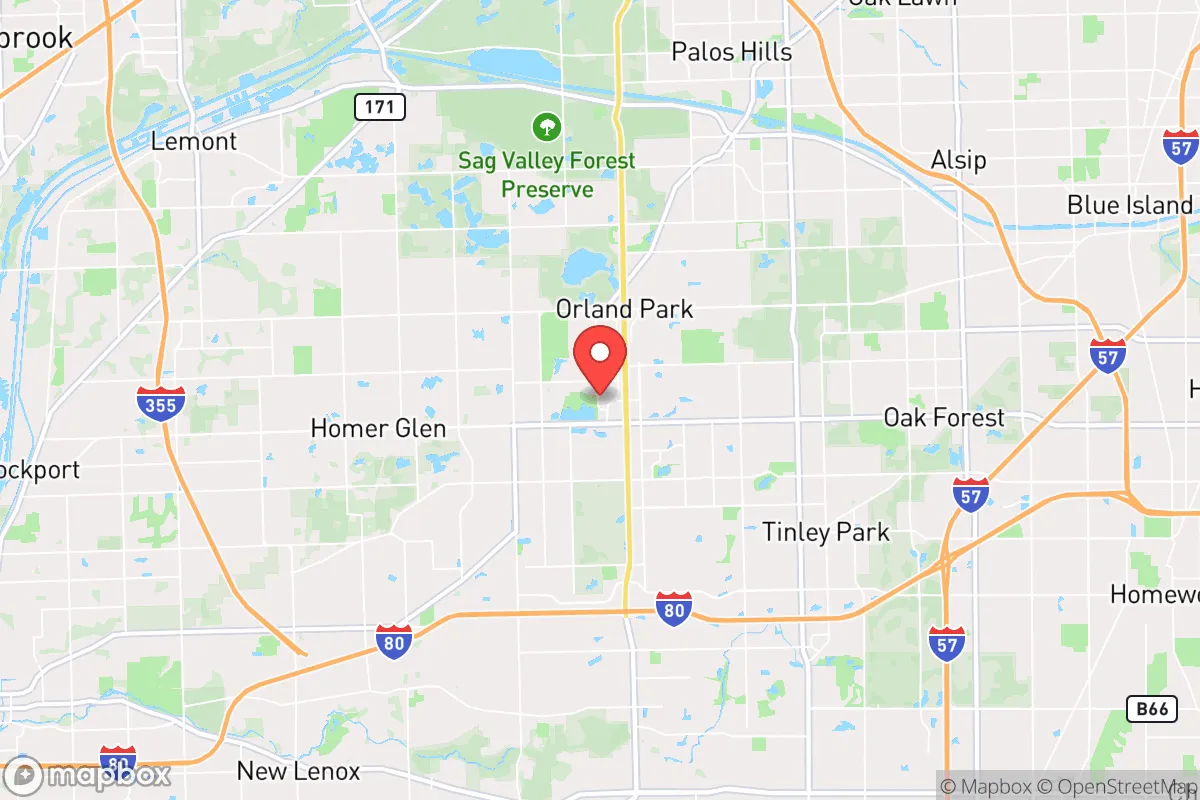
Photo: Wikipedia
Quality of Life in Orland Park, IL
Above-average quality of iife. The area offers a reasonable cost of living, decent mobility, and a mix of neighborhood amenities.
What does Quality of Life tell us?
Quality of Life blends cost of living, nearby amenities, socioeconomic signals, and neighborhood character. City-level scores represent the whole municipality; individual neighborhoods can differ.
What does this tell us?
Quality of Life blends cost of living, nearby amenities, socioeconomic signals, and neighborhood character. City-level scores represent the whole municipality; individual neighborhoods can differ.
Cost of Living
23% above national average
The Real Cost of Living in Orland Park, IL for 2026
| Tier | Individual | Family (4) |
|---|---|---|
| Survival | $23k | $42k |
| Comfortable | $68k | $100k |
| Luxury | $165k+ | $256k+ |
| Elite (Top 5%) | $194k+ | $301k+ |
99%
The Area Signal
A metric tracking the socioeconomic signals of the area.
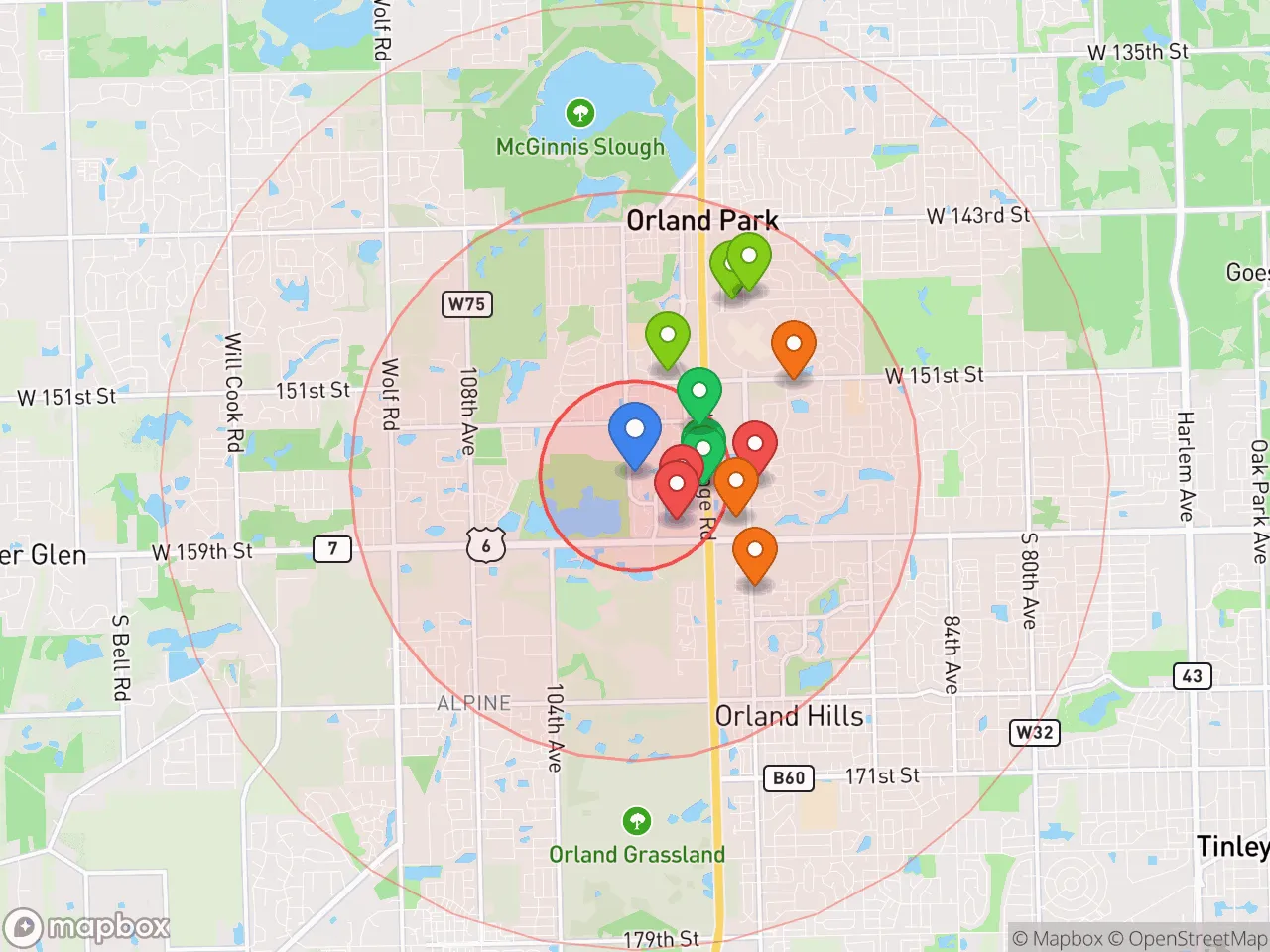
Hobbies
Explore the areaGroceries
9 within 10 miles
Gas
20 within 10 miles
Hospital
20 within 20 miles
Airport
MDW — Midway International
Post Office
USPS — Orland Park, IL
Critical Amenities
Quality-of-Life Analysis
Orland Park, Illinois, is an affluent southwest Chicago suburb where the cost of living index of 123 (23% above the national average) reflects its status as a sought-after community for families and professionals seeking a balance of suburban space and city access. The village's population of roughly 58,000 is characterized by a high proportion of college-educated homeowners, many of whom commute to Chicago or work in the region's growing healthcare and retail sectors. Median household incomes consistently exceed $80,000, supporting a lifestyle centered on well-funded schools, extensive park districts, and a robust local retail economy anchored by the Orland Square Mall.
Cost of living, housing prices, and how Orland Park compares to nearby suburbs
Housing is the primary driver of Orland Park's above-average cost of living. The median home value of $349,400 is significantly higher than the national median but remains competitive with other top-tier southwest suburbs like Tinley Park (median ~$330,000) and is notably less expensive than near-north suburbs such as Evanston or Arlington Heights. Renters face a median rent of $1,415, which is roughly 10-15% higher than in neighboring Mokena or Frankfort but still below Chicago city averages. The trade-off for these costs is a housing stock dominated by single-family homes on larger lots, many built between 1980 and 2000, with newer developments concentrated near 143rd Street. Property taxes in Cook County are a significant factor—typically 2.0% to 2.5% of assessed value—which adds roughly $7,000 to $8,700 annually to the cost of ownership, a reality that pushes some buyers toward adjacent Will County communities.
Schools, parks, and the daily rhythm of life in Orland Park
Daily life in Orland Park revolves around its highly rated public schools, particularly those in Consolidated High School District 230 (Carl Sandburg High School) and Orland School District 135, both of which consistently rank among the top in Cook County for test scores and college readiness. The village's park district manages over 30 parks, the standout being the 200-acre Centennial Park with its water park, sledding hill, and extensive sports fields. Commuting is the most notable friction point: the average commute time of 33.7 minutes is longer than the national average, driven by the 25-mile drive to downtown Chicago via I-57 or the Metra Rock Island District line from the 143rd Street station. For daily errands, residents rely on the Orland Park Crossing and Orland Square retail corridor, which offers everything from national big-box stores to local restaurants, while the nearby Palos Forest Preserves provide immediate access to hiking and biking trails that feel far removed from suburban density.
Orland Park is best suited for families and long-term homeowners who prioritize school quality, low crime rates, and access to outdoor recreation over urban nightlife or ultra-short commutes. Empty-nesters and retirees also find the village appealing due to its active adult communities and proximity to Silver Cross Hospital in New Lenox. Professionals working in Chicago's Loop or the I-88 tech corridor will need to budget for the commute, but the combination of strong property values, top-tier schools, and a self-contained retail and dining scene makes Orland Park a stable, predictable choice for those who can absorb its higher cost of living.

Crime in Orland Park, IL
Lower crime rates than 91% of comparable U.S. locations.
Violent CrimeViolent Crime Analysis
Property CrimeProperty Crime Analysis
Crime Analysis
Orland Park, Illinois, is a notably safe southwest Chicago suburb where violent crime rates are dramatically lower than both state and national averages, though property crime rates align more closely with typical suburban figures. With a violent crime rate of just 8.6 incidents per 100,000 residents, Orland Park is significantly safer than the national average of roughly 380 per 100,000 and the Illinois state average of approximately 440 per 100,000. This places the village among the safest communities in Cook County for violent offenses, a fact that consistently draws families and retirees to the area.
Crime in context
Orland Park’s property crime rate stands at 993.2 per 100,000 residents, which is lower than the national average of roughly 1,950 per 100,000 but slightly above the Illinois state average of approximately 1,800 per 100,000. The majority of these property crimes are thefts and vehicle break-ins, often concentrated near the Orland Square Mall and along the LaGrange Road commercial corridor. While these numbers are manageable, residents should note that Orland Park is part of Cook County, which has been governed by progressive prosecutors and judges who prioritize diversion programs and reduced sentencing for property and drug offenses. This judicial philosophy, while intended to reduce incarceration, has been criticized for contributing to repeat property crimes and a perception that offenders face minimal consequences, potentially emboldening criminal activity in the broader metro area.
What residents experience
Daily life in Orland Park feels very safe, with most violent crime being extremely rare and typically involving domestic incidents or isolated disputes rather than random attacks. The Orland Park Police Department maintains a strong community presence, with proactive patrols and a well-regarded crime prevention unit that hosts neighborhood watch training and safety seminars. However, residents should remain vigilant about property crime, particularly package thefts from front porches and unlocked car burglaries, which are common in many suburban communities. The village’s location near Interstate 80 and Interstate 57 also means transient criminals from Chicago and Joliet occasionally target the area, a pattern seen across many outer-ring suburbs of large metro regions.
Neighborhood-level variation
Safety in Orland Park is relatively uniform across its neighborhoods, but some variation exists. The area west of LaGrange Road, including the Lake Hills and Orland Hills subdivisions, tends to have the lowest crime rates, with many blocks reporting zero incidents annually. The area immediately surrounding Orland Square Mall and the 143rd Street corridor sees higher property crime volumes, particularly during holiday shopping seasons. The village’s newer developments near 179th Street and Will-Cook Road also report very low crime, benefiting from modern street lighting and limited through-traffic. Overall, Orland Park’s crime profile is excellent for a suburb of 58,000 people, though the progressive criminal justice policies of Cook County remain a legitimate concern for residents who prioritize strict enforcement and victim-centered outcomes.
* Values derived from national, state, county, city and local statistics and may differ in a specific area. Last updated: 2026-04-23T12:19:05.000Z
Narrative content on this page is AI-generated and may contain mistakes. Verify any details that matter before acting on them.
ReloMaps may earn a commission from affiliate links at no extra cost to you.

