Photo: Wikipedia
Personal Sovereignty in Orleans, VT
Moderate friction. Expect trade-offs in some aspect of personal liberty and independence.
What does Personal Sovereignty tell us?
Personal Sovereignty measures your capacity for self-reliance and independence with minimal government friction. Higher scores mean fewer barriers between you and the way you want to live... but it assumes you have the space you need and good neighbors.
What does this tell us?
Personal Sovereignty measures your capacity for self-reliance and independence with minimal government friction. Higher scores mean fewer barriers between you and the way you want to live... but it assumes you have the space you need and good neighbors.
State Policy
Energy independence: Importer (15% of energy produced in-state)
Personal Liberty
Homesteading

Personal Liberty Analysis
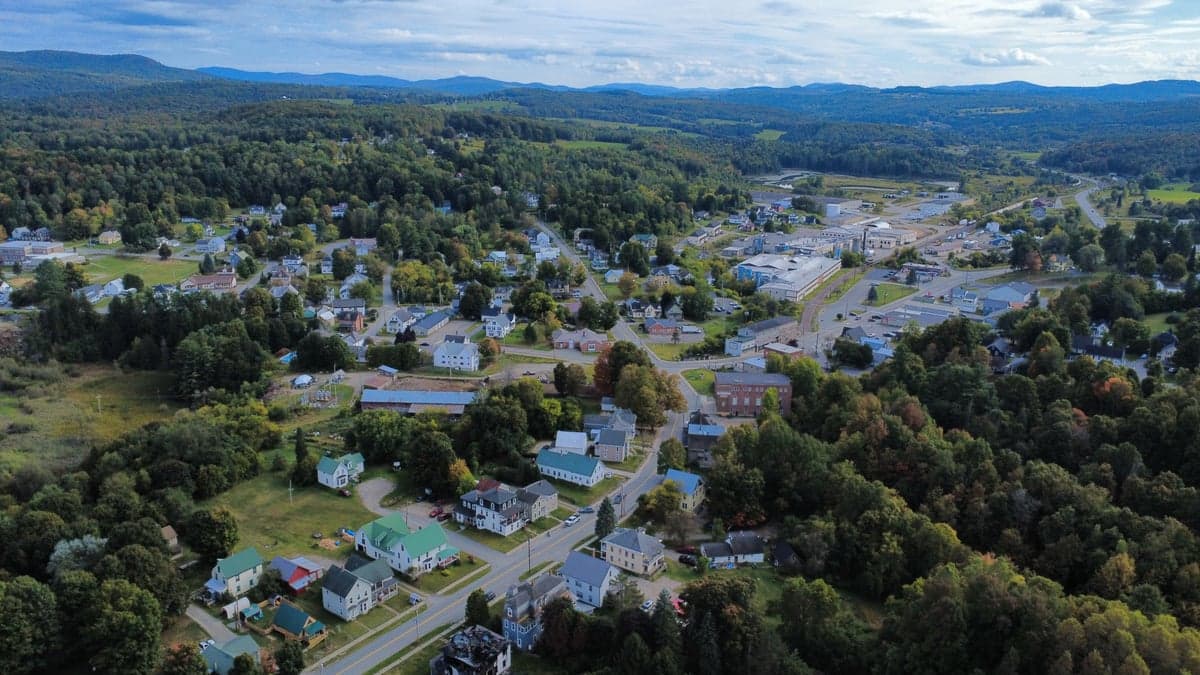
Orleans, Vermont, offers a mixed bag for those prioritizing personal sovereignty, with the state’s progressive lean creating a regulatory environment that can feel restrictive to conservative-leaning individuals and preppers. While the town itself retains a rural, independent character—rooted in its agricultural history and small-scale commerce—the overarching influence of Montpelier imposes significant constraints on gun rights, medical autonomy, and property use. For a survivalist or parent seeking maximum freedom from government overreach, Orleans requires careful navigation: the local culture supports self-reliance, but state laws often undercut it, making this a location where personal sovereignty is earned through strategic compliance and community networks rather than guaranteed by statute.
Tax burden and regulatory posture: How Vermont’s policies affect your wallet and freedom
Vermont’s tax burden is among the highest in the nation, and Orleans residents feel this acutely. The state levies a progressive income tax with rates topping out at 8.75% on income over $213,150 (2025), plus a sales tax of 6% that exempts groceries but hits most other purchases. Property taxes are particularly steep—averaging around 1.8% of assessed value in Orleans County, which can strain a fixed-income prepper’s budget. The regulatory posture is equally heavy: Act 250, Vermont’s land-use law, imposes strict permitting on any development that affects 10+ acres or involves subdivision, often delaying or blocking homesteading projects. For those looking to build a self-sufficient compound, this means months of paperwork and potential legal fees. The state’s environmental regulations also restrict off-grid systems—solar panels are allowed, but net metering rules cap system size, and composting toilets require specific approvals. In short, the tax and regulatory climate in Orleans demands a higher financial and bureaucratic cost for autonomy than in less-regulated states like New Hampshire or Maine.
Self-defense and gun law specifics: What you can and cannot own in Orleans
Vermont’s gun laws have tightened significantly in recent years, eroding the state’s historic reputation for firearm freedom. While Orleans County remains a Second Amendment stronghold culturally, state law now mandates universal background checks for all firearm sales, including private transfers—a direct hit to the private-sale autonomy many preppers value. Magazine capacity is restricted to 10 rounds for long guns and 15 for handguns, limiting the effectiveness of defensive setups. “Red flag” laws (Extreme Risk Protection Orders) allow authorities to seize firearms based on a complaint, with no criminal conviction required, which raises concerns about due process. Concealed carry is still permitless for residents 18 and older, but open carry is increasingly stigmatized in public spaces. For survivalists, the practical takeaway is that building a robust armory requires out-of-state purchases or trust-based private deals that skirt the law—a risky proposition. The local sheriff’s office in Orleans tends to be more lenient in enforcement, but state police are active, so compliance with registration and storage laws is essential to avoid legal jeopardy.
Self-reliance and homesteading viability: Lot sizes, zoning, and off-grid feasibility
Orleans’ rural zoning and available land make homesteading viable, but with caveats. Minimum lot sizes in unincorporated areas are typically 1-2 acres, though many parcels in the surrounding countryside are 5-20 acres, offering room for gardens, livestock, and small orchards. Zoning is generally permissive for agricultural use—chickens, goats, and even a few cows are standard—but any structure beyond a single-family home requires Act 250 review if it alters the landscape significantly. Off-grid living is legally tricky: Vermont requires connection to the electrical grid for new construction unless you can prove a “self-sufficient” system that meets state codes, which often means expensive battery banks and approved solar arrays. Rainwater collection is allowed for non-potable uses, but well water is the norm, and drilling a new well can cost $5,000-$15,000. Composting toilets are permitted under certain conditions, but septic systems must meet strict health regulations. For a prepper, the ideal approach is to buy an existing older home with grandfathered systems—these are common in Orleans—and gradually upgrade to off-grid capability while staying under the regulatory radar. The local climate (Zone 4b) supports cold-hardy crops like potatoes, kale, and apples, but the short growing season (120-140 days) limits year-round food production without a greenhouse.
Personal liberties: Parental rights, medical autonomy, speech, and property
Parental rights in Vermont are under pressure. The state mandates comprehensive sex education in public schools, including LGBTQ+ content, with no opt-out for parents who object on religious or moral grounds. Vaccine mandates for school attendance are strict—no philosophical exemptions, only medical—which can conflict with a parent’s desire for medical autonomy. Homeschooling is legal but requires annual notification and portfolio review, a level of oversight that some find intrusive. Medical autonomy is similarly constrained: Vermont has legalized assisted suicide and recreational marijuana, but it also enforces strict vaccine mandates for healthcare workers and has a state-run health exchange that limits private insurance options. Free speech protections are strong under the Vermont Constitution, but local ordinances in Orleans can restrict political signage or public gatherings, though enforcement is rare. Property rights are the most contentious area: Act 250 and local zoning boards have broad authority to deny permits for anything deemed “not in the public interest,” including off-grid cabins, workshops, or even large fences. For a survivalist, this means that owning land does not guarantee the right to use it as you see fit—every modification requires a paper trail. The overall environment is one of managed freedom: you can live quietly, but any visible deviation from the norm invites scrutiny.
Compared to other rural areas in the Northeast, Orleans offers a moderate level of personal sovereignty—better than Massachusetts or New York, but worse than New Hampshire or Maine. The local community’s independent spirit and the town’s distance from state enforcement provide a buffer, but the legal framework is stacked against the prepper mindset. For those willing to work within the system—buying older properties, building trust with neighbors, and staying low-key—Orleans can be a viable base for self-reliance. However, for individuals seeking maximum autonomy with minimal government interference, the trade-offs in taxes, gun laws, and regulatory hurdles may outweigh the benefits. The key is to view Orleans not as a sanctuary, but as a compromise: a place where personal sovereignty is possible, but only with constant vigilance and a willingness to adapt.

* Values derived from national, state, county, city and local statistics and may differ in a specific area. Last updated: 2026-04-19T08:47:47.000Z
Narrative content on this page is AI-generated and may contain mistakes. Verify any details that matter before acting on them.
ReloMaps may earn a commission from affiliate links at no extra cost to you.

