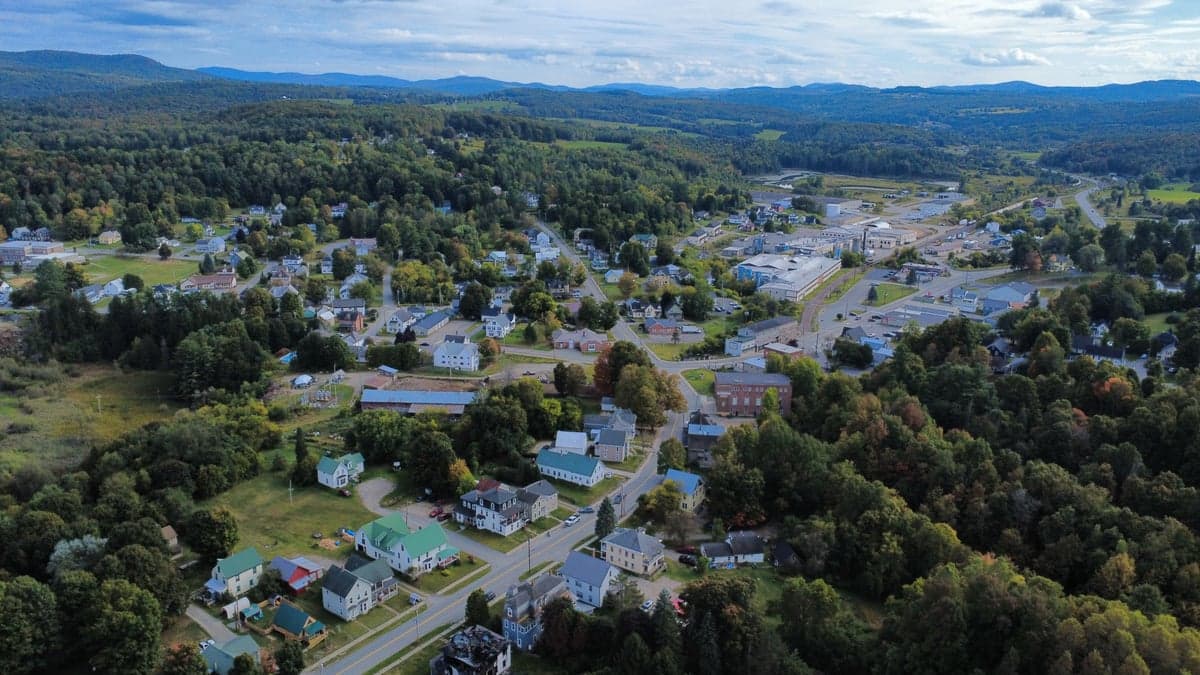
Photo: Wikipedia
Strategic Assessment of Orleans, VT
Meaningful friction. Expect exposure to either population pressure, blast zones, or natural disaster risk. Consider buying a retreat property.
What does the Strategic Assessment tell us?
Our Strategic Assessment grades tactical survivability of an area. Major population centers, military targets, fallout zones, natural disasters, and border exposure all drive risk — lower exposure means a more defensible position in a crisis.
This is heavily inspired by Joel Skousen's Strategic Relocation book. Highly recommended you checkout the book ($)What does this tell us?
Our Strategic Assessment grades tactical survivability of an area. Major population centers, military targets, fallout zones, natural disasters, and border exposure all drive risk — lower exposure means a more defensible position in a crisis.
This is heavily inspired by Joel Skousen's Strategic Relocation book. Highly recommended you checkout the book ($)Strategic Pillars

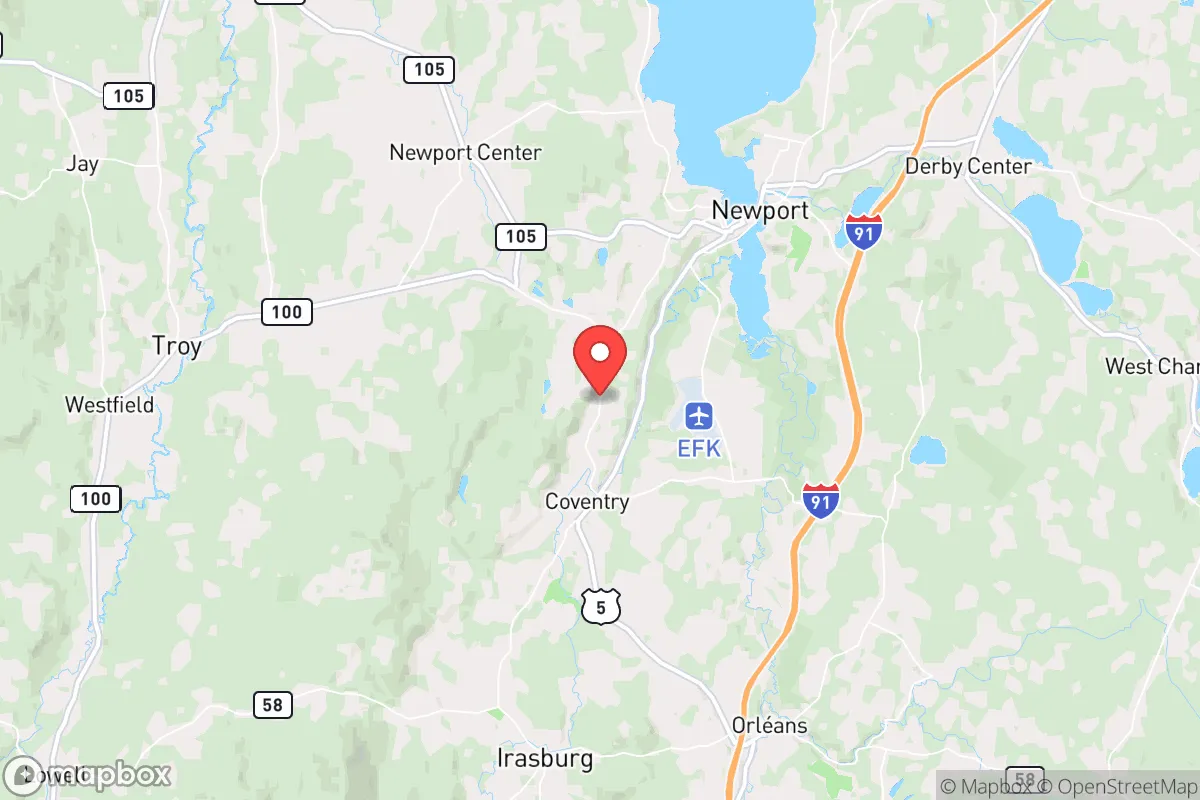
Key Distances
Regional Safe Places
Below is our recommended "safe zones" in Vermont and the surrounding area based on our strategic heuristics. For most people, it's unrealistic to live in a “safe zone” full-time due to work, family or other personal reasons. They tend to be more rural. However, many of these areas are perfect for second homes and retreat properties that double as a vacation home or even a short-term rental.
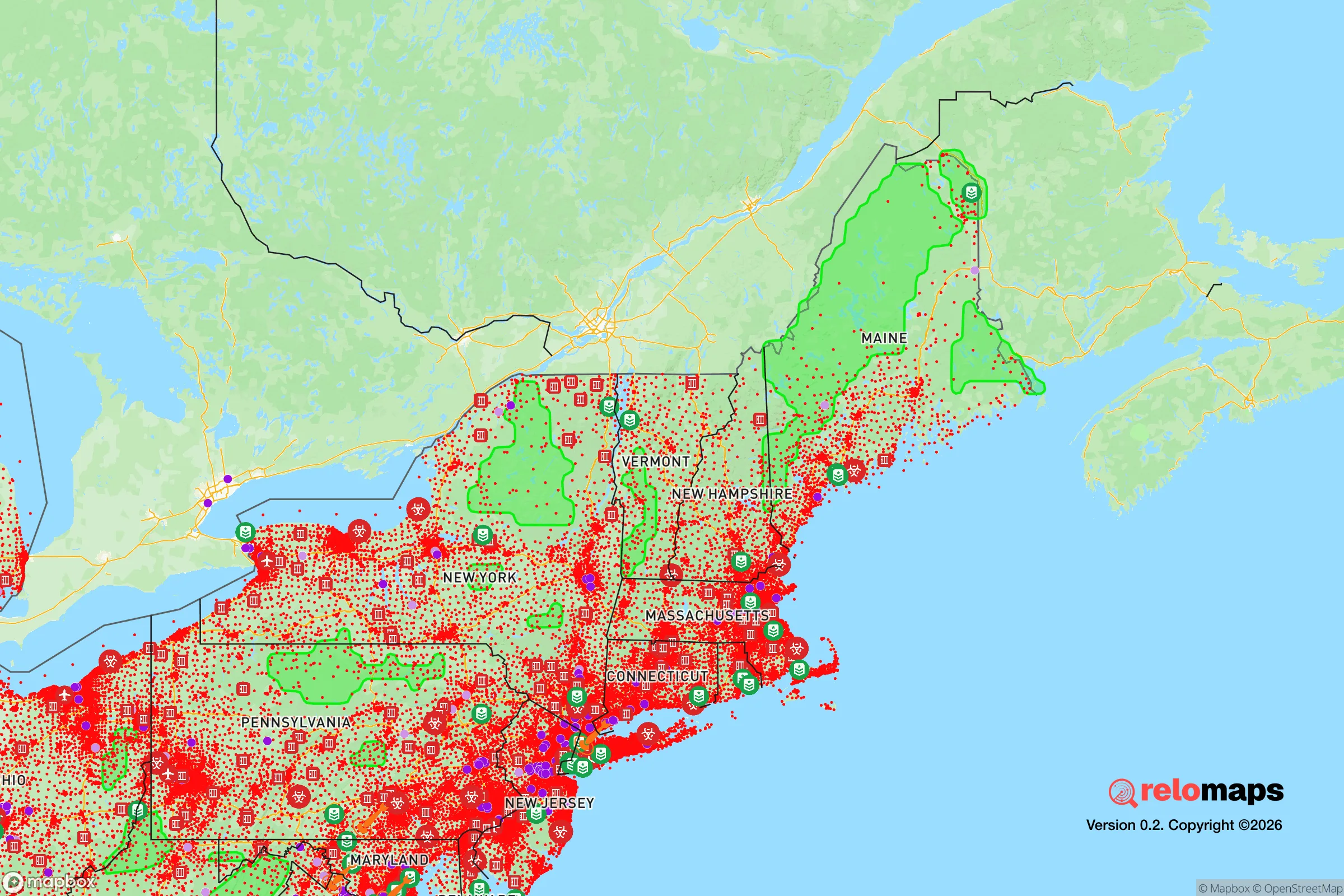
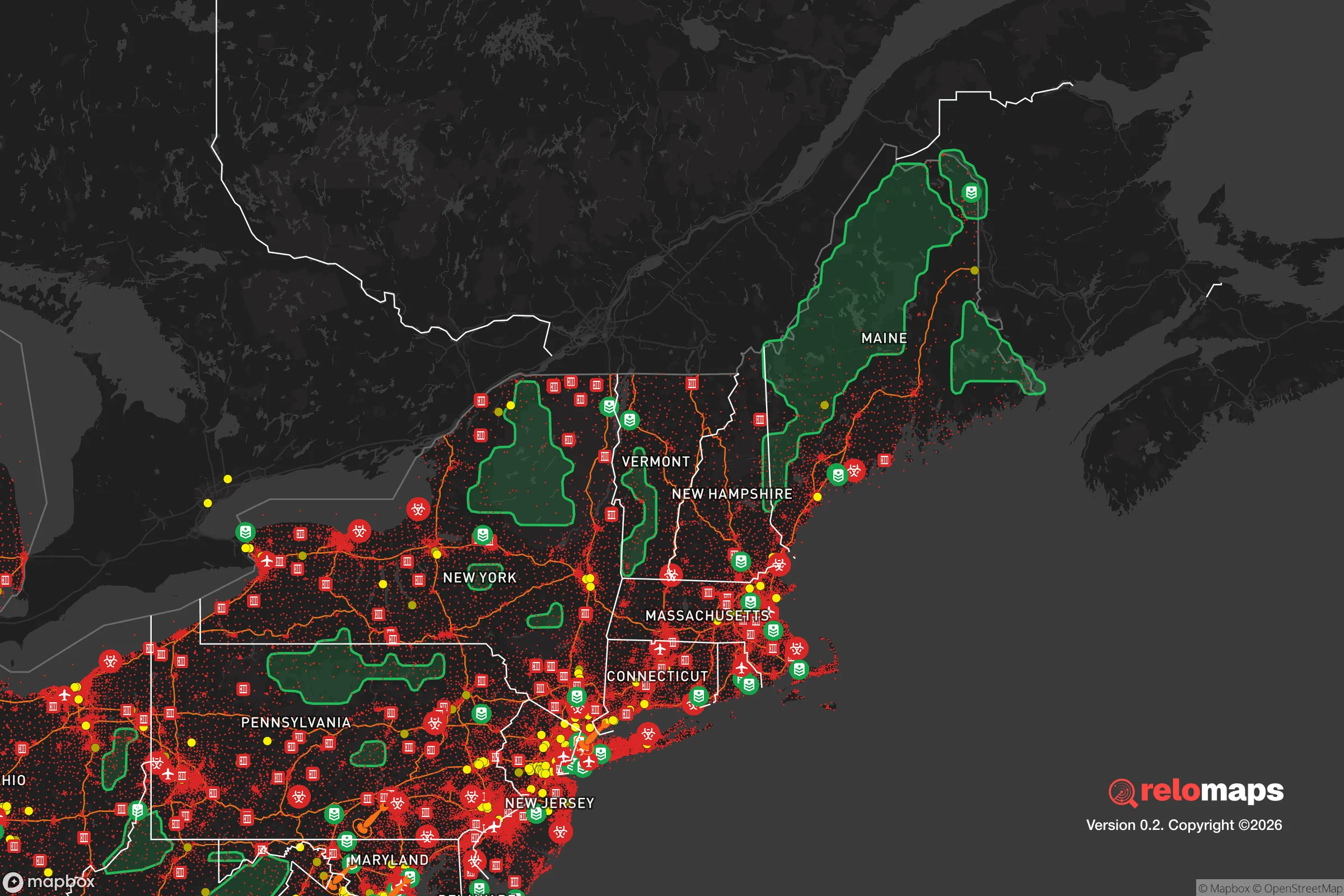


Important Note: For informational purposes only. This does not mean nothing bad ever happens in the green zones. Please use common sense. This is based on public data and modeled with AI. We tried to take a conservative approach but mistakes happen. We update this regularly as new information becomes available.
Solar Generator Recommendations
Backup power matters more here than in safer locations. We've picked three solar generators across budgets and capacity tiers — start with the budget unit if you only need a few essentials, or step up if you want to run a fridge and HVAC for days at a time.

Jackery Portable Power Station Explorer 300
Budget OptionPower on the Go: Weighing only 11 lbs, it's convenient to set up and store with book-sized foldable solar panels

BLUETTI Portable Power Station AC180
Designed for both indoor and outdoor scenarios, AC180 is highly capable as it has a robost capacity and continuous output power.

EF ECOFLOW DELTA Pro Ultra Power Station
Upgraded PickEcoFlow DELTA Pro Ultra is a whole-home energy system designed to grow with your family. Integrated with the Smart Home Panel 2, it scales to meet your evolving energy needs — keeping your home powered, intelligent, and secure through every stage of life.
We earn a commission, at no additional cost to you.
Strategic Assessment Analysis
Orleans, Vermont, offers a compelling strategic position for those prioritizing resilience and self-sufficiency, sitting in the state's remote Northeast Kingdom (NEK) region. Its location—roughly 20 miles from the Canadian border and 90 miles from Montreal—places it far from major U.S. population centers, reducing exposure to the cascading effects of urban unrest or infrastructure collapse. The area's low population density (about 800 people in the village proper) and rugged terrain provide natural buffers against both human-caused and natural disruptions, making it a viable base for long-term preparedness.
Geographic position and natural advantages for long-term security
Orleans sits in a valley along the Barton River, surrounded by the rolling hills and forests of the NEK, an area often called "the last frontier of Vermont" for its sparse development and independent character. The village is roughly 30 miles from the larger town of St. Johnsbury and 45 miles from Newport, but these are small regional hubs, not sprawling metro areas—meaning less traffic, fewer supply chain choke points, and lower risk of civil unrest spillover. The proximity to the Canadian border (about 20 miles north) offers a potential secondary access point for trade or relocation, though border crossings are limited and subject to federal control. The region's elevation (around 1,200 feet) and northern latitude mean cooler summers and harsh winters, which can be a double-edged sword: the cold deters casual migration but demands robust heating and food storage. The area's abundant surface water—the Barton River, Lake Memphremagog to the north, and numerous smaller streams—provides a reliable water source, though treatment and filtration are essential. The surrounding forests offer timber for fuel and construction, as well as game for hunting, but the soil is rocky and acidic, limiting large-scale agriculture without significant amendment.
Risks, exposures, and proximity to fallout-relevant landmarks
Orleans' primary risk is its distance from critical infrastructure and emergency services. The nearest hospital is North Country Hospital in Newport (about 25 minutes), and the closest trauma center is in Burlington (over 90 minutes), meaning a serious injury or medical emergency could be life-threatening without a well-stocked medical kit and training. The area is not immune to natural disasters: winter storms can dump 80-100 inches of snow annually, causing power outages that last days or weeks, and the region sits in a moderate seismic zone, though major earthquakes are rare. From a fallout perspective, Orleans is well-positioned: the nearest nuclear power plant is Seabrook Station in New Hampshire (about 150 miles southeast), and the closest major military target—like the Portsmouth Naval Shipyard or the Burlington International Airport (which hosts the Vermont Air National Guard)—are both over 90 miles away. The Canadian border is a double-edged sword: while it offers an escape route, it also means proximity to potential cross-border smuggling routes or federal enforcement activity during a crisis. The village's small size and limited economic base mean that a prolonged disruption to supply chains (e.g., a cyberattack on food distribution) would hit hard, as most goods are trucked in from outside the region.
Practical resilience for a relocator: food, water, energy, and defensibility
For a relocator focused on self-sufficiency, Orleans offers a mixed bag. Water is abundant: the Barton River runs through the village, and many properties have wells or access to springs, but testing for contaminants (agricultural runoff, septic leakage) is critical. Food production is challenging due to the short growing season (about 100-120 frost-free days) and poor soil; raised beds, greenhouses, and cold frames are almost mandatory for serious gardening. Local farmers' markets and co-ops (like the Orleans County Natural Foods Co-op in nearby Barton) provide some local produce, but reliance on outside food is high. Energy resilience is achievable: wood stoves are common for heating, and solar panels (with battery storage) are viable despite the cloudy winters, though backup generators running on propane or diesel are more reliable for long-term off-grid living. The village's layout—a compact downtown with residential areas on surrounding hills—offers some defensibility: choke points on the few roads in and out (primarily US-5 and VT-58) could be monitored, but the terrain is not easily fortified. Community is a double-edged sword: the NEK has a strong tradition of mutual aid and self-reliance, but outsiders are often viewed with suspicion, and building trust takes time. For a single individual or family, joining local preparedness groups (like the Vermont Preparedness Network or NEK prepper meetups) is essential for both security and knowledge-sharing. The nearest major population center (Montreal) is 90 miles away, but its size (over 4 million metro) means it could be a source of refugees or civil unrest during a crisis, making Orleans' distance a net positive.
The overall strategic picture for Orleans is one of moderate resilience with significant trade-offs. Its remote location, low population density, and abundant water make it a strong candidate for those seeking to avoid the fallout of urban collapse, but the harsh climate, limited local food production, and distance from medical care demand serious preparation. For a conservative-leaning relocator concerned with national instability, Orleans offers a defensible, low-profile base—but it is not a "bug-out" paradise. Success here requires a multi-year investment in infrastructure: a wood-burning stove, a well-stocked pantry, a reliable vehicle with winter tires, and a network of trusted neighbors. The area's independence-minded culture aligns with a prepper mindset, but the practical realities of northern living mean that complacency is a luxury you cannot afford. If you are willing to trade convenience for security and can handle the isolation, Orleans is a viable long-term option; if you need quick access to urban amenities or expect a soft landing, look elsewhere.

* Values derived from national, state, county, city and local statistics and may differ in a specific area. Last updated: 2026-04-19T08:47:47.000Z
Narrative content on this page is AI-generated and may contain mistakes. Verify any details that matter before acting on them.
ReloMaps may earn a commission from affiliate links at no extra cost to you.

