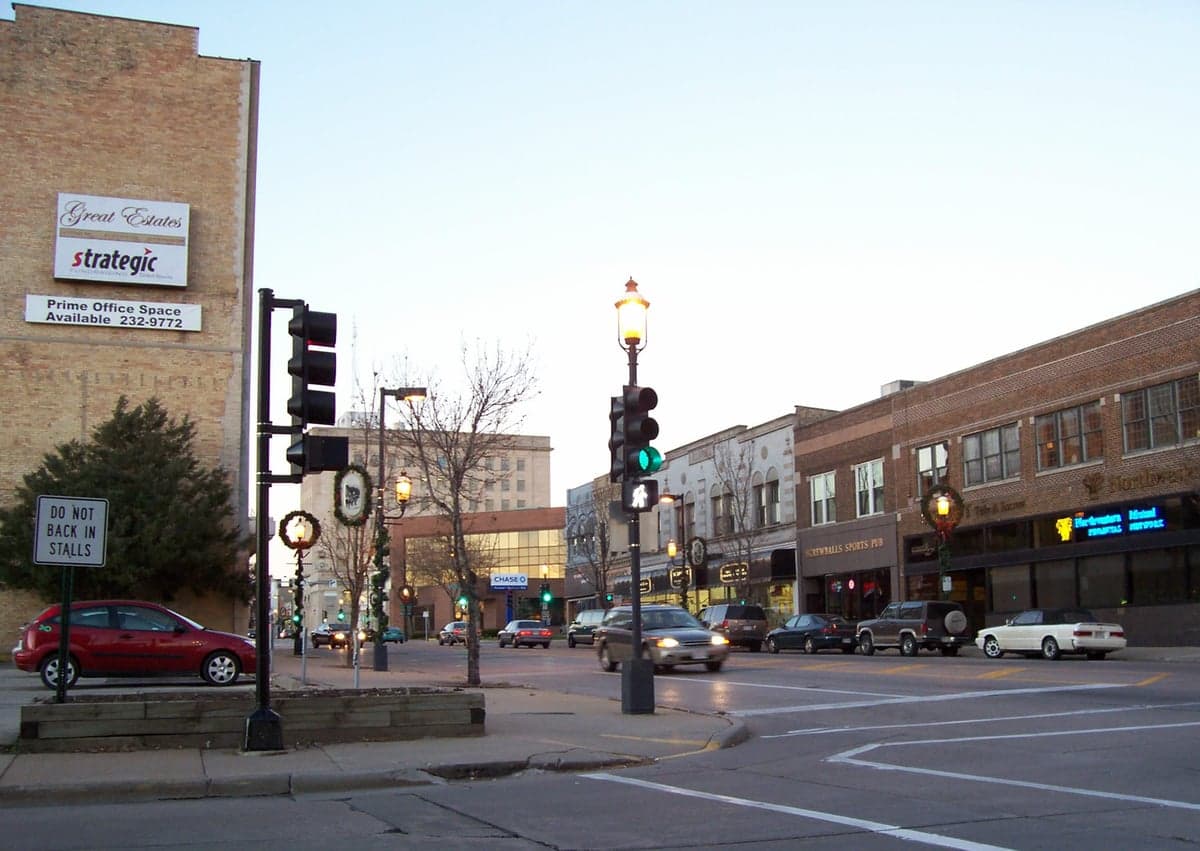
Photo: Wikipedia
Personal Sovereignty in Oshkosh, WI
Moderate friction. Expect trade-offs in some aspect of personal liberty and independence.
What does Personal Sovereignty tell us?
Personal Sovereignty measures your capacity for self-reliance and independence with minimal government friction. Higher scores mean fewer barriers between you and the way you want to live... but it assumes you have the space you need and good neighbors.
What does this tell us?
Personal Sovereignty measures your capacity for self-reliance and independence with minimal government friction. Higher scores mean fewer barriers between you and the way you want to live... but it assumes you have the space you need and good neighbors.
State Policy
Energy independence: Importer (15% of energy produced in-state)
Personal Liberty
Homesteading

Personal Liberty Analysis
Oshkosh, Wisconsin, offers a mixed but workable environment for personal sovereignty, where state-level preemption on key issues like firearms provides a solid foundation, but local governance and a relatively high property tax burden create friction for those seeking maximum autonomy. For the strategic relocator—especially single individuals and parents with a survivalist or prepper mindset—the city sits in a state that generally respects individual rights, yet the day-to-day reality involves navigating a municipality that leans more progressive on certain regulatory fronts. The key is understanding where Wisconsin law protects you from local overreach and where you’ll need to adapt your lifestyle to fit within Oshkosh’s specific constraints.
Tax burden and regulatory posture in Oshkosh and Wisconsin
Wisconsin’s tax structure is a double-edged sword for sovereignty-minded individuals. The state imposes a progressive income tax with rates ranging from 3.54% to 7.65% in 2026, which is moderate compared to high-tax states like California or New York but still a significant bite for self-employed preppers or remote workers. Property taxes are the real sting: Oshkosh’s effective rate hovers around 2.1% of assessed value, among the highest in the Midwest, driven by school district levies and municipal services. This means a $250,000 home carries an annual tax bill of roughly $5,250—money that could otherwise fund your own supplies, land, or off-grid infrastructure. On the regulatory side, Wisconsin is generally business-friendly, with no state-level occupational licensing for many trades, but Oshkosh enforces its own zoning and building codes that can complicate projects like adding a workshop or installing solar panels. The state’s right-to-work status (since 2015) and lack of a state-level minimum wage above the federal $7.25 give employers and independent contractors more flexibility, but local ordinances on noise, property maintenance, and short-term rentals can feel like petty infringements on personal freedom.
Self-defense and gun law specifics in Oshkosh and Wisconsin
Wisconsin is a shall-issue state for concealed carry, meaning Oshkosh residents can obtain a permit with a clean background check and a short training course—no arbitrary delays or local discretion. The state preempts all local firearm ordinances, so Oshkosh cannot ban carry in city parks, restrict magazine capacities, or impose waiting periods beyond state law. This is a critical win for personal sovereignty: you can legally carry a firearm for self-defense in most public spaces, including grocery stores and sidewalks, though private property owners can still post signs prohibiting it. Open carry is legal without a permit for anyone 18 or older, but practical considerations—like police response to “man with a gun” calls—make concealed carry the smarter choice. Stand-your-ground laws are not explicitly codified in Wisconsin, but the Castle Doctrine is strong: you have no duty to retreat in your home, vehicle, or workplace if you reasonably believe force is necessary to prevent death or great bodily harm. For preppers, this means your property is a legal redoubt, but you should still document any defensive incident thoroughly, as Wisconsin courts interpret “reasonable belief” case-by-case. The state also allows firearm possession in vehicles without a permit, as long as the weapon is not concealed on your person—useful for bug-out scenarios.
Self-reliance and homesteading viability in Oshkosh
Oshkosh’s urban core is not homesteading-friendly, but the surrounding Winnebago County and nearby rural townships offer real opportunities for self-reliance. Within city limits, standard residential lots are typically 0.1 to 0.25 acres, and zoning restricts livestock—chickens are allowed with a permit (max 6 hens, no roosters), but goats, pigs, or larger animals are prohibited. Gardening is unrestricted, and many residents grow substantial vegetable plots, but the short growing season (Zone 5a, roughly 140 frost-free days) limits year-round production. For serious homesteading, look to towns like Omro (10 miles west) or Larsen (15 miles north), where 1-5 acre parcels are common and agricultural zoning allows chickens, goats, and even small-scale farming without municipal interference. Off-grid feasibility is limited by Wisconsin’s building codes: new homes must connect to grid power or have an approved alternative (solar with battery backup is legal but requires permits and inspections), and well water and septic systems are tightly regulated by the county health department. Rainwater collection is legal but restricted to non-potable uses (irrigation only) under state law. For a prepper, Oshkosh itself is a decent base for supplies and community networking, but the actual homestead should be outside city limits where you have more control over your land and fewer inspectors.
Personal liberties in Oshkosh: parental rights, medical autonomy, speech, and property
Parental rights in Wisconsin are relatively strong compared to blue states. The state has a “Parents’ Bill of Rights” law (2021) that affirms parents’ authority over their children’s education, healthcare, and moral upbringing. Oshkosh public schools must notify parents of any changes to a student’s mental, emotional, or physical health, and parents can opt their children out of sex education or controversial curriculum. Homeschooling is straightforward: file a form with the school district, teach 875 hours per year, and cover basic subjects—no state testing or curriculum approval required. Medical autonomy is a mixed bag: Wisconsin has no state-level vaccine mandate for adults, but some employers and healthcare facilities require COVID-19 or flu shots. The state does not have a “right to try” law for experimental treatments, but it does allow terminally ill patients access to investigational drugs under federal law. For preppers, stockpiling prescription medications is legally tricky—doctors can prescribe up to a 90-day supply, but “off-label” use or importing from overseas is risky. Free speech is protected under the First Amendment, and Oshkosh has not enacted any local ordinances restricting political speech or assembly, though public gatherings require permits for groups over 50. Property rights are generally respected, but the city’s rental inspection program and nuisance ordinances (e.g., tall grass, inoperable vehicles) can feel like government overreach if you’re trying to maintain a low-profile, self-sufficient property.
Overall, Oshkosh offers a B-tier sovereignty environment for the conservative prepper: solid on guns and parental rights, but weighed down by high property taxes and urban zoning that stifles true self-reliance. Compared to states like Texas or Idaho, Wisconsin’s colder climate and higher taxes are drawbacks, but it beats Illinois or Minnesota hands-down on firearm freedom and local control. For single individuals or parents who want a city with decent infrastructure, a conservative-leaning county (Winnebago County voted +12 R in 2024), and the ability to live quietly without constant government interference, Oshkosh is a viable option—just plan to buy land outside the city limits for your bunker or homestead. The state’s preemption laws give you a shield against the worst local overreach, but you’ll still need to budget for taxes and navigate a regulatory system that, while not hostile, is far from libertarian.

* Values derived from national, state, county, city and local statistics and may differ in a specific area. Last updated: 2026-04-21T10:15:15.000Z
Narrative content on this page is AI-generated and may contain mistakes. Verify any details that matter before acting on them.
ReloMaps may earn a commission from affiliate links at no extra cost to you.

