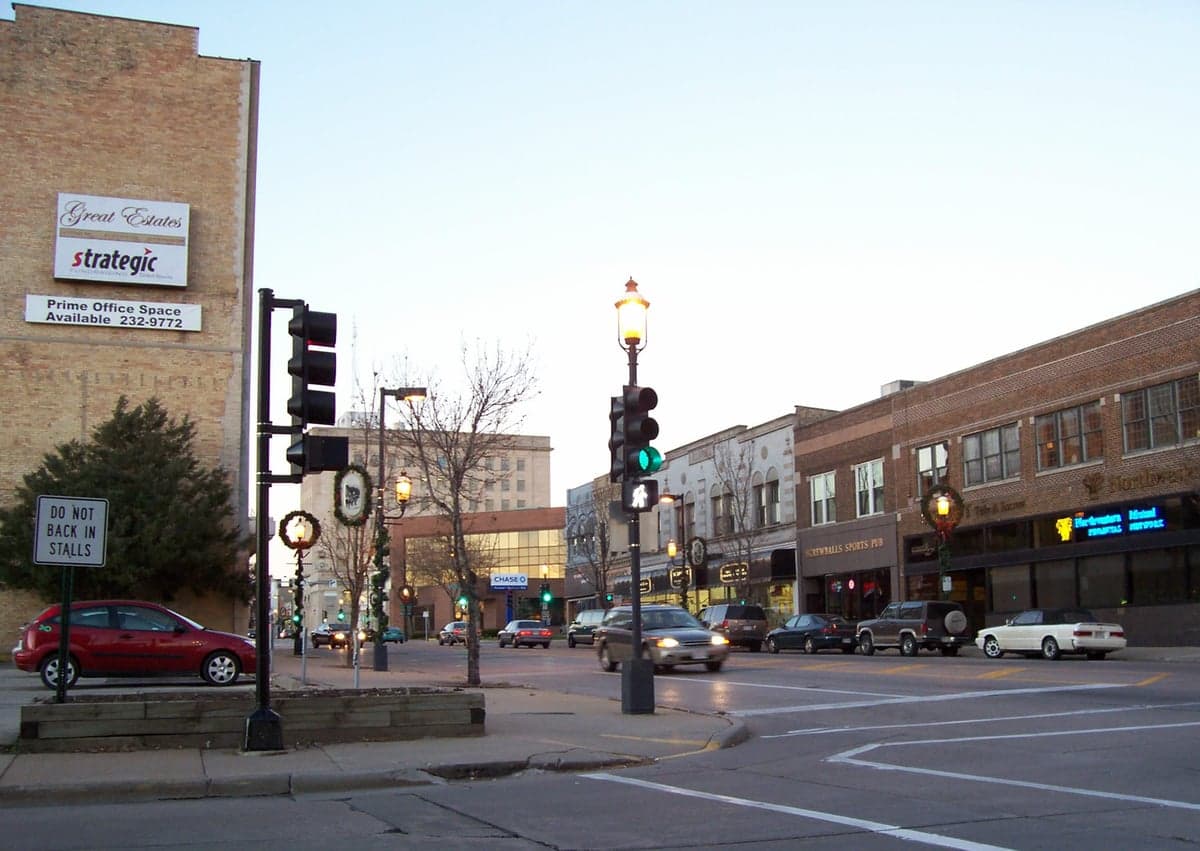
Photo: Wikipedia
Political ClimatePolitical Climate in Oshkosh, WI
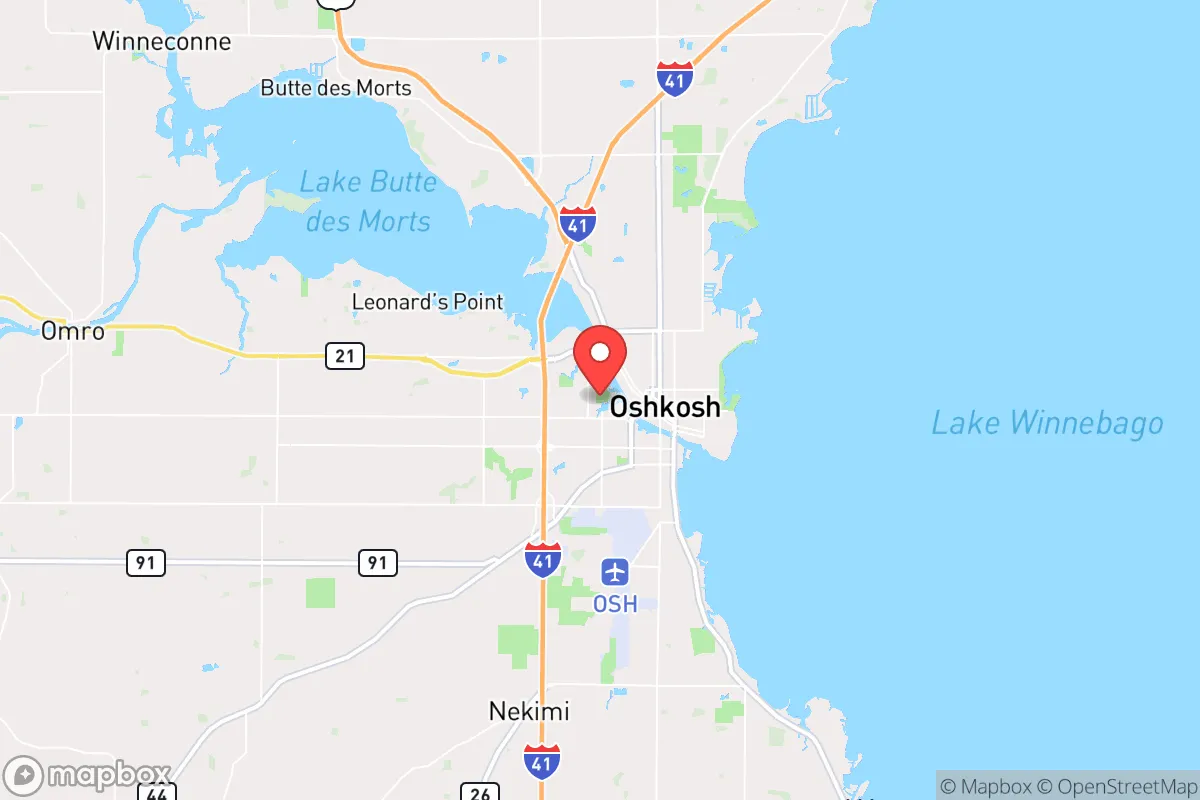
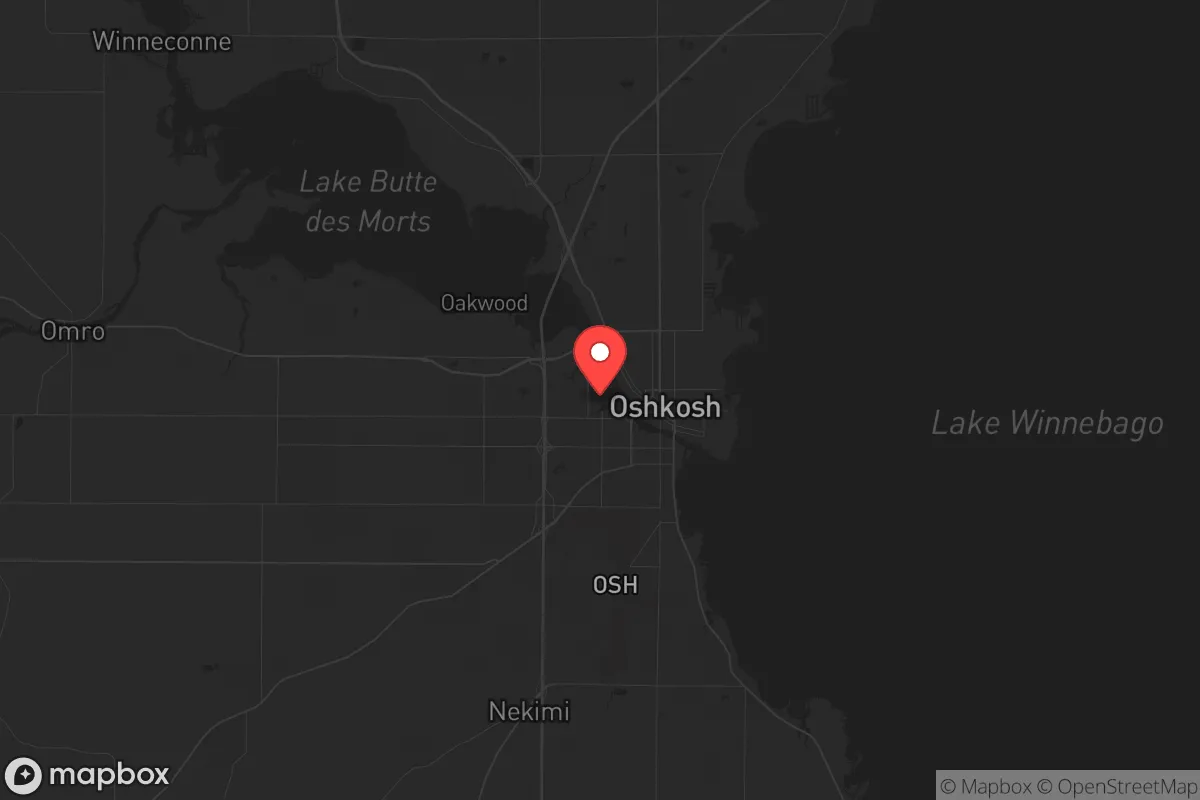
District shown is the primary district for this city’s centroid. Cities may span multiple districts.
Local Political AnalysisPolitical Analysis of Oshkosh, WI
Oshkosh, Wisconsin, sits in a county that has been a reliable conservative stronghold for decades, with a Cook PVI of R+8 that reflects its solidly Republican lean in federal elections. But if you’ve lived here as long as I have, you’ve watched the political ground shift under your feet. The city itself—home to the University of Wisconsin-Oshkosh and a growing service sector—has seen a slow but steady drift toward progressive policies, especially in local school board races and city council votes. Meanwhile, the surrounding towns like Omro, Winneconne, and rural parts of Winnebago County remain deeply red, creating a noticeable split between the urban core and the countryside. The trajectory here is concerning: what was once a quiet, common-sense community is now a battleground where traditional values are increasingly under pressure from outside influences and activist agendas.
How it compares
Drive twenty minutes north to Neenah or Menasha, and you’ll find a similar story—blue-collar roots, strong family values, and a general distrust of government overreach. But Oshkosh stands out because of its size and the university’s pull. The contrast with Appleton, just 20 miles south, is stark: Appleton leans more moderate, with a mix of libertarian-leaning independents and a vocal progressive minority that has pushed for things like sanctuary city policies and diversity, equity, and inclusion mandates in local schools. In Oshkosh, we’ve managed to hold the line on most of that so far, but the 2024 election results showed the margin tightening. The rural townships around us vote +20 to +30 points Republican, while the city’s wards near the university campus flipped blue by narrow margins. That’s the kind of creeping change that worries me—it’s not a revolution, it’s a slow erosion of the principles that made this area a great place to raise a family.
What this means for residents
For folks who value personal freedom and limited government, the practical effect is already visible. Property taxes in Winnebago County have climbed steadily, driven by school district referendums that passed with heavy support from the city’s progressive bloc. You’ll see more mandates from the county health department, more zoning restrictions that make it harder to start a small business or build a workshop on your own land, and a school curriculum that increasingly emphasizes social-emotional learning over core academics. The local GOP is active, but they’re fighting an uphill battle against state-level funding formulas that favor Milwaukee and Madison. If you’re thinking about moving here, understand that your vote matters more than ever—especially in local races, where a handful of seats can determine whether we keep our Second Amendment protections intact or start seeing red flag laws and permit-to-purchase schemes pushed through by a narrow majority.
Culturally, Oshkosh still feels like a place where people wave from their trucks and leave their doors unlocked, but the policy battles are heating up. The biggest flashpoint right now is the school board, where a slate of conservative candidates won in 2023 but faces constant recall efforts and legal challenges from the teachers’ union. On the bright side, the city council has so far resisted calls to defund the police or impose mask mandates, and the county sheriff’s office remains a model of constitutional law enforcement. Long-term, I’d say Oshkosh is at a crossroads: if the current trend of progressive activism in the city continues, we could end up looking like Madison-lite within a decade. But if the rural and suburban voters stay engaged and organized, we can keep this community grounded in the values of self-reliance, fiscal responsibility, and respect for individual rights that have always defined the Fox Valley.

State Political ClimatePolitical Climate in Wisconsin
State Political AnalysisPolitical Environment in the State
Wisconsin has long been a classic swing state, but over the past decade it has hardened into a deeply polarized battleground where the rural-urban divide defines everything. The state’s overall partisan lean is essentially a 50-50 coin flip in statewide races, but that masks a dramatic shift: the once-Democratic strongholds in the industrial south and west have been bleeding blue, while the Milwaukee and Madison metros have become increasingly progressive. The 10-20 year trajectory shows a state that is splintering geographically and culturally, with the conservative-leaning rural and exurban areas growing more Republican, and the urban cores becoming more left-wing, creating a political climate that feels like two different states under one capitol dome.
Urban vs. rural divide
The political map of Wisconsin is a textbook case of the urban-rural chasm. The southeastern corner, anchored by Milwaukee and its inner suburbs like Shorewood and Wauwatosa, is a deep blue stronghold that reliably delivers massive Democratic margins. Madison, home to the University of Wisconsin, is even more progressive, with Dane County routinely voting 75%+ Democratic. Meanwhile, the rest of the state has swung hard to the right. The “WOW” counties — Waukesha, Ozaukee, and Washington — north and west of Milwaukee are among the most reliably Republican suburban areas in the entire Midwest, and they’ve only gotten redder as the city has shifted left. Up north, the rural Northwoods counties like Vilas and Oneida are solidly conservative, while the Driftless Region in the southwest, including places like Lancaster and Platteville, has flipped from blue to red over the last two cycles. The key battlegrounds are the exurban and small-town counties like Brown County (Green Bay) and Outagamie County (Appleton), which have trended rightward as the Democratic brand has weakened among working-class voters outside the metros.
Policy environment
Wisconsin’s policy environment is a mixed bag for conservatives. On the plus side, the state has a flat income tax rate of 4.4% (down from a progressive structure a decade ago), and the corporate tax rate is a competitive 7.9%. Property taxes are above the national average, but the state’s levy limits have kept them from exploding. The regulatory posture is generally business-friendly, with a right-to-work law (passed in 2015) and a relatively light permitting process for new construction. However, the state has a Democratic governor, Tony Evers, who has vetoed conservative priorities like a flat tax reduction and school choice expansion. Education policy is a flashpoint: the state has a robust school choice program (the Milwaukee Parental Choice Program is the oldest in the nation), but Evers has fought to limit it. Healthcare is a mixed bag — Wisconsin did not expand Medicaid under the Affordable Care Act until 2019, and the state runs its own exchange. Election laws are a major concern for conservatives: the state uses no-excuse absentee voting and has same-day voter registration, which critics argue opens the door to fraud. The 2020 election saw massive legal battles over drop boxes and ballot curing, and the legislature has since passed a voter ID law and banned most private funding of elections, but the system remains a point of contention.
Trajectory & freedom
On the freedom front, Wisconsin is a tale of two trends. On the positive side, the state has constitutional carry for firearms (since 2011), a strong Castle Doctrine law, and no state-level red flag law, though local governments in Milwaukee and Madison have tried to impose their own restrictions. Parental rights have been strengthened with the passage of a Parents’ Bill of Rights in 2023, which requires schools to notify parents about curriculum changes and medical services. However, the trajectory is concerning. The state has seen a push for medical autonomy restrictions — the 2023 law banning gender transition procedures for minors (Act 100) was a win for conservatives, but the fight over abortion remains unresolved, with a 1849 law that was effectively overturned by a 2023 state Supreme Court ruling. The biggest threat to freedom is the state Supreme Court, which flipped to a 4-3 liberal majority in 2023 after a record-spending election. That court has already struck down the state’s legislative maps as unconstitutional, and is likely to take up cases on abortion, school choice, and election laws. The state’s tax burden is moderate, but the income tax is still higher than neighboring states like South Dakota and Tennessee, and the property tax burden is a real drag on homeowners.
Civil unrest & political movements
Wisconsin has a long history of political activism, from the 2011 Act 10 protests against public sector union restrictions (which drew 100,000 people to the Capitol) to the 2020 Kenosha riots after the Jacob Blake shooting, which saw businesses burned and two people killed. The state is a hotbed of organized movements on both sides. On the right, the Wisconsin Institute for Law & Liberty (WILL) is a powerful legal advocacy group that has successfully challenged election procedures and school district policies. The Wisconsin Family Action group has been a force on parental rights and abortion. On the left, the Wisconsin Democratic Party is well-funded and organized, and groups like Indivisible and Black Lives Matter have a strong presence in Madison and Milwaukee. Immigration politics are relatively quiet compared to border states, but the state has seen a surge in migrant labor in agriculture and dairy, and some rural counties have passed resolutions opposing sanctuary policies. The election integrity controversy is still raw: the 2020 election saw a massive infusion of private funding from the Center for Tech and Civic Life, which was directed to five Democratic-leaning cities, and the subsequent investigation by the Wisconsin Elections Commission found no widespread fraud but did recommend changes to drop box procedures. The 2024 election is expected to be another knife-edge fight, with both sides already gearing up for legal battles.
Projection
Over the next 5-10 years, Wisconsin is likely to become more polarized and less stable for conservatives. The demographic trends are not favorable: the state’s population is aging, and the younger, more progressive voters in Madison and Milwaukee are growing while the rural areas are shrinking. The in-migration patterns are mixed — some conservatives are moving to the WOW counties and the Northwoods, but the state is also seeing an influx of remote workers from Illinois and Minnesota who bring their left-leaning politics. The state Supreme Court’s liberal majority will likely redraw congressional and legislative maps after the 2030 census, which could lock in Democratic advantages for a decade. The biggest wildcard is the 2026 gubernatorial election — if a Republican wins, they could push through a flat tax cut and school choice expansion, but if Evers or another Democrat holds the office, the state will remain in gridlock. The economic freedom of the state is at risk: the property tax burden is likely to rise as local governments struggle with pension costs, and the state’s reliance on federal funding for roads and healthcare makes it vulnerable to federal policy shifts. A conservative moving in now should expect to fight for every inch of ground — the state is not trending red, but it is not hopeless either, as the rural and exurban areas remain deeply committed to conservative values.
Bottom line for a new resident: Wisconsin offers a decent quality of life with good schools in the suburbs, a strong outdoor recreation scene, and a relatively low cost of living compared to the coasts. But the political climate is a constant battle. You’ll find like-minded communities in the WOW counties, the Fox Valley, and the Northwoods, but you’ll also face a state government that is split between a Democratic governor and a Republican legislature, and a judiciary that is tilting left. If you value gun rights, school choice, and local control, you can find a home here — but you’ll need to stay engaged in local politics to protect those freedoms. The state is not a red fortress, but it’s not a lost cause either. It’s a place where your vote and your voice genuinely matter, for better or worse.
* Values derived from national, state, county, city and local statistics and may differ in a specific area. Last updated: 2026-04-21T10:15:15.000Z
Narrative content on this page is AI-generated and may contain mistakes. Verify any details that matter before acting on them.
ReloMaps may earn a commission from affiliate links at no extra cost to you.

