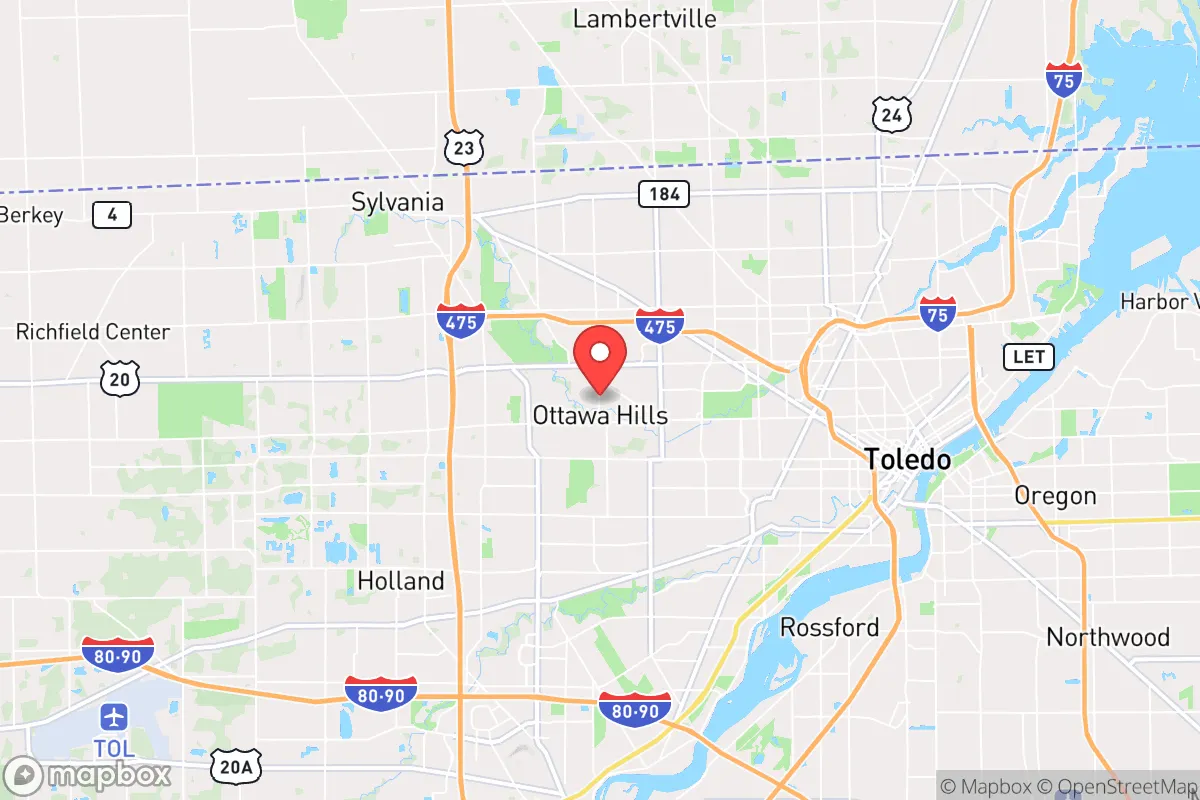
Personal Sovereignty in Ottawa Hills, OH
Viable for self-reliance. Generally workable, though some barriers may limit total independence.
What does Personal Sovereignty tell us?
Personal Sovereignty measures your capacity for self-reliance and independence with minimal government friction. Higher scores mean fewer barriers between you and the way you want to live... but it assumes you have the space you need and good neighbors.
What does this tell us?
Personal Sovereignty measures your capacity for self-reliance and independence with minimal government friction. Higher scores mean fewer barriers between you and the way you want to live... but it assumes you have the space you need and good neighbors.
State Policy
Energy independence: Importer (40% of energy produced in-state)
Personal Liberty
Homesteading

Personal Liberty Analysis
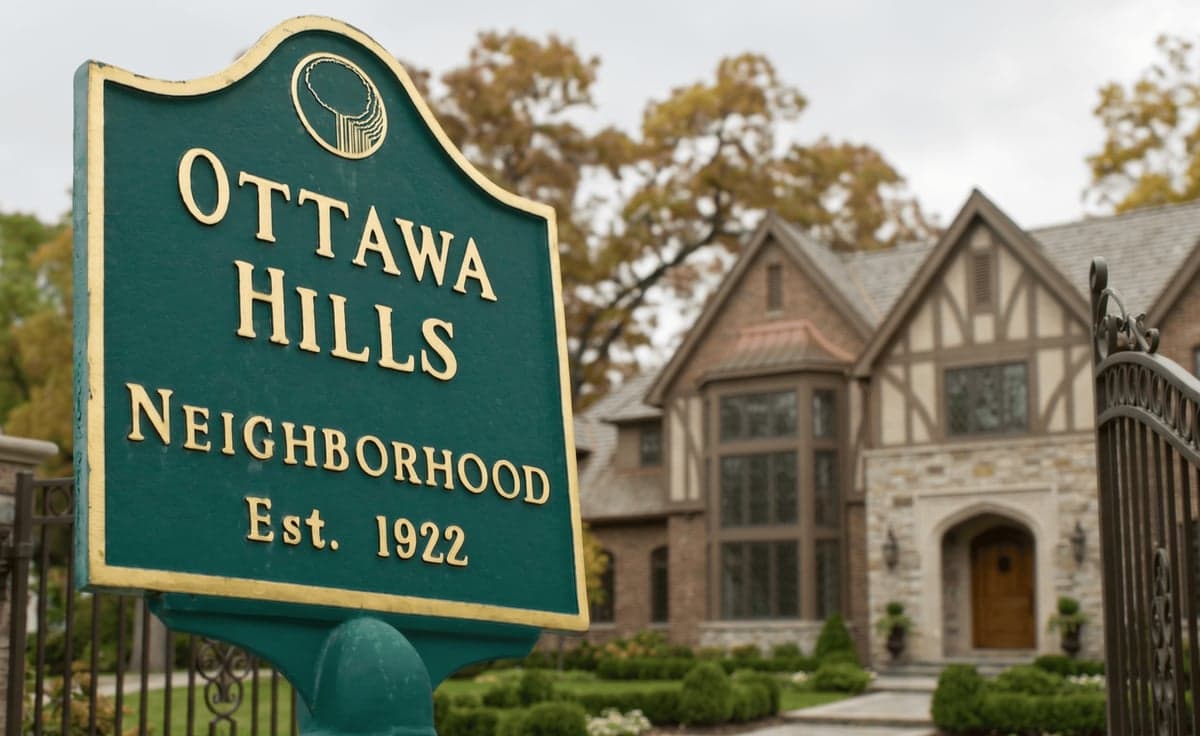
Ottawa Hills, Ohio, offers a unique personal sovereignty environment that blends the structural advantages of a small, affluent village with the broader legal framework of Lucas County and the state of Ohio. For those approaching relocation from a survivalist or prepper mindset, the key takeaway is that while the village itself maintains a tight-knit, low-crime atmosphere conducive to self-reliance, residents must navigate a state-level landscape that is generally favorable to personal liberties but not without its own regulatory complexities. The autonomy you experience here is largely defined by the village's hands-off approach to daily life and the constitutional protections of Ohio, rather than any radical local ordinances that expand personal freedoms beyond state norms.
Tax burden, property rights, and the regulatory posture of the village
From a fiscal sovereignty standpoint, Ottawa Hills presents a mixed picture that demands careful scrutiny. The village levies its own income tax of 1.5% on residents, which is on top of the state of Ohio's flat income tax rate of roughly 3.5% (as of 2026). This combined local and state burden is moderate compared to high-tax states like New York or California, but it is a real cost that reduces your disposable income for prepping supplies, land, or other self-sufficiency investments. Property taxes in the Ottawa Hills school district are notably high, driven by the excellent public school system, which is a double-edged sword: you pay a premium for education, but you also fund a local government that is generally efficient and non-intrusive. The village's zoning code is strict, with minimum lot sizes of one acre and architectural review boards that can dictate exterior modifications. This is a significant constraint for anyone wanting to build a bunker, install a large solar array visible from the street, or keep livestock. The regulatory posture here is one of orderly, aesthetic preservation—not heavy-handed enforcement of personal conduct, but a firm hand on property use. For the prepper, this means you can likely store supplies and maintain a defensive posture inside your home, but you cannot turn your property into a visible compound or agricultural operation without facing pushback from the village.
Self-defense rights, gun laws, and the reality of concealed carry
Ohio is a "constitutional carry" state, meaning that as of 2022, any law-abiding adult 21 or older can carry a concealed handgun without a permit. This is a bedrock advantage for personal sovereignty in Ottawa Hills. The village itself has no local gun ordinances that restrict this right, so you are subject only to state law. You can carry openly or concealed in most public spaces, including parks and sidewalks, though private businesses and the local schools (K-12) are off-limits under state law. The village's police department is professional and responsive, but the low crime rate means you are unlikely to face a situation where you need to defend yourself. However, the prepper mindset values the right to carry as a fundamental check on government overreach and a tool for personal security in a deteriorating scenario. The main practical limitation is that Ottawa Hills is a small, wealthy enclave where visible firearms might draw unwanted attention from neighbors or law enforcement, even if legal. For those who prioritize self-defense, the legal framework is solid, but the social environment may encourage discretion. Stand-your-ground laws apply statewide, meaning you have no duty to retreat before using deadly force in any place you are lawfully present.
Self-reliance, homesteading viability, and off-grid feasibility
For the serious prepper looking to achieve a degree of self-sufficiency, Ottawa Hills presents significant structural challenges. The village's one-acre minimum lot sizes are generous by suburban standards, but they are still too small for meaningful homesteading. Raising chickens for eggs is permitted with a permit, but larger livestock like goats or pigs is not allowed. Gardening is fine, but you are limited to what you can grow on a typical suburban lot. The real constraint is zoning: the village code explicitly prohibits "agricultural uses" as a primary activity, and any outbuilding (shed, greenhouse, workshop) requires approval and must match the architectural character of the neighborhood. Off-grid living is effectively impossible within village limits. The village requires connection to municipal water and sewer, and solar panels are allowed only if they are not visible from the street or are integrated into the roof design. You cannot drill a well, install a septic system, or disconnect from the grid without violating multiple codes. For a prepper, this means Ottawa Hills is a place to live a comfortable, secure life in a stable community, but it is not a location where you can build a self-sufficient homestead. The trade-off is that the village's low crime and strong community ties provide a different kind of security—one based on mutual watchfulness and social cohesion rather than physical independence.
Personal liberties: parental rights, medical autonomy, speech, and property
Ohio's legal environment generally supports personal liberties in ways that align with a conservative, survivalist worldview. Parental rights are strong: Ohio law recognizes parents as the primary decision-makers for their children's education, healthcare, and religious upbringing. The state has a robust school choice program, including vouchers and charter schools, and homeschooling is straightforward with minimal reporting requirements. Ottawa Hills itself has an excellent public school system, but parents who prefer alternative education face no local barriers. Medical autonomy is a mixed bag. Ohio does not have a state-level vaccine mandate for adults, and during the COVID-19 pandemic, the state's response was less restrictive than many others. However, the state does have a vaccine mandate for schoolchildren (with medical and religious exemptions), and there is no broad "right to try" experimental treatments outside of FDA-approved channels. For the prepper, this means you can generally make your own medical decisions, but you cannot legally stockpile prescription medications without a prescription, and there are no local compounding pharmacies that cater to off-grid medicine. Free speech is fully protected under the First Amendment and Ohio's own constitution, and the village has no local ordinances that restrict political expression, signage, or assembly. Property rights are strong in theory, but the village's zoning and architectural review boards impose real limits on what you can do with your land. You cannot, for example, erect a privacy fence over six feet without a variance, and you cannot store large quantities of fuel or hazardous materials without special permits. The overall balance is that Ottawa Hills respects your personal autonomy in matters of belief, speech, and family, but it constrains your physical autonomy over your property in the name of community aesthetics.
In the broader context of personal sovereignty, Ottawa Hills offers a high degree of social and legal freedom within a tightly regulated physical environment. Compared to rural areas where you can own dozens of acres and live off-grid, this village is restrictive. Compared to deep-blue urban centers like San Francisco or Portland, it is a bastion of liberty. The real value for the prepper-minded individual is the combination of low crime, strong community, and a legal framework that respects gun rights, parental authority, and free speech. If your survival strategy relies on blending in, building social capital, and maintaining a low profile while being prepared, Ottawa Hills is a strong candidate. If your strategy requires physical self-sufficiency, livestock, and the ability to disconnect from municipal systems, you will need to look further into rural Lucas County or neighboring states like Indiana or Michigan. The sovereignty here is real but bounded—you are free to live your life as you see fit, as long as you do not visibly disrupt the orderly, affluent character of the village.

* Values derived from national, state, county, city and local statistics and may differ in a specific area. Last updated: 2026-04-27T17:50:30.000Z
Narrative content on this page is AI-generated and may contain mistakes. Verify any details that matter before acting on them.
ReloMaps may earn a commission from affiliate links at no extra cost to you.

