Political ClimatePolitical Climate in Ottawa Hills, OH
District shown is the primary district for this city’s centroid. Cities may span multiple districts.
Local Political AnalysisPolitical Analysis of Ottawa Hills, OH
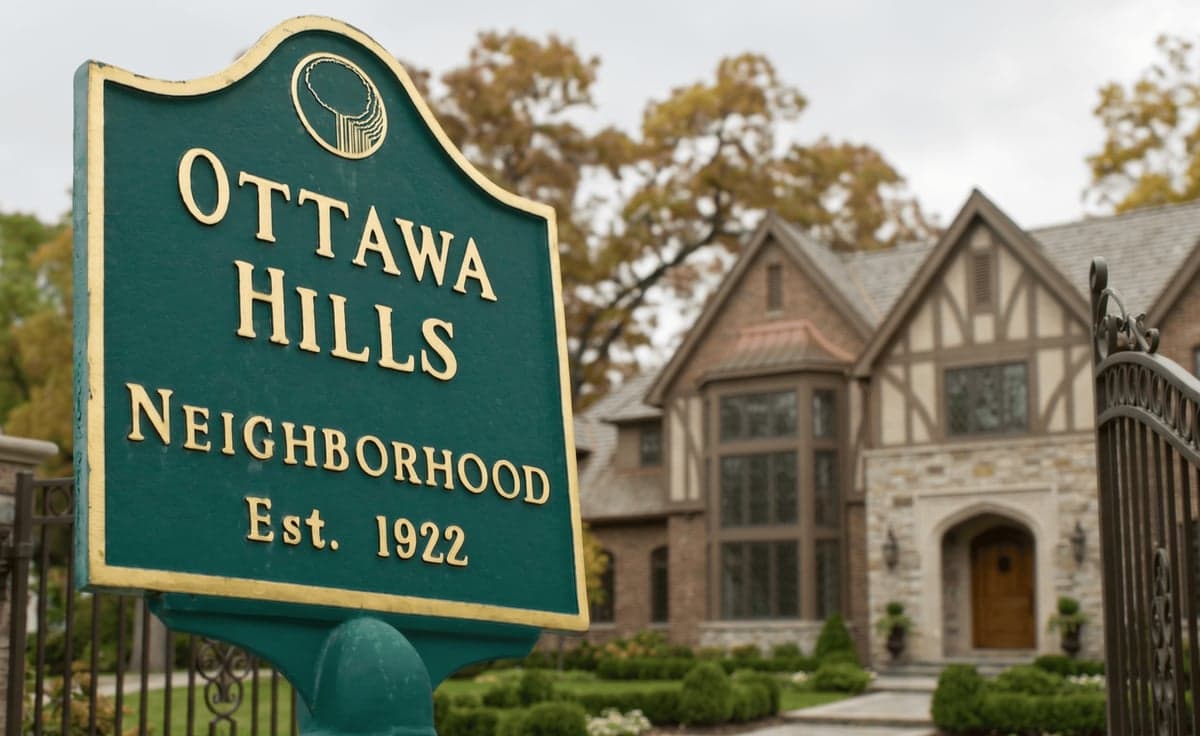
Ottawa Hills has long been a quiet pocket of conservative sensibility in northwest Ohio, but like many suburbs, it's feeling the pull of shifting political winds. The area carries a Cook PVI of R+3, meaning it leans Republican by a modest three points, but that number feels thinner on the ground than it did a decade ago. If you've lived here as long as I have, you remember when local elections were almost a formality—now you see more yard signs for progressive candidates, and the conversations at the village council meetings have a sharper edge. The trajectory is subtle but real: Ottawa Hills is still red, but it's not the deep, comfortable red it used to be.
How it compares
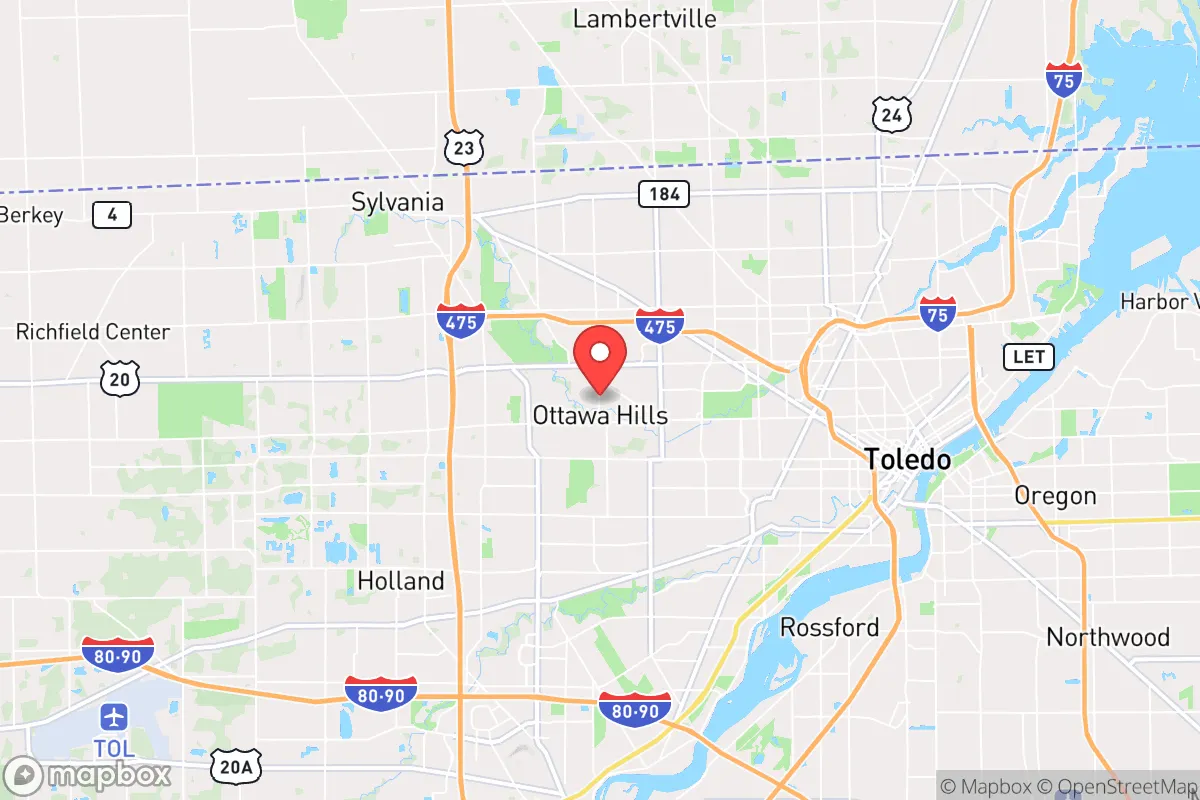
Drive ten minutes east into Toledo proper, and you're in a different world politically—Lucas County went for Biden by over 20 points in 2020, and the city council there has pushed through policies like sanctuary city status and defunding police initiatives that would never fly here. Head south to Perrysburg or west to Sylvania, and you'll find suburbs that feel more reliably conservative, with R+6 or R+8 leanings and fewer of the progressive murmurings we're starting to hear. Ottawa Hills sits in an awkward middle ground: we're close enough to Toledo to absorb some of its cultural drift, but far enough to still hold onto the old-school values of fiscal responsibility and limited government. The contrast with Maumee, just to the north, is especially telling—Maumee has seen a wave of new development and younger families who tend to vote more liberally, while Ottawa Hills has held steadier, though not immune.
What this means for residents
For those of us who moved here specifically to escape the overreach we saw in larger cities, the creeping changes are worth watching. The village council has flirted with zoning ordinances that feel like they're reaching into your backyard—things like restrictions on fence heights and tree removal that would have been laughed off twenty years ago. Property taxes have inched up faster than inflation, and there's been talk of adopting "equity" language in school board policies, which is usually a foot in the door for curriculum changes that prioritize ideology over academics. If you value personal freedoms—the right to do what you want with your own land, to send your kids to a school that teaches facts not feelings, to keep your tax dollars local and lean—then the next few election cycles in Ottawa Hills are going to matter more than ever. The good news is that the village still has a strong core of residents who remember what made this place great: quiet streets, low crime, and a government that stays out of your way.
Culturally, Ottawa Hills still feels like a throwback in the best sense. There's no downtown strip of overpriced coffee shops or bike-share programs; it's a residential village where people know their neighbors and the biggest controversy is usually the leaf pickup schedule. But the policy distinctions are starting to show. The local library board, for instance, has resisted pressure to host drag story hours or "sensitivity training" events that have become common in Toledo's public libraries. That's a small win, but it signals the kind of fight that's coming. Long-term, if the progressive wave continues to wash over Lucas County, Ottawa Hills may need to consider whether it can stay a conservative island in a liberal sea—or whether it will eventually be pulled under. For now, it's still a good place to raise a family without the government breathing down your neck, but you'd better keep an eye on the ballot box.

State Political ClimatePolitical Climate in Ohio
State Political AnalysisPolitical Environment in the State
Ohio has long been the quintessential bellwether state, but over the past decade it has shifted from a classic purple battleground to a solidly red-leaning state, with Republicans now holding every statewide executive office and a supermajority in the state legislature. The 2024 presidential election saw Donald Trump carry the state by roughly 11 points, a stark contrast to the 8-point margin in 2020 and the 8-point margin in 2016, cementing a rightward trajectory that began with the collapse of the old industrial coalition. The dominant political coalition today is a mix of working-class voters in small cities and rural areas, suburban conservatives in the Cincinnati and Columbus exurbs, and a growing population of retirees and remote workers fleeing high-tax states like Illinois and California.
Urban vs. rural divide
The political map of Ohio is a textbook study in the urban-rural chasm. The three major metros — Cleveland, Columbus, and Cincinnati — are the Democratic strongholds, with Cuyahoga County (Cleveland) delivering over 66% of its vote to Joe Biden in 2020. Columbus, driven by the massive Ohio State University campus and a growing tech sector, is the most reliably blue big city in the state. But the real story is the collapse of Democratic support in the small cities and rural counties that once formed the "Blue Wall." Places like Youngstown (Mahoning County), once a union-heavy Democratic bastion, flipped hard to Trump in 2016 and have stayed red. Stark County (Canton) and Butler County (north of Cincinnati) are now reliably Republican. The Appalachian counties in the southeast — places like Belmont and Monroe — vote 70-80% Republican, driven by cultural conservatism and a deep distrust of the Democratic Party's environmental and gun control stances. The suburban ring around Columbus, especially Delaware County, is now one of the most Republican counties in the state, with a median household income over $100,000 and a strong libertarian streak on taxes and regulation.
Policy environment
Ohio's policy environment is broadly conservative, with a few notable exceptions that frustrate freedom-minded residents. The state has a flat income tax of 3.5% (down from 4.8% in 202.src), and the legislature has been steadily cutting rates with a goal of eliminating the income tax entirely. Property taxes are moderate, but local school levies can push them higher in affluent suburbs. The regulatory posture is business-friendly, with right-to-work laws (though not a full "right-to-work" state in the union sense) and a tort reform system that has reduced lawsuit abuse. On education, Ohio has one of the most robust school choice programs in the nation, including the EdChoice Scholarship and the Cleveland Scholarship Program, which allow public funds to follow students to private or religious schools. This has been a major draw for conservative parents. However, the state's election laws have been a flashpoint: voter ID requirements were tightened in 2023, and early voting hours were reduced, which critics call suppression but supporters call integrity. The state also has a constitutional amendment process that has been used to enshrine abortion rights (Issue 1 in 2023) and legalize marijuana (Issue 2 in 2023), both of which passed with over 56% of the vote — a reminder that Ohio's electorate is more libertarian on social issues than its elected officials.
Trajectory & freedom
On the freedom front, Ohio is a mixed bag trending in the right direction on most fronts. The biggest win for liberty in recent years was the passage of constitutional carry in 2022, which eliminated the requirement for a permit to carry a concealed firearm. This was a major victory for gun rights advocates and has made Ohio one of the most gun-friendly states in the Midwest. On parental rights, the state passed the Parents' Bill of Rights in 2023, requiring schools to notify parents of any changes to a student's health or well-being, including gender identity discussions. This has been a flashpoint in blue-leaning districts like Upper Arlington and Shaker Heights, where school boards have clashed with parents. On medical autonomy, Ohio's COVID-era mandates were among the most aggressive in the Midwest, with Governor Mike DeWine imposing a statewide stay-at-home order and mask mandates that lasted longer than in neighboring Indiana or Kentucky. This created a lasting distrust among conservatives, and the backlash helped fuel the 2022 election of a more conservative legislature. On taxation, the trajectory is clearly toward lower rates, with the income tax cut in 2023 being the largest in state history. However, property taxes remain a concern, especially in growing exurbs where school levies are frequent. The state also has a homestead exemption for seniors, but no broad-based property tax cap.
Civil unrest & political movements
Ohio has seen its share of political turbulence, but it has been less dramatic than in states like Oregon or Michigan. The 2020 George Floyd protests in Columbus and Cincinnati were large but mostly peaceful, though there were instances of looting and property damage in downtown Columbus. The anti-lockdown movement in 2020 was particularly strong in rural counties, with protests at the Statehouse in Columbus drawing thousands. The Ohio Freedom Alliance and other grassroots groups have been active in school board meetings and county GOP conventions, pushing for more transparency and less government overreach. On immigration, Ohio is not a border state, but the issue has become more visible with the arrival of Haitian migrants in Springfield (Clark County), which has strained local resources and become a national talking point. The city's mayor has asked for federal help, and the issue has energized conservative voters in the region. There is no sanctuary city policy in Ohio; in fact, the state passed a law in 2024 requiring local law enforcement to cooperate with federal immigration authorities. Election integrity remains a hot topic, with the 2020 election in Ohio being widely considered secure, but the 2023 constitutional amendment votes saw allegations of out-of-state funding and signature fraud, leading to calls for tighter initiative petition rules.
Projection
Over the next 5-10 years, Ohio is likely to become more conservative, but not uniformly so. The in-migration from blue states — particularly retirees from Illinois and remote workers from California — is accelerating, and these newcomers tend to be fiscally conservative but socially moderate. This will likely push the state toward a more libertarian flavor: lower taxes, less regulation, but also a grudging acceptance of marijuana legalization and abortion rights. The Columbus metro will continue to grow and become more Democratic, but the rest of the state will harden its Republican lean. The Appalachian counties are aging and losing population, which could reduce their electoral weight, while the Cincinnati and Columbus exurbs are booming. The biggest wildcard is the state's constitutional amendment process, which could be used to enshrine further progressive policies (like minimum wage hikes or ranked-choice voting) that the legislature would never pass. A new resident moving in now should expect a state that is broadly conservative on most issues, with a strong gun culture, low taxes, and robust school choice, but with periodic battles over ballot initiatives that can shift the ground overnight.
For a conservative-leaning individual or family considering a move, Ohio offers a solid foundation: a low cost of living, a business-friendly climate, and a political culture that respects property rights and parental authority. The key is to choose your location carefully — stick to the exurbs of Cincinnati (like Mason or Liberty Township), the Columbus suburbs (like Dublin or Powell), or the Lake Erie shoreline (like Port Clinton or Sandusky) for the best alignment with conservative values. Avoid the urban cores of Cleveland, Columbus, and Cincinnati, where progressive policies on taxes, schools, and public safety are more entrenched. The state is trending in the right direction on most fronts, but vigilance is required — especially on property taxes and the potential for future ballot initiatives that could undermine the gains made in recent years.
* Values derived from national, state, county, city and local statistics and may differ in a specific area. Last updated: 2026-04-27T17:50:30.000Z
Narrative content on this page is AI-generated and may contain mistakes. Verify any details that matter before acting on them.
ReloMaps may earn a commission from affiliate links at no extra cost to you.

