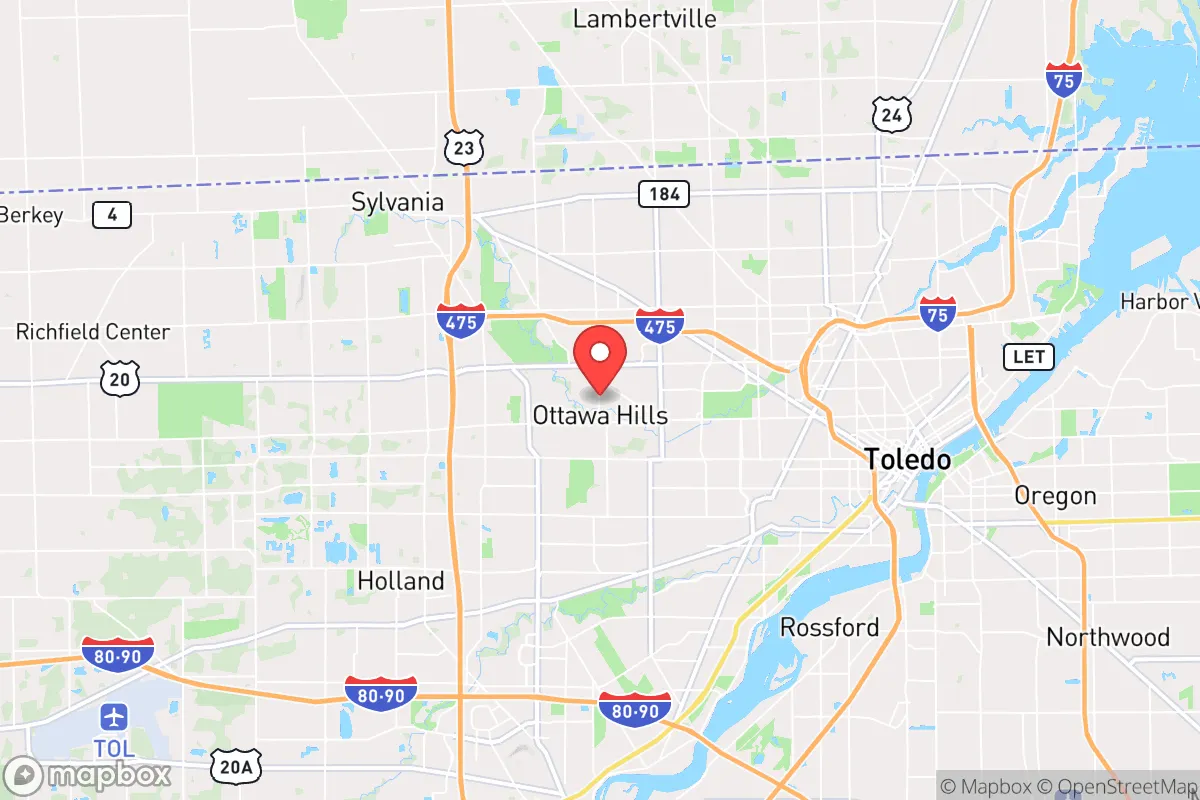
Strategic Assessment of Ottawa Hills, OH
Multiple tactical vulnerabilities. Population density, target proximity, or disaster risk are likely compounding. A retreat property and exit planning is required.
What does the Strategic Assessment tell us?
Our Strategic Assessment grades tactical survivability of an area. Major population centers, military targets, fallout zones, natural disasters, and border exposure all drive risk — lower exposure means a more defensible position in a crisis.
This is heavily inspired by Joel Skousen's Strategic Relocation book. Highly recommended you checkout the book ($)What does this tell us?
Our Strategic Assessment grades tactical survivability of an area. Major population centers, military targets, fallout zones, natural disasters, and border exposure all drive risk — lower exposure means a more defensible position in a crisis.
This is heavily inspired by Joel Skousen's Strategic Relocation book. Highly recommended you checkout the book ($)Strategic Pillars

Key Distances
Regional Safe Places
Below is our recommended "safe zones" in Ohio and the surrounding area based on our strategic heuristics. For most people, it's unrealistic to live in a “safe zone” full-time due to work, family or other personal reasons. They tend to be more rural. However, many of these areas are perfect for second homes and retreat properties that double as a vacation home or even a short-term rental.

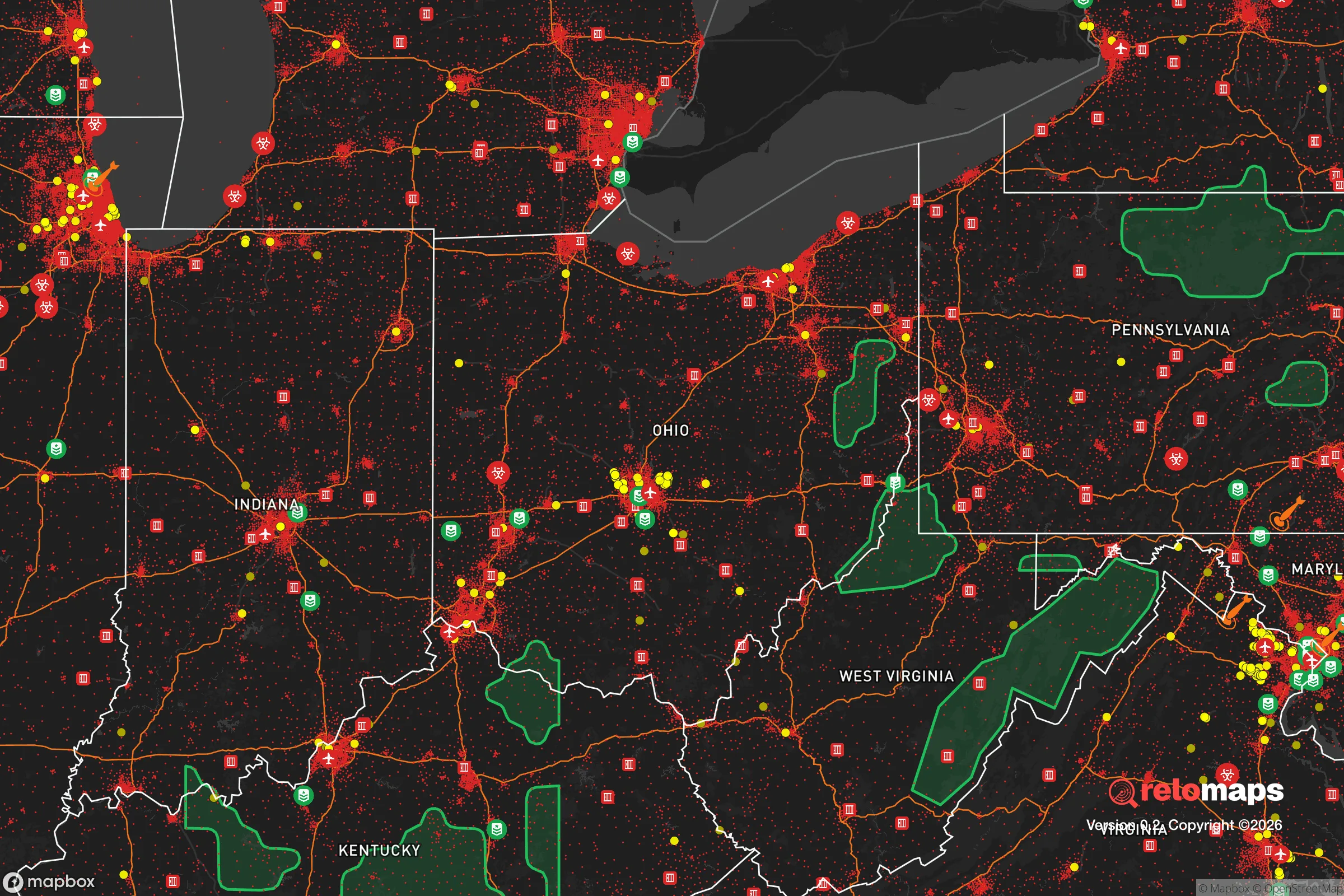


Important Note: For informational purposes only. This does not mean nothing bad ever happens in the green zones. Please use common sense. This is based on public data and modeled with AI. We tried to take a conservative approach but mistakes happen. We update this regularly as new information becomes available.
Solar Generator Recommendations
Backup power matters more here than in safer locations. We've picked three solar generators across budgets and capacity tiers — start with the budget unit if you only need a few essentials, or step up if you want to run a fridge and HVAC for days at a time.

Jackery Portable Power Station Explorer 300
Budget OptionPower on the Go: Weighing only 11 lbs, it's convenient to set up and store with book-sized foldable solar panels

BLUETTI Portable Power Station AC180
Designed for both indoor and outdoor scenarios, AC180 is highly capable as it has a robost capacity and continuous output power.

EF ECOFLOW DELTA Pro Ultra Power Station
Upgraded PickEcoFlow DELTA Pro Ultra is a whole-home energy system designed to grow with your family. Integrated with the Smart Home Panel 2, it scales to meet your evolving energy needs — keeping your home powered, intelligent, and secure through every stage of life.
We earn a commission, at no additional cost to you.
Strategic Assessment Analysis
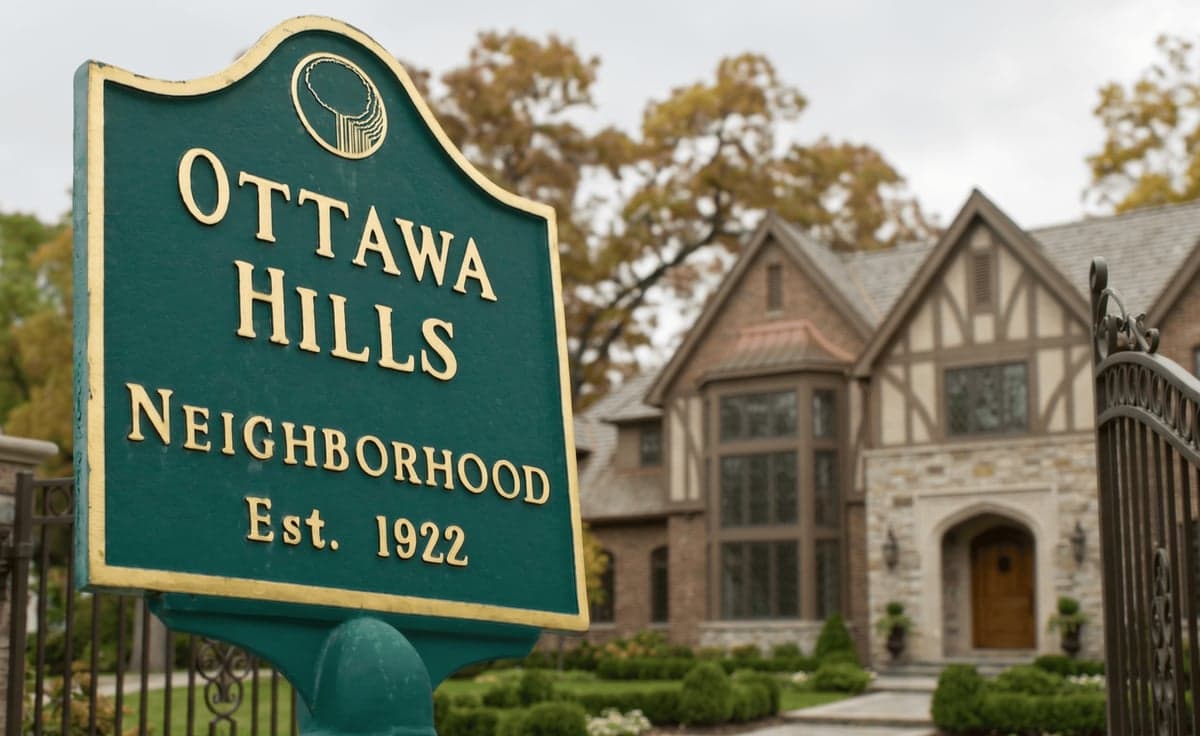
Ottawa Hills, Ohio, presents a complex strategic picture for the conservative prepper: a wealthy, insular village that offers strong day-to-day resilience but sits uncomfortably close to a major metropolitan area and its associated vulnerabilities. Its primary advantage is its physical and social isolation within Lucas County—a 1.8-square-mile enclave of high property values, low crime, and a hyper-local government that can act decisively. However, its location just five miles from downtown Toledo and within a 50-mile radius of the Davis-Besse nuclear power plant introduces serious long-term survival risks that a relocator must weigh carefully. For the single individual or family seeking a quiet, defensible base with excellent local governance, Ottawa Hills is a strong candidate—provided you have a solid bug-out plan for the first 72 hours of a regional crisis.
Geographic position and natural defensive advantages of the Ottawa Hills enclave
Ottawa Hills is not a typical suburb; it is a planned village incorporated in 1922 with a deliberate design that enhances its strategic value. The village is bounded by the Ottawa River to the south and east, and by Secor Road and Central Avenue to the west and north—creating natural choke points for vehicle access. The river itself is a minor waterway, but its wooded floodplain provides a green buffer that limits direct line-of-sight from neighboring areas. The village’s street network is a maze of cul-de-sacs and winding roads with limited through-traffic, making it inherently difficult for large groups to navigate quickly. This layout, combined with a village police department that maintains a 24/7 patrol presence and a community-wide emergency notification system, gives residents a significant defensive edge over typical suburban sprawl. The terrain is flat but heavily wooded with mature canopy, offering both concealment and a natural sound buffer. For a relocator prioritizing a low-profile, easily monitored perimeter, Ottawa Hills’ geography is a genuine asset—not just a feel-good talking point.
Risk exposure: proximity to Toledo, Davis-Besse, and regional instability triggers
The most significant strategic drawback of Ottawa Hills is its proximity to Toledo (population ~270,000) and the broader metropolitan area of 600,000+. In a scenario of civil unrest, mass casualty events, or supply chain collapse, the village’s wealth and isolation make it a potential target for looting or refugee flow. Ottawa Hills is surrounded by lower-income, higher-crime neighborhoods in central Toledo, and the only direct routes into the village—Secor Road and Central Avenue—are major arteries that would funnel displaced populations directly toward the enclave. The village has no physical barrier or gate system; it relies entirely on police presence and community vigilance. Furthermore, the Davis-Besse Nuclear Power Station, located 25 miles east-northeast in Oak Harbor, is a single-unit pressurized water reactor that has experienced multiple emergency shutdowns and a near-miss containment failure in 2002. A catastrophic release at Davis-Besse would place Ottawa Hills directly in the prevailing wind path (west-southwest), potentially requiring evacuation or shelter-in-place for weeks. The village’s water supply comes from Toledo’s municipal system, which suffered a cyanotoxin crisis in 2014 that left 500,000 residents without potable water for three days. Any disruption to Toledo’s water treatment or power grid would immediately affect Ottawa Hills, with no independent backup. For the prepper, these are not theoretical concerns—they are concrete, recurring vulnerabilities tied to the village’s dependence on a stressed urban infrastructure.
Practical resilience for a relocator: food, water, energy, and defensibility
Ottawa Hills offers a mixed bag for the self-sufficient relocator. On the positive side, the village’s lot sizes average 0.5 to 1.5 acres, which is unusually large for a first-ring suburb and allows for substantial backyard gardening, rainwater collection, and even small livestock (chickens are permitted with a permit). The soil is fertile glacial till, and the growing season runs from April to October—long enough for a serious vegetable garden. However, the village’s zoning code is restrictive: no front-yard fences, no above-ground pools, and strict limits on outbuildings. A prepper looking to install a large greenhouse, a backup generator shed, or a visible water storage tank will face pushback from the architectural review board. Energy resilience is a weak point: the village is served by Toledo Edison, and power outages are rare but can last 12-24 hours during severe storms. Solar panels are allowed but must be ground-mounted and screened from the street, which limits roof-top generation. Natural gas is available for heating and cooking, but a grid-down scenario would cut that supply. Defensibility is the village’s strongest practical asset: the police department has a mutual aid agreement with the University of Toledo and Lucas County Sheriff, and the village’s small population (roughly 4,500) means that a coordinated neighborhood watch can be highly effective. The Ottawa Hills Community Association runs a voluntary emergency preparedness program that includes ham radio operators and a neighborhood response team. For a relocator willing to invest in underground cisterns, a propane backup system, and a discreet solar array, Ottawa Hills can be made reasonably self-sufficient—but it requires upfront capital and a willingness to work within the village’s aesthetic rules.
The overall strategic picture for Ottawa Hills is one of high baseline security with a low ceiling for independent survival. For the conservative relocator who values excellent schools (Ottawa Hills Local Schools are consistently ranked among Ohio’s top 10), a tight-knit community with strong property rights, and a police force that responds in minutes, this village is a legitimate haven for day-to-day living. But the prepper must accept that Ottawa Hills is not a retreat; it is a well-fortified forward operating base. Its proximity to Toledo’s urban core, its dependence on municipal water and power, and its location within the Davis-Besse fallout zone mean that a major regional event will require a pre-planned evacuation to a secondary location—ideally a rural property in the nearby Michigan Thumb or the Appalachian foothills of southeastern Ohio. The village’s strength is in its social cohesion and governance, not in its ability to withstand a prolonged siege. If you are looking for a place to raise a family with minimal daily risk and a strong community ethos, Ottawa Hills is a top-tier choice. If you are looking for a self-sufficient bunker, keep driving east.

* Values derived from national, state, county, city and local statistics and may differ in a specific area. Last updated: 2026-04-27T17:50:30.000Z
Narrative content on this page is AI-generated and may contain mistakes. Verify any details that matter before acting on them.
ReloMaps may earn a commission from affiliate links at no extra cost to you.

