 Popular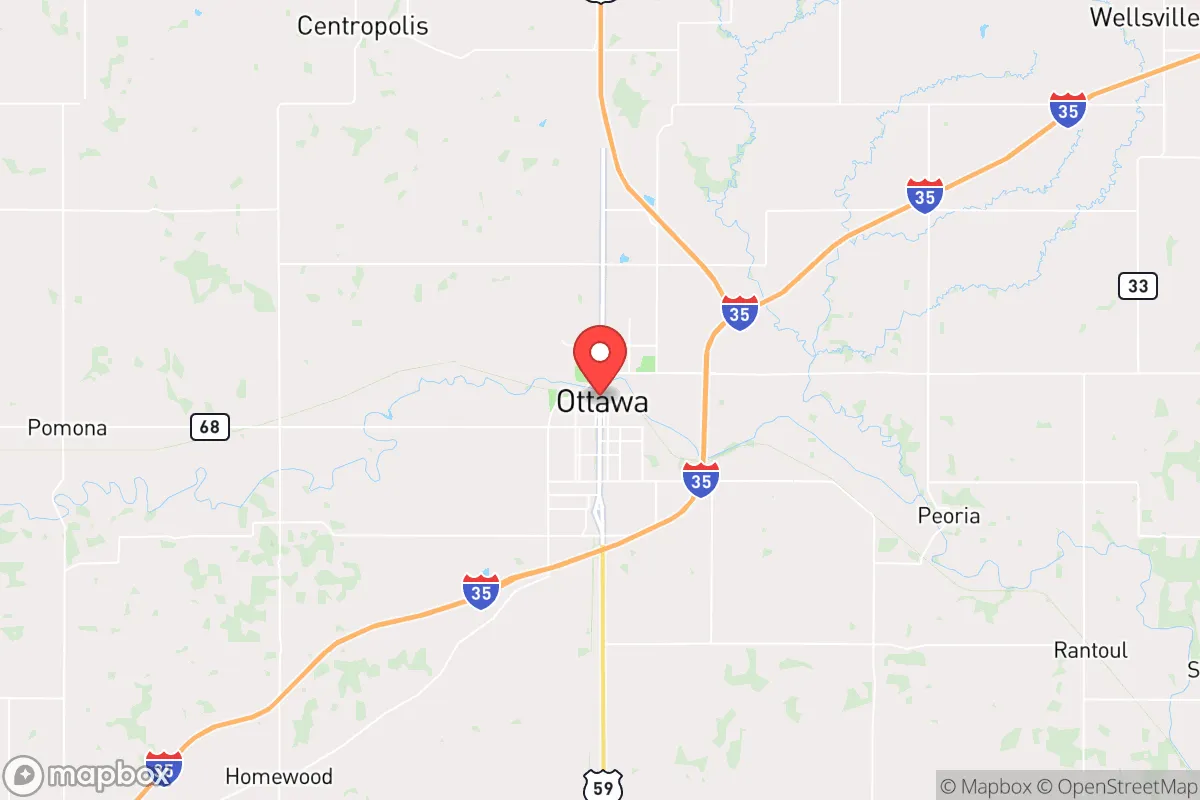
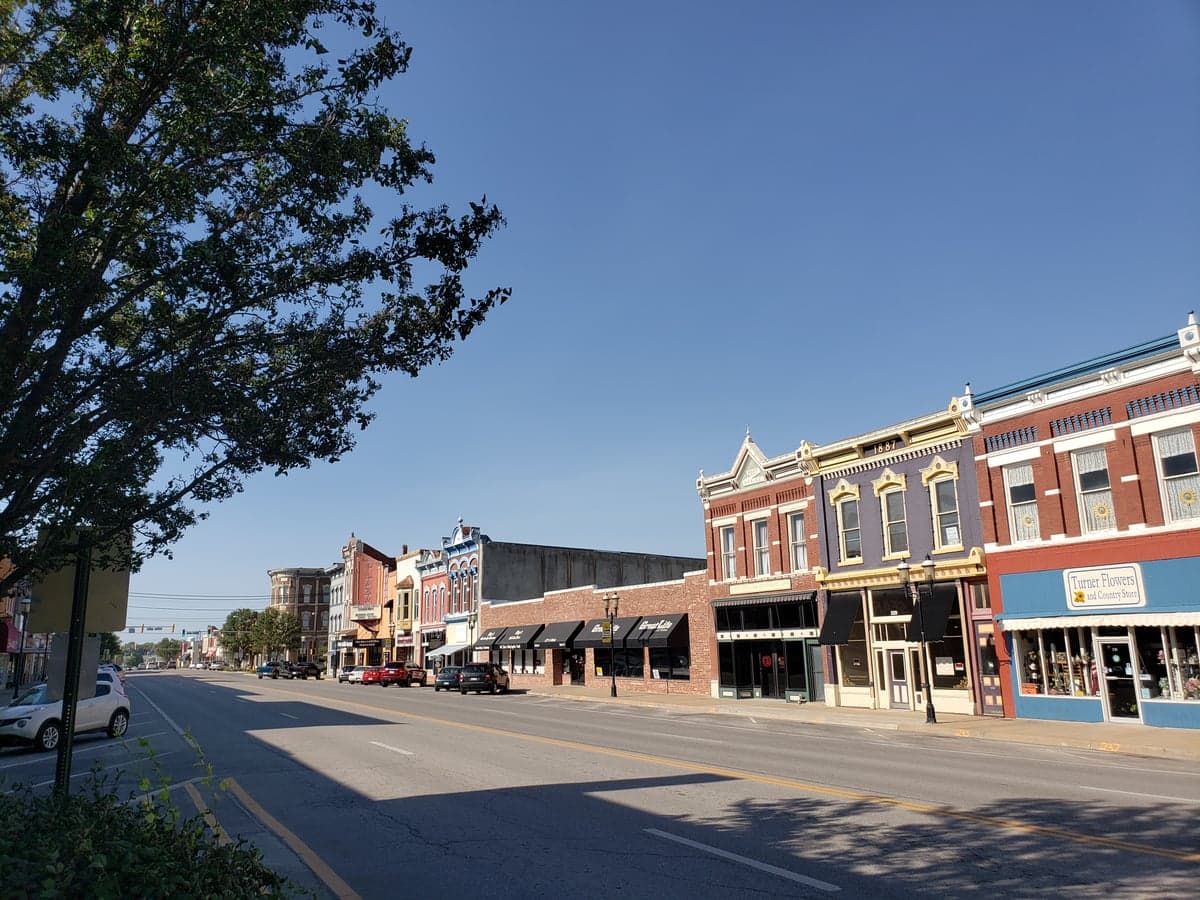
Photo: Wikipedia
Demographics of Ottawa, KS
Affluence Level in Ottawa, KS
A middle-class area roughly in line with national averages across income, home values, education, and employment.
People of Ottawa, KS
The people of Ottawa, Kansas, today form a predominantly white, native-born community of 12,632 residents, characterized by a quiet, family-oriented stability rooted in its agricultural and manufacturing heritage. With 88.6% of the population identifying as white and a foreign-born share of just 0.8%, the city remains one of the least ethnically diverse in Franklin County, though a small Hispanic (4.1%) and East/Southeast Asian (1.1%) presence adds modest variety. The city’s identity is shaped by its role as a regional service hub and home to Ottawa University, giving it a slightly more educated workforce than surrounding rural areas—27.5% hold a bachelor’s degree or higher. Residents describe Ottawa as a place where “everyone knows everyone,” with a strong sense of local pride and a slower pace of life that appeals to families and retirees alike.
How the city was settled and grew
Ottawa was founded in 1864 by a group of settlers from the New England Emigrant Aid Company, a free-state organization that sought to populate Kansas with anti-slavery advocates. The original wave of settlers—largely of English, Scottish, and German descent—arrived via the Marais des Cygnes River and the newly laid tracks of the Leavenworth, Lawrence & Galveston Railroad. They established the city’s core around what is now Downtown Ottawa, building the first frame houses and commercial blocks along Main Street. A second wave of German immigrants arrived in the 1870s and 1880s, drawn by railroad construction jobs and the promise of cheap farmland. They settled primarily in the North Ottawa neighborhood, where they built St. Patrick’s Catholic Church and the city’s first brewery. By 1900, Ottawa’s population had reached 6,000, supported by a thriving flour-milling and brick-making industry. The South Ottawa district, near the Ottawa University campus (founded 1865), became home to faculty and students, while the East Side developed as a working-class area of railroad laborers and factory workers. No significant non-white population existed during this period; the city’s black population remained below 2% until the mid-20th century.
Modern era (post-1965)
The post-1965 era brought only modest demographic change to Ottawa. The Immigration and Nationality Act of 1965 had little effect here—the foreign-born share never exceeded 1.5%. Instead, the city’s growth came from domestic in-migration: white families from rural Franklin County and the Kansas City suburbs seeking lower housing costs and a quieter lifestyle. The West Side neighborhood, developed in the 1970s and 1980s, absorbed most of this new suburban-style growth, with ranch homes and cul-de-sacs replacing farmland. A small Hispanic community began forming in the 1990s, concentrated in the North Ottawa area near the Cargill meatpacking plant, which employed many Mexican and Central American workers. The East/Southeast Asian population—primarily Vietnamese and Filipino—arrived in the 2000s, mostly as professionals at Ottawa University or as healthcare workers at Ransom Memorial Hospital. They settled in the University Heights district near the campus. The black population, at 1.2%, remains concentrated in the older Downtown core, a legacy of mid-20th-century housing patterns. Overall, Ottawa’s racial composition has shifted only slightly since 1990: the white share dropped from 95% to 88.6%, while the Hispanic share rose from 1.5% to 4.1%. The city remains overwhelmingly native-born and English-speaking.
The future
Ottawa’s population is projected to grow slowly—perhaps reaching 13,500 by 2040—driven by continued domestic in-migration from the Kansas City metro area, now just 45 minutes east. The city is likely to remain predominantly white, with the Hispanic share rising gradually to 6-7% as families in the North Ottawa enclave grow and assimilate. The East/Southeast Asian population is expected to plateau at around 1.5%, as Ottawa University’s international recruitment stabilizes. No significant Indian-subcontinent or Arab communities are anticipated, given the absence of any existing base or employer demand. The city is not tribalizing into distinct ethnic enclaves; rather, it is slowly homogenizing as newer white residents from the suburbs blend with the older white population. The West Side will continue to absorb most new housing development, while Downtown may see modest infill of apartments and townhomes aimed at young professionals. The key demographic trend is aging: the median age is 38.5, and the 65+ cohort is growing faster than the under-18 group, suggesting a future of more retirees and fewer school-age families.
For someone moving in now, Ottawa offers a stable, low-diversity community where the population is slowly graying and the small Hispanic and Asian minorities are quietly integrating. The city is not becoming a melting pot; it is becoming a slightly more varied version of its historically white, Midwestern self. New residents—especially families—will find a place where neighbors still wave from porches, schools are well-regarded, and the biggest change in the last 30 years has been the arrival of a Starbucks on Main Street.

* Values derived from national, state, county, city and local statistics and may differ in a specific area. Last updated: 2026-04-19T08:51:03.000Z
Narrative content on this page is AI-generated and may contain mistakes. Verify any details that matter before acting on them.
ReloMaps may earn a commission from affiliate links at no extra cost to you.

