 Popular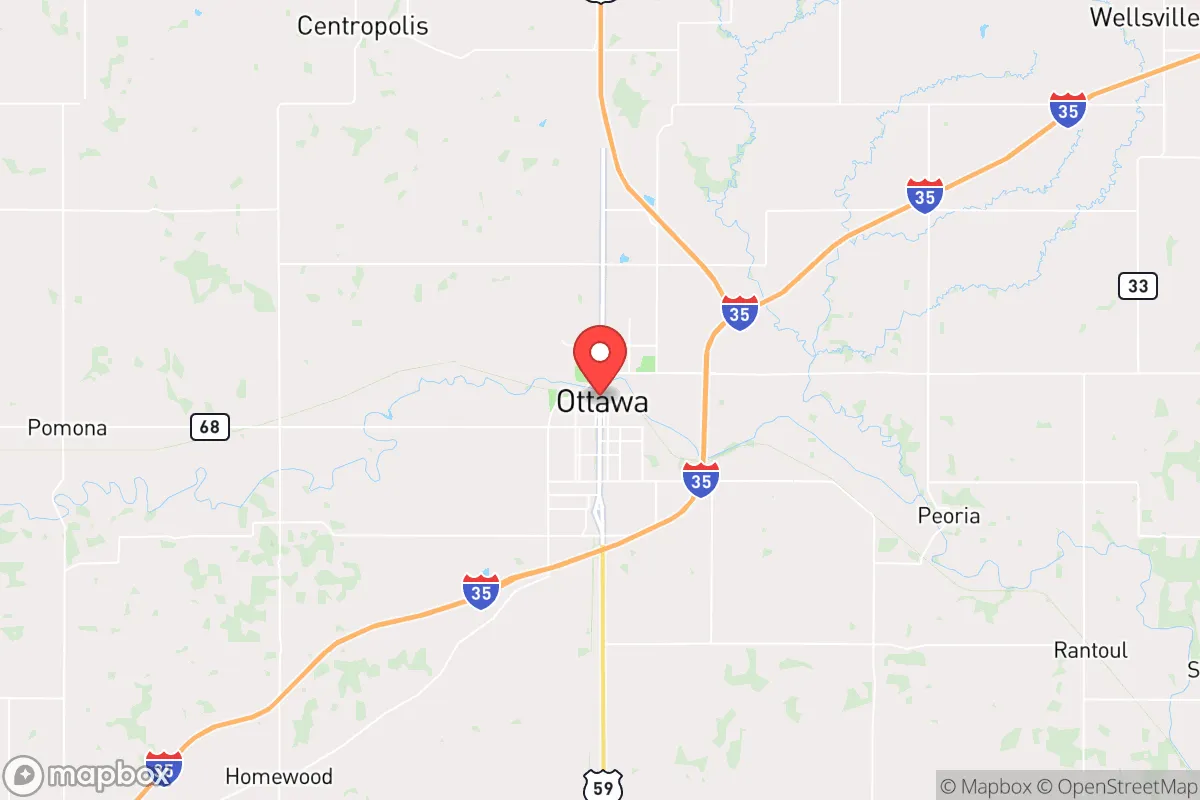
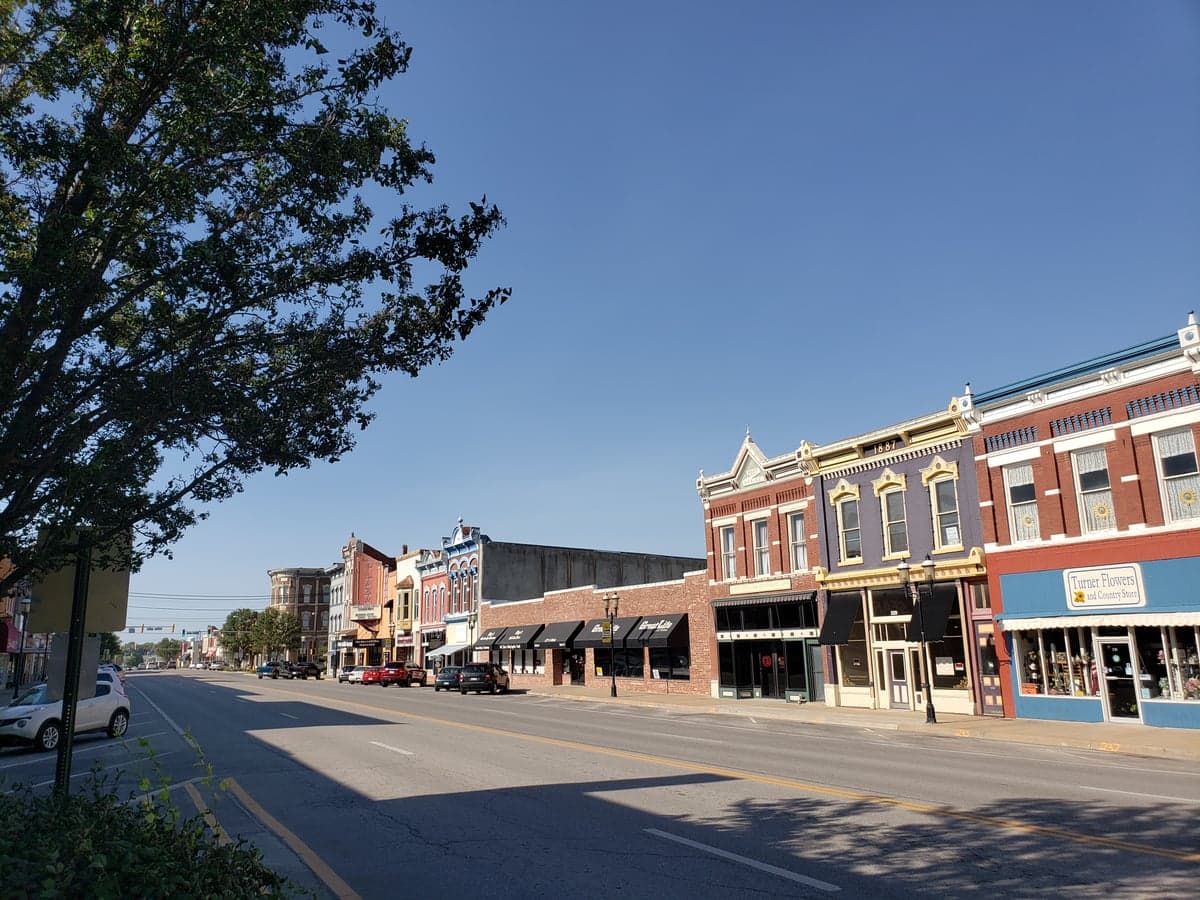
Photo: Wikipedia
Personal Sovereignty in Ottawa, KS
Viable for self-reliance. Generally workable, though some barriers may limit total independence.
What does Personal Sovereignty tell us?
Personal Sovereignty measures your capacity for self-reliance and independence with minimal government friction. Higher scores mean fewer barriers between you and the way you want to live... but it assumes you have the space you need and good neighbors.
What does this tell us?
Personal Sovereignty measures your capacity for self-reliance and independence with minimal government friction. Higher scores mean fewer barriers between you and the way you want to live... but it assumes you have the space you need and good neighbors.
State Policy
Energy independence: Self-sufficient (80% of energy produced in-state)
Personal Liberty
Homesteading

Personal Liberty Analysis
Ottawa, Kansas offers a notably high degree of personal sovereignty for those seeking to minimize government overreach in daily life, particularly when compared to coastal or urban centers. This small city of roughly 13,000 residents sits in Franklin County, a region where local governance tends to favor individual autonomy over collective mandates, and where state-level protections for gun rights, parental authority, and property use create a legal environment that respects personal decision-making. For the survivalist or prepper mindset, Ottawa represents a strategic balance — close enough to the Kansas City metro for supply access, yet far enough to avoid the regulatory creep that often accompanies population density.
Tax burden and regulatory posture: How Kansas law limits government reach
Kansas maintains a relatively light tax footprint compared to neighboring states, which directly supports personal sovereignty. The state income tax is a flat 5.7% as of 2026, with no progressive brackets that penalize higher earners or those building self-sufficient homesteads. Property taxes in Franklin County average around 1.2% of assessed value, which is moderate for the region but notably lower than in Johnson County or the Kansas City suburbs. More importantly, Kansas law imposes strict limits on local government’s ability to impose new taxes or fees without voter approval — a check on municipal overreach that Ottawa residents have leveraged to keep city budgets lean. The regulatory environment for small-scale agriculture, home-based businesses, and alternative energy is permissive: no state-level permitting for rainwater collection, no bans on backyard chickens or beekeeping within city limits (though homeowners should verify HOA covenants), and net metering policies that allow solar panel owners to sell excess power back to the grid at retail rates. For those concerned with creeping federal or state mandates, Ottawa’s local officials have a track record of resisting unfunded mandates from Topeka, particularly around land use and building codes that would impose costs on individual property owners.
Self-defense and gun law specifics: What the Second Amendment looks like in practice
Kansas is a constitutional carry state, meaning no permit is required to carry a concealed firearm for anyone legally allowed to possess one. Ottawa residents enjoy this right without the bureaucratic hurdles found in states like California or New York. The state also preempts local gun ordinances, so Ottawa cannot enact its own bans on magazine capacity, firearm types, or carry locations beyond what state law allows — a critical protection against city council overreach. Stand-your-ground laws are fully in effect, with no duty to retreat in any place where an individual has a legal right to be. For preppers, this means defensive planning is straightforward: your home, vehicle, and person are legally protected zones. The Franklin County Sheriff’s Office is known for a pro-Second Amendment stance, and the local gun culture is robust, with multiple ranges and gun shops within a 20-minute drive. Background checks are required for dealer sales, but private transfers between individuals remain unregulated — a feature that preserves privacy in firearm transactions. For those building a long-term survival stockpile, Kansas law explicitly prohibits any state or local registry of firearms or ammunition, and there are no limits on magazine capacity or firearm types, including NFA items like suppressors and short-barreled rifles, provided federal paperwork is filed.
Self-reliance and homesteading viability: Lot sizes, zoning, and off-grid feasibility
Ottawa’s zoning code is unusually friendly to self-reliance. Within city limits, standard residential lots range from 7,000 to 12,000 square feet, but many neighborhoods allow accessory dwelling units, workshops, and detached garages without special permits. For those wanting more land, the unincorporated areas of Franklin County offer parcels from 1 to 40 acres at prices averaging $4,000–$8,000 per acre — a fraction of what similar land costs near Lawrence or Overland Park. Zoning in the county is minimal: no county-wide building codes for agricultural structures, no restrictions on keeping livestock (including goats, chickens, or even a single cow on parcels over 5 acres), and no prohibition on hunting on your own land. Off-grid living is legally feasible: Kansas has no state law requiring connection to municipal water or sewer, and rainwater collection is explicitly legal and encouraged. Solar panels, wind turbines, and backup generators face no permitting hurdles beyond standard electrical inspections. The city’s water utility is reliable, but for those who prefer independence, well drilling is permitted on parcels over 1 acre, with typical depths of 100–200 feet yielding good-quality groundwater. Composting toilets and greywater systems are allowed under state health code, though a septic permit is required for any blackwater system. For the prepper focused on food security, Ottawa’s growing season runs roughly April through October, and the local soil is fertile loam — ideal for vegetable gardens and small orchards.
Personal liberties: Parental rights, medical autonomy, speech, and property
Kansas law provides strong protections for parental rights, including the right to direct a child’s education, medical care, and religious upbringing. Homeschooling is straightforward: no state registration, no curriculum approval, no standardized testing requirements — simply a notification to the local school district. Ottawa has a vibrant homeschool community with multiple co-ops and extracurricular options. Medical autonomy is similarly respected: Kansas does not mandate COVID-19 or other childhood vaccines for school attendance, and there is no state-level vaccine passport system. The state’s medical freedom law, passed in 2023, prohibits discrimination based on vaccination status and bars employers from requiring vaccines as a condition of employment — a protection that extends to both private and public sector workers in Ottawa. Free speech is protected under the Kansas Constitution, which has its own strong free-expression clause, and the city has no noise or signage ordinances that would restrict political or religious expression on private property. Property rights are reinforced by Kansas’s strong eminent domain laws, which require public use and just compensation, and by the state’s right-to-farm act, which protects agricultural operations from nuisance lawsuits — relevant for those keeping livestock or running a small farm. For those concerned with federal overreach, Franklin County has declared itself a Second Amendment Sanctuary and a Constitutional County, meaning local law enforcement will not assist in enforcing federal gun laws they deem unconstitutional.
Overall, Ottawa, Kansas ranks among the more sovereign-friendly small cities in the Midwest for those prioritizing personal autonomy, self-defense, and self-reliance. The combination of constitutional carry, minimal zoning, permissive homesteading laws, and strong parental rights creates an environment where government stays largely out of daily life. While no location is immune from federal overreach or economic volatility, Ottawa’s local culture and state-level legal framework provide a buffer that is increasingly rare in modern America. For the strategic relocator with a survivalist or prepper mindset, this is a place where you can build the life you want — on your own terms, with minimal interference from those who would tell you how to live.

* Values derived from national, state, county, city and local statistics and may differ in a specific area. Last updated: 2026-04-19T08:51:03.000Z
Narrative content on this page is AI-generated and may contain mistakes. Verify any details that matter before acting on them.
ReloMaps may earn a commission from affiliate links at no extra cost to you.

