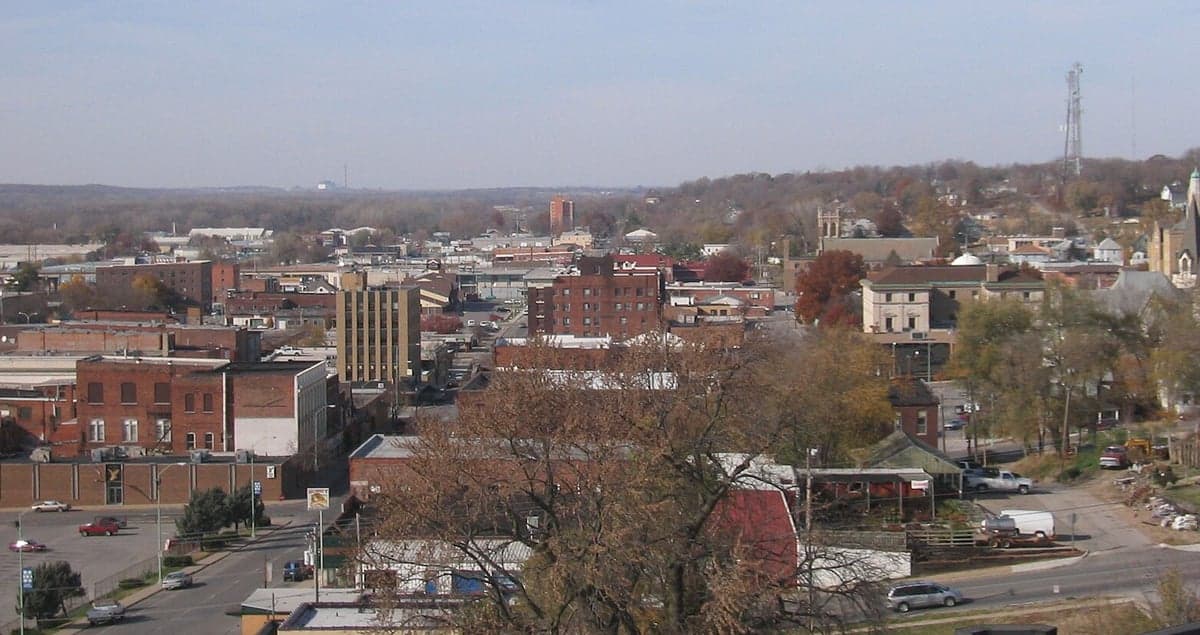
Photo: Wikipedia
Quality of Life in Ottumwa, IA
A high quality of life with strong walkability, manageable living costs, healthy neighborhood signals, and solid amenity access.
What does Quality of Life tell us?
Quality of Life blends cost of living, nearby amenities, socioeconomic signals, and neighborhood character. City-level scores represent the whole municipality; individual neighborhoods can differ.
What does this tell us?
Quality of Life blends cost of living, nearby amenities, socioeconomic signals, and neighborhood character. City-level scores represent the whole municipality; individual neighborhoods can differ.
Cost of Living
38% below national average
The Real Cost of Living in Ottumwa, IA for 2026
| Tier | Individual | Family (4) |
|---|---|---|
| Survival | $15k | $29k |
| Comfortable | $26k | $38k |
| Luxury | $103k+ | $160k+ |
| Elite (Top 5%) | $121k+ | $188k+ |
150%
The Area Signal
A metric tracking the socioeconomic signals of the area.


Hobbies
Explore the areaGroceries
4 within 10 miles
Gas
0 within 10 miles
Hospital
3 within 20 miles
Airport
MCI — Kansas City International
Post Office
USPS — Ottumwa, IA
Critical Amenities
Quality-of-Life Analysis
Ottumwa, Iowa, presents a notably affordable quality of life shaped by its working-class roots and modest affluence levels. With a cost of living index of 62—well below the national average of 100—the city attracts residents seeking financial breathing room, including young families, retirees on fixed incomes, and manufacturing workers. The median household income hovers around $45,000, reflecting a community where economic stability comes more from low expenses than high earnings, and where the population of roughly 25,000 values practicality over prestige.
How housing costs and everyday expenses compare to nearby areas
Housing in Ottumwa is exceptionally affordable, with a median home value of just $92,400 and a median rent of $956 per month. These figures are roughly half the national median and significantly undercut nearby cities like Iowa City (median home value ~$220,000) and Des Moines (~$190,000). Even compared to smaller regional peers such as Fairfield or Centerville, Ottumwa’s housing stock—much of it older, single-family homes—remains the cheapest option in southeast Iowa. The average commute of just 17 minutes further reduces transportation costs, a sharp contrast to the 25- to 30-minute drives common in larger metro areas. Utility costs and grocery prices also track below national averages, meaning a household earning $50,000 here effectively has the purchasing power of one earning $80,000 in a high-cost city like Denver or Seattle.
What daily life is like for families: schools, amenities, and local rhythm
Daily life in Ottumwa moves at a slow, predictable pace. The Ottumwa Community School District serves roughly 4,500 students, with Ottumwa High School offering a range of vocational and college-prep tracks, though graduation rates (around 85%) trail the state average. For recreation, the city maintains several parks along the Des Moines River, including the 200-acre Ottumwa Park with sports fields and a campground. The Bridge View Center hosts community events and concerts, while the Ottumwa Regional Airport provides limited commercial flights. Retail and dining options are concentrated along Quincy Avenue and the Ottumwa Mall, but residents often drive 45 minutes to Iowa City or an hour to Des Moines for major shopping or specialized healthcare. The local economy is anchored by employers like John Deere Ottumwa Works (manufacturing), Walmart Distribution, and the Ottumwa Regional Health Center, giving the city a blue-collar, nine-to-five rhythm. Cultural amenities are sparse—there is no major performing arts venue or four-year university within city limits—but the nearby Indian Hills Community College provides adult education and workforce training.
Ottumwa is best suited for those who prioritize low housing costs and a short commute over urban amenities or career diversity. Retirees on fixed incomes, remote workers seeking a low-overhead base, and manufacturing employees at John Deere or other industrial plants will find the affordability compelling. However, professionals in tech, finance, or creative fields may struggle with limited local job options and a lack of cultural density. The city offers a stable, no-frills environment where financial stress is low, but the trade-off is a quieter, more isolated lifestyle that requires driving for many services and entertainment.

Crime in Ottumwa, IA
Generally safer than 65% of comparable U.S. locations.
Violent CrimeViolent Crime Analysis
Property CrimeProperty Crime Analysis
Crime Analysis
Ottumwa, Iowa, reports a violent crime rate of 280.2 incidents per 100,000 residents and a property crime rate of 2,218.2 per 100,000, placing it above national averages for both categories. While not among the most dangerous cities in the state, these figures indicate a community where residents should remain vigilant, particularly regarding property-related offenses. The city’s overall safety picture is shaped by its status as a regional economic hub in Wapello County, where crime patterns reflect both local socioeconomic factors and broader regional trends.
Crime in context
Ottumwa’s violent crime rate of 280.2 per 100,000 is roughly 25% higher than the national average of 224 per 100,000 and significantly exceeds the Iowa state average of approximately 200 per 100,000. Property crime in Ottumwa, at 2,218.2 per 100,000, is nearly double the national average of 1,195 per 100,000 and well above the Iowa state average of 1,450 per 100,000. These comparisons place Ottumwa in a higher-risk tier among Iowa’s smaller cities, though it remains below the rates seen in larger metropolitan areas like Des Moines or Cedar Rapids. The elevated property crime rate is particularly notable, as it suggests a persistent issue with theft, burglary, and vehicle-related offenses that affects a broad swath of the population.
What residents experience
For daily life in Ottumwa, property crime is the most tangible concern. Residents commonly report incidents of vehicle break-ins, shed burglaries, and package theft, especially in neighborhoods near the downtown core and along major corridors like Highway 63. Violent crime, while less frequent, includes aggravated assault and robbery, often concentrated in specific areas and frequently linked to disputes or substance abuse. The local police department has implemented community policing initiatives and crime prevention programs, but the city’s property crime rate has remained stubbornly high over the past five years. Residents are advised to secure homes and vehicles, use outdoor lighting, and participate in neighborhood watch groups to mitigate risks.
Neighborhood-level variation in Ottumwa is notable. Areas east of the Des Moines River, including the historic East End and parts of the North End, tend to report higher crime densities, while newer subdivisions on the west side and southern outskirts generally see fewer incidents. The Ottumwa Housing Authority’s properties and some older rental districts also show elevated crime reports. Prospective residents should research specific blocks and consult local police crime maps, as safety can vary significantly within a few blocks. Overall, while Ottumwa is not a high-crime city by national standards, its above-average rates—especially for property crime—warrant a cautious approach to personal safety and property protection.
* Values derived from national, state, county, city and local statistics and may differ in a specific area. Last updated: 2026-04-19T22:34:29.000Z
Narrative content on this page is AI-generated and may contain mistakes. Verify any details that matter before acting on them.
ReloMaps may earn a commission from affiliate links at no extra cost to you.

