Photo: Wikipedia
Political ClimatePolitical Climate in Ottumwa, IA
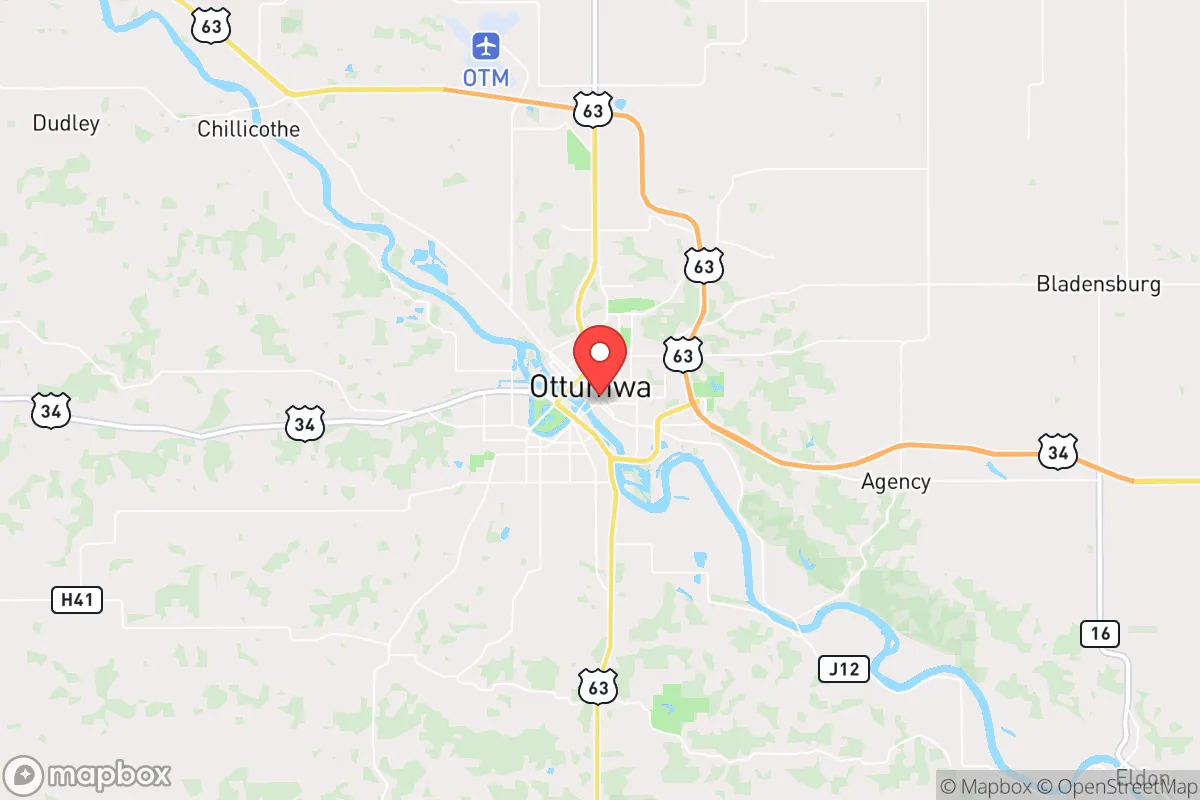
District shown is the primary district for this city’s centroid. Cities may span multiple districts.
Local Political AnalysisPolitical Analysis of Ottumwa, IA
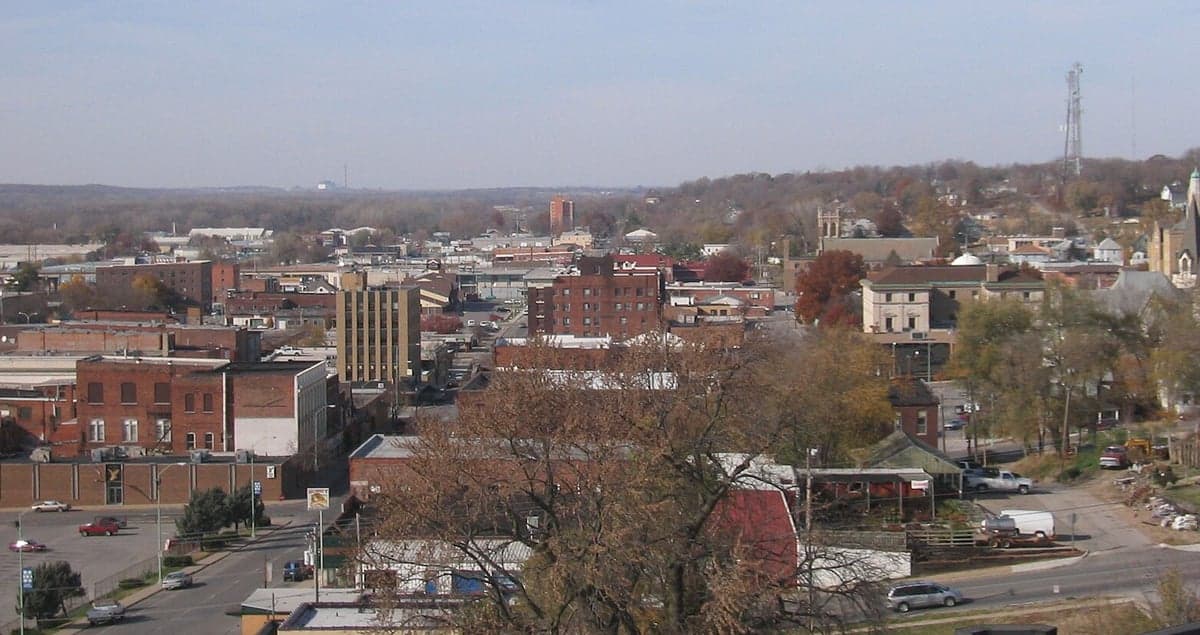
Ottumwa sits in a political sweet spot that’s been shifting under our feet. The Cook PVI of R+2 tells you the district leans slightly Republican, but that number doesn’t capture the real story. For decades, this was a solid blue-collar Democrat stronghold—union shops at John Deere and the old meatpacking plants kept things reliably left. But starting around 2016, you could feel the ground tilt. The working-class base started voting more on cultural and economic freedom issues than on party loyalty. Today, Ottumwa is a true battleground at the local level, but the trajectory is clearly toward the right, especially among younger families and small business owners who are fed up with government overreach.
How it compares
Drive 30 minutes north to Fairfield, and you’re in a different universe—that town’s got a strong progressive streak thanks to the Maharishi University crowd and a younger, artsy population. Head south to Bloomfield, and you’ll find a deep-red rural county that hasn’t voted for a Democrat in a generation. Ottumwa sits right in the middle, politically and geographically. Wapello County itself has been trending redder: Trump won it in 2020 after it went for Obama twice. The real contrast, though, is inside city limits. The old guard—retired union workers, long-time city employees—still lean Democratic, but the new blood moving in from the suburbs and farms is overwhelmingly conservative. You see it in school board races and city council meetings: the progressive agenda gets pushed back hard here.
What this means for residents
For folks who value personal freedoms and limited government, Ottumwa is a decent place to be—but you’ve got to keep an eye on it. The city council has flirted with zoning overreach and some feel-good diversity initiatives that smell like top-down mandates. Property taxes have crept up, and there’s constant pressure from Des Moines to adopt state-level progressive policies on everything from energy standards to education curriculum. The good news is that the local pushback is real. The county supervisors are solidly conservative, and the school board has resisted critical race theory and gender ideology indoctrination so far. If you’re worried about government telling you how to run your business or raise your kids, Ottumwa still respects that line—but it takes vigilance to keep it that way.
One thing that sets Ottumwa apart is its stubborn independence. We don’t have the kind of boutique progressive activism you see in Iowa City or even Fairfield. The local culture is still rooted in hunting, farming, and manufacturing—practical, hands-on, and skeptical of anyone who thinks they know better than you do. That said, the biggest threat I see isn’t from the left in town; it’s from state-level mandates that chip away at local control. The next few years will tell whether Ottumwa holds its conservative ground or gets dragged along with the national tide. For now, it’s a place where you can still speak your mind without getting canceled, and where the government mostly stays out of your way—if you keep pushing back.

State Political ClimatePolitical Climate in Iowa
State Political AnalysisPolitical Environment in the State
Iowa has been a reliably Republican state in presidential elections since 2016, but it wasn't always that way. For decades, it was a classic swing state, voting for Barack Obama twice before flipping hard to Donald Trump by nearly 10 points in 2020 and again in 2024. The shift is driven by a massive rural-urban realignment: the Des Moines metro and Iowa City have moved left, while the rest of the state has moved right. Today, the GOP holds a trifecta in state government, and the political culture is increasingly defined by a conservative, freedom-oriented agenda that prioritizes low taxes, parental rights, and gun rights.
Urban vs. rural divide
The political map of Iowa is a textbook example of the urban-rural split. The Des Moines metro (Polk, Dallas, and Warren counties) is the state's blue anchor, with Polk County voting Democratic by about 12 points in 2024. Iowa City (Johnson County) is the deepest blue, voting +30 Democratic, driven by the University of Iowa's liberal faculty and student population. On the flip side, the rest of the state is deeply red. Counties like Sioux, Plymouth, and Lyon in the northwest routinely vote 70-80% Republican. The most dramatic flip has been in the northeast: Linn County (Cedar Rapids) went from +18 Obama in 2008 to +2 Trump in 2024, a 20-point swing that mirrors the broader trend. Suburbs like Ankeny and Waukee (Dallas County) are now competitive, but still lean right, while smaller cities like Council Bluffs and Sioux City are solidly red. The rural-urban divide is stark: drive 20 minutes outside Des Moines, and you're in deep Trump country.
Policy environment
Iowa's policy environment has shifted sharply conservative since 2017. The state has a flat income tax of 3.8% (phasing down to 3.5% by 2027), and property taxes are among the lowest in the Midwest. There is no estate tax. The regulatory posture is business-friendly, with right-to-work laws and a low corporate tax rate. On education, Governor Kim Reynolds signed a universal school choice bill in 2023, allowing any family to use state funds for private or homeschool expenses. This was a major win for parental rights. Healthcare is a mixed bag: Iowa expanded Medicaid under the ACA, but the state has also imposed work requirements for able-bodied adults. Election laws tightened after 2020: voter ID is required, absentee ballot drop boxes are restricted, and early voting windows were shortened. The state also passed a six-week abortion ban in 2023 (the "fetal heartbeat" law), which is currently blocked by the courts but reflects the legislature's intent. Overall, the policy environment is one of the most freedom-oriented in the Midwest, with a strong emphasis on local control and limited government.
Trajectory & freedom
Iowa is becoming more free in several key areas, but there are warning signs. On the positive side, the state passed constitutional carry (permitless carry) in 2021, meaning no license is needed to carry a concealed firearm. The school choice law expanded educational freedom dramatically. Property rights were strengthened with a 2022 law limiting eminent domain for carbon pipelines, a major issue in rural areas. However, there are concerning trends. The state's medical marijuana program is extremely limited—only low-THC oils are allowed, and there's no recreational cannabis. This is a freedom gap compared to neighboring Illinois and Minnesota. Additionally, the state's occupational licensing requirements remain burdensome for some trades, though reform is ongoing. The biggest red flag for conservatives is the potential for federal overreach: Iowa's agricultural economy is heavily dependent on federal subsidies and trade policy, which could be weaponized by a future progressive administration. On balance, the state is moving in the right direction on most fronts, but vigilance is needed to prevent creeping government control.
Civil unrest & political movements
Iowa has seen relatively little civil unrest compared to coastal states, but there have been flashpoints. The 2020 Black Lives Matter protests in Des Moines and Iowa City were largely peaceful, though there were some property damage incidents. The state's response was measured, with the governor deploying the Iowa State Patrol to protect property without heavy-handed tactics. On the right, the most visible movement is the "Parents' Rights" coalition, which successfully pushed for the school choice law and book bans in school libraries. The anti-carbon pipeline movement (against the Summit Carbon Solutions pipeline) has been a major grassroots effort, with farmers and landowners organizing to fight eminent domain. Immigration politics are relatively quiet, as Iowa has a small foreign-born population (about 5%), but there have been tensions in meatpacking towns like Storm Lake and Postville, where immigrant labor is essential. Election integrity is a hot topic: the 2020 and 2022 elections were certified without major controversy, but the state's new voting laws have been praised by conservatives and criticized by Democrats. Overall, the political climate is stable, with activism focused on specific policy battles rather than broad unrest.
Projection
Over the next 5-10 years, Iowa is likely to become more Republican and more conservative, but with a caveat. The Des Moines metro is growing and diversifying, which could slowly shift the state's overall lean. However, the rural areas are shrinking, and the GOP has gerrymandered the state's congressional districts to be safely red (three of four seats are Republican). The biggest demographic shift is the influx of remote workers from Chicago and the coasts, who are drawn to Iowa's low cost of living and conservative policies. These newcomers tend to be moderate Republicans or libertarian-leaning, which could push the state toward a more "live and let live" conservatism rather than a culture-war-focused one. The wildcard is agriculture: if federal farm policy turns hostile under a future Democratic administration, Iowa's economy could suffer, potentially fueling populist anger. For a new resident, expect the state to remain a conservative stronghold, with continued emphasis on school choice, gun rights, and low taxes. The culture war battles will likely intensify around education and transgender issues, but the overall trajectory is one of increasing personal freedom.
Bottom line for a new resident: Iowa is a great fit if you value low taxes, strong gun rights, educational freedom, and a stable, family-friendly environment. The political climate is conservative but not extreme—think "prairie libertarianism" rather than fire-breathing populism. You'll find a state that respects your personal choices, as long as you respect others' right to do the same. The biggest practical consideration is that your vote will matter more in local primaries than in general elections, as the GOP dominance means the real decisions are made in the primary. If you're moving from a blue state, you'll notice a dramatic difference in how government interacts with your daily life—less red tape, lower taxes, and a general sense that the state trusts you to make your own decisions. Just be prepared for cold winters and a lot of cornfields.
* Values derived from national, state, county, city and local statistics and may differ in a specific area. Last updated: 2026-04-19T22:34:29.000Z
Narrative content on this page is AI-generated and may contain mistakes. Verify any details that matter before acting on them.
ReloMaps may earn a commission from affiliate links at no extra cost to you.

