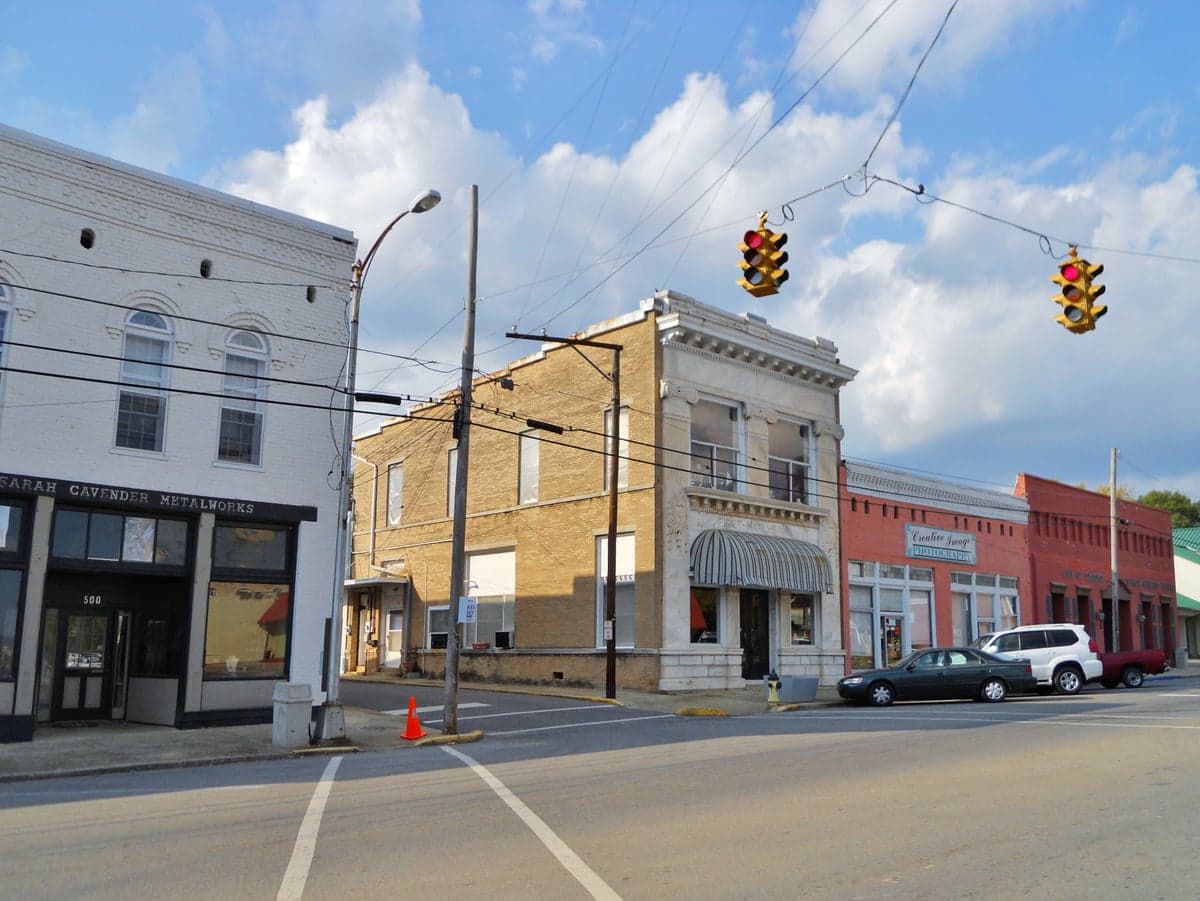
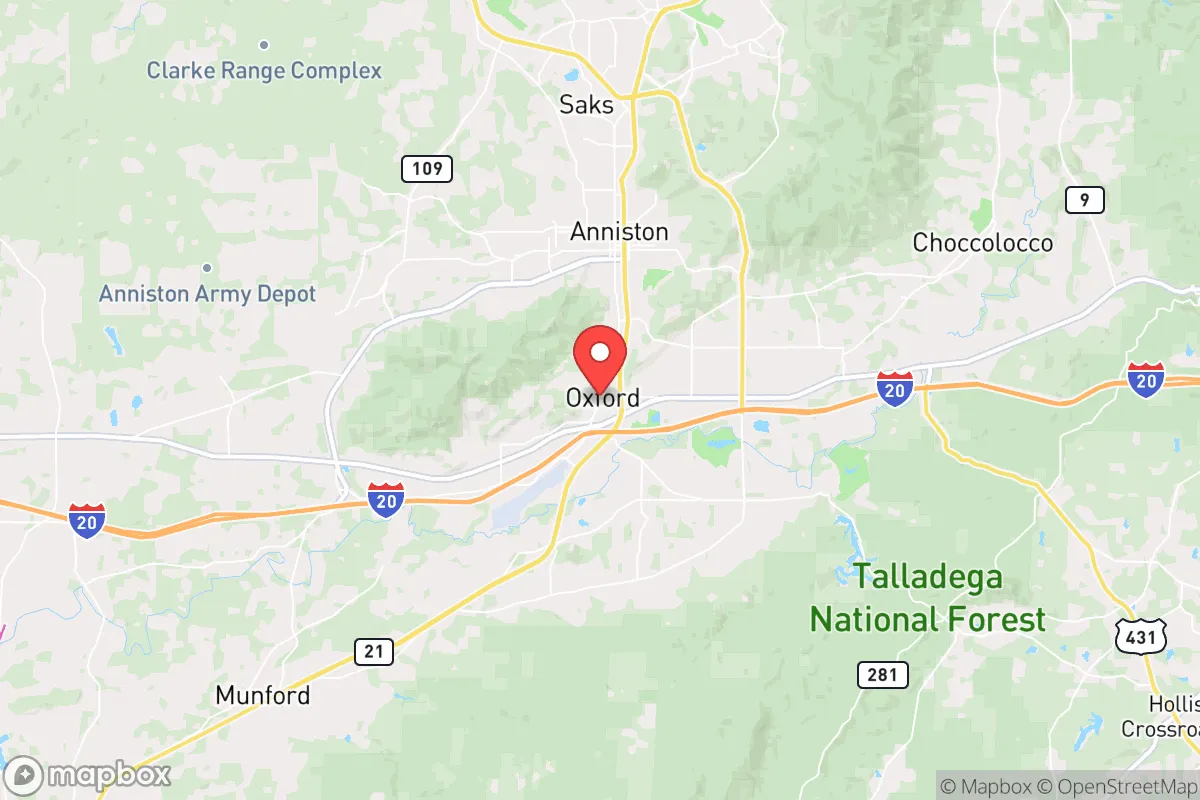
Photo: Wikipedia
Personal Sovereignty in Oxford, AL
Viable for self-reliance. Generally workable, though some barriers may limit total independence.
What does Personal Sovereignty tell us?
Personal Sovereignty measures your capacity for self-reliance and independence with minimal government friction. Higher scores mean fewer barriers between you and the way you want to live... but it assumes you have the space you need and good neighbors.
What does this tell us?
Personal Sovereignty measures your capacity for self-reliance and independence with minimal government friction. Higher scores mean fewer barriers between you and the way you want to live... but it assumes you have the space you need and good neighbors.
State Policy
Energy independence: Importer (45% of energy produced in-state)
Personal Liberty
Homesteading

Personal Liberty Analysis
Oxford, Alabama offers a notably high degree of personal sovereignty, particularly when measured against the encroaching regulatory environments found in many other parts of the country. For the individual or family operating from a survivalist or prepper mindset, this small city in Calhoun County represents a strategic pocket where state-level protections and local culture align to maximize personal autonomy. The combination of a light tax burden, strong self-defense laws, and a regulatory posture that largely leaves people alone makes Oxford a viable base of operations for those prioritizing self-reliance and minimal government interference in daily life.
Tax burden and regulatory posture: How Alabama’s fiscal conservatism protects your resources
Alabama’s overall tax burden is among the lowest in the nation, and Oxford residents benefit directly from this. There is no state-level tax on groceries or prescription drugs, which is a tangible relief for families stockpiling supplies or managing tight budgets. The state income tax is a flat 5% on taxable income above $3,000, but the standard deduction and personal exemptions are generous enough that many lower-to-middle-income households pay very little. Property taxes in Calhoun County are exceptionally low, typically ranging from 0.3% to 0.5% of assessed value, meaning a $200,000 home might carry an annual tax bill of only $600 to $1,000. This low property tax burden directly reduces the risk of being taxed out of your home, a growing concern in states with runaway assessments. On the regulatory side, Alabama operates with a distinctly hands-off philosophy. There are no state-level building codes enforced uniformly across all jurisdictions—Oxford has its own modest codes, but they are far less onerous than those in states like California or New York. Business licensing is straightforward, and there is no state income tax on Social Security benefits, which matters for multi-generational homesteading plans. The state’s right-to-work laws further reduce government entanglement in private employment, giving individuals more freedom to contract their labor without forced union dues or closed-shop arrangements.
Self-defense and gun law specifics: What Alabama’s constitutional carry means for your security
Alabama is a constitutional carry state, meaning that as of 2022, any law-abiding adult 21 or older can carry a concealed handgun without a permit. This is a foundational sovereignty issue for the prepper community: the right to self-defense is not contingent on government permission, paperwork, or fees. Oxford sits in Calhoun County, which has a strong tradition of Second Amendment support, and local law enforcement generally respects this right. The state also has a “Stand Your Ground” law with no duty to retreat, which applies in any place where you are lawfully present. This legal framework gives residents the confidence to defend their home, vehicle, or person without fear of prosecution for exercising that right. Additionally, Alabama does not have a firearm registry, no waiting periods for long guns or handguns, and no restrictions on magazine capacity or “assault weapon” features. For those building a serious preparedness arsenal, this means you can legally own standard-capacity magazines, suppressors (with federal NFA paperwork), and any commonly available rifle without state-level interference. The only notable restriction is that private sales between individuals do not require a background check, which preserves a traditional avenue for transferring firearms without government oversight. For the survivalist, this legal environment is a significant advantage over states like New York, California, or Illinois, where even owning certain firearms can be a felony.
Self-reliance and homesteading viability: Lot sizes, zoning, and off-grid feasibility in Oxford
Oxford’s zoning and land-use policies are generally favorable to self-reliance, though there are some municipal limits to be aware of. Within the city limits, standard residential lots range from a quarter-acre to half-acre, but larger parcels—one to five acres—are available in the outskirts and unincorporated areas of Calhoun County just minutes from downtown. The city’s zoning code does not prohibit backyard chickens, small-scale vegetable gardens, or rainwater collection, though it does have restrictions on livestock like goats or pigs within city limits. For serious homesteading, the smart play is to buy land just outside Oxford’s corporate limits, where county zoning is virtually nonexistent. In unincorporated Calhoun County, you can keep horses, cattle, or poultry, build a workshop or barn, and set up solar panels without needing a parade of permits. Off-grid feasibility is high: Alabama has no state law prohibiting rainwater harvesting, and the region receives about 52 inches of rain annually, making water independence achievable with proper cistern storage. Solar energy is also viable, with net metering available through Alabama Power, though the state’s utility monopoly means you cannot sell excess power back at retail rates—you’ll want to size your system for self-consumption. Septic systems are standard for rural properties, and well drilling is common. The main regulatory hurdle is that the city does require permits for new construction and major renovations, but these are straightforward and inexpensive compared to coastal or northeastern states. For the prepper looking to establish a resilient homestead with food, water, and energy independence, Oxford’s surrounding rural areas offer a low-hassle path to that goal.
Personal liberties: Parental rights, medical autonomy, speech, and property protections
Alabama has some of the strongest parental rights laws in the country, which is a critical factor for families concerned about government overreach in education and healthcare. The state’s “Parents’ Bill of Rights” (Alabama Code § 16-1-50) explicitly affirms that parents have the fundamental right to direct the upbringing, education, and healthcare of their children. This includes the right to opt out of any school curriculum or activity without penalty, and to access all educational records. In practice, this means Oxford parents can reject mask mandates, vaccine requirements for school attendance, or controversial sex education content without fear of legal retaliation. On medical autonomy, Alabama has not enacted broad vaccine mandates for adults, and the state legislature has passed laws prohibiting COVID-19 vaccine mandates by state and local governments. While the state does have strict laws on abortion, that is a separate issue from the broader medical freedom landscape—for the prepper, the key point is that you can choose your own healthcare providers and treatments without state interference, including alternative or holistic approaches, as long as they don’t involve controlled substances. Free speech protections are robust: Alabama has no hate speech laws that criminalize political or religious expression, and the state’s public universities generally respect First Amendment rights. Property rights are also strongly protected. Alabama is a “Dillon’s Rule” state, meaning local governments only have powers explicitly granted by the state, which limits the ability of Oxford’s city council to impose draconian land-use restrictions. Eminent domain abuse is rare, and the state has laws requiring just compensation well above market value for any taking. For the individual who values being left alone to live, speak, and raise a family according to their own conscience, Oxford’s legal environment is a clear positive.
Overall, Oxford, Alabama offers a level of personal sovereignty that is increasingly rare in the United States. The combination of constitutional carry, low taxes, minimal zoning outside city limits, strong parental rights, and a culture of self-reliance creates a strategic environment for those who prioritize autonomy over convenience. While no location is perfect—Alabama’s utility monopoly and some municipal restrictions are minor drawbacks—the city and its surrounding county provide a legal and cultural foundation that allows individuals and families to prepare for uncertain times without fighting the government every step of the way. For the survivalist or prepper evaluating relocation options in the Southeast, Oxford represents a solid, defensible choice where the state has your back, not your leash.

* Values derived from national, state, county, city and local statistics and may differ in a specific area. Last updated: 2026-04-19T19:03:59.000Z
Narrative content on this page is AI-generated and may contain mistakes. Verify any details that matter before acting on them.
ReloMaps may earn a commission from affiliate links at no extra cost to you.

