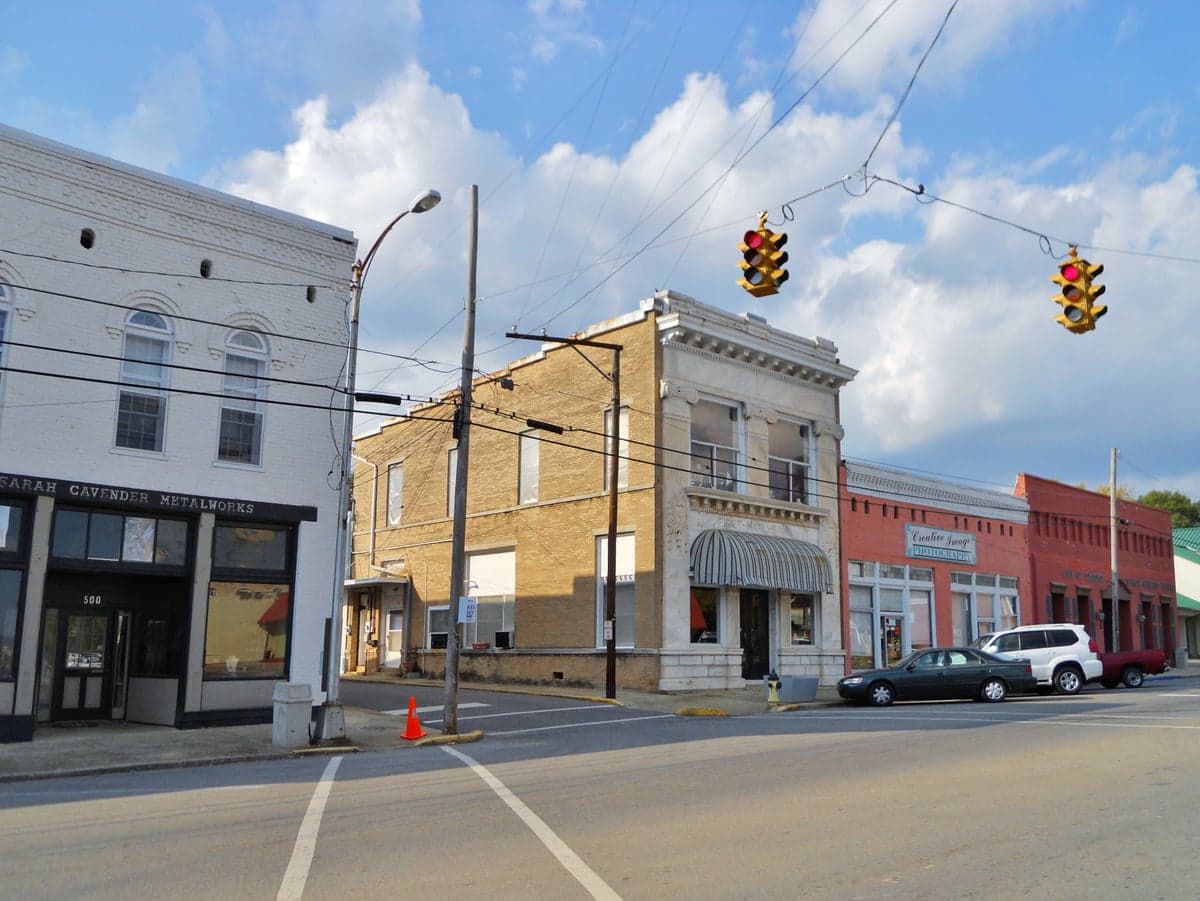
Photo: Wikipedia
Political ClimatePolitical Climate in Oxford, AL
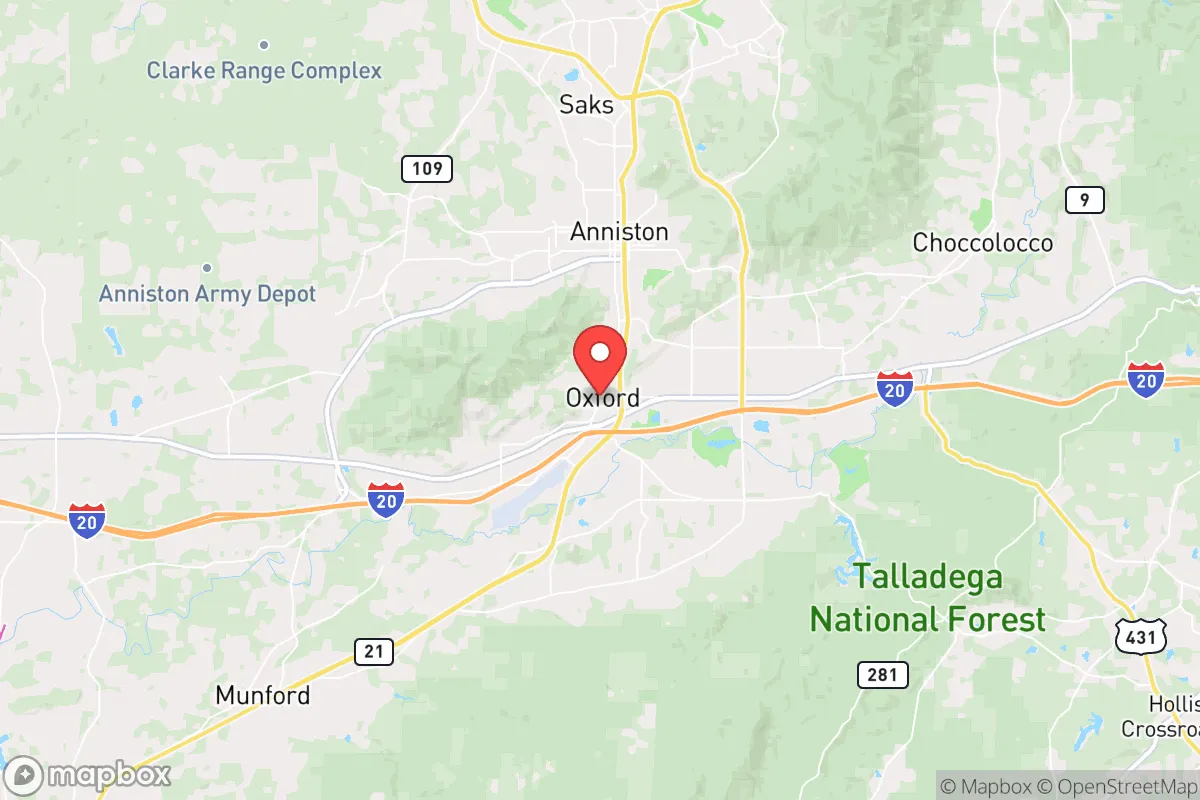
District shown is the primary district for this city’s centroid. Cities may span multiple districts.
Local Political AnalysisPolitical Analysis of Oxford, AL
Oxford, Alabama, is about as solidly conservative as it gets, and that’s not changing anytime soon. The Cook PVI rating of R+23 tells you everything you need to know—this area votes Republican by a massive margin, and it’s been that way for decades. You won’t find much of a political shift here, and honestly, most folks like it that way. The local government tends to keep its nose out of your business, which is a big reason why people move here from places like Birmingham or Atlanta. If you’re looking for a place where personal freedoms and traditional values still mean something, Oxford is a breath of fresh air.
How it compares
Drive just 15 minutes west to Anniston, and you’ll notice a different vibe. Anniston has a slightly more moderate lean, with a few more progressive voices cropping up in local elections, especially around city council races. Head south to Talladega, and it’s still conservative, but you’ll see more of a mix—some folks there are starting to push for changes in zoning and school policies that feel a little too “big government” for my taste. Oxford, though? It’s a rock. The county itself, Calhoun County, leans red, but Oxford is the anchor. Neighboring communities like Jacksonville (home to Jacksonville State University) have a younger, more transient population that can swing a bit left on social issues, but Oxford’s long-time residents keep the balance firmly in check. The contrast is clear: Oxford is where people come to get away from the overreach you see in bigger cities.
What this means for residents
For daily life, this political climate means fewer headaches. You’re not going to see the city council pushing through mask mandates or business shutdowns like you might in other parts of the state. Property taxes stay low, and there’s a general attitude of “live and let live” as long as you’re not hurting anyone. The school board here is conservative, so curriculum debates are minimal—parents have a real say in what their kids are taught. That said, there’s a quiet concern among locals about the slow creep of progressive ideas from state-level politics or even from Birmingham’s influence. Some worry that if the county shifts even a little, we could see more regulations on things like gun ownership or property rights. For now, though, Oxford remains a place where you can trust that your Second Amendment rights aren’t under threat, and your tax dollars aren’t being wasted on social experiments.
One thing that stands out culturally is the strong sense of community self-reliance. Oxford doesn’t lean heavily on state or federal handouts—people here take pride in handling their own problems. You’ll see that in the local churches, the volunteer fire departments, and the way neighbors step up when someone’s in a bind. There’s a healthy skepticism of government overreach, whether it’s about land use, business licenses, or school policies. If you’re the type who values personal responsibility over bureaucratic control, Oxford feels like home. The trajectory is steady—no dramatic swings, just a quiet determination to keep things the way they are. Long-term, as long as the city keeps electing leaders who respect individual freedoms, Oxford will stay a conservative stronghold in a state that’s already pretty red. Just keep an eye on those county-level elections; that’s where the real battles happen.

State Political ClimatePolitical Climate in Alabama
State Political AnalysisPolitical Environment in the State
Alabama is a deeply red state, with Republicans holding every statewide elected office and supermajorities in both legislative chambers, but the political climate is more layered than a simple partisan label suggests. The state has shifted sharply rightward over the past 20 years, driven by the realignment of rural white voters and the collapse of the old "Yellow Dog" Democratic tradition in the Black Belt. Today, the dominant coalition is a mix of evangelical conservatives, rural populists, and business-oriented suburbanites, though significant pockets of Democratic strength remain in majority-Black counties and a few urban centers.
Urban vs. rural divide
The political map of Alabama is starkly divided. The state’s largest metro, Birmingham (Jefferson County), is a Democratic stronghold, delivering about 60% of its vote to Joe Biden in 2020. But drive 20 minutes south to Shelby County—suburban Birmingham—and you’ll find some of the most reliably Republican turf in the nation, with Trump winning by 30 points. Montgomery and Mobile are competitive but lean Democratic in local races, while Huntsville (Madison County) is a fascinating exception: a fast-growing, high-education, high-income city that still votes Republican by double digits, thanks to its defense and aerospace workforce. The rural Black Belt counties like Greene and Lowndes vote 80%+ Democratic, but they have tiny populations. The real engine of Republican dominance is the vast rural and exurban expanse—places like Cullman, Baldwin County (Gulf Shores), and Lee County (Auburn/Opelika)—where Trump won by 40-50 points. The divide isn’t just urban vs. rural; it’s also racial and educational, with white college graduates in Huntsville and Birmingham suburbs breaking more moderate than their non-college counterparts.
Policy environment
Alabama’s policy environment is aggressively conservative. There is no state income tax on retirement income, and the state’s overall tax burden is among the lowest in the nation, though the sales tax is regressive (often 9-10% in cities). The state has a right-to-work law, no state minimum wage above the federal $7.25, and a regulatory climate that the American Legislative Exchange Council consistently ranks in the top 10 for business freedom. On education, Alabama passed the Alabama CHOICE Act in 2024, creating a universal school choice program that allows parents to use state funds for private school, homeschooling, or tutoring—a major win for parental rights. Healthcare is a mixed bag: the state refused Medicaid expansion under Obamacare, leaving many rural hospitals struggling, but also avoiding the federal strings that come with it. Election laws are strict: voter ID is required, absentee voting is limited, and the state banned ballot drop boxes in 2022. The legislature also passed a law in 2023 making it a felony for election officials to send unsolicited absentee ballot applications. For a conservative, this is a state that largely respects local control and limits federal overreach, though the heavy reliance on sales taxes and the lack of a homestead exemption for property taxes can feel burdensome to new residents.
Trajectory & freedom
Alabama is trending more free in several key areas, but with some concerning caveats. The 2022 permitless carry law (Constitutional Carry) was a landmark expansion of Second Amendment rights—no permit needed to carry a concealed firearm. The state also passed the Alabama Parental Rights Protection Act in 2022, which prohibits schools from withholding information about a child’s mental or physical health from parents, and bans instruction on sexual orientation or gender identity in K-5 classrooms. In 2023, the legislature banned transgender medical procedures for minors. On property rights, Alabama is a strong "private property rights" state, with no statewide zoning mandates and limited eminent domain abuse. However, there are warning signs: the state’s heavy reliance on federal funding (about 40% of the budget) creates a vulnerability to Washington’s strings. The 2024 expansion of gambling (a lottery and casino bill) passed despite moral opposition, signaling a shift toward revenue-seeking that could lead to higher taxes down the road. The biggest freedom concern is the state’s criminal justice system—Alabama has one of the highest incarceration rates in the world, and the 2023 prison reform bill was modest at best. For a freedom-minded resident, the trajectory is positive on guns and parental rights, but the prison-industrial complex and federal dependency are real red flags.
Civil unrest & political movements
Alabama has not seen the kind of large-scale civil unrest seen in Portland or Seattle, but there have been flashpoints. The 2020 George Floyd protests in Birmingham and Montgomery were significant, with some property damage and clashes, but they were contained and short-lived. The state’s political activism is more organized around conservative causes: the Alabama Citizens for Life is a powerful force, and the Alabama Republican Party has a strong grassroots network through county-level "Republican Executive Committees." Immigration politics are relatively quiet—Alabama passed HB 56 in 2011, one of the strictest anti-illegal immigration laws in the country, but it was largely gutted by federal courts. Today, the issue is less visible, though the border crisis has renewed calls for state-level enforcement. There is a small but vocal "nullification" movement among some rural counties, with Blount County and St. Clair County passing resolutions declaring themselves "Second Amendment sanctuaries." Election integrity remains a hot topic: the 2022 law banning ballot drop boxes and tightening absentee rules was driven by concerns about fraud, though no widespread fraud has been proven. A new resident would notice that political conversations are common in everyday life—church, the coffee shop, the hunting club—but they are generally civil and respectful, reflecting a culture where people know their neighbors.
Projection
Over the next 5-10 years, Alabama is likely to become more Republican, not less. The in-migration from California and the Northeast is real, but it’s mostly flowing to Huntsville and Auburn, which are already red. The state’s population is growing slowly, but the growth is concentrated in conservative suburbs and exurbs. The Black Belt is losing population, which reduces Democratic vote share. The biggest wildcard is the potential for a Democratic shift among college-educated white voters in Birmingham’s suburbs, but that trend is weak compared to the national pattern. The legislature will likely continue to push school choice, gun rights, and pro-life legislation. The biggest threat to freedom is the state’s fiscal health: if federal funding shrinks, Alabama will face pressure to raise taxes or cut services, which could erode the low-tax environment. A new resident moving in now should expect a state that is stable, culturally conservative, and increasingly assertive in protecting parental rights and gun rights, but with a government that is still too big and too reliant on Washington.
Bottom line for a new resident: Alabama offers a political climate that is friendly to conservatives—low taxes, strong gun rights, school choice, and a culture that respects family and faith. But don’t mistake red for libertarian: the state has a heavy hand in criminal justice, a regressive tax system, and a deep dependence on federal money. If you’re moving here, you’ll find a place where your values are reflected in law, but you’ll also need to stay engaged to keep it that way. The freedom is real, but it’s not automatic—it requires vigilance.
* Values derived from national, state, county, city and local statistics and may differ in a specific area. Last updated: 2026-04-19T19:03:59.000Z
Narrative content on this page is AI-generated and may contain mistakes. Verify any details that matter before acting on them.
ReloMaps may earn a commission from affiliate links at no extra cost to you.

