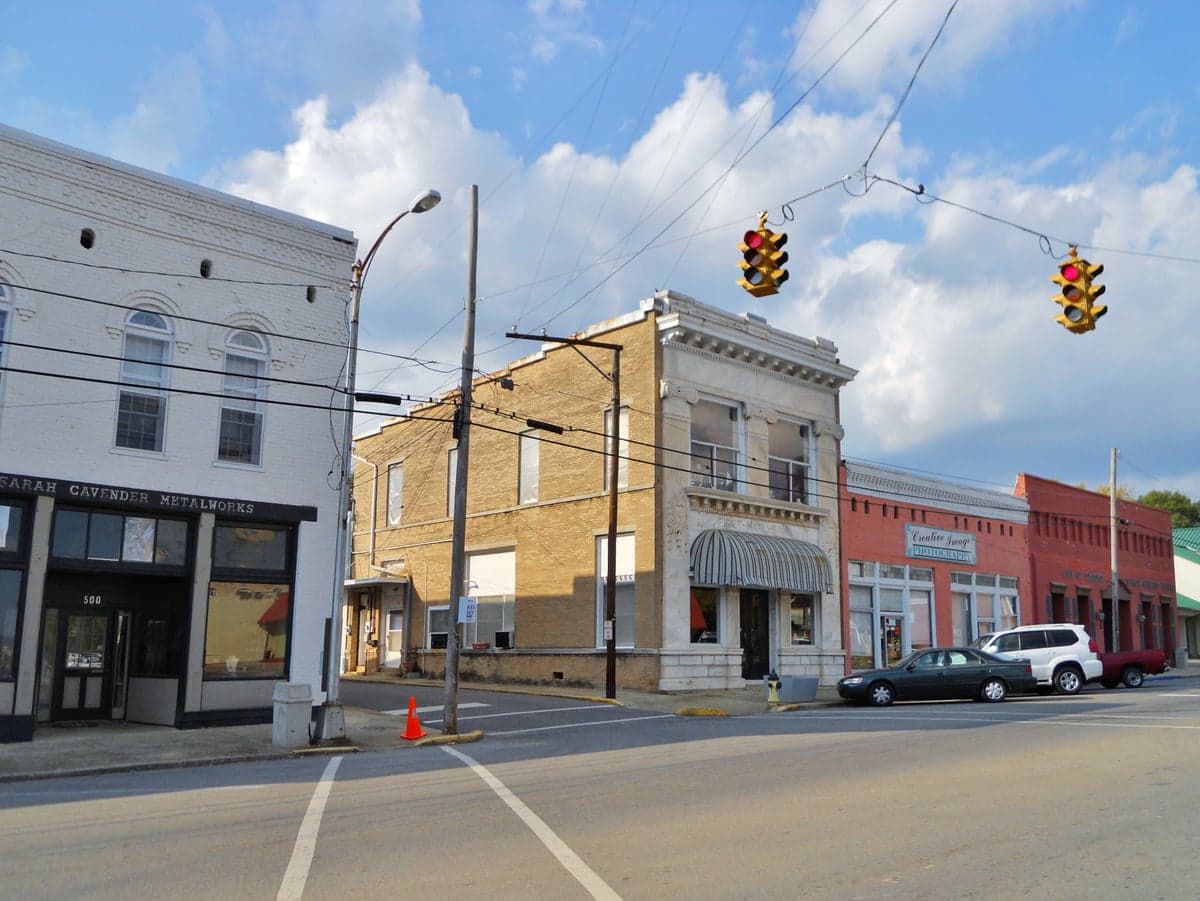
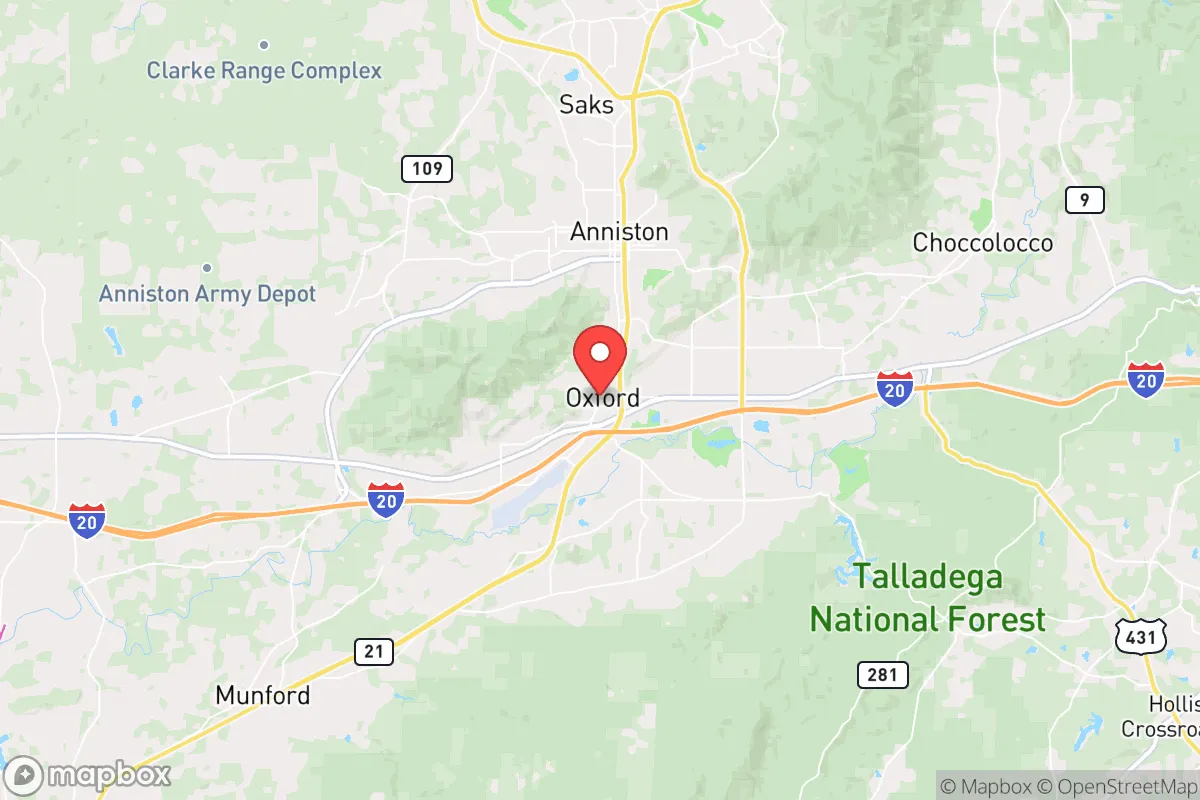
Photo: Wikipedia
Strategic Assessment of Oxford, AL
Workable tactical position. Some exposure to population density or targets, but generally defensible in a crisis.
What does the Strategic Assessment tell us?
Our Strategic Assessment grades tactical survivability of an area. Major population centers, military targets, fallout zones, natural disasters, and border exposure all drive risk — lower exposure means a more defensible position in a crisis.
This is heavily inspired by Joel Skousen's Strategic Relocation book. Highly recommended you checkout the book ($)What does this tell us?
Our Strategic Assessment grades tactical survivability of an area. Major population centers, military targets, fallout zones, natural disasters, and border exposure all drive risk — lower exposure means a more defensible position in a crisis.
This is heavily inspired by Joel Skousen's Strategic Relocation book. Highly recommended you checkout the book ($)Strategic Pillars

Key Distances
Regional Safe Places
Below is our recommended "safe zones" in Alabama and the surrounding area based on our strategic heuristics. For most people, it's unrealistic to live in a “safe zone” full-time due to work, family or other personal reasons. They tend to be more rural. However, many of these areas are perfect for second homes and retreat properties that double as a vacation home or even a short-term rental.
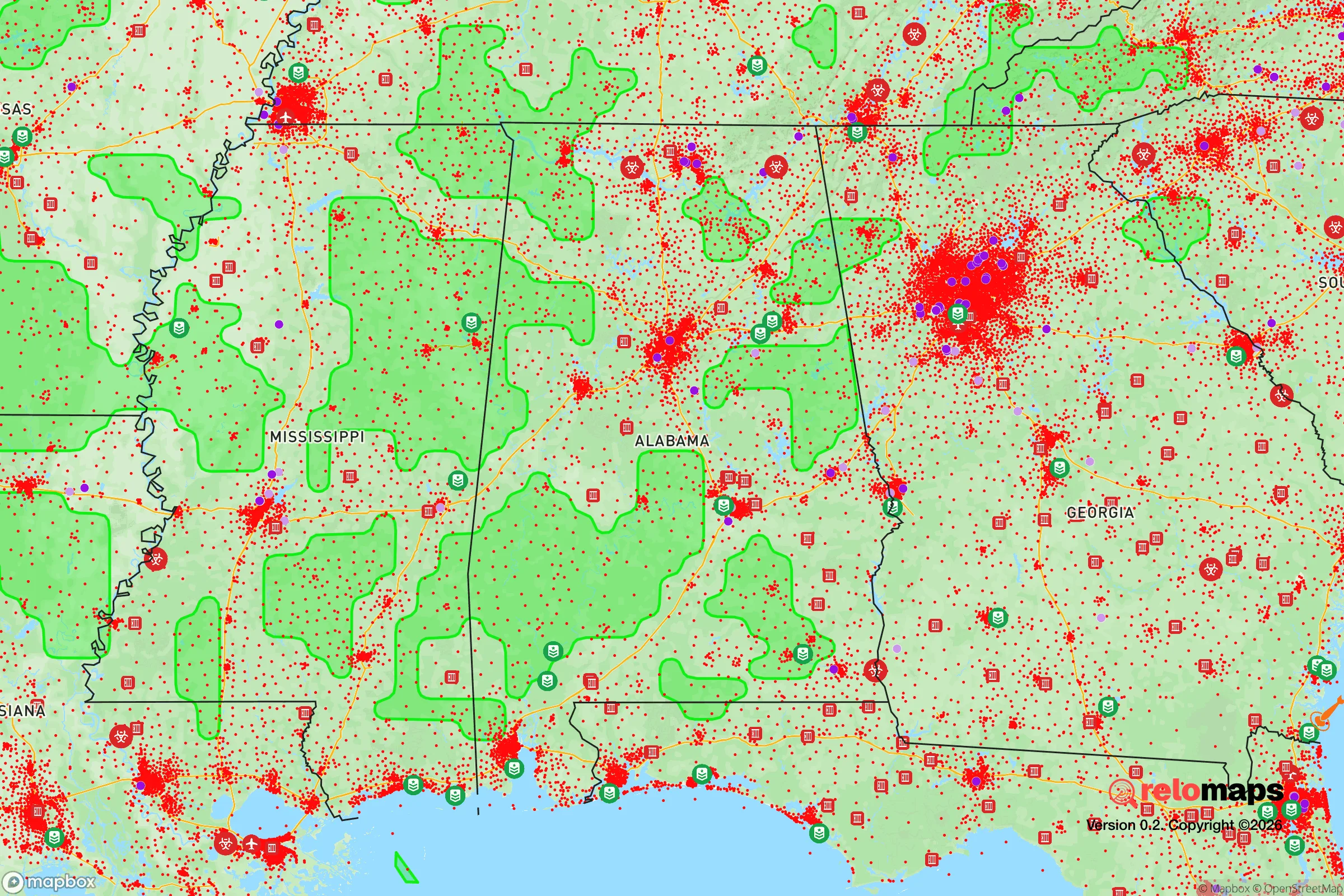
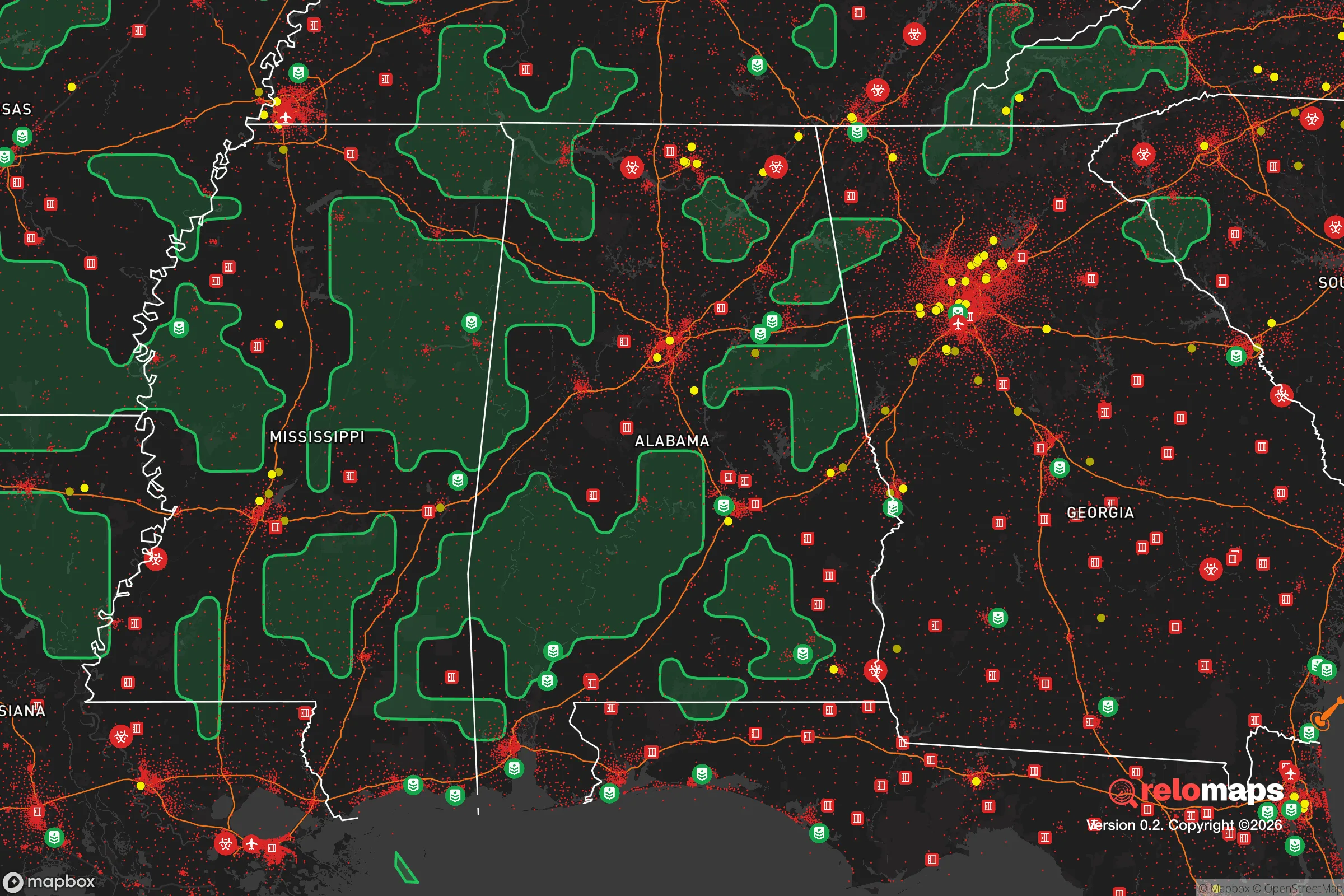


Important Note: For informational purposes only. This does not mean nothing bad ever happens in the green zones. Please use common sense. This is based on public data and modeled with AI. We tried to take a conservative approach but mistakes happen. We update this regularly as new information becomes available.
Solar Generator Recommendations
Backup power matters more here than in safer locations. We've picked three solar generators across budgets and capacity tiers — start with the budget unit if you only need a few essentials, or step up if you want to run a fridge and HVAC for days at a time.

Jackery Portable Power Station Explorer 300
Budget OptionPower on the Go: Weighing only 11 lbs, it's convenient to set up and store with book-sized foldable solar panels

BLUETTI Portable Power Station AC180
Designed for both indoor and outdoor scenarios, AC180 is highly capable as it has a robost capacity and continuous output power.

EF ECOFLOW DELTA Pro Ultra Power Station
Upgraded PickEcoFlow DELTA Pro Ultra is a whole-home energy system designed to grow with your family. Integrated with the Smart Home Panel 2, it scales to meet your evolving energy needs — keeping your home powered, intelligent, and secure through every stage of life.
We earn a commission, at no additional cost to you.
Strategic Assessment Analysis
Oxford, Alabama, sits in a strategic pocket of the Deep South that offers a blend of industrial resilience and geographic insulation, making it a serious contender for those prioritizing long-term preparedness. Located in Calhoun County along the I-20 corridor, Oxford provides a buffer from the immediate fallout zones of major metropolitan areas like Birmingham (roughly 60 miles west) and Atlanta (about 90 miles east), while still maintaining access to critical supply chains and transportation networks. For a conservative-leaning relocator concerned with civic unrest, mass casualty events, and systemic disruptions, Oxford’s position as a regional retail and employment hub—anchored by the Quintard Mall corridor and major employers like the Honda Manufacturing plant in nearby Lincoln—offers a foundation of economic stability that can weather localized shocks. The city’s population of roughly 22,000 is small enough to avoid the anonymity and vulnerability of a large urban center, yet large enough to sustain essential services and a community network that can be activated in a crisis.
Geographic position and natural advantages for long-term security
Oxford’s geographic setting provides several natural advantages that align with a prepper mindset. The city is nestled in the foothills of the Appalachian Mountains, with the Talladega National Forest and Cheaha State Park—Alabama’s highest point—less than 30 minutes to the east. This proximity to rugged, forested terrain offers multiple retreat options and natural barriers that complicate large-scale movement or surveillance by hostile actors. The area’s topography includes ridges and valleys that can serve as defensible positions, while the nearby Coosa River and Lake Logan Martin (about 20 minutes south) provide reliable water sources independent of municipal systems. The climate is temperate, with four distinct seasons that support subsistence gardening and livestock, though summer heat and humidity require planning for water storage and heat-related contingencies. Critically, Oxford is outside the primary hurricane strike zone of the Gulf Coast (roughly 250 miles inland), reducing the risk of storm-induced mass casualty events that could overwhelm regional infrastructure. The region’s low seismic activity and absence of major floodplains further enhance its stability as a long-term base of operations.
Risks, exposures, and proximity to fallout-relevant landmarks
No location is without vulnerabilities, and Oxford’s strategic position comes with specific exposures that a serious relocator must account for. The most significant risk is the I-20 corridor itself, which runs directly through the city and connects Birmingham to Atlanta—two major population centers that could become epicenters of civil unrest, supply chain collapse, or mass evacuation events. In a crisis, I-20 could become a chokepoint for refugees fleeing the cities, potentially overwhelming Oxford’s resources and drawing unwanted attention. The Honda plant in Lincoln (about 15 miles west) and the Anniston Army Depot (roughly 20 miles northeast) are dual-edged assets: they provide economic stability and potential employment for skilled trades, but they also represent industrial and military targets that could attract sabotage, cyberattacks, or conventional strikes. The Anniston depot, in particular, stores chemical weapons and conventional munitions, making it a high-value target in any large-scale conflict. Additionally, Oxford’s reliance on the Quintard Mall and big-box retail corridor means that a prolonged economic disruption—such as a currency collapse or grid failure—would severely impact local commerce and food availability. The city’s water supply comes from the Coosa River via the Oxford Water Works, which is vulnerable to contamination or sabotage, especially given the industrial activity upstream in Gadsden and Anniston.
Practical resilience for a relocator: food, water, energy, and defensibility
For a relocator focused on practical self-sufficiency, Oxford offers a mixed but workable baseline. The surrounding Calhoun County is agricultural, with ample farmland and livestock operations within a 30-minute drive, meaning that direct relationships with local farmers can be established for bulk food purchases, barter, or cooperative growing. The city itself has several grocery stores (Walmart, Publix, Piggly Wiggly) that would be stripped quickly in a crisis, so a prepper should plan for at least a 90-day supply of staples and a strategy for local procurement. Water is a strong point: the Coosa River and Lake Logan Martin are accessible for purification, and the area’s average annual rainfall of 52 inches supports rainwater catchment systems. However, the municipal water treatment plant is a single point of failure, so a well on private property—common in the rural outskirts—is a significant advantage. Energy resilience is more challenging: Oxford is served by Alabama Power, which relies on a mix of coal, natural gas, and nuclear (the Browns Ferry plant is about 80 miles west). Grid failure is a real risk in a major event, so solar panels with battery storage or a backup generator are essential for anyone planning to stay put. Defensibility varies by neighborhood: the older, tree-covered areas near the base of the Appalachians offer natural concealment and multiple egress routes, while the newer subdivisions along the I-20 corridor are more exposed and harder to secure. The city’s police force is professional but small (roughly 40 officers), so in a prolonged breakdown, community-based security networks would be necessary. The local gun culture is strong, with several firearms dealers and ranges in the area, and Alabama’s constitutional carry law (effective 2022) means no permit is needed for concealed carry—a practical advantage for those who prioritize self-defense.
Overall, Oxford presents a viable strategic base for a conservative-minded relocator who values industrial stability, geographic buffer, and access to natural resources, but it is not a bug-out location. The city’s position along a major interstate and its proximity to military and industrial targets introduce real risks that require active mitigation—namely, a well-stocked retreat property in the nearby national forest or a rural homestead in the surrounding county. For a single individual or family willing to invest in water independence, energy backup, and community-building, Oxford offers a solid middle ground: close enough to economic opportunity to sustain a normal life, yet far enough from the urban core to avoid the worst of a collapse. The key is to treat Oxford as a base of operations, not a fortress—and to have a plan for when the I-20 corridor becomes a liability rather than an asset.

* Values derived from national, state, county, city and local statistics and may differ in a specific area. Last updated: 2026-04-19T19:03:59.000Z
Narrative content on this page is AI-generated and may contain mistakes. Verify any details that matter before acting on them.
ReloMaps may earn a commission from affiliate links at no extra cost to you.

