
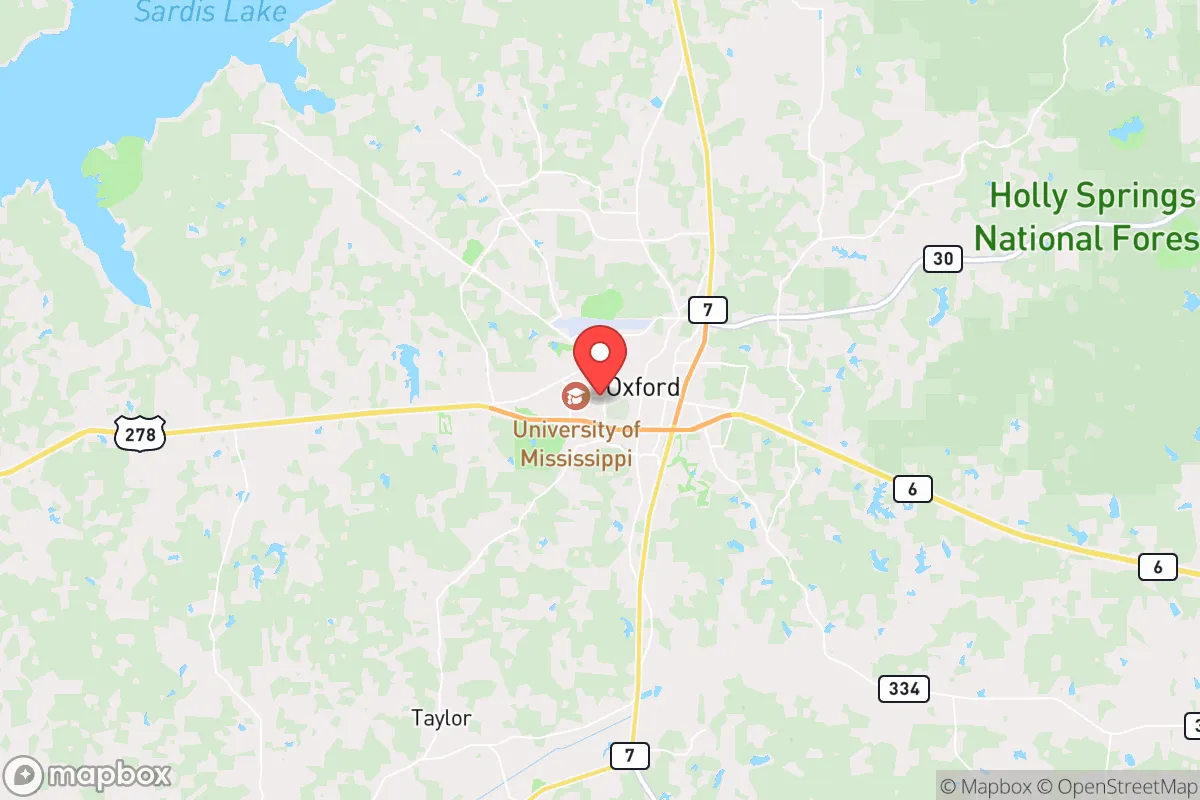
Photo: Wikipedia
Quality of Life in Oxford, MS
Above-average quality of iife. The area offers a reasonable cost of living, decent mobility, and a mix of neighborhood amenities.
What does Quality of Life tell us?
Quality of Life blends cost of living, nearby amenities, socioeconomic signals, and neighborhood character. City-level scores represent the whole municipality; individual neighborhoods can differ.
What does this tell us?
Quality of Life blends cost of living, nearby amenities, socioeconomic signals, and neighborhood character. City-level scores represent the whole municipality; individual neighborhoods can differ.
Cost of Living
4% above national average
The Real Cost of Living in Oxford, MS for 2026
| Tier | Individual | Family (4) |
|---|---|---|
| Survival | $17k | $33k |
| Comfortable | $65k | $95k |
| Luxury | $108k+ | $168k+ |
| Elite (Top 5%) | $195k+ | $303k+ |
63%
The Area Signal
A metric tracking the socioeconomic signals of the area.
Hobbies
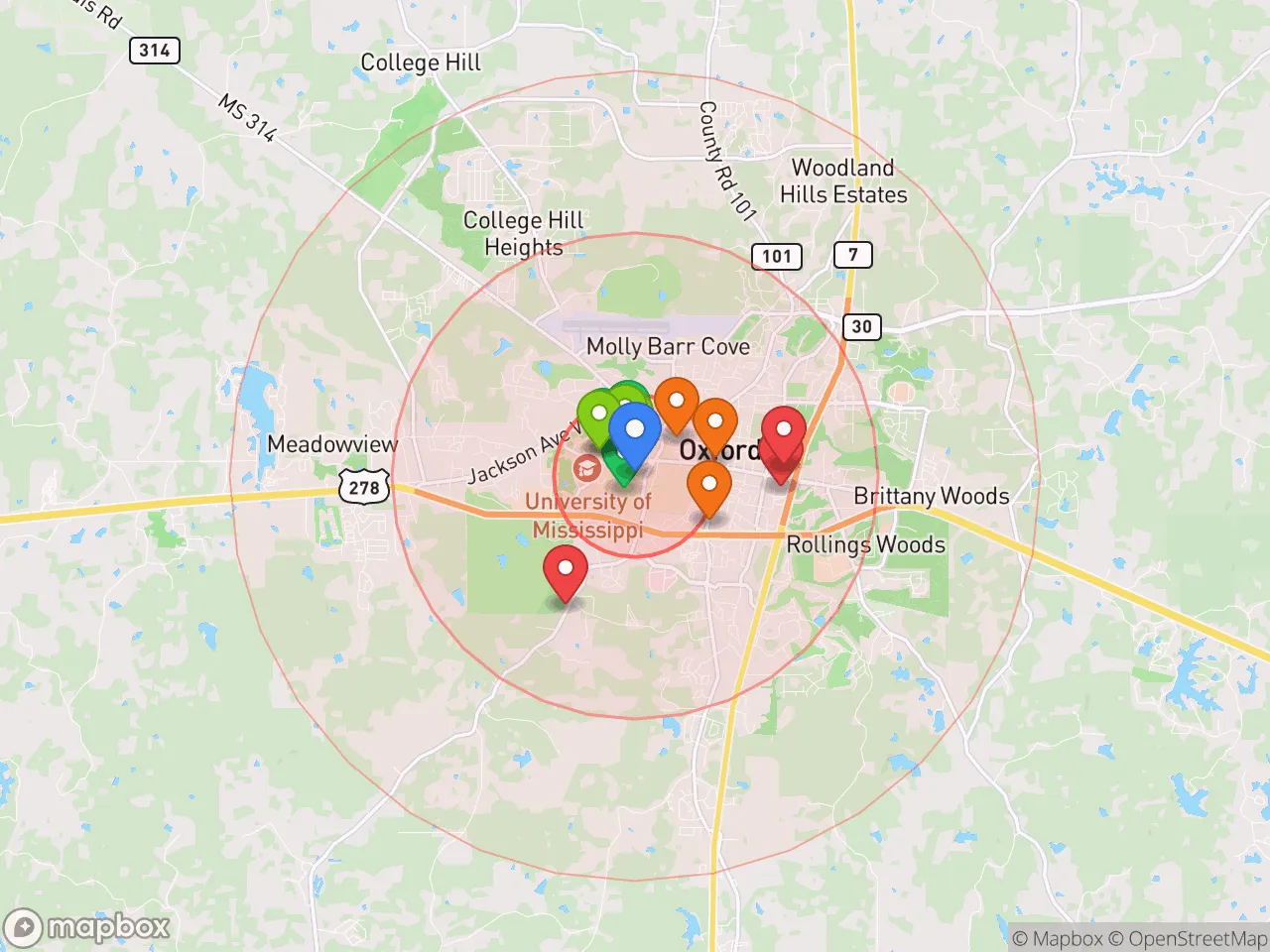
Explore the areaGroceries
2 within 10 miles
Gas
20 within 10 miles
Hospital
3 within 20 miles
Airport
BNA — Nashville International
Post Office
USPS — Oxford, MS
Critical Amenities
Quality-of-Life Analysis
Oxford, Mississippi, is an affluent college town where the economy and culture are dominated by the University of Mississippi (Ole Miss), drawing a population that is notably younger, more educated, and higher-earning than the state average. The city’s character is defined by a blend of long-term residents, university faculty, and students, creating a community that is both intellectually vibrant and rooted in Southern traditions. With a cost of living index of 104 (just 4% above the national average), Oxford offers a relatively accessible entry point into a high-amenity lifestyle, though local housing costs have risen sharply in recent years, reflecting the area's desirability.
Cost of living, housing market, and affordability compared to nearby areas
Oxford’s cost of living index of 104 is significantly lower than major metropolitan hubs like Nashville or Atlanta, but it is notably higher than the Mississippi state average of roughly 86. The primary driver of this premium is housing: the median home value of $333,400 is more than double the state median of around $150,000, placing Oxford among the most expensive housing markets in Mississippi. For renters, the median rent of $1,093 is also elevated compared to nearby towns like Batesville ($750) or Tupelo ($850), though it remains below the national median. The average commute of 22.3 minutes is reasonable and reflects the fact that many residents live within or just outside the city limits, avoiding the longer drives common in larger metro areas. However, for those working in lower-wage sectors, the gap between local incomes and housing costs can be a strain, as service-industry jobs often pay below the $55,000 household median.
Local amenities, schools, and the daily rhythm of life
Daily life in Oxford revolves around the university’s calendar and the historic downtown Square, which is packed with locally owned restaurants, bookstores, and live music venues. The Oxford School District is consistently rated among the top in Mississippi, with Oxford High School regularly ranking in the state’s top 5 for test scores and college readiness, making the city a magnet for families seeking strong public education. The area also offers abundant outdoor recreation, including the 1,000-acre Sardis Lake for boating and fishing, and the 40-mile-long Tanglefoot Trail for cycling and running. The rhythm of the year is punctuated by major events like the Double Decker Arts Festival and Ole Miss football Saturdays, which bring tens of thousands of visitors and create a lively, sometimes congested, atmosphere. For daily errands and shopping, Oxford has a full range of national retailers and grocery stores, though residents often drive 30 minutes to Batesville or an hour to Memphis for specialized medical care or big-box shopping.
Oxford is best suited for those who value a tight-knit, walkable community with a strong cultural and educational anchor, particularly families seeking top-tier schools and professionals tied to the university or remote work. Retirees and empty-nesters are also drawn to the area’s low crime rate relative to the national average and its vibrant social scene. However, the high housing costs relative to local wages mean that budget-conscious buyers or renters may need to look at surrounding unincorporated areas like Taylor or Abbeville. For anyone who prioritizes a lively, college-town atmosphere with Southern charm and solid public services, Oxford offers a quality of life that punches well above its size.

Crime in Oxford, MS
Generally safer than 63% of comparable U.S. locations.
Violent CrimeViolent Crime Analysis
Property CrimeProperty Crime Analysis
Crime Analysis
Oxford, Mississippi, reports a violent crime rate of 178.8 incidents per 100,000 residents, a figure that sits well below the national average and is roughly half the rate of similarly sized college towns in the South. Property crime, however, is a more pressing concern, with a rate of 1,025.7 per 100,000—significantly higher than both the Mississippi state average and the national median. This mixed profile means that while violent confrontations are statistically rare, residents face a tangible risk of theft, burglary, and vehicle break-ins, particularly in areas with high student turnover and transient populations.
Crime in context
Oxford’s violent crime rate is about 40% lower than the U.S. average of roughly 380 per 100,000, and it compares favorably to the Mississippi state rate of approximately 250 per 100,000. The city’s property crime rate, however, is roughly 30% higher than the national average of 1,954 per 100,000 and exceeds the state average of 2,100 per 100,000. This disparity is common in university towns, where dense student housing, seasonal population surges, and a concentration of unattended vehicles and apartments create frequent opportunities for theft. The presence of the University of Mississippi (Ole Miss) contributes to a younger, more transient demographic that statistically correlates with higher property crime, even as violent offenses remain low.
What residents experience
For most Oxford residents, daily safety concerns revolve around property rather than personal violence. The most common incidents reported are thefts from unlocked vehicles, package thefts from porches, and bicycle thefts near the Square and campus. Burglaries of off-campus student housing are also a recurring issue, especially during holiday breaks. Violent crime is rare but not absent: incidents are typically isolated to domestic disputes or altercations in the bar district late at night. The Oxford Police Department maintains a visible presence, particularly around the Square and university events, and response times are generally fast. However, some residents express concern that Lafayette County’s justice system, influenced by progressive prosecutorial policies common in many college towns, may prioritize rehabilitation over incarceration, potentially leading to shorter sentences for repeat property offenders and a perception that the system is more sympathetic to offenders than to victims. This dynamic can erode public confidence, especially among homeowners who feel the legal consequences for theft are insufficient to deter crime.
Neighborhood-level safety varies notably. Areas immediately adjacent to the University, such as the student-heavy streets near the Grove and the apartments on Old Taylor Road, see the highest property crime rates. Established residential neighborhoods like the North Lamar corridor and the historic districts near the Square report far fewer incidents, though no area is immune to occasional theft. The city’s newer subdivisions on the west side, such as those off Highway 6, tend to have lower crime rates but are more car-dependent, which can reduce the sense of community surveillance. Overall, Oxford is a safe city for its size, but property crime requires proactive prevention—locking vehicles, securing packages, and using outdoor lighting are standard precautions for long-term residents.
* Values derived from national, state, county, city and local statistics and may differ in a specific area. Last updated: 2026-04-30T03:28:03.000Z
Narrative content on this page is AI-generated and may contain mistakes. Verify any details that matter before acting on them.
ReloMaps may earn a commission from affiliate links at no extra cost to you.

