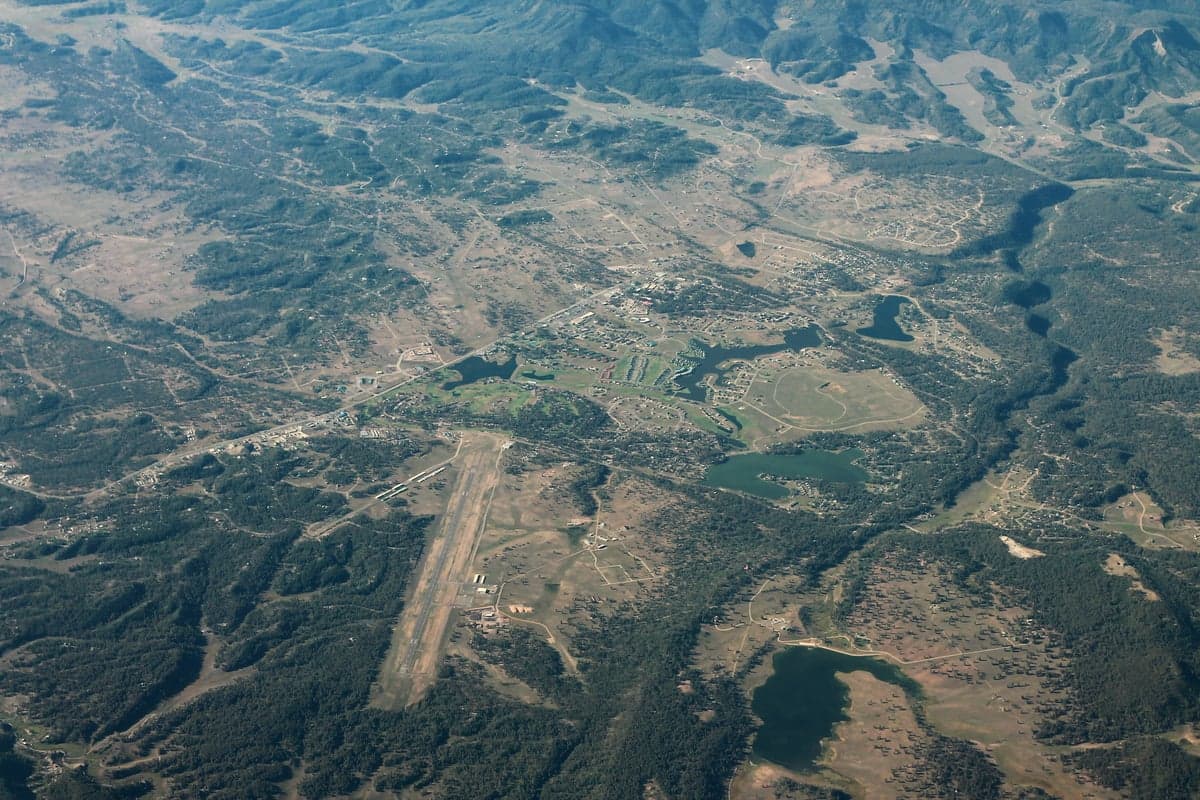
Photo: Wikipedia
Demographics of Pagosa Springs, CO
Affluence Level in Pagosa Springs, CO
A middle-class area roughly in line with national averages across income, home values, education, and employment.
People of Pagosa Springs, CO
Pagosa Springs, Colorado, is a small town of 1,718 residents with a distinctive demographic profile: a near-even split between non-Hispanic White (43.7%) and Hispanic (47.2%) populations, making it one of the most balanced communities in the state. The foreign-born share is low at 3.0%, and the town is overwhelmingly non-diverse beyond these two groups, with negligible Black (0.1%), East/Southeast Asian (0.0%), and Indian subcontinent (0.6%) populations. This is a working-class, rural community where 23.3% of adults hold a college degree, and the population is characterized by deep-rooted family ties, a strong outdoor recreation culture, and a noticeable tension between long-time Hispanic families and newer White in-migrants from other states.
How the city was settled and grew
Pagosa Springs was originally the territory of the Ute people, who used the area's hot springs for centuries before European contact. The first permanent non-Native settlement began after the 1873 Brunot Agreement forced the Ute onto a reservation, opening the San Juan Basin to Anglo-American homesteaders and miners. The town was officially founded in 1881 as a railroad stop and supply center for the surrounding mining and timber industries. The earliest Anglo settlers clustered around the hot springs and the downtown core, building what is now known as the Historic Downtown District, where many original Victorian-era buildings still stand. Hispanic families began arriving in significant numbers during the early 1900s, drawn by work in the timber industry and sheep ranching. They settled primarily in the South Pagosa neighborhood, south of the San Juan River, which remains the historic heart of the town's Hispanic community. By the mid-20th century, Pagosa Springs was a small, isolated ranching and logging town with a population under 1,000, split roughly evenly between Anglo and Hispanic residents.
Modern era (post-1965)
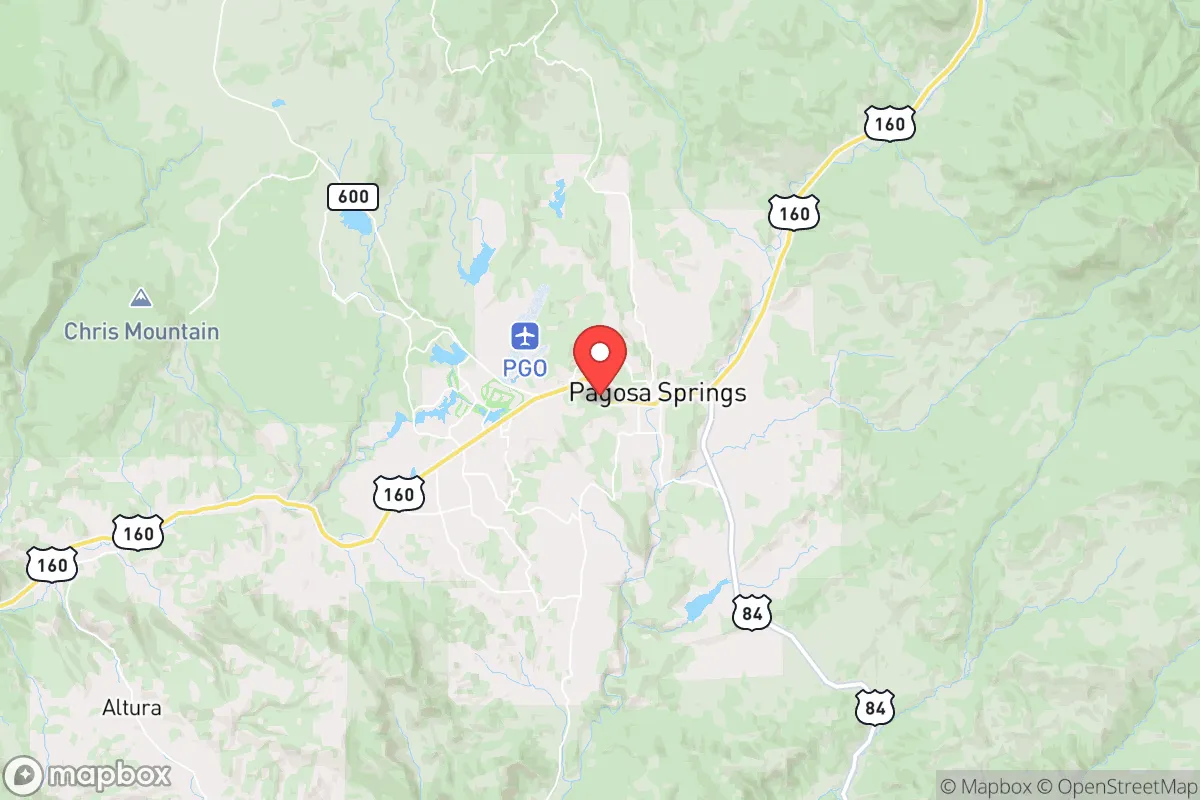
The post-1965 era brought two major demographic shifts. First, the 1970s and 1980s saw a wave of domestic in-migration from Texas, California, and the Mountain West, driven by the town's reputation for hot springs, skiing at Wolf Creek, and affordable land. These newcomers—overwhelmingly White and often retired or remote workers—settled in newer subdivisions north of the river, particularly in North Pagosa and the Fairfield Pagosa development, a large master-planned community built around a golf course. This created a geographic and cultural divide: the older Hispanic community in South Pagosa and the downtown area, and the newer, more affluent White community in the northern subdivisions. The second shift was the steady growth of the Hispanic population through natural increase and continued migration from New Mexico and Mexico, though the foreign-born share remains low. The Hispanic share of the population rose from roughly 35% in 1990 to 47.2% today, while the White share declined from over 60% to 43.7%. There has been no significant growth in Black, Asian, or Indian subcontinent populations, and the town remains essentially a two-group community.
The future
The population of Pagosa Springs is likely to continue its slow growth, driven primarily by White in-migration from higher-cost states and natural increase among the Hispanic population. The town is not homogenizing; rather, it is becoming more geographically and culturally tribalized, with the North Pagosa and Fairfield Pagosa areas becoming increasingly White and affluent, while South Pagosa and the Historic Downtown District remain predominantly Hispanic and working-class. The Hispanic population is expected to grow its share modestly, potentially reaching a slim majority within 10-15 years, as younger Hispanic families have higher birth rates and some White retirees age out. The immigrant community is plateauing, not growing, as the foreign-born share has been stable at around 3% for decades. The town's future is one of a stable, bicultural community with clear geographic boundaries between groups, rather than a melting pot.
For someone moving to Pagosa Springs now, the key takeaway is that this is a town with two distinct communities living side by side. The northern subdivisions offer a quieter, more affluent, predominantly White lifestyle with access to golf and mountain views, while the southern and downtown areas offer a more traditional, family-oriented, Hispanic-influenced community. The town is not becoming more diverse in the broader sense—it remains a White-Hispanic binary—and newcomers should expect to choose which side of the river they want to live on, as the social and cultural divide is real and persistent.

* Values derived from national, state, county, city and local statistics and may differ in a specific area. Last updated: 2026-04-28T23:24:28.000Z
Narrative content on this page is AI-generated and may contain mistakes. Verify any details that matter before acting on them.
ReloMaps may earn a commission from affiliate links at no extra cost to you.

