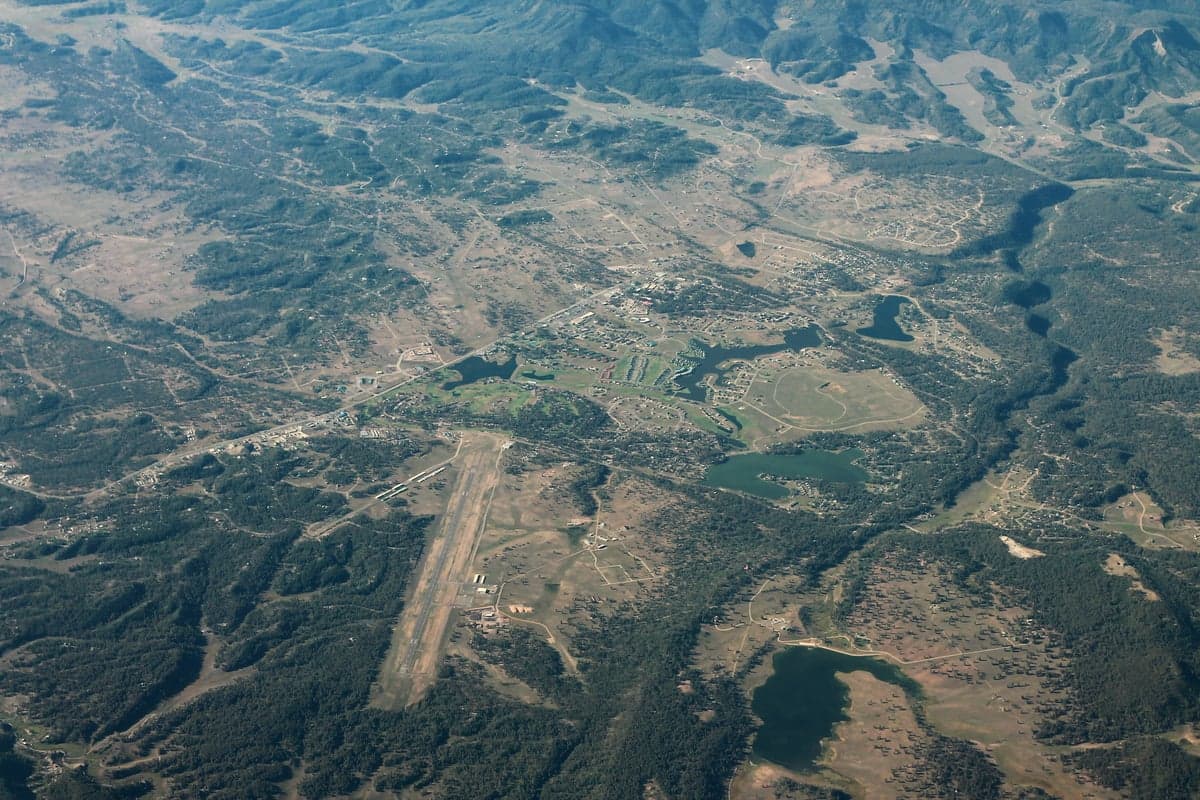
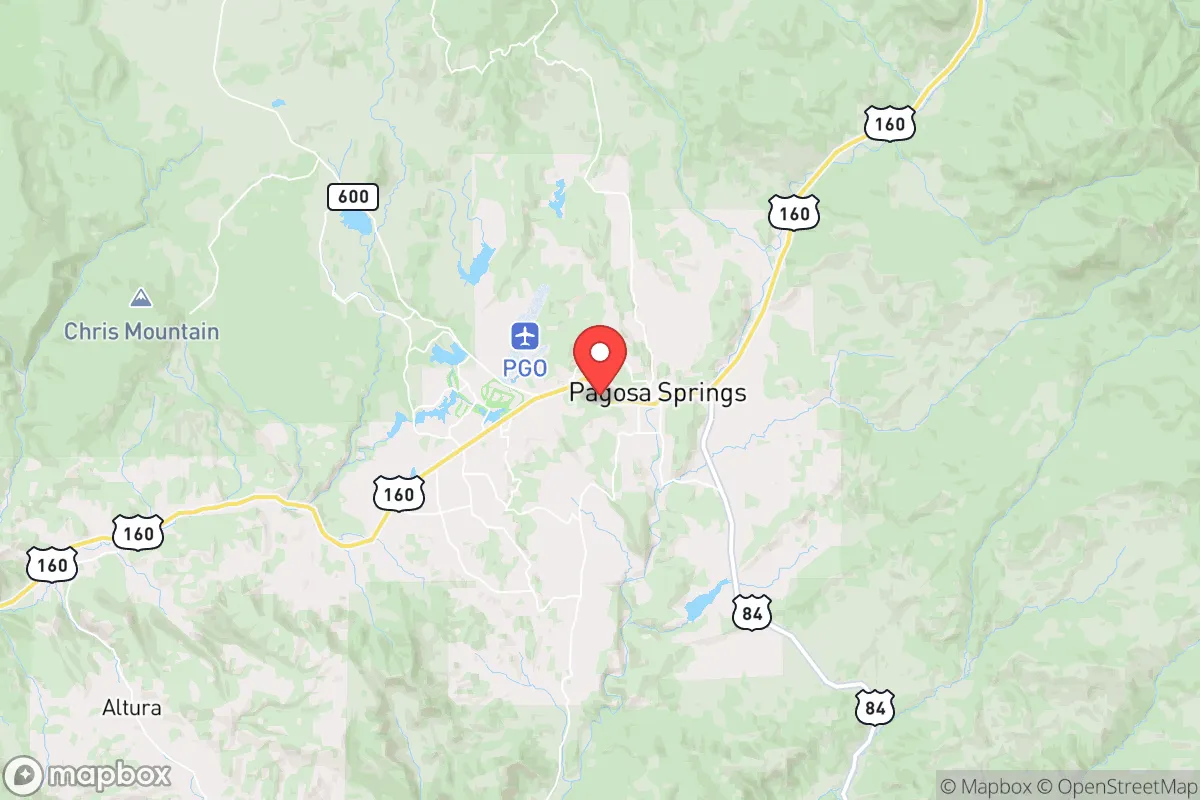
Photo: Wikipedia
Political ClimatePolitical Climate in Pagosa Springs, CO
District shown is the primary district for this city’s centroid. Cities may span multiple districts.
Local Political AnalysisPolitical Analysis of Pagosa Springs, CO
Pagosa Springs has long been a place where folks value their independence, and that’s still the backbone of the local political climate. With a Cook PVI of R+5, the area leans reliably Republican, but it’s not the kind of lockstep conservatism you’d find in, say, Colorado Springs. The real story here is how the town’s traditional, live-and-let-live attitude is being tested by an influx of newcomers and outside money, which is slowly nudging the needle toward more progressive policies. If you’ve been around a while, you can feel the shift—it’s subtle, but it’s there, and it’s worth keeping an eye on.
How it compares
Compared to nearby towns, Pagosa Springs sits in a unique middle ground. Drive an hour north to Durango, and you’ll find a much more liberal vibe—think bike lanes, organic co-ops, and city council debates about carbon neutrality. That’s a world away from the ranching and hunting culture that still defines much of Archuleta County. Head south to Chama, New Mexico, and you’re back in deep-red territory, where the biggest political fights are about water rights and federal land use. Pagosa Springs has historically been closer to Chama in spirit, but the last five years have seen a noticeable uptick in progressive-leaning transplants from places like Denver and California. They bring new ideas, sure, but also a tendency to push for zoning changes and environmental regulations that can feel like government overreach to long-time residents. The contrast is stark: while Durango embraces the change, Pagosa Springs is still wrestling with whether it wants to go down that road.
What this means for residents
For those who’ve lived here for decades, the biggest concern is how these shifts affect personal freedoms. The county commission has stayed mostly conservative, but there’s been a steady push for more restrictive short-term rental ordinances and building codes—things that sound reasonable on paper but often end up telling property owners what they can and can’t do with their own land. The local school board has also become a battleground, with debates over curriculum and library books that would have been unthinkable ten years ago. If you value the ability to hunt on public land, run a small business without a stack of permits, or just live without a bunch of bureaucratic red tape, you’ll want to pay attention to local elections. The trajectory isn’t alarming yet, but it’s heading in a direction that could erode the very independence that makes Pagosa Springs special.
Culturally, the town still holds onto its Western roots—the annual Four Corners Folk Festival and the local rodeo are big draws—but there’s a growing tension between the old guard and the new arrivals. Policy-wise, the most notable distinction is how Pagosa Springs handles water and development. Unlike some Colorado towns that have embraced aggressive growth and environmental mandates, Archuleta County has been slower to adopt new regulations, which is a double-edged sword. It keeps government out of your backyard, but it also means infrastructure can lag behind. For now, the balance tips toward freedom, but the next few election cycles will decide whether that holds. If you’re thinking of moving here, just know that the political climate is still mostly conservative, but it’s not immune to the pressures that are reshaping the whole state.

State Political ClimatePolitical Climate in Colorado
State Political AnalysisPolitical Environment in the State
Colorado has shifted from a classic purple swing state to a solidly blue-leaning one over the past two decades, with Democrats now controlling the governorship, both U.S. Senate seats, and both chambers of the state legislature. The state voted for the Democratic presidential candidate by roughly 13 points in 2020 and 2024, a dramatic swing from the 2000s when it was a perennial battleground. This transformation is driven primarily by explosive population growth in the Denver metro area and along the Front Range, which has overwhelmed the state’s historically conservative rural and mountain regions.
Urban vs. rural divide
The political map of Colorado is a tale of two worlds. The Denver-Boulder corridor, including Denver, Boulder, Aurora, and Lakewood, is the engine of Democratic power, delivering margins of 30-50 points in most elections. Colorado Springs remains the state’s conservative stronghold, home to Focus on the Family and a heavy military presence, but its influence is diluted by the sheer population of the Front Range. The Western Slope and Eastern Plains—places like Grand Junction, Montrose, and Lamar—vote reliably Republican, but they lack the numbers to counterbalance the urban centers. A key flashpoint is Jefferson County, a suburban Denver county that was once a bellwether but has trended blue in recent cycles, flipping from red to purple to light blue over the last decade. The 2022 gubernatorial race saw Republican candidate Heidi Ganahl win only 34 of 64 counties, mostly rural, while Democrat Jared Polis swept the Front Range.
Policy environment
Colorado’s policy environment is increasingly progressive, with a tax structure that is moderate but trending left. The state has a flat income tax rate of 4.4%, but voters approved a progressive tax structure in 2020 that allows higher rates on top earners, a move conservatives warned would open the door to future hikes. Property taxes are relatively low compared to the national average, but recent legislation has made it easier for local governments to raise them. On education, Colorado has adopted the controversial "Comprehensive Health Education" standards, which include LGBTQ+ and sexual health topics from kindergarten, sparking parental rights battles. The state also has a "red flag" gun law (HB 19-1177) that allows courts to temporarily confiscate firearms from individuals deemed a threat, a policy many conservatives view as a violation of due process. Election laws have been liberalized with automatic voter registration, same-day registration, and universal mail-in ballots, which critics argue erode election integrity. The state also has a sanctuary policy (HB 19-1124) that limits cooperation between local law enforcement and federal immigration authorities, a major concern for those prioritizing border security.
Trajectory & freedom
Colorado is becoming less free by most conservative measures, particularly in the areas of gun rights, parental rights, and property rights. The 2023 "Family Affirmation Act" (SB 23-188) allows minors to receive gender-affirming care without parental consent in certain circumstances, a direct challenge to parental authority that has energized conservative opposition. The "red flag" law has been used thousands of times since its 2019 enactment, with critics pointing to cases where due process was bypassed. On property rights, the state has tightened land-use regulations, including a 2023 law that mandates higher density zoning near transit corridors, effectively overriding local control in many suburbs. The state’s energy policies are also a concern: Colorado has set a goal of 100% renewable electricity by 2040, and new oil and gas drilling permits have been slashed, hurting the Western Slope economy. On the positive side for conservatives, Colorado remains a right-to-work state, and there is no state income tax on Social Security benefits, which helps retirees. However, the overall trajectory is toward more government intervention in personal and economic decisions.
Civil unrest & political movements
Colorado has seen its share of political flashpoints. The 2020 protests in Denver turned violent, with property damage and clashes between police and left-wing activists, leading to a lasting sense of unease in the city. The "Colorado Springs Club Q" shooting in 2022 intensified debates over gun control and hate crimes, with Democrats using it to push further restrictions. On the right, the "Colorado Republican Party" has been fractured between establishment and populist factions, with the 2022 convention devolving into chaos over election integrity disputes. The "Weld County" secession movement, which sought to create a 51st state called "North Colorado" in 2013, has faded but reflects deep rural frustration with Denver’s dominance. Immigration politics are a live wire: the Denver city council declared itself a "sanctuary city" in 2017, and the state’s sanctuary law has led to tensions with federal ICE agents. In 2023, the arrival of thousands of migrants bused from Texas overwhelmed Denver’s shelter system, sparking local backlash and a debate over whether the state’s policies were attracting more arrivals.
Projection
Over the next 5-10 years, Colorado will likely continue its leftward drift, driven by in-migration from blue states like California and New York. The Denver metro area is projected to add another 500,000 residents by 2035, most of whom will vote Democratic. The rural counties will continue to lose population and political influence. Expect further gun control measures, including a potential ban on "assault weapons" and mandatory liability insurance for gun owners. Parental rights will remain a battleground, with likely attempts to expand the "Family Affirmation Act" to include puberty blockers without parental consent. Property taxes will rise as local governments struggle to fund infrastructure for the growing population. The only wildcard is a potential economic downturn that could slow migration and shift the political calculus, but for now, the trend is clear. A conservative moving to Colorado in 2026 should expect to live in a state where their vote is increasingly irrelevant at the statewide level, but where local elections in conservative enclaves like Douglas County or El Paso County can still make a difference.
For a new resident, the bottom line is this: Colorado offers stunning natural beauty and a strong economy, but the political climate is hostile to conservative values on guns, parental rights, and immigration. If you’re moving here, focus on the local level—county commissions, school boards, and city councils—where you can still have a real impact. The state as a whole is lost to the progressive agenda for the foreseeable future, but pockets of freedom remain in the suburbs and rural areas if you choose your location wisely.
* Values derived from national, state, county, city and local statistics and may differ in a specific area. Last updated: 2026-04-28T23:24:28.000Z
Narrative content on this page is AI-generated and may contain mistakes. Verify any details that matter before acting on them.
ReloMaps may earn a commission from affiliate links at no extra cost to you.

