 Popular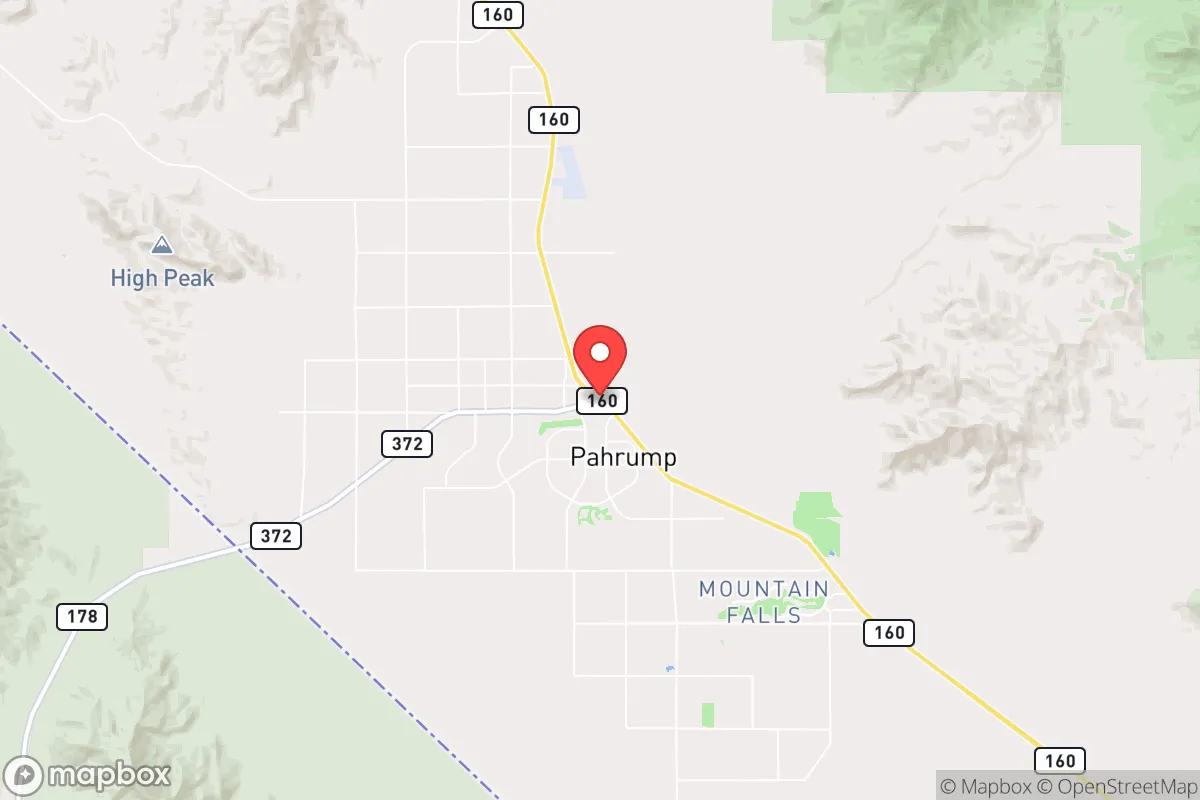
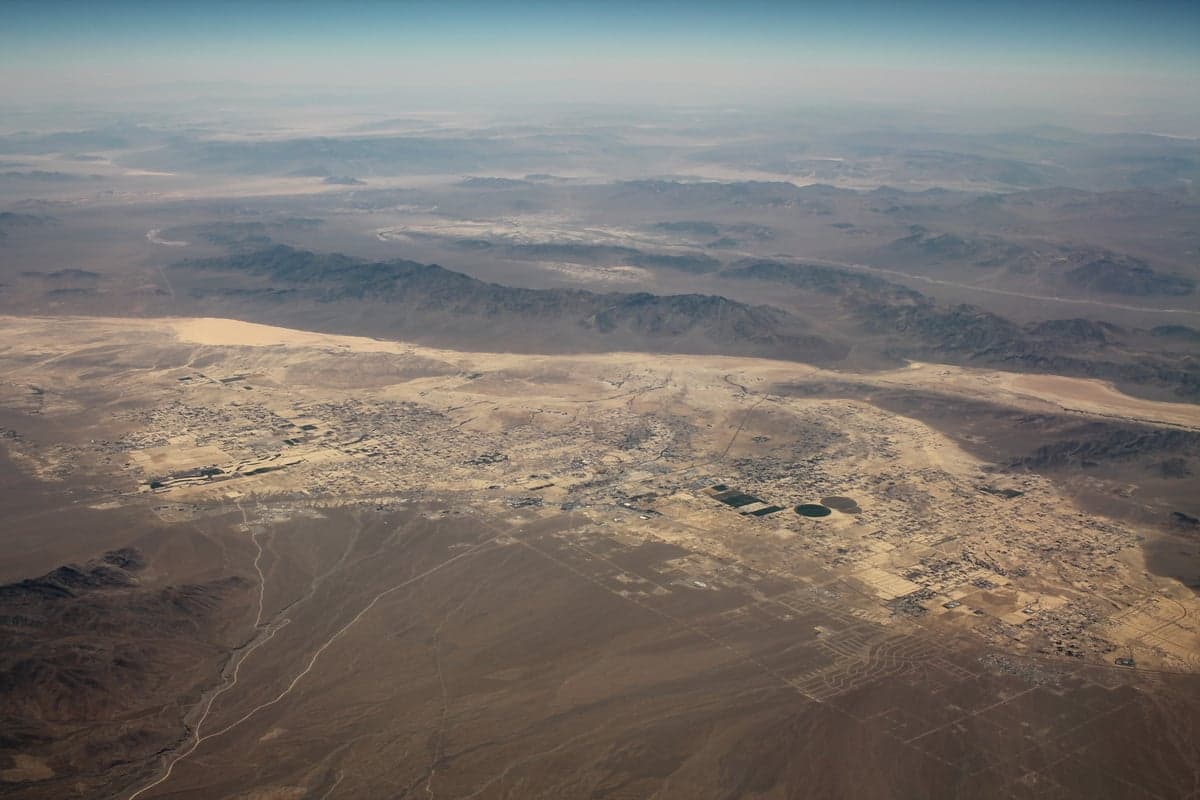
Photo: Wikipedia
Demographics of Pahrump, NV
Affluence Level in Pahrump, NV
A middle-class area roughly in line with national averages across income, home values, education, and employment.
People of Pahrump, NV
The people of Pahrump, Nevada today number roughly 45,800, forming a predominantly white (70.2%) and notably older population with a strong conservative character. The city is defined by its rural desert setting, a significant Hispanic minority (16.2%), and a very low foreign-born share (2.8%) that reflects limited recent immigration. With only 12.5% of adults holding a college degree, Pahrump’s identity is working-class, self-reliant, and rooted in the land—a stark contrast to the fast-growing, suburban Las Vegas metro area just 60 miles east.
How the city was settled and grew
Pahrump’s human history is almost entirely a 20th-century story. The area was originally inhabited by the Southern Paiute people, but permanent non-Native settlement did not begin until the 1870s, when ranchers and miners arrived. The first major wave came with the discovery of silver and lead in the nearby Spring Mountains, drawing prospectors who established small camps. By the early 1900s, the Pahrump Valley’s artesian springs made it a rare oasis for cattle ranching and alfalfa farming. The original settlement cluster, now known as Old Town Pahrump along NV-160, grew around a general store and post office. A second early node, Manse, developed to the south as a farming community. These early residents were overwhelmingly white, native-born, and drawn by the promise of cheap land and a remote, independent lifestyle. The population remained tiny—under 500—through the 1950s.
Modern era (post-1965)
Pahrump’s modern population boom began in the 1970s and accelerated through the 1990s, driven by domestic in-migration from California and the Las Vegas suburbs. The 1965 Hart-Cellar Act had little direct effect here; the foreign-born share remains very low at 2.8%. Instead, the growth came from white retirees seeking low taxes and wide-open spaces, and from working-class families priced out of Clark County. The Calvada subdivision, a master-planned community with large lots and a golf course, became a magnet for affluent retirees from Southern California. Meanwhile, Mountain Falls, a gated golf community, attracted a similar demographic. Hispanic growth began in the 1990s, driven by agricultural labor in the valley’s alfalfa, hay, and pistachio farms. Today, the Hispanic population (16.2%) is concentrated in the Pahrump Valley Estates area and in mobile home parks near the agricultural zones. The Black population (2.4%) and East/Southeast Asian population (2.0%) are small and dispersed, with no distinct ethnic enclaves. The Indian-subcontinent population (0.2%) is negligible. The college-educated share (12.5%) is well below the national average, reflecting the area’s blue-collar and retiree base.
The future
Pahrump’s population is likely to continue growing slowly, but it is not homogenizing or tribalizing into distinct enclaves. The white share (70.2%) is declining gradually as the Hispanic share rises, but the foreign-born rate remains low, suggesting that Hispanic growth is primarily through natural increase and domestic migration from other parts of Nevada and California. The city is not attracting significant immigrant communities from Asia or the Indian subcontinent. The next 10-20 years will likely see a continued aging of the white population, with younger Hispanic families partially offsetting the demographic decline. The Calvada and Mountain Falls areas will remain predominantly white and older, while Pahrump Valley Estates and the agricultural fringe will become more Hispanic. No major new subdivisions are planned, so growth will be infill and small-lot development. The city’s character—conservative, rural, and self-sufficient—is unlikely to change dramatically.
For someone moving in now, Pahrump offers a low-cost, low-regulation environment with a population that is stable, aging, and culturally homogeneous. The lack of ethnic diversity and the low college attainment rate mean that newcomers will find a community that values practicality over cosmopolitanism. The city is becoming slightly more Hispanic but remains overwhelmingly white and native-born, with little of the rapid demographic churn seen in other Nevada boomtowns. It is a place for those seeking quiet, space, and a predictable social order.

* Values derived from national, state, county, city and local statistics and may differ in a specific area. Last updated: 2026-04-29T01:42:58.000Z
Narrative content on this page is AI-generated and may contain mistakes. Verify any details that matter before acting on them.
ReloMaps may earn a commission from affiliate links at no extra cost to you.

