 Popular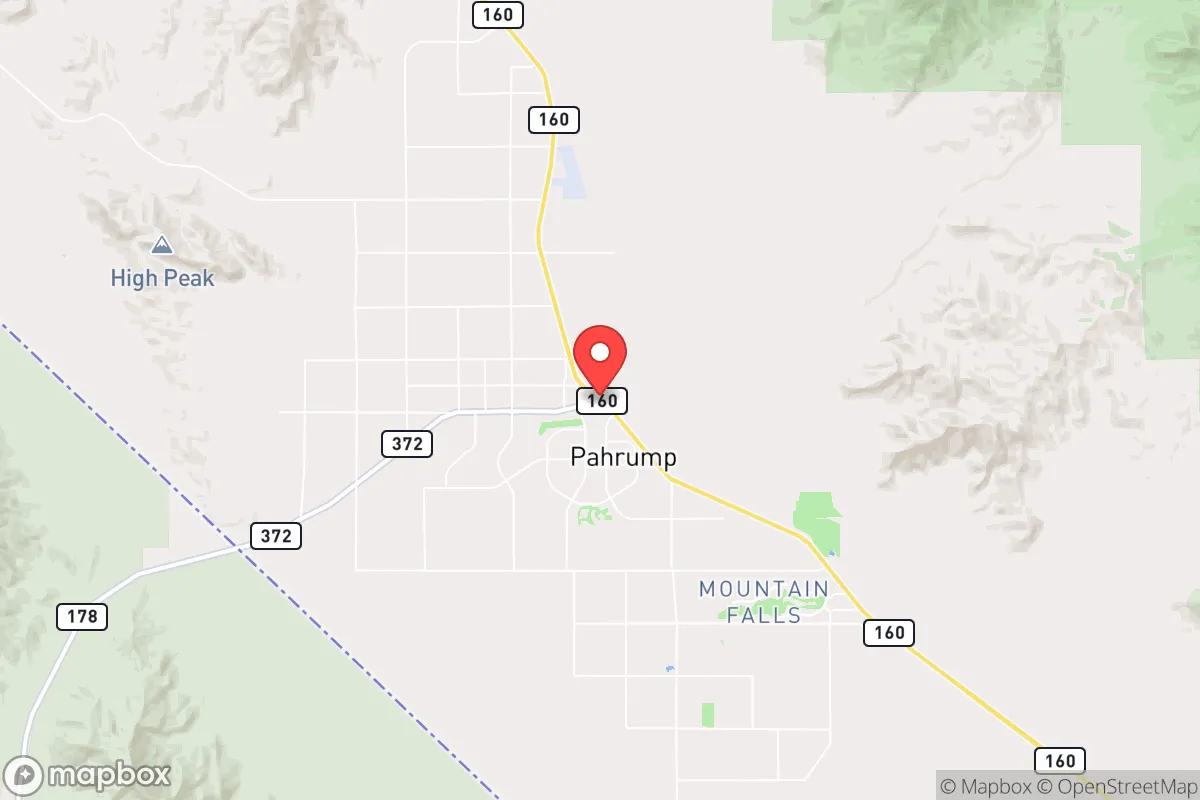
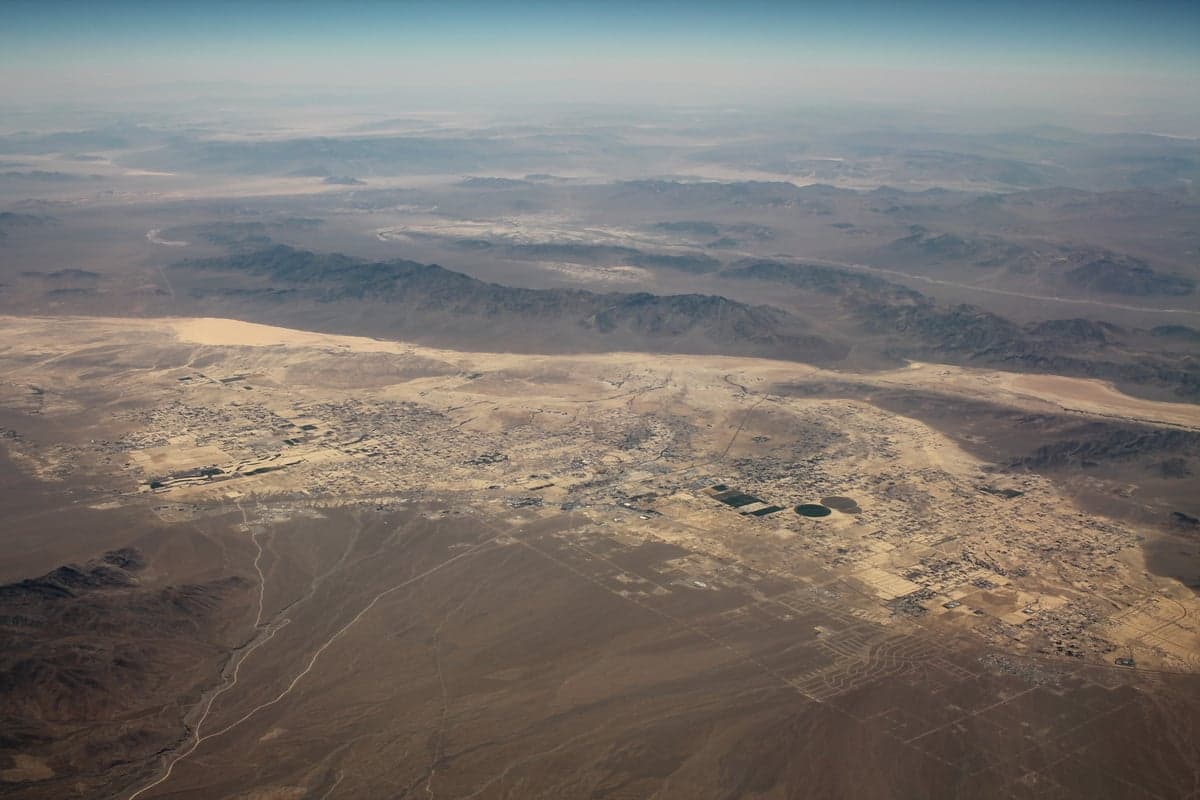
Photo: Wikipedia
Strategic Assessment of Pahrump, NV
Workable tactical position. Some exposure to population density or targets, but generally defensible in a crisis.
What does the Strategic Assessment tell us?
Our Strategic Assessment grades tactical survivability of an area. Major population centers, military targets, fallout zones, natural disasters, and border exposure all drive risk — lower exposure means a more defensible position in a crisis.
This is heavily inspired by Joel Skousen's Strategic Relocation book. Highly recommended you checkout the book ($)What does this tell us?
Our Strategic Assessment grades tactical survivability of an area. Major population centers, military targets, fallout zones, natural disasters, and border exposure all drive risk — lower exposure means a more defensible position in a crisis.
This is heavily inspired by Joel Skousen's Strategic Relocation book. Highly recommended you checkout the book ($)Strategic Pillars

Key Distances
Regional Safe Places
Below is our recommended "safe zones" in Nevada and the surrounding area based on our strategic heuristics. For most people, it's unrealistic to live in a “safe zone” full-time due to work, family or other personal reasons. They tend to be more rural. However, many of these areas are perfect for second homes and retreat properties that double as a vacation home or even a short-term rental.
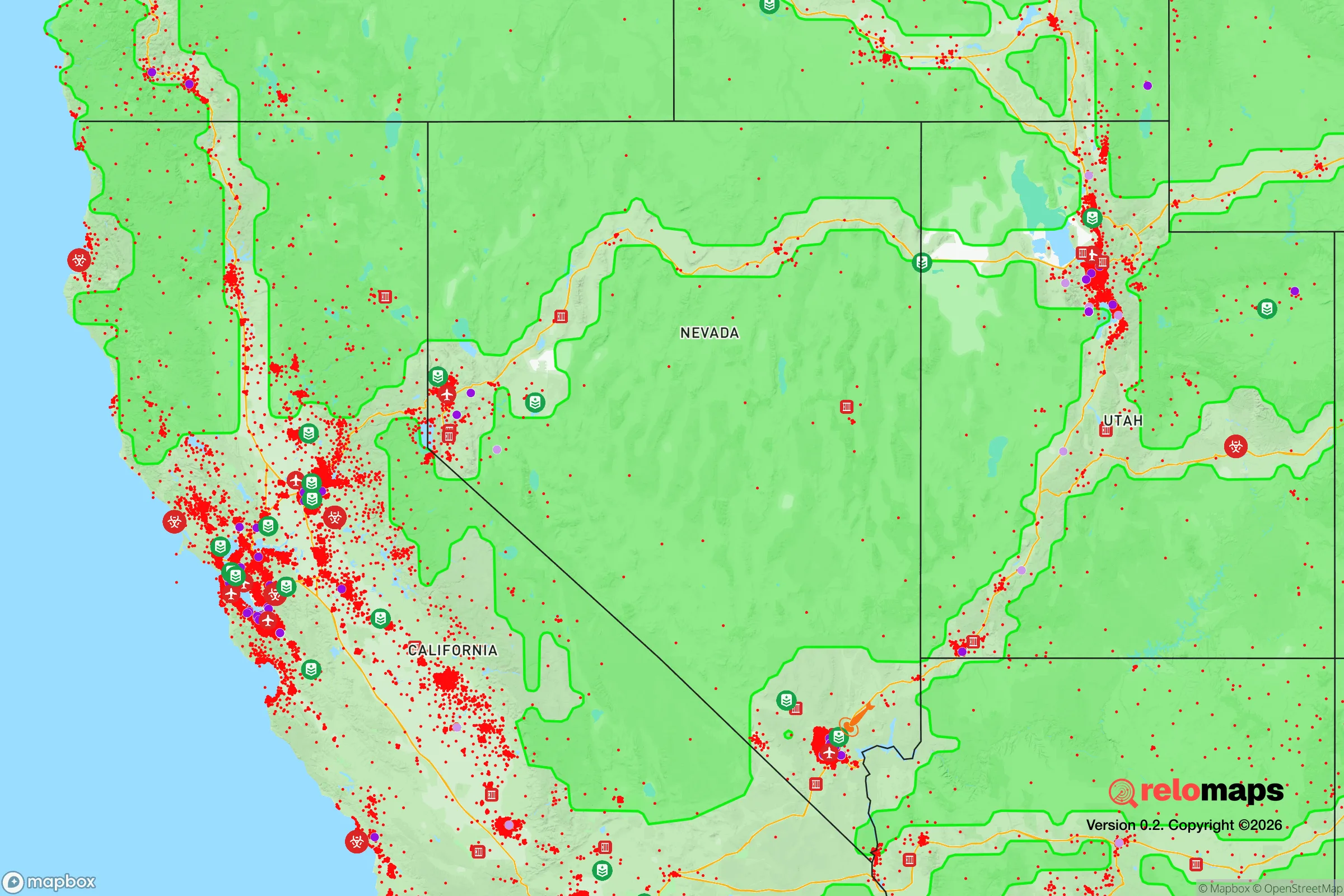
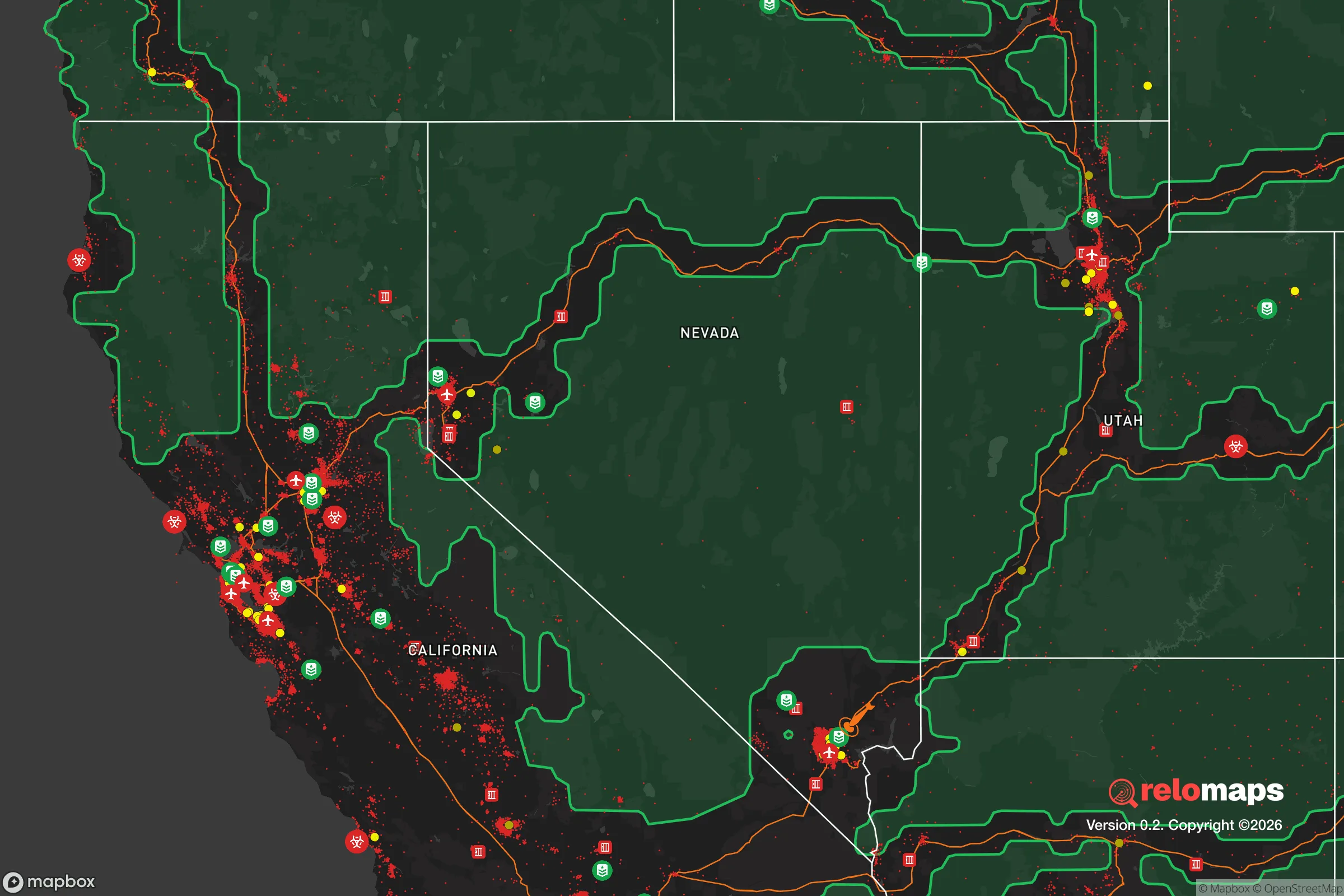


Important Note: For informational purposes only. This does not mean nothing bad ever happens in the green zones. Please use common sense. This is based on public data and modeled with AI. We tried to take a conservative approach but mistakes happen. We update this regularly as new information becomes available.
Solar Generator Recommendations
Backup power matters more here than in safer locations. We've picked three solar generators across budgets and capacity tiers — start with the budget unit if you only need a few essentials, or step up if you want to run a fridge and HVAC for days at a time.

Jackery Portable Power Station Explorer 300
Budget OptionPower on the Go: Weighing only 11 lbs, it's convenient to set up and store with book-sized foldable solar panels

BLUETTI Portable Power Station AC180
Designed for both indoor and outdoor scenarios, AC180 is highly capable as it has a robost capacity and continuous output power.

EF ECOFLOW DELTA Pro Ultra Power Station
Upgraded PickEcoFlow DELTA Pro Ultra is a whole-home energy system designed to grow with your family. Integrated with the Smart Home Panel 2, it scales to meet your evolving energy needs — keeping your home powered, intelligent, and secure through every stage of life.
We earn a commission, at no additional cost to you.
Strategic Assessment Analysis
Pahrump, Nevada, sits roughly 60 miles west of Las Vegas, placing it far enough from a major metropolitan target to avoid the worst of a blast zone or civil collapse scenario, yet close enough to access supplies and medical care if the grid holds. Its location in Nye County offers a mix of desert isolation and practical access to Highway 160, a two-lane route that can be monitored and defended more easily than interstate corridors. For a relocator thinking in terms of resilience—food security, water access, energy independence, and defensibility—Pahrump presents a serious option, but one that requires clear-eyed assessment of its vulnerabilities alongside its advantages.
Geographic position and natural advantages for long-term survival
Pahrump sits in a high desert valley at roughly 2,700 feet elevation, which provides a moderate climate relative to the Mojave—summers are hot but dry, winters are mild with occasional frost, and the risk of catastrophic wildfire is lower than in forested mountain towns. The valley’s groundwater aquifer is a critical asset: unlike much of the Southwest, Pahrump has a relatively shallow water table, and many properties have private wells that can be fitted with hand pumps or solar-powered systems. The surrounding Spring Mountains and Charleston Peak to the east offer watershed, game, and potential retreat terrain, while the Amargosa Valley to the west provides open land with minimal population density. The area’s agricultural history—alfalfa, hay, and some small-scale farming—means the soil is workable, and a handful of local farms still operate, offering a base for food production that many desert towns lack. For a relocator, the ability to drill a well, install solar panels, and grow a portion of your own food is not theoretical here; it’s already being done by a significant number of residents.
Risks, exposures, and proximity to fallout-relevant landmarks
The most obvious risk is proximity to Las Vegas, which at 60 miles is close enough that a nuclear detonation at Nellis Air Force Base, McCarran International Airport, or the Hoover Dam could produce fallout patterns affecting Pahrump depending on wind direction. The Nevada National Security Site (formerly the Nevada Test Site) lies roughly 75 miles north, and while it’s not an active testing ground, the area has a history of radioactive contamination from above-ground tests in the 1950s and 1960s. Fallout from a major event at either location could drift into the valley, though the prevailing winds tend to carry east or northeast. More immediate risks include the potential for civil unrest spilling out of Las Vegas along Highway 160—a single road that could become a chokepoint or a refugee corridor. The town’s population has grown rapidly, from roughly 36,000 in 2010 to over 45,000 today, which strains infrastructure and increases the number of unprepared people who might flee into the area during a crisis. Earthquakes are a low-to-moderate risk, but the area sits near the Walker Lane seismic zone, and a major quake could disrupt the water table or damage the single main road. For a survivalist, the key takeaway is that Pahrump is not a remote bunker; it’s a semi-rural exurb with real exposure to regional shocks.
Practical resilience for a relocator: food, water, energy, and defensibility
Water is Pahrump’s strongest card. The valley’s aquifer is estimated to hold hundreds of thousands of acre-feet, and while over-pumping is a concern for long-term sustainability, a private well with a manual backup can provide a family’s needs indefinitely. Many homes already have septic systems, which means you’re not dependent on municipal sewer lines. Solar potential is excellent—the area averages over 300 sunny days per year—and off-grid solar setups are common, with local installers familiar with battery storage and generator integration. Food resilience is more mixed: there are a handful of local farms, a farmers’ market, and some livestock operations, but the town relies heavily on trucked-in groceries from Las Vegas. A serious prepper would need to establish a garden, consider chickens or goats, and stockpile at least six months of dry goods. Defensibility is moderate. The valley is open, with long sightlines, but the single main road (Highway 160) can be monitored from elevated positions near the mountain foothills. Rural properties on the outskirts offer more privacy and the ability to create a perimeter, while in-town lots are more vulnerable to looting or mass movement. The local sheriff’s office is understaffed relative to the population, so self-reliance in security is a practical necessity, not paranoia. Gun culture is strong in Nye County, and the county is a Second Amendment sanctuary, which aligns with the conservative prepper mindset.
The overall strategic picture for a conservative relocator
Pahrump offers a realistic middle ground for someone who wants to be prepared without living in a remote cabin accessible only by dirt road. It has water, sun, and land at a price point far below California or Colorado, and its political climate—Nye County voted +31 points Republican in 2024—means you’re surrounded by people who share a similar worldview on self-reliance, firearms, and government skepticism. The downsides are real: proximity to Las Vegas introduces fallout risk, refugee flow potential, and a single-road dependency that could become a liability. The town’s rapid growth also means that the “small town” feel is fading, and newcomers are arriving without the same preparedness mindset. For a single individual or a family willing to invest in a well, solar, and a defensible property on the valley’s edge, Pahrump is a solid strategic choice—not a fortress, but a viable base of operations for weathering the kind of disruptions that concern the survivalist community. The key is to treat it as a starting point, not a final answer: secure your water and energy first, build community with like-minded neighbors, and always have a secondary retreat plan if the Las Vegas corridor becomes untenable.

* Values derived from national, state, county, city and local statistics and may differ in a specific area. Last updated: 2026-04-29T01:42:58.000Z
Narrative content on this page is AI-generated and may contain mistakes. Verify any details that matter before acting on them.
ReloMaps may earn a commission from affiliate links at no extra cost to you.

