 Popular
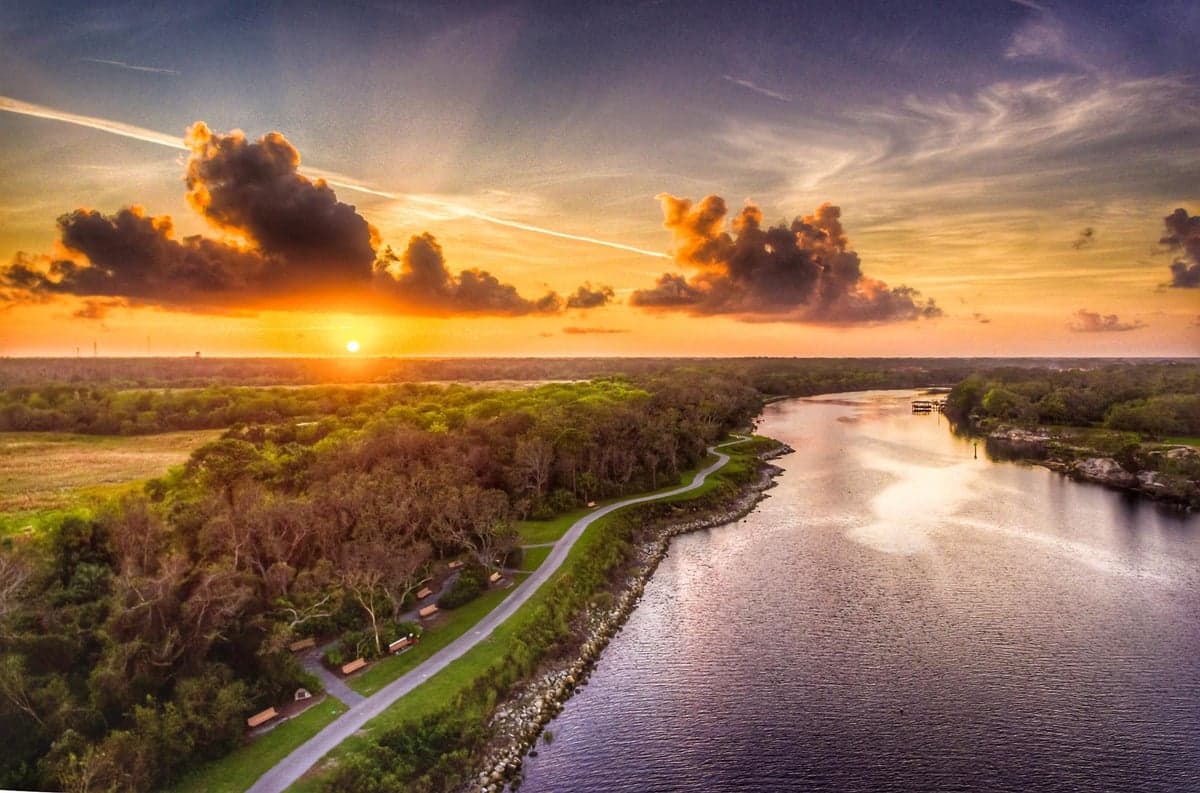
Photo: Wikipedia
Personal Sovereignty in Palm Coast, FL
Viable for self-reliance. Generally workable, though some barriers may limit total independence.
What does Personal Sovereignty tell us?
Personal Sovereignty measures your capacity for self-reliance and independence with minimal government friction. Higher scores mean fewer barriers between you and the way you want to live... but it assumes you have the space you need and good neighbors.
What does this tell us?
Personal Sovereignty measures your capacity for self-reliance and independence with minimal government friction. Higher scores mean fewer barriers between you and the way you want to live... but it assumes you have the space you need and good neighbors.
State Policy
Energy independence: Importer (10% of energy produced in-state)
Personal Liberty
Homesteading

Personal Liberty Analysis
Palm Coast, Florida, offers a notably high degree of personal sovereignty compared to many other parts of the country, largely due to Florida’s consistent state-level push to limit government overreach and protect individual rights. For the survivalist or prepper-minded individual, this translates into a legal environment where your ability to make decisions about your property, your family, and your self-defense is broadly respected, though not without some local nuance. The key question isn’t whether you have freedom here—it’s how well you can operationalize that freedom on a suburban lot in a fast-growing coastal community.
Tax burden and regulatory posture: How Florida’s policies protect your wallet and choices
Florida’s lack of a state income tax is the single most powerful tool for preserving personal sovereignty here. Every dollar you earn stays in your pocket, not sent to Tallahassee or Washington. This is a deliberate policy choice that reflects a deep-seated cultural preference for limited government. Property taxes in Flagler County, where Palm Coast sits, are moderate—around 0.85% of assessed value as of 2025—which is reasonable for a coastal county with good infrastructure. There is no state-level estate or inheritance tax, meaning you can pass assets to your children without the state taking a cut. The regulatory posture at the state level is also favorable: Florida preempts many local ordinances on things like short-term rentals and occupational licensing, which means Palm Coast cannot easily impose burdensome local rules that would restrict your ability to use your property as you see fit. However, be aware that the city does have a homeowners’ association (HOA) presence in many subdivisions, which can impose covenants that limit things like vehicle storage, outbuildings, or landscaping choices. For a prepper, this is the first real friction point—you may need to seek out non-HOA lots or older neighborhoods to avoid restrictions on things like a backup generator, a small workshop, or a visible food garden.
Self-defense and gun law specifics: What Florida’s constitutional carry means for you
Florida became a constitutional carry state on July 1, 2023, meaning law-abiding adults can carry a concealed firearm without a permit. This is a massive win for personal sovereignty. You do not need to ask the government for permission to exercise your Second Amendment rights. The state also has strong “stand your ground” laws, which remove any duty to retreat before using deadly force if you are in a place you have a legal right to be. Castle doctrine protections are robust—your home and vehicle are considered your castle. There is no state-level assault weapons ban, no magazine capacity limit, and no waiting period for long guns (though there is a three-day waiting period for handgun purchases, which is a minor but real infringement). Palm Coast itself is a generally pro-gun community; you will see “We Support the 2nd Amendment” signs on businesses and vehicles. The Flagler County Sheriff’s Office is known for being supportive of gun rights, and there are multiple gun ranges within a 30-minute drive, including the Saltwater Shooting Range and the Volusia County Gun & Hunt Club. For the prepper, the key takeaway is that you can legally build a substantial armory and train with it without bureaucratic hassle. The only real concern is that Florida’s “red flag” law (the Risk Protection Order statute) does exist, so a bad-faith accusation from a neighbor or family member could theoretically trigger a temporary firearms seizure—a reminder that no state is perfect on this front.
Self-reliance and homesteading viability: Lot sizes, zoning, and off-grid feasibility in Palm Coast
This is where Palm Coast presents a mixed picture for the serious homesteader. The city was originally platted with large lots—many are a half-acre to a full acre—which is a huge advantage over typical suburban subdivisions. You can find properties with room for a substantial garden, a chicken coop, and even a small orchard. Zoning in the city’s residential areas (primarily R-1) allows for accessory structures like sheds and workshops, and you can keep up to four chickens per household without a permit (though roosters are generally prohibited due to noise ordinances). However, the city’s water and sewer infrastructure is nearly universal, so going fully off-grid on water is difficult—you would need a well, which is not permitted on most platted lots because the city requires connection to municipal water. Solar panels are allowed, but HOAs can restrict their placement and visibility, so you need to buy in a non-HOA area or one with solar-friendly covenants. Rainwater collection is legal and encouraged for irrigation, but potable rainwater systems are subject to strict health department regulations. For the prepper, the best strategy is to target the older, established neighborhoods in the “C” and “D” sections of Palm Coast (the original platted areas) where lots are larger and HOA restrictions are minimal or nonexistent. You can realistically achieve a high degree of food self-sufficiency here, but full energy and water independence will require either a rural parcel outside city limits or a willingness to work within municipal systems.
Personal liberties: Parental rights, medical autonomy, speech, and property protections
Florida has become a national leader on parental rights in education, with the Parental Rights in Education Act (often called the “Don’t Say Gay” law by critics) ensuring that parents have the final say on their children’s health and education decisions. This means you can opt your child out of curriculum you find objectionable, and schools cannot hide information about your child’s well-being from you. Medical autonomy is also strong: Florida banned COVID-19 vaccine mandates for private employers and government entities, and the state has aggressively pushed back against federal health mandates. You are free to choose your own doctor, pursue alternative treatments, and refuse any medical procedure without government coercion. Speech protections are robust—Florida has some of the strongest anti-SLAPP laws in the nation, protecting you from frivolous lawsuits designed to silence criticism. Property rights are protected by the state’s “Property Rights” amendment, which requires just compensation for any regulatory taking. However, there is a notable exception: the state’s “live local” act and other growth management laws mean that the city can still impose impact fees and development restrictions that raise the cost of building or renovating. For the prepper, the most important liberty is the ability to keep your family’s affairs private—Florida has strong privacy protections for personal data, and the state does not have a comprehensive surveillance camera network like some urban areas. You can live quietly and keep your preparations to yourself.
Overall, Palm Coast offers a level of personal sovereignty that is significantly higher than the national average, particularly in the areas of taxation, gun rights, and parental control. It is not a libertarian paradise—you still have to contend with HOAs, municipal water requirements, and the occasional local ordinance that feels like overreach. But compared to states like California, New York, or Illinois, where the government actively works against self-reliance and individual choice, Palm Coast is a breath of fresh air. For the strategic relocator who values autonomy and wants a base where you can build a resilient, self-sufficient life without constant government interference, this area deserves serious consideration. Just be prepared to do your homework on the specific lot and HOA situation—that’s where the rubber meets the road on personal sovereignty in this corner of Florida.

* Values derived from national, state, county, city and local statistics and may differ in a specific area. Last updated: 2026-09-21T19:02:13.000Z
Narrative content on this page is AI-generated and may contain mistakes. Verify any details that matter before acting on them.
ReloMaps may earn a commission from affiliate links at no extra cost to you.

