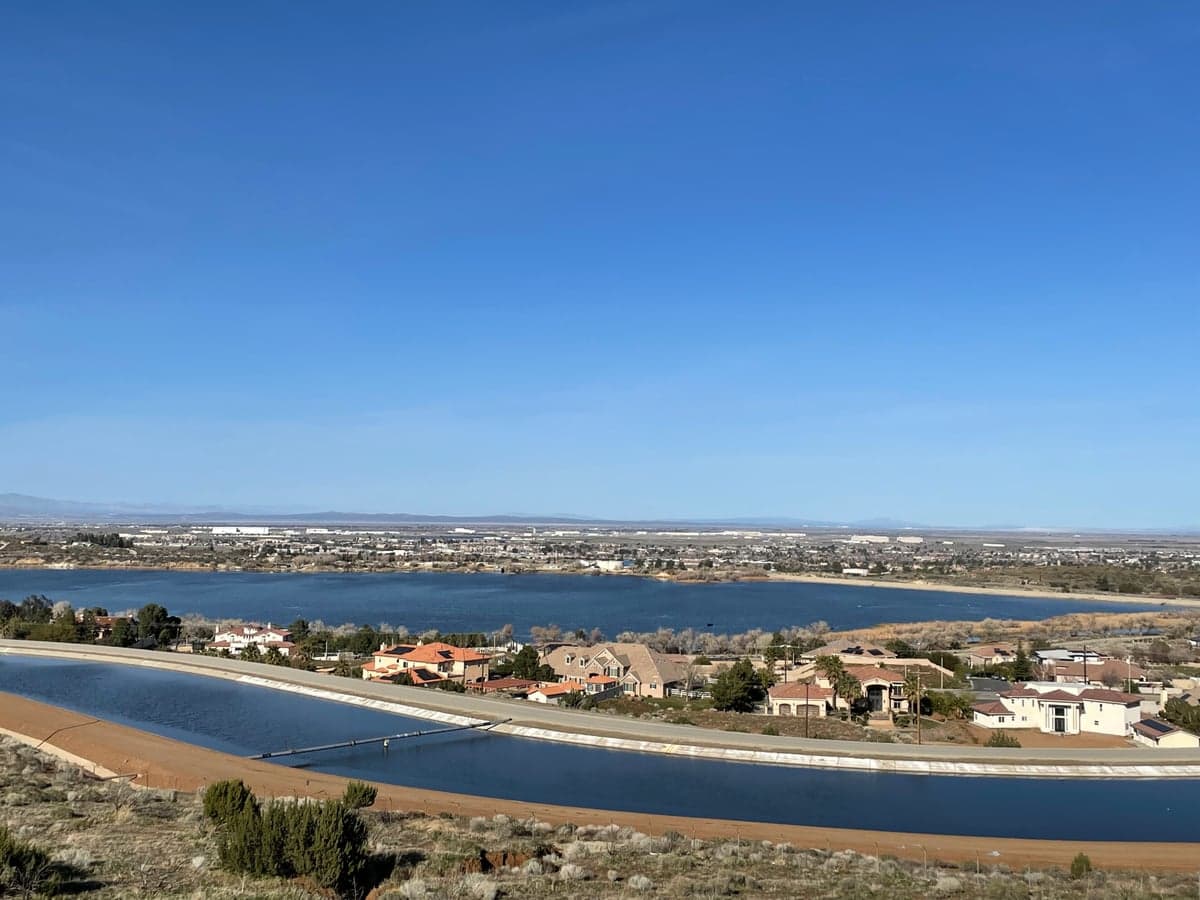
Photo: Wikipedia
Personal Sovereignty in Palmdale, CA
Moderate friction. Expect trade-offs in some aspect of personal liberty and independence.
What does Personal Sovereignty tell us?
Personal Sovereignty measures your capacity for self-reliance and independence with minimal government friction. Higher scores mean fewer barriers between you and the way you want to live... but it assumes you have the space you need and good neighbors.
What does this tell us?
Personal Sovereignty measures your capacity for self-reliance and independence with minimal government friction. Higher scores mean fewer barriers between you and the way you want to live... but it assumes you have the space you need and good neighbors.
State Policy
Energy independence: Importer (33% of energy produced in-state)
Personal Liberty
Homesteading

Personal Liberty Analysis
Palmdale offers a mixed bag for those prioritizing personal sovereignty, with California’s heavy-handed state apparatus constantly butting heads against the High Desert’s frontier ethos. While you won’t find the legal autonomy of a Texas or Idaho here, the city’s geography and local culture carve out meaningful pockets of self-reliance that savvy individuals can exploit. For the survivalist or prepper, Palmdale is less a sanctuary and more a strategic outpost—close enough to resources but far enough from the coastal chaos to breathe, provided you’re willing to navigate Sacramento’s regulatory labyrinth.
Tax burden and regulatory posture in California’s High Desert
California’s tax regime is a known anchor, and Palmdale doesn’t escape it. The state’s top marginal income tax rate of 13.3% hits high earners hard, while sales tax in Los Angeles County (Palmdale’s jurisdiction) sits at 10.25% as of 2026—one of the highest in the nation. Property taxes, however, are capped at roughly 1% of assessed value under Proposition 13, with annual increases limited to 2%, which provides some predictability for long-term homeowners. The regulatory posture is where the real friction lives: California’s California Environmental Quality Act (CEQA) can stall even modest construction projects, and the state’s aggressive energy mandates (e.g., banning new gas-powered appliances by 2030) force compliance. For the prepper, this means any off-grid or self-sufficient build—say, a solar array with battery storage or a rainwater catchment system—requires navigating a thicket of permits and inspections. The city’s zoning code, while more lenient than coastal areas, still restricts accessory dwelling units and livestock in many residential zones. The takeaway: you can survive here, but you’ll be paying the state’s toll at every turn.
Self-defense and gun law specifics in Palmdale
California’s gun laws are among the most restrictive in the nation, and Palmdale residents must comply fully. The state’s Roster of Handguns Certified for Sale limits new handgun purchases to approved models, effectively banning many popular self-defense firearms. Magazine capacity is capped at 10 rounds, and “assault weapon” bans cover features like pistol grips and flash hiders on rifles. Concealed carry permits (CCWs) are issued by the Los Angeles County Sheriff’s Department, which, post-Bruen, has moved to a “shall-issue” standard, but the process remains costly and time-consuming—expect a multi-month wait, mandatory training, and fees exceeding $300. Open carry is prohibited entirely. For the survivalist, this creates a frustrating paradox: the High Desert’s remote stretches (e.g., the Angeles National Forest boundary) are ideal for training, but transporting firearms to those areas requires locked cases and unloaded weapons. Local gun culture exists—shops like Palmdale Gun & Pawn serve a dedicated community—but you’re operating under a legal microscope. If self-defense is your top priority, Palmdale is a compromise; you can own firearms, but the state’s thumb is heavy.
Self-reliance and homesteading viability: lot sizes, zoning, and off-grid feasibility
Palmdale’s High Desert geography is where personal sovereignty gets a tangible foothold. Many residential lots in the city’s outskirts—particularly in areas like Quartz Hill or near the Antelope Valley Indian Museum—range from half-acre to 2.5 acres, with some rural parcels exceeding 5 acres. Zoning in these “Rural Residential” districts allows for small-scale livestock (chickens, goats, bees) and gardening, though pigs and cattle are generally prohibited. Off-grid feasibility is a mixed bag: solar panels are common and encouraged (the city averages 280 sunny days per year), but California’s net metering policies have been gutted, reducing the financial incentive to sell excess power back to the grid. Rainwater collection is legal but limited to 200 gallons per property without a permit, and well drilling is possible in some areas (check groundwater rights with the Antelope Valley Groundwater Sustainability Agency). The city’s building codes require connection to municipal water and sewer in most subdivisions, so true off-grid living is rare. For the prepper, the strategy is to buy a larger lot on the city’s fringe, install a robust solar system with battery backup, and keep a low profile—neighbors here tend to mind their own business, but code enforcement can be triggered by complaints.
Personal liberties: parental rights, medical autonomy, speech, and property
California’s progressive tilt directly impacts personal liberties in ways that rankle conservative-leaning residents. Parental rights are under constant pressure: the state’s 2023 law prohibiting school districts from notifying parents of a child’s gender identity changes (AB 1955) remains in effect, and Palmdale’s local school board has seen heated debates over curriculum transparency. Medical autonomy is similarly constrained—California mandates COVID-19 and childhood vaccines for school attendance (with limited religious exemptions), and the state’s “Right to Die” law (End of Life Option Act) is legal but tightly regulated. Free speech is protected under the First Amendment, but local ordinances in Palmdale restrict “aggressive panhandling” and require permits for large public gatherings. Property rights are the sorest point: California’s coastal commission and CEQA can effectively veto land-use decisions, and the state’s rent control laws (AB 1482) cap annual rent increases at 5% plus inflation, which can discourage landlords from investing in upgrades. For the survivalist, this means your home is your castle—but the state can still reach in through zoning, health mandates, and tax policy. The local culture, however, is more libertarian than the state average; many residents are military veterans or aerospace workers who value self-reliance.
Overall, Palmdale’s personal sovereignty is a study in contrasts: it offers more physical space and a lower cost of entry than coastal California, but the state’s regulatory and tax apparatus remains a constant drag. For the prepper or survivalist, the city works best as a base of operations—a place to store supplies, raise some chickens, and maintain a low profile while staying within striking distance of the Mojave Desert’s vast public lands (BLM and National Forest). Compared to states like Texas or Arizona, Palmdale is a compromise; you’ll trade legal autonomy for California’s climate and job market. If you’re willing to fight the bureaucracy and keep your head down, the High Desert’s frontier spirit still flickers—but don’t expect it to catch fire without a fight.

* Values derived from national, state, county, city and local statistics and may differ in a specific area. Last updated: 2026-04-24T12:48:20.000Z
Narrative content on this page is AI-generated and may contain mistakes. Verify any details that matter before acting on them.
ReloMaps may earn a commission from affiliate links at no extra cost to you.

