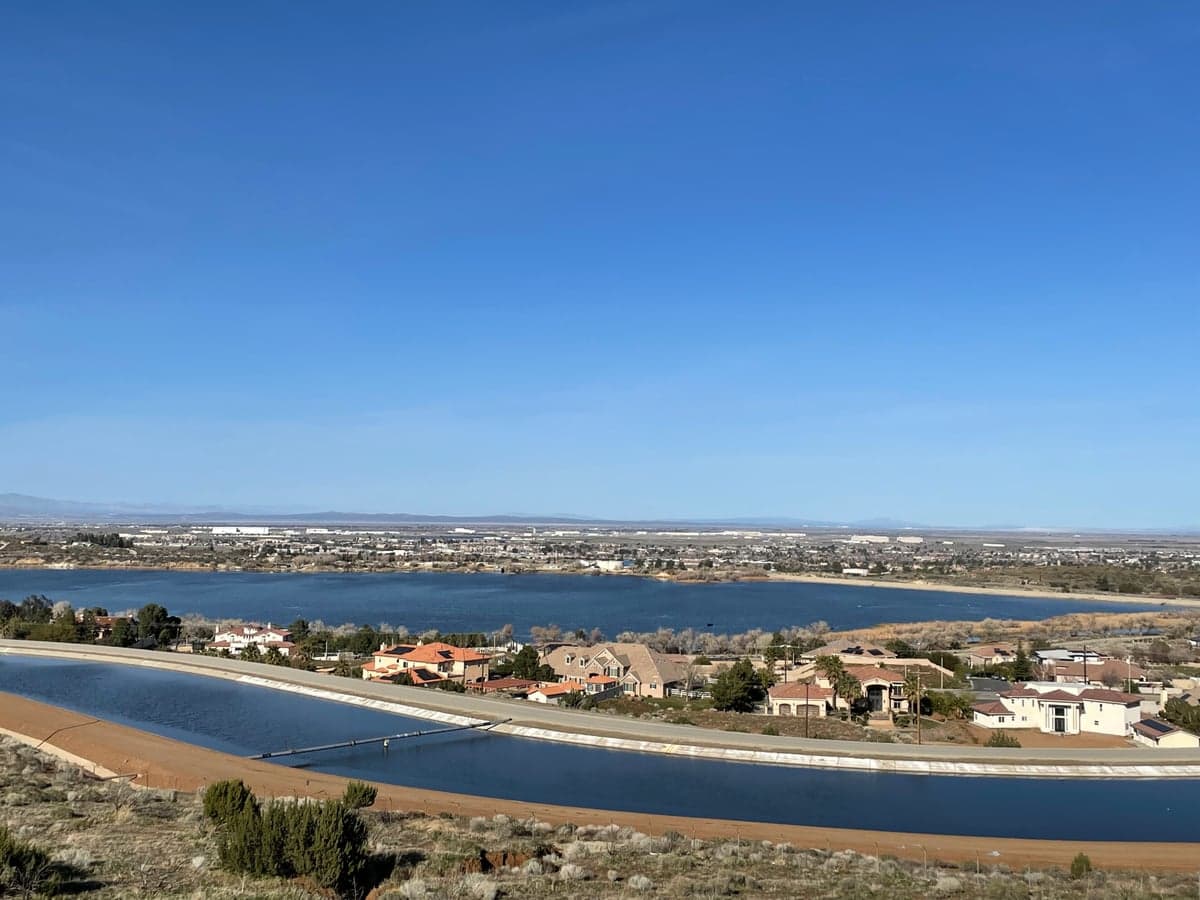
Photo: Wikipedia
Political ClimatePolitical Climate in Palmdale, CA
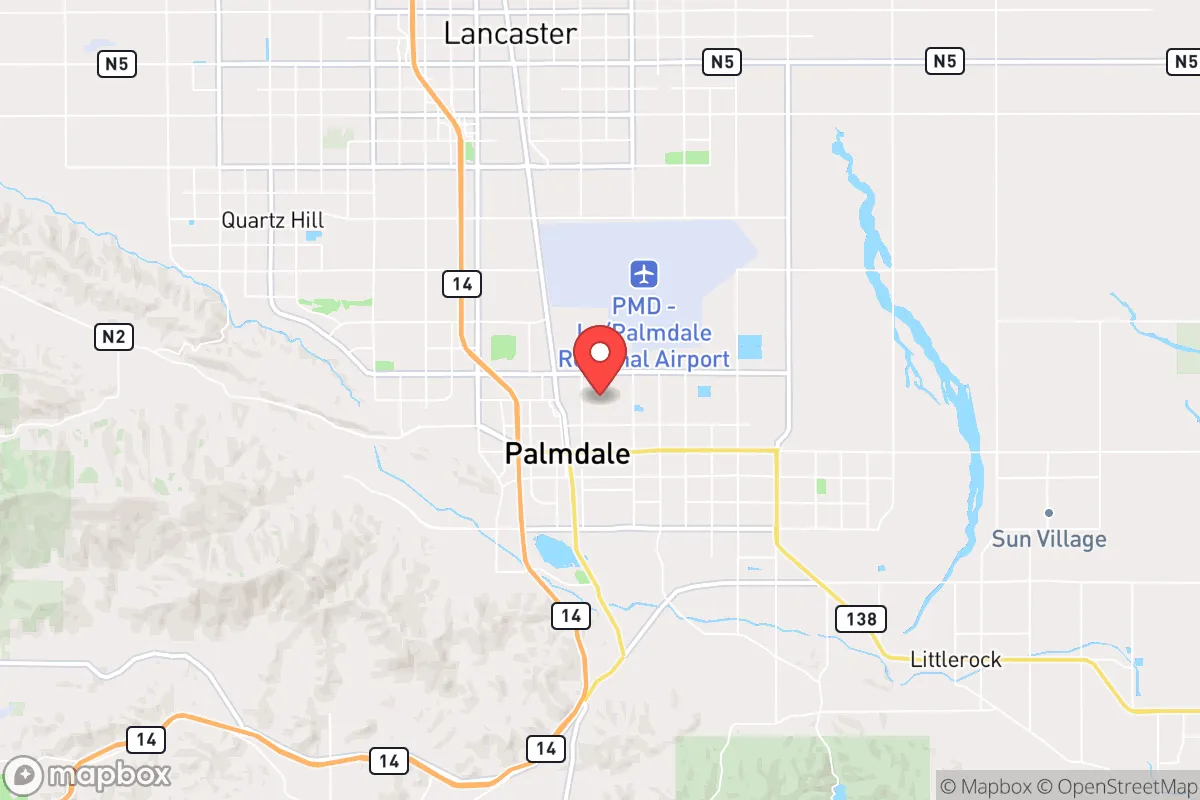
District shown is the primary district for this city’s centroid. Cities may span multiple districts.
Local Political AnalysisPolitical Analysis of Palmdale, CA
Palmdale’s political climate has shifted noticeably over the past decade, and if you’ve lived here as long as I have, you’ve felt it. The city sits in a district with a Cook PVI of D+3, meaning it leans slightly Democratic overall, but that number hides a more complicated reality. Palmdale was reliably conservative for years—a blue-collar, aerospace-driven town where folks valued self-reliance and didn’t want the government poking into their business. Lately, though, you’re seeing more progressive energy creeping in, especially from newcomers priced out of Los Angeles who bring their big-city voting habits with them. The trajectory is concerning if you value limited government and personal freedoms, because the local elections and policy debates are starting to reflect that shift.
How it compares
To understand Palmdale’s politics, you have to look at the neighbors. Head west to Lancaster, and you’ll find a similar story—once a conservative stronghold, now trending purple, though Lancaster still holds a slightly more Republican edge in local races. Drive south toward Santa Clarita, and you’re in reliably red territory, where voters consistently push back against state-level mandates on housing and energy. But go east into the high desert communities like Adelanto or Victorville, and you’ll see a different picture: those areas are more mixed, with a strong libertarian streak that resents Sacramento’s overreach. Palmdale sits right in the middle of this patchwork, and the contrast is stark. While Santa Clarita’s city council still fights state housing quotas, Palmdale’s leadership has been more willing to adopt progressive policies on land use and public spending. It’s a reminder that your vote here matters more than ever, because the surrounding towns show what’s possible when conservatives hold the line.
What this means for residents
For those of us who’ve been here a while, the biggest worry is how this political drift affects daily life. The push for higher density housing, for example, sounds good on paper but often means more government control over what you can do with your own property. You’re seeing it in zoning fights and in the pressure to adopt “climate action plans” that raise utility costs and limit choices. Property taxes and fees have crept up, and there’s a growing sense that local officials are more focused on pleasing state bureaucrats than listening to the people who actually live here. If you value the freedom to run a small business without endless red tape, or to own a home without constant new regulations, Palmdale’s shift is something to watch closely. The good news is that voter turnout in local elections is still decent, and many residents are waking up to what’s at stake.
One cultural distinction worth noting: Palmdale has a strong military and aerospace heritage, with Edwards Air Force Base and Lockheed Martin nearby. That tradition of service and discipline tends to anchor conservative values—respect for the Second Amendment, skepticism of government overreach, and a belief that hard work should be rewarded without interference. You still see that spirit at local gun shows and in the number of “Don’t Tread on Me” flags flying in the outskirts. But as the city grows and attracts more people from the coast, that identity is getting diluted. The next few election cycles will tell you whether Palmdale holds onto its independent character or becomes another suburb of Los Angeles in spirit as well as geography. If you’re thinking of moving here, just know that the political winds are shifting, and it pays to get involved early if you want to keep things from going too far.

State Political ClimatePolitical Climate in California
State Political AnalysisPolitical Environment in the State
California is a one-party Democratic state where registered Democrats outnumber Republicans by nearly 2-to-1, and the last time it voted for a Republican presidential candidate was George W. Bush in 2004. The dominant coalition is a mix of coastal progressives, unionized public-sector workers, and a growing bloc of Latino voters who lean left, though not as uniformly as the party’s base. Over the last 20 years, the state has shifted from a competitive purple state—where Arnold Schwarzenegger won a recall in 2003—to a deep blue stronghold, driven by massive population growth in the Bay Area and Los Angeles County, while inland and rural areas have become more Republican but lost political clout.
Urban vs. rural divide
The political map of California is a tale of two states. The coastal metros—San Francisco, Los Angeles, San Diego, and Oakland—generate the vast majority of Democratic votes, with San Francisco County delivering 85% of its vote to Joe Biden in 2020. In contrast, the Central Valley and inland regions are Republican strongholds: Bakersfield (Kern County) voted +16 for Trump, and Redding (Shasta County) went +30 for Trump. The divide is stark even within counties: Orange County, once a conservative bastion, flipped to Biden in 2020 by 9 points, driven by suburban voters in Irvine and Santa Ana who are repelled by the national GOP’s cultural conservatism. Meanwhile, Fresno and Modesto remain competitive but lean blue due to unionized farmworkers and public-sector employees. The rural-urban split is so extreme that some rural counties have discussed secession—the State of Jefferson movement, centered in Yreka and Redding, has been pushing for a separate state since the 1940s, though it has zero chance of success.
Policy environment
California’s policy environment is a laboratory for progressive governance, and it shows in the tax code and regulatory landscape. The state has the highest income tax rate in the nation (13.3% for top earners), a state sales tax of 7.25% that can reach over 10% with local add-ons, and some of the highest gas taxes in the country—currently 68 cents per gallon, with annual inflation adjustments. Property taxes are capped at 1% of assessed value under Proposition 13, but that benefit is eroding as home prices skyrocket. On regulation, California has the strictest environmental laws in the US, including the California Environmental Quality Act (CEQA), which is often weaponized by NIMBY groups to block housing and infrastructure. Education policy is dominated by the California Teachers Association, a powerful union that has blocked charter school expansion and fought parental notification laws. Healthcare is heavily regulated, with the state running its own insurance exchange (Covered California) and moving toward a single-payer system that has stalled due to cost. Election laws are among the most liberal: universal mail-in voting, same-day registration, and no voter ID requirement—a system that conservatives argue invites fraud, though no widespread evidence has emerged. The state also has a “sanctuary state” law (SB 54), which limits local law enforcement cooperation with federal immigration authorities.
Trajectory & freedom
California is becoming less free by almost any measure of personal liberty, especially for conservatives. On gun rights, the state has some of the strictest laws in the nation: a 10-day waiting period, an assault weapons ban, a “may-issue” concealed carry system that was recently tightened by SB 2 (2023), which restricts carry permits in most public places. The Supreme Court’s Bruen decision (2022) forced some loosening, but California lawmakers are actively resisting. On parental rights, the state passed AB 1955 (2024), which prohibits school districts from requiring parental notification when a child changes their gender identity—a direct blow to family autonomy. On speech, California’s AB 587 (2022) requires social media companies to report their content moderation policies, a move critics call a backdoor to censorship. Medical autonomy took a hit with the state’s COVID-19 mandates, which were among the longest-lasting in the country, including vaccine requirements for schoolchildren that were only dropped in 2024. Property rights are under constant assault from rent control laws (AB 1482) and the Coastal Commission’s near-veto power over development. The only area where freedom has expanded is marijuana legalization (Proposition 64, 2016), but even that is heavily taxed and regulated.
Civil unrest & political movements
California has been a flashpoint for civil unrest and political activism for decades. The 2020 George Floyd protests in Los Angeles and Oakland were among the largest and most destructive in the nation, with looting and arson causing billions in damage. The state’s sanctuary policies have made it a magnet for immigration activism, with groups like the California Immigrant Youth Justice Alliance pushing for even more protections. On the right, the State of Jefferson movement remains active in rural counties, and there have been organized recall efforts against progressive district attorneys—most notably the successful recall of San Francisco DA Chesa Boudin in 2022, driven by crime concerns. Election integrity is a hot-button issue: after the 2020 election, the state’s universal mail-in system drew lawsuits from conservative groups, and in 2024, some counties reported ballot drop-box tampering incidents. The most visible flashpoint for a new resident would be the homelessness crisis in San Francisco and Los Angeles, which has spawned tent encampments, drug use in public, and a political battle over whether to force people into treatment or leave them alone. The state’s response—spending billions on shelters with little effect—has frustrated both left and right.
Projection
Over the next 5-10 years, California will likely become more progressive and less affordable, driving continued out-migration to Texas, Arizona, and Idaho. The state’s population has already declined for three consecutive years (2020-2023), losing about 500,000 residents, and the trend is accelerating among middle-class families and conservatives. The demographic shift is toward a younger, more diverse population that votes heavily Democratic, but the state is also seeing an influx of wealthy tech workers who support progressive policies on social issues while opposing new housing—a contradiction that will keep housing costs high. The political trajectory is toward single-payer healthcare, more rent control, and stricter gun laws, all of which will further alienate conservatives. The wild card is a potential economic downturn: California’s budget relies heavily on capital gains taxes from the tech sector, and a crash could force cuts to the generous social programs that define the state. For a conservative moving in now, expect to be a permanent minority voter, with your voice drowned out by a legislature that sees your values as obstacles to progress.
Bottom line for a new resident: If you’re a conservative considering California, you’re moving into a state where your political views will be in the minority, your taxes will be high, and your personal freedoms—especially on guns, education, and parental rights—will be under constant pressure. The natural beauty and economic opportunity are real, but they come at the cost of living in a system that actively works against your values. If you’re set on moving, target inland areas like Bakersfield or Redding where you’ll find more like-minded neighbors, but understand that state-level policy will still override local preferences on most issues.
* Values derived from national, state, county, city and local statistics and may differ in a specific area. Last updated: 2026-04-24T12:48:20.000Z
Narrative content on this page is AI-generated and may contain mistakes. Verify any details that matter before acting on them.
ReloMaps may earn a commission from affiliate links at no extra cost to you.

