Demographics of Parkston, SD
Affluence Level in Parkston, SD
A middle-class area roughly in line with national averages across income, home values, education, and employment.
People of Parkston, SD
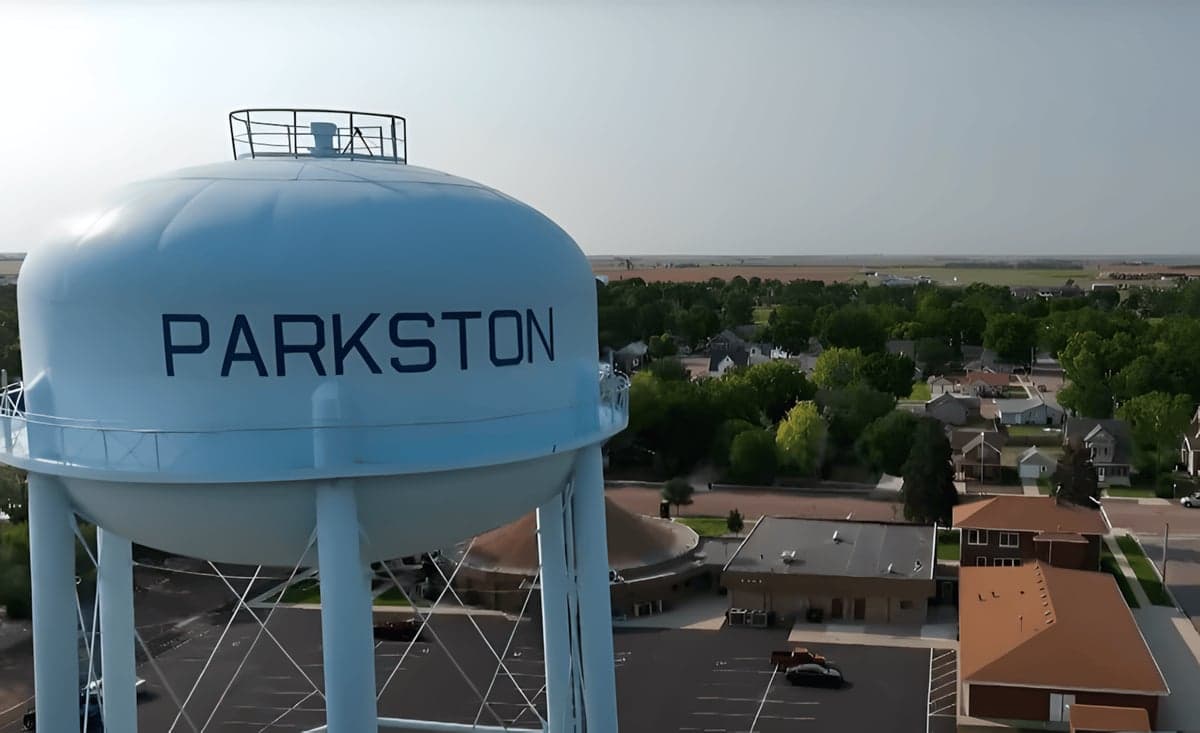
Parkston, South Dakota, is a small, tight-knit community of 1,981 residents where 93.9% of the population is White and the foreign-born share is just 0.6%, reflecting a deeply homogeneous and stable demographic profile. The city’s identity is rooted in its German-Russian and Czech immigrant heritage, with a strong agricultural and small-town character that persists today. With 24.8% of adults holding a college degree, the population is less educated than state averages, but the community values self-reliance, faith, and family. Parkston is a place where generational roots run deep, and newcomers are often drawn by a desire for quiet, safe, and affordable living.
How the city was settled and grew
Parkston was founded in the 1880s as a railroad town along the Chicago, Milwaukee, St. Paul and Pacific Railroad, which opened the region to European immigrants seeking cheap farmland. The first major wave of settlers were German-Russian families—ethnic Germans who had lived in the Russian Empire—who arrived in the 1880s and 1890s, drawn by the promise of fertile soil and land grants under the Homestead Act. They established the North Parkston neighborhood, where many of the original farmsteads and simple frame houses still stand, and built the area’s first Lutheran and Catholic churches. A second wave of Czech immigrants arrived around 1900, settling in the South Parkston district, where they founded St. Paul’s Catholic Church and the local Czech Hall, which remains a community gathering spot. The town grew steadily through the 1920s, peaking at around 1,200 residents by 1930, as the surrounding agricultural economy—centered on corn, soybeans, and hogs—provided stable livelihoods. The Great Depression and World War II slowed growth, but the post-war baby boom filled the West Parkston area with new single-family homes, solidifying the town’s character as a farming service center.
Modern era (post-1965)
After the 1965 Immigration and Nationality Act, Parkston saw virtually no new foreign-born arrivals; the foreign-born share today is 0.6%, and the population remains overwhelmingly White. The major demographic shift in the modern era has been domestic out-migration, as younger residents left for larger cities like Sioux Falls or Mitchell for education and jobs. The Hispanic population, now at 2.5%, began to grow slowly in the 1990s and 2000s, primarily as migrant farmworkers and their families settled in the East Parkston area near the grain elevators and meatpacking facilities. These families often work in agriculture or at the nearby Dakota Provisions turkey processing plant in Huron, and they have formed a small but stable enclave. The Black, Asian, and Indian subcontinent populations are each 0.0%, reflecting no significant immigration from those groups. The Downtown Parkston district, centered on Main Street, has seen some reinvestment but remains largely unchanged, with family-owned businesses and churches anchoring the community. The Lake Park neighborhood, a newer subdivision built in the 2000s, has attracted a few retirees and remote workers, but the overall population has declined slightly from a peak of 2,100 in the 1980s.
The future
Parkston’s population is likely to continue a slow decline or plateau, as the aging Baby Boomer generation passes and younger families remain scarce. The Hispanic community, while small, is the only growing demographic segment, and it may gradually expand as second-generation families stay in the area, but it will remain a minor share. The town is homogenizing rather than tribalizing, with no distinct ethnic enclaves beyond the small Hispanic cluster in East Parkston. The White population will remain dominant, and the foreign-born share will stay near zero. The next 10–20 years will likely see further consolidation of the agricultural economy, with fewer but larger farms, and the town may struggle to retain its school and local businesses. Newcomers will almost certainly be White, conservative, and drawn by low housing costs and a quiet lifestyle, but the overall population will shrink modestly.
For someone moving in now, Parkston offers a stable, safe, and culturally uniform environment where community ties are strong and change is slow. It is not a place of demographic diversity or rapid growth, but rather a steady, rural community where family and faith remain central. If you value predictability, low crime, and a deep sense of place, Parkston is a solid choice—but it is not a place that will reshape your worldview through exposure to different cultures.

* Values derived from national, state, county, city and local statistics and may differ in a specific area. Last updated: 2026-04-23T09:36:52.000Z
Narrative content on this page is AI-generated and may contain mistakes. Verify any details that matter before acting on them.
ReloMaps may earn a commission from affiliate links at no extra cost to you.

