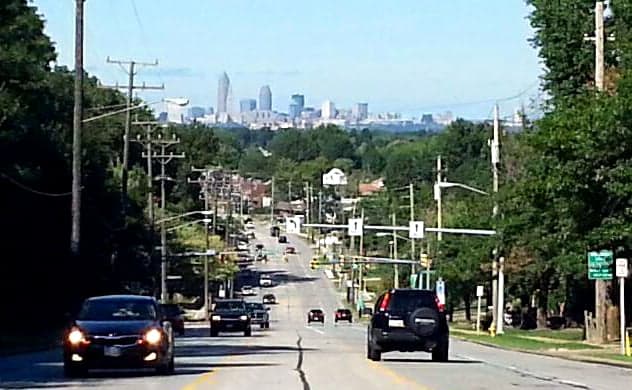
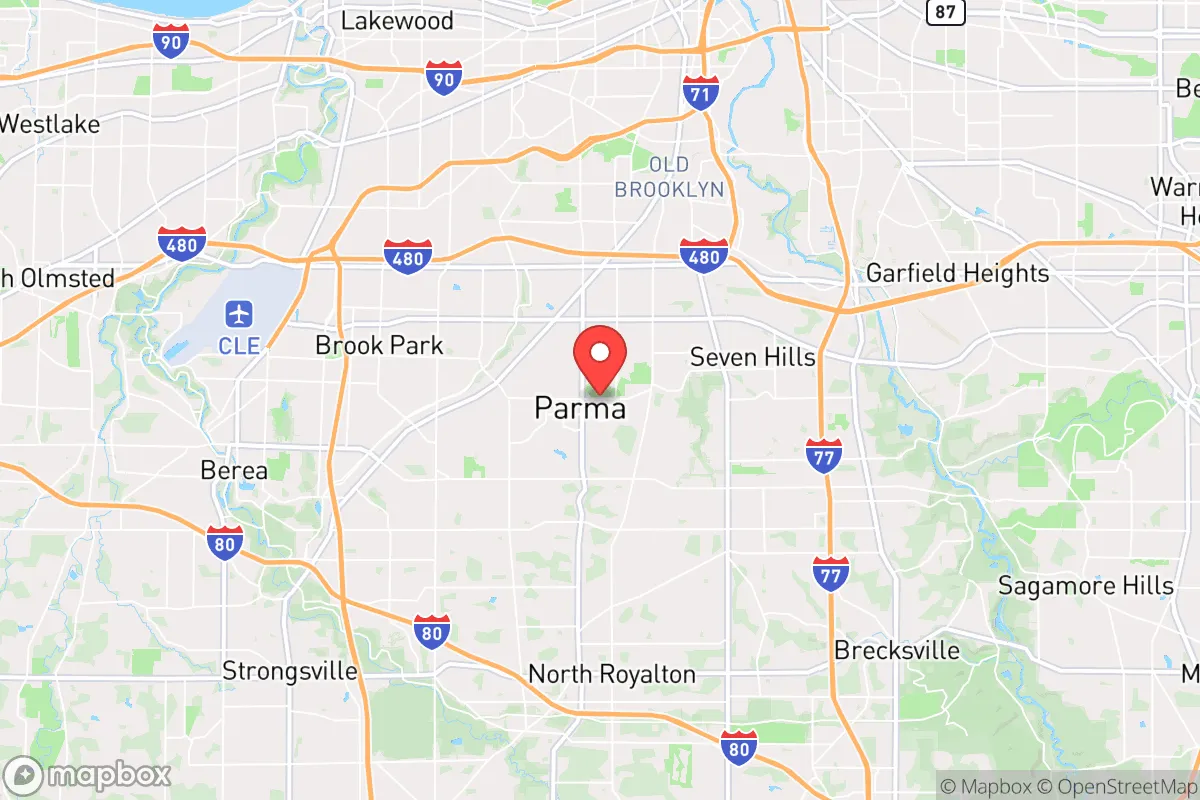
Photo: Wikipedia
Demographics of Parma, OH
Affluence Level in Parma, OH
A below-average socioeconomic profile. Incomes, home values, and educational attainment trail the U.S., with higher poverty and unemployment.
People of Parma, OH
Parma, Ohio, is a densely settled, middle-class suburb of 80,131 residents that retains a distinctly blue-collar, Eastern European character while gradually diversifying. Known as the "City of Homes and Churches," it is one of the most ethnically homogeneous large suburbs in Cuyahoga County, with a population that is 81.4% white and heavily Catholic. The city’s identity is rooted in its post-war boom as a haven for second- and third-generation immigrants, though recent decades have brought modest growth in Hispanic (8.1%) and East/Southeast Asian (1.5%) communities, reshaping select neighborhoods.
How the city was settled and grew
Parma’s population history begins not with colonial settlement but with a late-19th-century agricultural hamlet that exploded after World War II. Originally part of the Connecticut Western Reserve, the area was sparsely farmed by Yankee and German settlers through the 1800s. The real transformation came between 1945 and 1970, when Parma became a prime destination for white ethnic families—especially Czech, Polish, Slovak, and German—fleeing the aging, crowded neighborhoods of Cleveland’s near west side. These groups were drawn by affordable single-family homes on large lots, built rapidly by developers like the Parma Development Company. The historic core of this settlement is Ridgewood Heights, a neighborhood of Cape Cod and bungalow homes that became the heart of the Czech and Slovak community. Nearby Parma Heights (a separate village but culturally contiguous) and the area around State Road and Snow Road saw heavy Polish and German settlement. By 1960, Parma’s population had surged past 80,000, making it Ohio’s seventh-largest city—a status it still holds. The city’s nickname, "City of Churches," reflects the dozens of Catholic and Orthodox parishes built by these groups, including St. Charles Borromeo (Polish) and St. John Nepomucene (Czech).
Modern era (post-1965)
After the 1965 Hart-Cellar Act and the subsequent suburbanization of Cleveland’s Black population, Parma became a flashpoint for racial tension. The city resisted integration through housing policies and informal steering, earning a reputation as one of the most segregated suburbs in the Midwest. As a result, Parma’s Black population remains low at 4.7%, concentrated almost entirely in the Parmatown area and the apartments along Broadview Road near the border with Cleveland’s Lee-Miles neighborhood. The Hispanic population, now 8.1%, began growing in the 1990s, driven by Puerto Rican and Mexican families moving from Cleveland’s Clark-Fulton and Detroit-Shoreway neighborhoods. They settled primarily in the Parma Heights border zone and the West 130th Street corridor, where older duplexes and apartments offered affordable entry points. East/Southeast Asian residents (1.5%) are a smaller but visible presence, with a cluster of Vietnamese and Korean families in the Pleasant Valley area, often drawn by the Parma City School District’s English as a Second Language programs. The Indian subcontinent population (0.8%) is scattered but slightly concentrated near the Ridge Road commercial strip, where several Indian grocery stores and restaurants have opened since 2010. Overall, Parma remains overwhelmingly white, but the white share has declined from 95% in 1990 to 81.4% today, with most of that shift occurring in the 2000s and 2010s.
The future
Parma’s population is slowly homogenizing in its older, white ethnic core while tribalizing into distinct enclaves along its edges. The city’s total population has been stable—80,131 in 2020, down slightly from 81,601 in 2010—but the composition is shifting. The white population is aging rapidly; the median age is 42.3, and many of the Czech and Polish families who built the city are retiring or moving to Sun Belt states. Younger white families are increasingly choosing neighboring suburbs like Strongsville or North Royalton, which offer newer housing stock. Meanwhile, the Hispanic population is the fastest-growing segment, projected to reach 12–14% by 2035 if current trends hold. This growth is concentrated in the Parma Heights border and West 130th Street areas, which are becoming de facto Hispanic corridors with bodegas, Pentecostal churches, and bilingual signage. The East/Southeast Asian and Indian communities are small but stable, with little evidence of rapid growth or assimilation into the broader white ethnic culture. The city’s college-educated share (24.3%) is below the national average, and Parma has not attracted the professional-class migration seen in Cleveland’s inner-ring suburbs like Lakewood or Shaker Heights. The next decade will likely see Parma become a more Hispanic, less white city, but the pace will be gradual—more a slow demographic drift than a sudden transformation.
For someone moving in now, Parma is becoming a place where the old Eastern European identity is fading but not gone, replaced by a quieter, more diverse working-class suburb. The city offers affordable housing and strong municipal services, but the social fabric is thinning in the older neighborhoods while new enclaves form along the edges. It is a stable, safe choice for families who value low crime and good schools, but not a place of rapid upward mobility or cultural dynamism. The bottom line: Parma is a city in demographic transition, still anchored by its white ethnic past but slowly opening to new groups, especially Hispanic families seeking a foothold in the Cleveland suburbs.

* Values derived from national, state, county, city and local statistics and may differ in a specific area. Last updated: 2026-04-21T20:32:51.000Z
Narrative content on this page is AI-generated and may contain mistakes. Verify any details that matter before acting on them.
ReloMaps may earn a commission from affiliate links at no extra cost to you.

