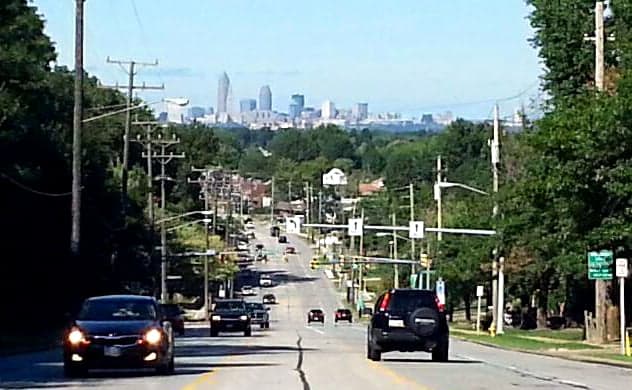
Photo: Wikipedia
Political ClimatePolitical Climate in Parma, OH
District shown is the primary district for this city’s centroid. Cities may span multiple districts.
Local Political AnalysisPolitical Analysis of Parma, OH
Parma, Ohio, has long been a solidly conservative working-class community, and while it still leans right with a Cook PVI of R+5, you can feel the political ground shifting under your feet if you’ve lived here a while. The city used to be a reliable Republican stronghold in Cuyahoga County, but the last few election cycles have shown a slow creep toward the center, driven largely by younger transplants and changing demographics. It’s not a blue wave by any stretch—Parma still votes red in most races—but the margin is thinner than it was twenty years ago, and that has a lot of long-time residents watching closely.
How it compares
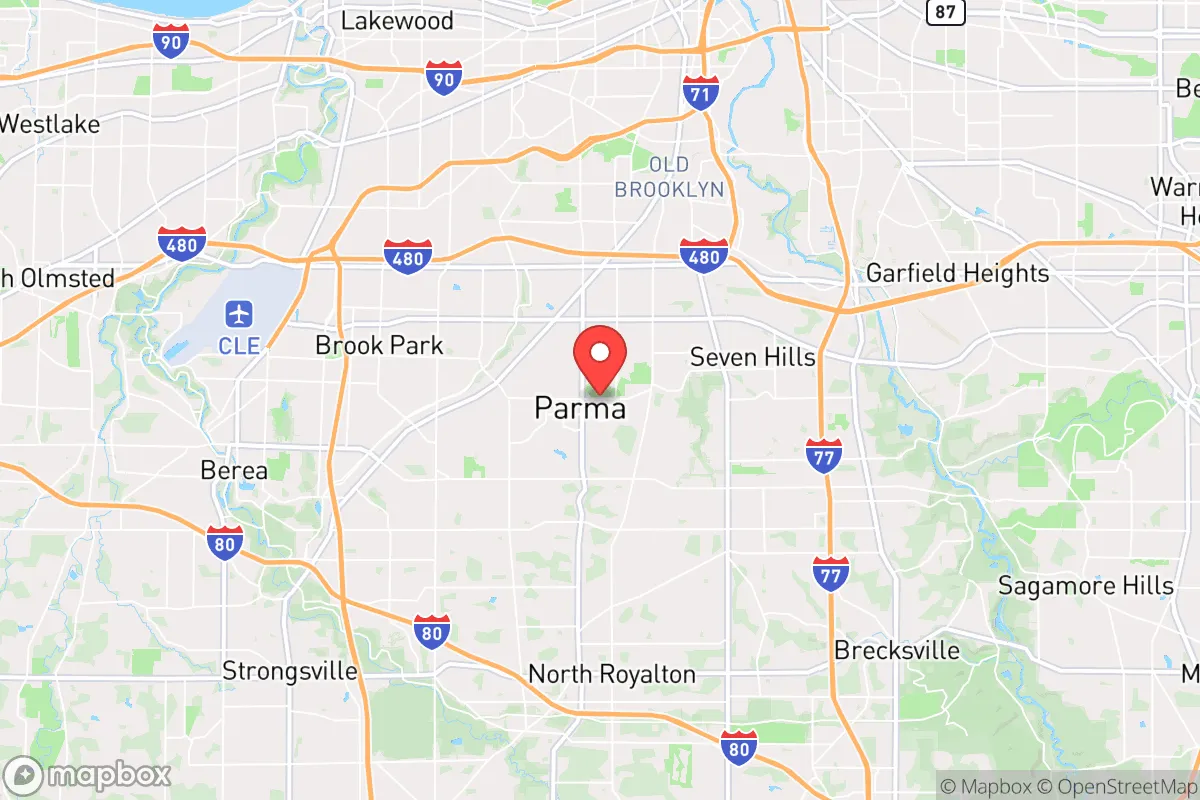
To really understand Parma’s politics, you have to look at the neighbors. Drive ten minutes north into Cleveland proper, and you’re in a deep-blue urban stronghold where progressive policies on taxes, policing, and zoning are the norm. Head west to Strongsville or south to North Royalton, and you’ll find communities that are still reliably conservative, with less of the cultural drift you see here. Parma sits right in the middle—it’s the buffer zone between the city’s leftward tilt and the outer-ring suburbs that haven’t budged. That makes it a bellwether: if Parma starts flipping blue in local races, it’s a sign the whole county is shifting. So far, it hasn’t, but the trend is concerning for anyone who values limited government and local control.
What this means for residents
For folks who’ve been here decades, the biggest worry is that the political middle ground Parma occupies is getting squeezed. You see it in local debates over things like housing density and school funding—there’s more pressure to adopt policies that sound good on paper but come with a lot of government strings attached. The city council has stayed mostly conservative, but the school board and some appointed commissions have seen a push from progressive activists who want to bring in ideas from Cleveland. That means more regulations, more mandates, and less room for personal choice in how you run your property or raise your kids. If you’re the kind of person who thinks the government should stay out of your backyard and your wallet, the trend here is worth keeping an eye on. The near-term outlook is still manageable—Parma isn’t going to turn into a progressive experiment overnight—but the long-term trajectory depends on whether the next wave of residents votes the same way their parents did.
Culturally, Parma still feels like a place where people value their independence and don’t appreciate being told what to do. You see it in the strong support for local gun rights, the resistance to mask and vaccine mandates that flared up during the pandemic, and the general skepticism of any “one-size-fits-all” policy from Columbus or Washington. The city has a proud Eastern European heritage—Polish, Ukrainian, Slovak—that leans traditional on family and community values. That said, there’s a growing tension between the old guard and newer arrivals who see things differently. The policy distinction that stands out most is Parma’s relatively low tax burden compared to Cleveland and its willingness to push back on county-level overreach. If you’re looking for a place where you can live your life without a lot of bureaucratic hassle, Parma still fits the bill—but you’ll want to stay involved in local elections to keep it that way.

State Political ClimatePolitical Climate in Ohio
State Political AnalysisPolitical Environment in the State
Ohio has long been the quintessential bellwether state, but over the past decade it has shifted from a pure purple battleground to a solidly red-leaning state, with Republicans now holding every statewide office and commanding supermajorities in both legislative chambers. The 2024 presidential election saw Donald Trump carry the state by over 11 points, a dramatic shift from the 2012 and 2016 margins that were within 3 points. This realignment is driven by a working-class exodus from the Democratic Party, particularly in the industrial belt and Appalachian southeast, while the suburban counties around Columbus and Cincinnati have become the new front lines of political competition.
Urban vs. rural divide
The political map of Ohio is a study in stark contrasts. The three major metros—Cleveland, Columbus, and Cincinnati—anchor the Democratic vote, but their influence is increasingly diluted by the vast, red rural and exurban expanse. Cuyahoga County (Cleveland) delivers massive Democratic margins, but its population has been stagnant for decades. Franklin County (Columbus) is the state’s fastest-growing urban center and has become a Democratic stronghold, driven by Ohio State University and a growing tech and insurance sector. Hamilton County (Cincinnati) has trended blue in presidential years, but its suburbs like West Chester and Mason remain reliably Republican. The real story is in the smaller metros and rural counties: places like Butler County (north of Cincinnati) and Delaware County (north of Columbus) are among the fastest-growing and most Republican in the state. Meanwhile, the Appalachian counties of Meigs, Vinton, and Monroe have flipped from blue-dog Democrat to deep red, as cultural and economic populism overtakes union loyalty. The Mahoning Valley around Youngstown, once a Democratic stronghold, now votes Republican by double digits in presidential races.
Policy environment
Ohio’s policy environment is a mixed bag for conservatives, but the trend is clearly in the right direction. The state has a flat income tax rate of 3.5% (down from 4.99% in 2020), with a phase-out plan that could eliminate it entirely by 2030. Property taxes are moderate, but local school levies can be high in affluent suburbs. The regulatory climate is business-friendly, with right-to-work laws not on the books but a strong tort reform environment. Education policy is a flashpoint: the state has a robust school choice program, including the EdChoice voucher system that allows students in low-performing districts to attend private schools, and a growing charter school sector. However, the state board of education has been a battleground over curriculum and parental rights. Healthcare is dominated by large systems like Cleveland Clinic and OhioHealth, but the state has not expanded Medicaid beyond the 2013 expansion, and there is no state-level individual mandate. Election laws have been tightened: voter ID is now required (with a limited list of acceptable IDs), drop boxes are restricted to one per county, and early voting hours have been standardized. The state also passed a 2023 law banning foreign nationals from contributing to ballot issue campaigns, a direct response to dark money in the 2023 abortion amendment fight.
Trajectory & freedom
Ohio is becoming more free in several key areas, but the trajectory is not without setbacks. On gun rights, the state passed constitutional carry in 2022, allowing permitless concealed carry for adults 21 and older, and preempted local gun ordinances. On parental rights, the 2023 Parents’ Bill of Rights (HB 8) requires schools to notify parents of any changes to a student’s health or well-being, including mental health and gender identity discussions. This law has been challenged in court but remains in effect. On medical autonomy, the state passed a 2023 law banning gender-affirming care for minors and restricting transgender athletes in school sports. However, the 2023 abortion amendment (Issue 1) enshrined a right to abortion up to viability, which was a significant loss for the pro-life movement and a reminder that direct democracy can override legislative will. On property rights, the state has not passed a comprehensive property tax reform, but a 2024 law capped annual increases on homestead exemptions for seniors. The biggest freedom concern remains the state’s heavy reliance on local property taxes for schools, which can create de facto tax burdens in growing suburbs.
Civil unrest & political movements
Ohio has seen its share of political flashpoints. The 2020 protests in Columbus and Cleveland over George Floyd’s death were large but largely peaceful, though there were isolated incidents of looting and property damage. The 2023 abortion amendment campaign saw intense grassroots organizing on both sides, with the pro-life side outspent but still winning in many rural counties. Immigration politics are less visible than in border states, but the 2023 influx of Haitian migrants to Springfield (Clark County) became a national story, with local officials claiming the population overwhelmed social services and schools. The city council passed a resolution declaring Springfield a “sanctuary city” in 2021, but it was largely symbolic and has since been rescinded. Election integrity remains a hot-button issue: the 2020 election in Ohio was certified without major controversy, but the 2024 cycle saw increased scrutiny of mail-in ballot processing in Cuyahoga County. There is no serious secession or nullification movement, but the “Ohio Freedom Alliance” and similar groups advocate for state sovereignty on gun and health mandates.
Projection
Over the next 5-10 years, Ohio will likely continue its rightward drift, but the pace will depend on demographic shifts. The Columbus metro is growing and diversifying, which could make Franklin County a Democratic powerhouse that offsets rural gains. However, the exurban counties around Columbus and Cincinnati are growing even faster and are deeply red. The Appalachian counties are aging and losing population, which will reduce their electoral weight. The wild card is the state’s direct democracy process: if progressives continue to use ballot initiatives to bypass the legislature (as they did with abortion and marijuana legalization in 2023), the state could see a growing tension between the elected government and the popular will. The income tax phase-out, if completed, would make Ohio one of the most tax-competitive states in the Midwest, potentially attracting more conservative migrants from high-tax states like Illinois and California. A new resident moving in now should expect a state that is politically stable but culturally divided, with a legislature that is reliably conservative but a judiciary that is still somewhat unpredictable on social issues.
Bottom line for a new resident: Ohio offers a solidly conservative policy environment on taxes, guns, and parental rights, but you’ll need to pick your county carefully. The rural and exurban areas are safe bets for like-minded neighbors, while the urban cores are increasingly progressive. The state’s direct democracy process means that major social issues can change overnight, so stay engaged in local elections and ballot campaigns. If you value low taxes, school choice, and a strong Second Amendment, Ohio is a good bet—just be prepared for the occasional political surprise from the ballot box.
* Values derived from national, state, county, city and local statistics and may differ in a specific area. Last updated: 2026-04-21T20:32:51.000Z
Narrative content on this page is AI-generated and may contain mistakes. Verify any details that matter before acting on them.
ReloMaps may earn a commission from affiliate links at no extra cost to you.

