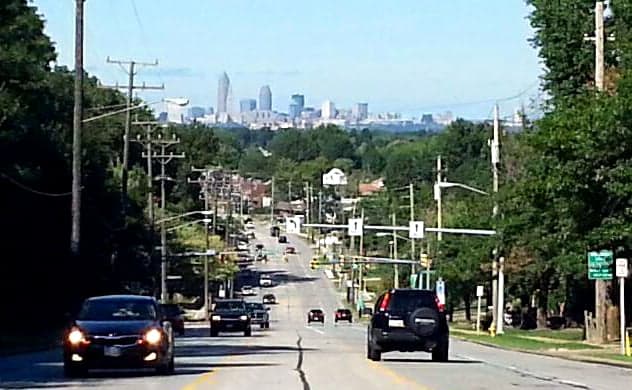
Photo: Wikipedia
Strategic Assessment of Parma, OH
Multiple tactical vulnerabilities. Population density, target proximity, or disaster risk are likely compounding. A retreat property and exit planning is required.
What does the Strategic Assessment tell us?
Our Strategic Assessment grades tactical survivability of an area. Major population centers, military targets, fallout zones, natural disasters, and border exposure all drive risk — lower exposure means a more defensible position in a crisis.
This is heavily inspired by Joel Skousen's Strategic Relocation book. Highly recommended you checkout the book ($)What does this tell us?
Our Strategic Assessment grades tactical survivability of an area. Major population centers, military targets, fallout zones, natural disasters, and border exposure all drive risk — lower exposure means a more defensible position in a crisis.
This is heavily inspired by Joel Skousen's Strategic Relocation book. Highly recommended you checkout the book ($)Strategic Pillars

Key Distances
Regional Safe Places
Below is our recommended "safe zones" in Ohio and the surrounding area based on our strategic heuristics. For most people, it's unrealistic to live in a “safe zone” full-time due to work, family or other personal reasons. They tend to be more rural. However, many of these areas are perfect for second homes and retreat properties that double as a vacation home or even a short-term rental.

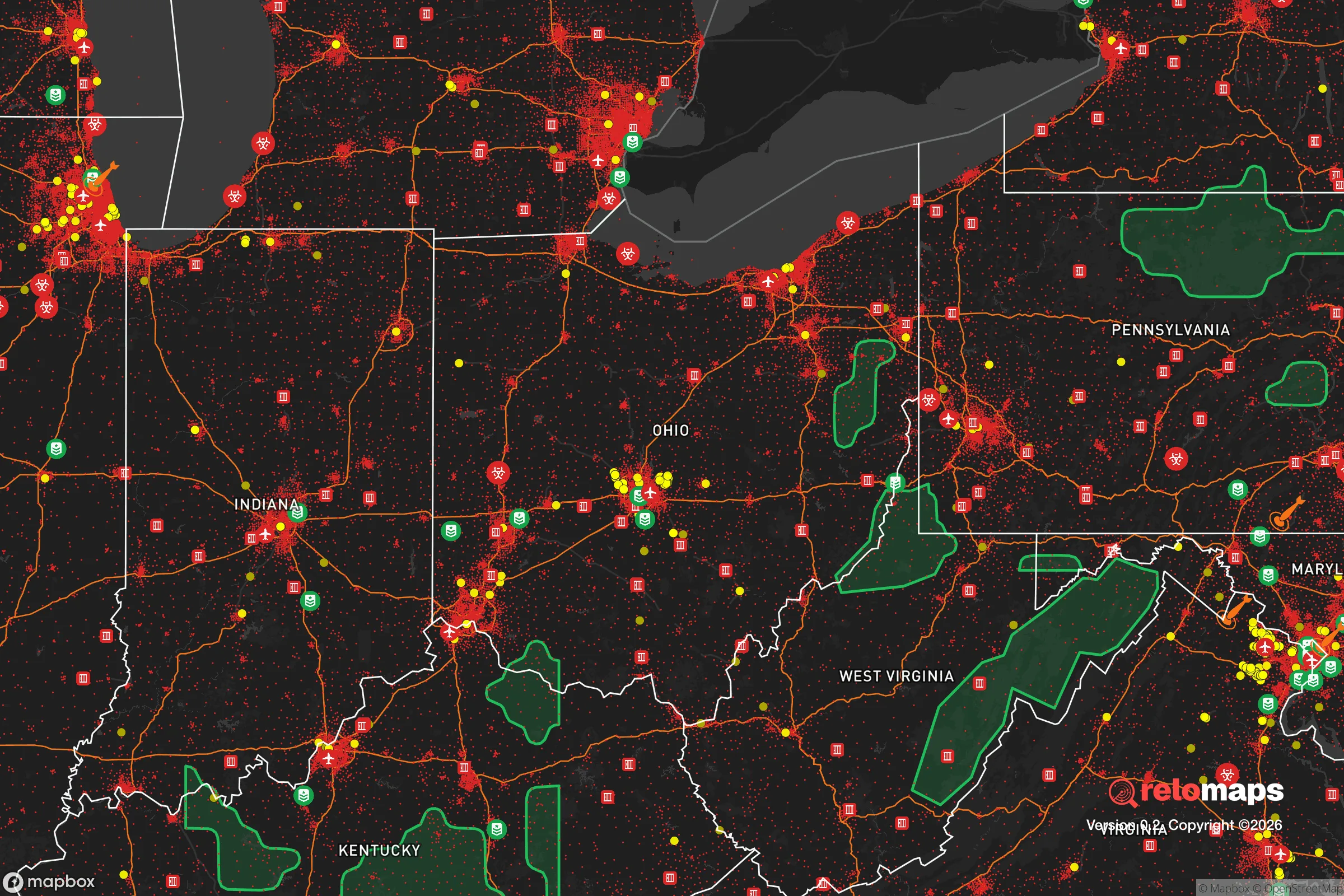


Important Note: For informational purposes only. This does not mean nothing bad ever happens in the green zones. Please use common sense. This is based on public data and modeled with AI. We tried to take a conservative approach but mistakes happen. We update this regularly as new information becomes available.
Solar Generator Recommendations
Backup power matters more here than in safer locations. We've picked three solar generators across budgets and capacity tiers — start with the budget unit if you only need a few essentials, or step up if you want to run a fridge and HVAC for days at a time.

Jackery Portable Power Station Explorer 300
Budget OptionPower on the Go: Weighing only 11 lbs, it's convenient to set up and store with book-sized foldable solar panels

BLUETTI Portable Power Station AC180
Designed for both indoor and outdoor scenarios, AC180 is highly capable as it has a robost capacity and continuous output power.

EF ECOFLOW DELTA Pro Ultra Power Station
Upgraded PickEcoFlow DELTA Pro Ultra is a whole-home energy system designed to grow with your family. Integrated with the Smart Home Panel 2, it scales to meet your evolving energy needs — keeping your home powered, intelligent, and secure through every stage of life.
We earn a commission, at no additional cost to you.
Strategic Assessment Analysis
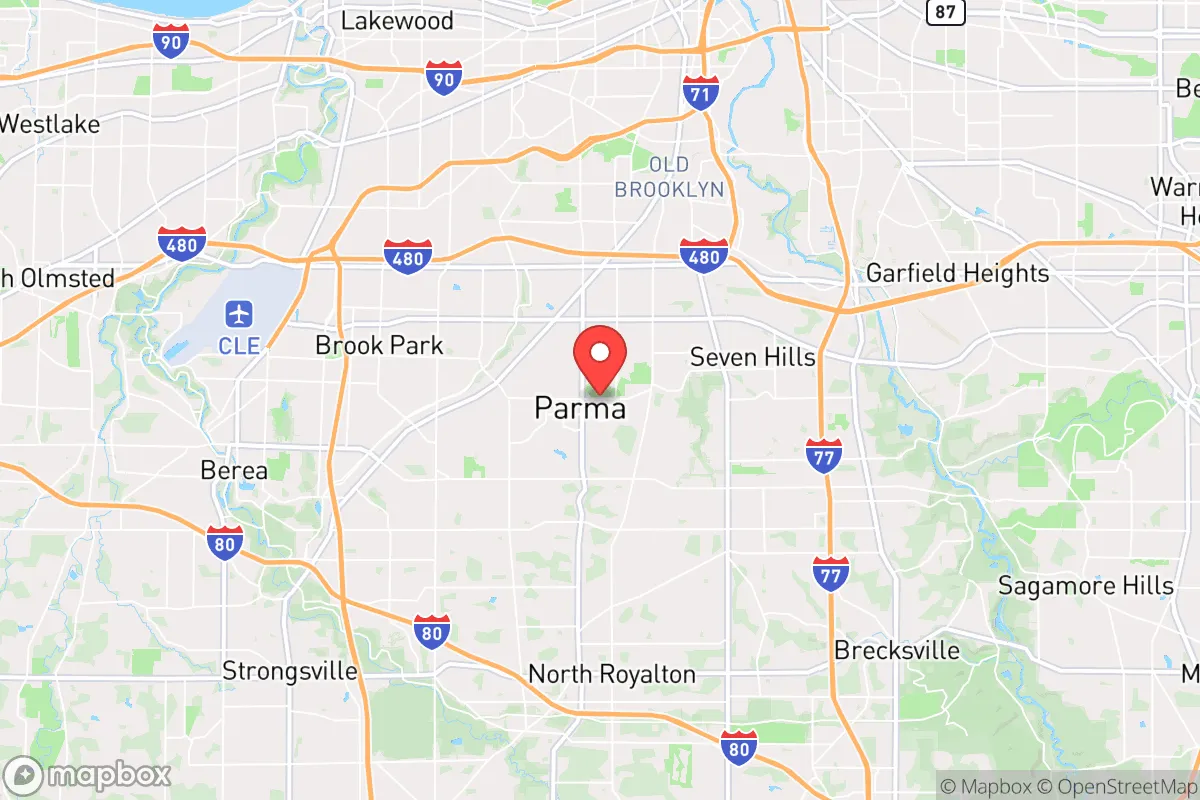
Parma, Ohio, presents a complex strategic picture for the conservative prepper. It offers genuine resilience advantages—a strong, established community fabric, affordable housing stock built to last, and a location that is close enough to Lake Erie for water access yet far enough from downtown Cleveland to avoid the worst of a sudden urban collapse. However, its position in the Rust Belt, within the shadow of a major metropolitan area and its associated infrastructure, introduces specific risks that any serious relocator must weigh. This assessment breaks down the hard numbers and real-world factors for a single individual or family looking to plant roots in a place that can weather the coming storms.
Geographic Position and Natural Advantages for Long-Term Stability
Parma’s primary strategic asset is its position within the Lake Erie watershed, which provides a massive, renewable freshwater source. Unlike regions dependent on deep aquifers or inter-basin transfers, Parma draws its municipal water from the lake, a resource that is far more resilient to drought and contamination than groundwater in many other parts of the country. The city sits on relatively stable geology, with no significant earthquake or sinkhole risks. Its inland location, roughly 10 miles from the lake shore, means it avoids the worst lake-effect snow bands that can paralyze communities directly on the water, while still benefiting from the moderating effect on summer heat. The local topography is gently rolling, offering natural drainage and defensible positions for a homestead, though it lacks the dramatic chokepoints of a mountainous region. The affordable real estate market is a key factor: a relocator can acquire a solid, brick-built home on a quarter-acre lot for a fraction of the cost of comparable property on the coasts, freeing up capital for supplies, infrastructure upgrades, and land improvements. This financial buffer is a form of resilience in itself.
Risks, Exposures, and Proximity to Fallout-Relevant Landmarks
The most significant vulnerability for Parma is its proximity to Cleveland, a major population and industrial center. In a scenario of civil unrest, mass casualty event, or economic collapse, Parma sits directly in the path of a potential urban exodus. The major highways—I-480, I-77, and the Jennings Freeway—are evacuation routes that could become chokepoints or vectors for looting and violence. The city is also within the 50-mile radius of the Perry Nuclear Power Plant (about 30 miles east), meaning a radiological release would place Parma in the plume exposure pathway. While the prevailing winds are westerly, a shift could bring fallout directly over the city. Furthermore, Parma is ringed by heavy industrial infrastructure: the steel mills and refineries along the Cuyahoga River valley, the Cleveland Hopkins International Airport (a potential target), and numerous chemical storage facilities. A major industrial accident or a coordinated attack on these nodes could create a cascading disaster. The city’s dense, suburban layout—while fostering community—also means that a single point of failure (e.g., a bridge collapse, a major fire) can cut off large sections of the population from escape routes. For the prepper, this means bugging in is the only viable strategy; bugging out through the surrounding suburbs would be a nightmare of gridlock and contested territory.
Practical Resilience for a Relocator: Food, Water, Energy, and Defensibility
For a relocator committed to staying put, Parma offers a mixed bag. Water security is the strongest point. The municipal supply from Lake Erie is robust, but a prepper should still invest in a Berkey or similar gravity-fed filter and store at least a 30-day supply. The Cuyahoga River and Rocky River are nearby but are heavily polluted and not a primary water source without advanced treatment. Food security is moderate. The city has a strong network of ethnic grocery stores (Polish, Ukrainian, Italian) that offer bulk staples, and the surrounding farmland in Medina and Lorain counties is productive. However, Parma itself is almost entirely built out; you won’t be growing a significant portion of your food on a standard lot. A greenhouse and raised beds can supplement, but you’ll be reliant on supply chains for the bulk of calories. Energy resilience is a challenge. The grid is aging and vulnerable to weather events (ice storms, high winds) and cyberattacks. Solar is viable, but the region’s cloud cover and snow load mean you’ll need a large battery bank and a backup generator (likely propane or natural gas). The city’s building codes and HOA-style restrictions in some neighborhoods may limit visible solar installations. Defensibility is the weakest link. Parma is a dense, interconnected suburb. Your home is likely on a street with neighbors on all sides. While this fosters a community watch, it also means you cannot create a meaningful perimeter. Your best bet is a hardened home: reinforced doors, laminated windows, a safe room, and a well-stocked armory. The local police department is professional but will be overwhelmed in a crisis. The strategic play here is to be a gray man—blend in, keep a low profile, and build a network of like-minded neighbors. The city’s strong Catholic and Orthodox church communities can be a foundation for mutual aid, but you must vet your contacts carefully.
The overall strategic picture for Parma is one of calculated trade-offs. It is not a remote redoubt; it is a working-class suburb with genuine resilience in water and community, but severe exposure to urban collapse and industrial hazards. For the conservative prepper who cannot afford a rural retreat, Parma offers a viable base of operations—provided you accept that you are betting on the stability of the Lake Erie water supply and the strength of your local network over the ability to disappear into the woods. The city’s affordability allows you to invest in hardening your home and stockpiling supplies, which is the only rational response to its vulnerabilities. If you are looking for a place to ride out a short-term crisis (a week-long power outage, a civil disturbance), Parma is solid. If you are planning for a long-term collapse of the national grid or a major war, you need a more remote location. Parma is a fallback position, not a final redoubt. It is a place to build a life and a community while keeping one eye on the horizon, ready to adapt as the situation demands.

* Values derived from national, state, county, city and local statistics and may differ in a specific area. Last updated: 2026-04-21T20:32:51.000Z
Narrative content on this page is AI-generated and may contain mistakes. Verify any details that matter before acting on them.
ReloMaps may earn a commission from affiliate links at no extra cost to you.

