Photo: Wikipedia
Demographics of Pasco, WA
Affluence Level in Pasco, WA
A middle-class area roughly in line with national averages across income, home values, education, and employment.
People of Pasco, WA
The people of Pasco, Washington today form a majority-Hispanic city (57.2%) with a significant White minority (35.0%), a small but established East/Southeast Asian community (1.6%), and a very small Black population (1.9%). With 78,446 residents and a foreign-born share of 13.6%, Pasco is the most ethnically distinct of the Tri-Cities, shaped by successive waves of agricultural labor, industrial expansion, and family-based immigration. The city’s identity is working-class, family-oriented, and increasingly bilingual, with a young median age and a growing sense of cultural cohesion among its Hispanic majority.
How the city was settled and grew
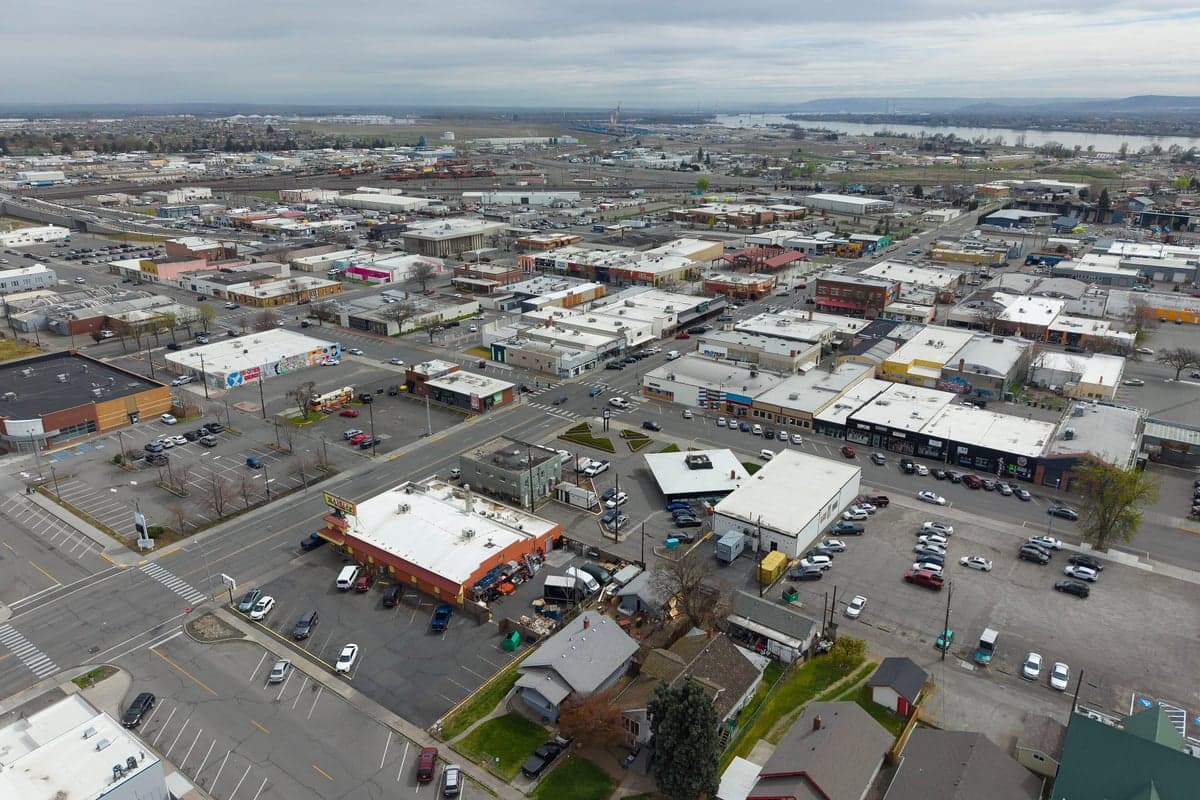
Pasco was founded in the 1880s as a railroad town, a deliberate creation of the Northern Pacific Railway at the junction of the Snake and Columbia Rivers. The original population was overwhelmingly White, drawn by railroad construction and maintenance jobs, and later by the promise of irrigated farmland under the federal Reclamation Act of 1902. The historic downtown Pasco district, centered on Lewis Street, was the original settlement core, housing railroad workers, merchants, and early farmers. By the 1910s, a small Japanese community had formed, working on railroad crews and in the fields, settling in what is now the East Pasco area near the rail yards. The 1930s and 1940s brought a second wave: Dust Bowl migrants from Oklahoma and Texas, who took up farm labor and settled in the North Pasco neighborhoods around 10th Avenue. The Hanford nuclear site, built during World War II, drew a third wave of White engineers and construction workers, many of whom lived in temporary housing in West Pasco near the Columbia River. By 1950, Pasco was still roughly 95% White, with small Japanese and Mexican enclaves.
Modern era (post-1965)
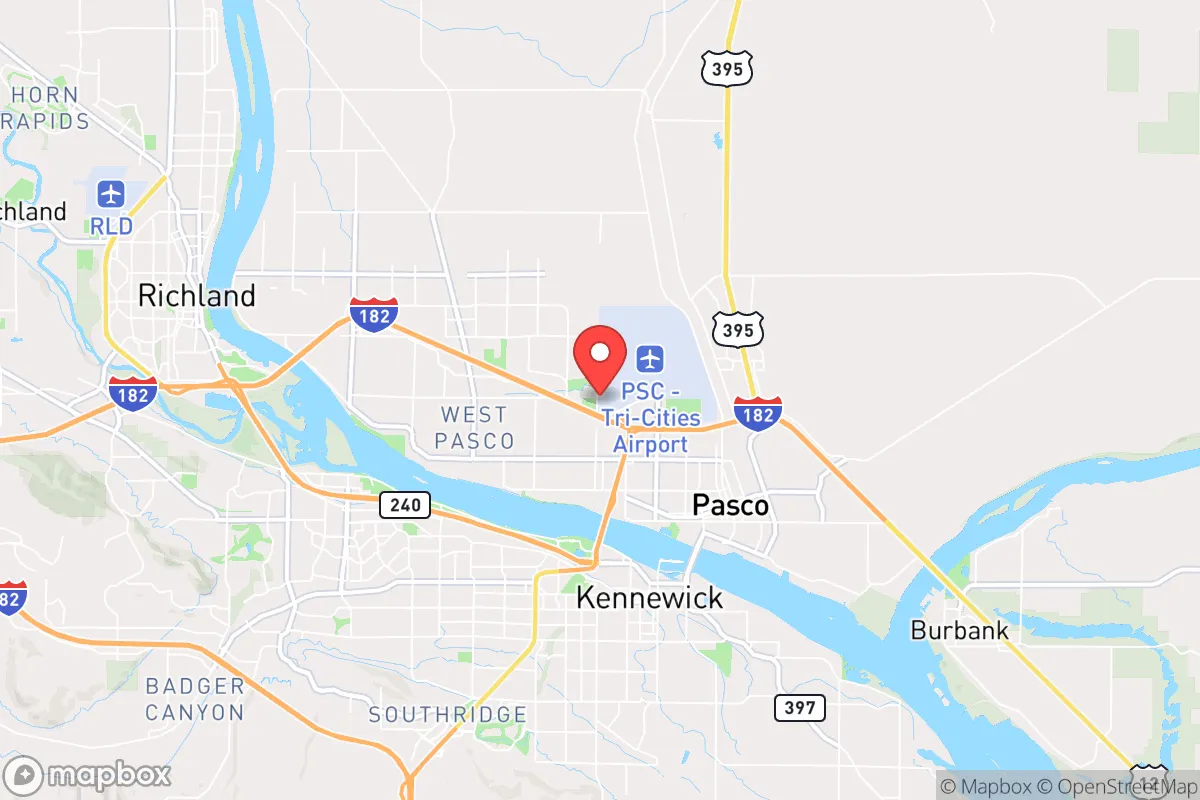
The 1965 Immigration and Nationality Act, combined with the end of the Bracero program in 1964, fundamentally reshaped Pasco. Mexican and Central American migrants, many already working in the region’s apple, cherry, and potato fields, began settling permanently rather than returning seasonally. The South Pasco neighborhoods, particularly around Court Street and 4th Avenue, became the primary landing zone for these new arrivals, offering affordable housing and proximity to agricultural jobs. By 1990, the Hispanic share had risen to roughly 30%, and by 2010 it had surpassed 50%. The White population, meanwhile, declined in absolute numbers as older railroad and Hanford families retired and moved to suburbs like Richland or Kennewick. The East/Southeast Asian community, primarily Filipino and Vietnamese, grew modestly during the 1980s and 1990s, concentrated in central Pasco near the hospital district, drawn by healthcare and service jobs. The Indian-subcontinent population remains negligible at 0.1%, with no distinct neighborhood concentration. Today, the city’s racial geography is clear: South and East Pasco are overwhelmingly Hispanic and working-class; West Pasco and the newer Broadmoor subdivision near the river are predominantly White and more affluent; central Pasco is the most mixed, with a visible East/Southeast Asian presence.
The future
Pasco’s population is heading toward a continued Hispanic majority, likely reaching 65-70% by 2040, driven by higher birth rates and ongoing family reunification migration. The White share will continue to shrink as older cohorts age out and younger White families choose other Tri-Cities suburbs. The city is not homogenizing into a single enclave, but rather tribalizing along class and tenure lines: newer Hispanic arrivals settle in South Pasco, while upwardly mobile Hispanic families move into the Broadmoor and West Pasco areas, creating a more economically diverse Hispanic population. The East/Southeast Asian community is stable but not growing rapidly, as younger generations tend to leave for larger cities. The Black population, at 1.9%, is small and dispersed, with no distinct neighborhood. The foreign-born share (13.6%) is likely to plateau as second-generation families become native-born. The college-educated share (20.7%) is low but rising slowly, as the city invests in a new technical college campus and attracts light manufacturing jobs.
For someone moving in now, Pasco is a city in transition: increasingly Hispanic, working-class, and family-centered, with a growing middle class but persistent poverty in older neighborhoods. The city’s character is distinct from its Tri-Cities neighbors—less white-collar, more agricultural, and more culturally vibrant in its own way. A newcomer should expect a bilingual environment, a strong Catholic and evangelical church presence, and a community where extended family networks are central to daily life. The schools are improving but face challenges from high poverty rates and English-learner populations. Pasco is not a homogenizing suburb; it is a majority-minority city forging its own identity, and that identity is likely to deepen over the next generation.

* Values derived from national, state, county, city and local statistics and may differ in a specific area. Last updated: 2026-04-21T11:15:38.000Z
Narrative content on this page is AI-generated and may contain mistakes. Verify any details that matter before acting on them.
ReloMaps may earn a commission from affiliate links at no extra cost to you.

