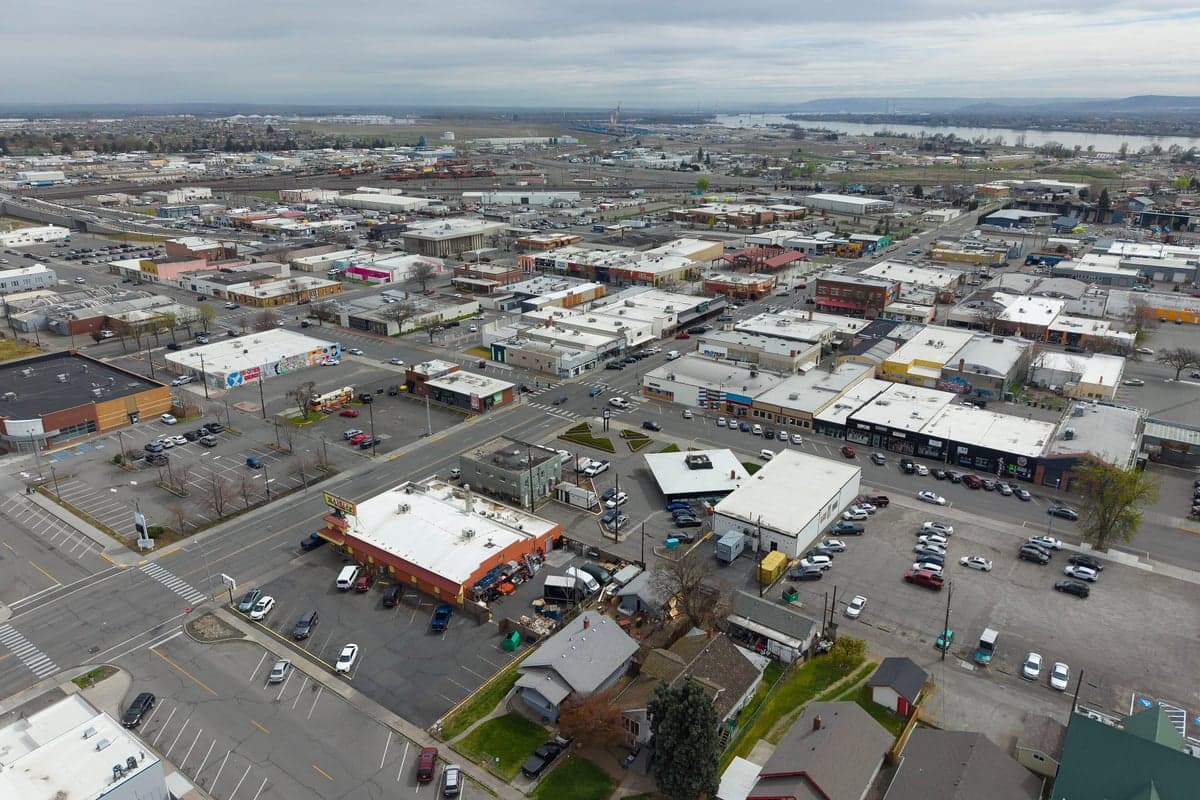
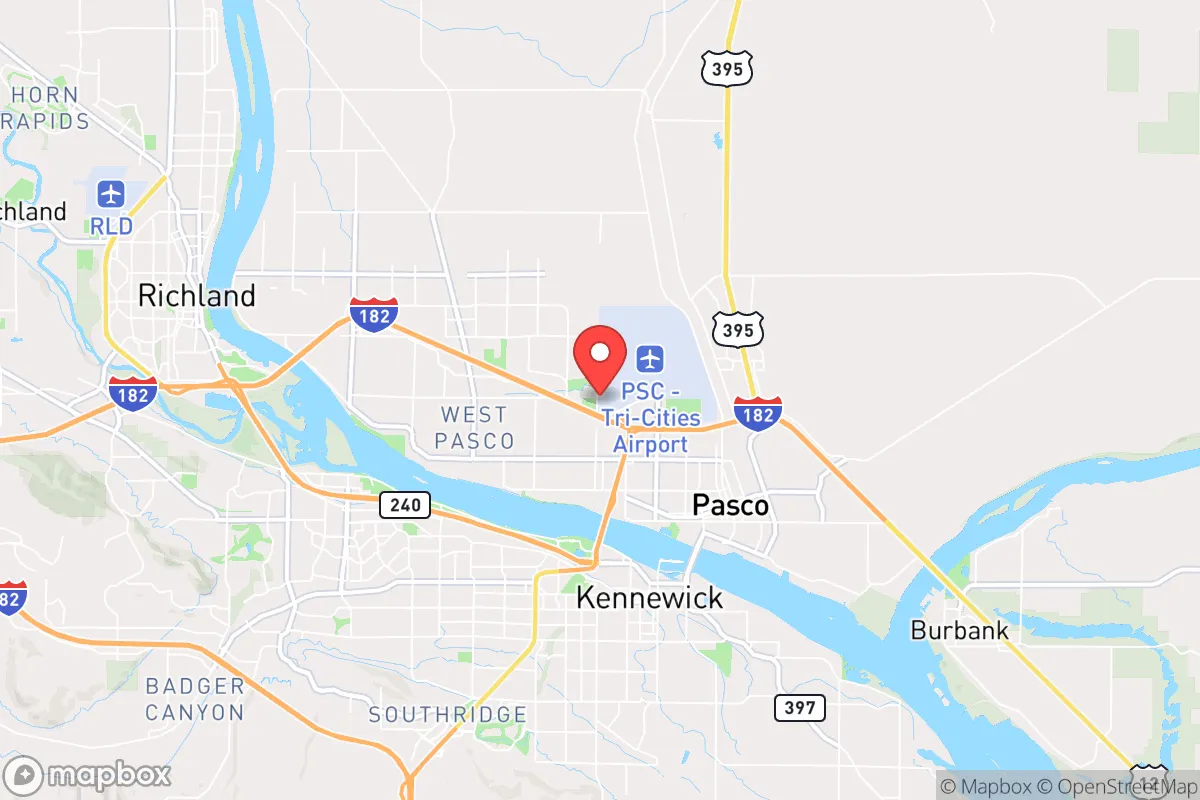
Photo: Wikipedia
Strategic Assessment of Pasco, WA
Workable tactical position. Some exposure to population density or targets, but generally defensible in a crisis.
What does the Strategic Assessment tell us?
Our Strategic Assessment grades tactical survivability of an area. Major population centers, military targets, fallout zones, natural disasters, and border exposure all drive risk — lower exposure means a more defensible position in a crisis.
This is heavily inspired by Joel Skousen's Strategic Relocation book. Highly recommended you checkout the book ($)What does this tell us?
Our Strategic Assessment grades tactical survivability of an area. Major population centers, military targets, fallout zones, natural disasters, and border exposure all drive risk — lower exposure means a more defensible position in a crisis.
This is heavily inspired by Joel Skousen's Strategic Relocation book. Highly recommended you checkout the book ($)Strategic Pillars

Key Distances
Regional Safe Places
Below is our recommended "safe zones" in Washington and the surrounding area based on our strategic heuristics. For most people, it's unrealistic to live in a “safe zone” full-time due to work, family or other personal reasons. They tend to be more rural. However, many of these areas are perfect for second homes and retreat properties that double as a vacation home or even a short-term rental.
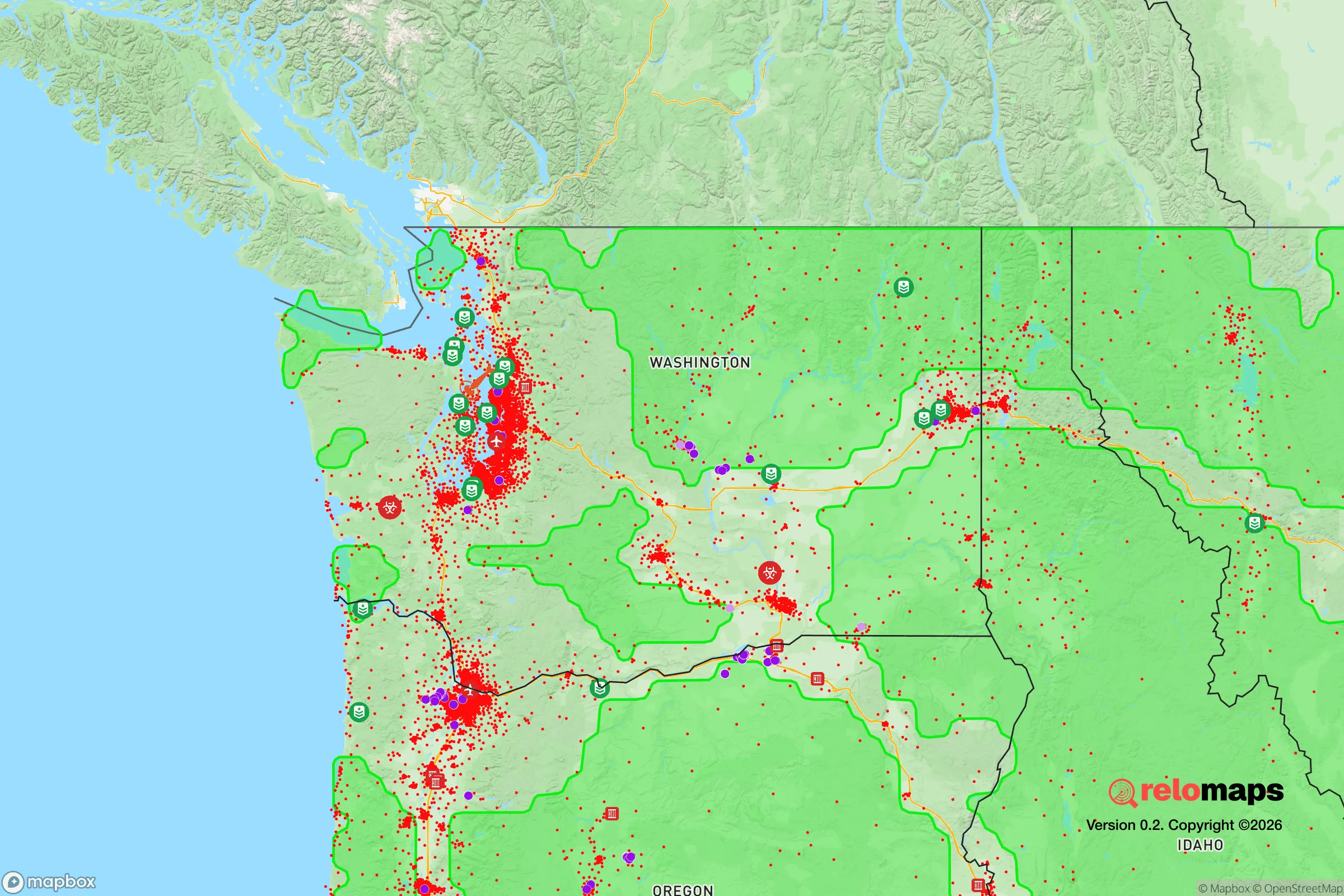
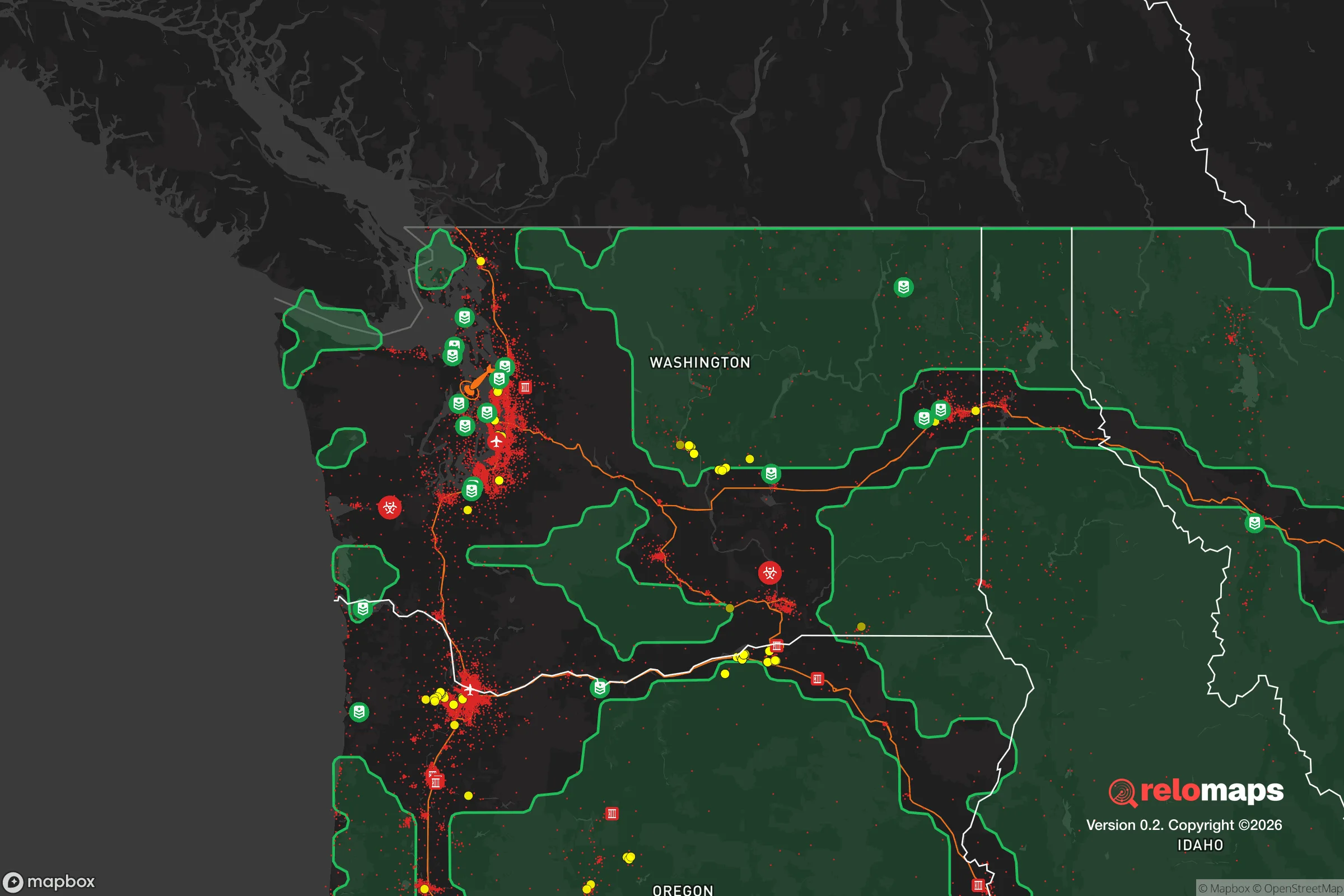


Important Note: For informational purposes only. This does not mean nothing bad ever happens in the green zones. Please use common sense. This is based on public data and modeled with AI. We tried to take a conservative approach but mistakes happen. We update this regularly as new information becomes available.
Solar Generator Recommendations
Backup power matters more here than in safer locations. We've picked three solar generators across budgets and capacity tiers — start with the budget unit if you only need a few essentials, or step up if you want to run a fridge and HVAC for days at a time.

Jackery Portable Power Station Explorer 300
Budget OptionPower on the Go: Weighing only 11 lbs, it's convenient to set up and store with book-sized foldable solar panels

BLUETTI Portable Power Station AC180
Designed for both indoor and outdoor scenarios, AC180 is highly capable as it has a robost capacity and continuous output power.

EF ECOFLOW DELTA Pro Ultra Power Station
Upgraded PickEcoFlow DELTA Pro Ultra is a whole-home energy system designed to grow with your family. Integrated with the Smart Home Panel 2, it scales to meet your evolving energy needs — keeping your home powered, intelligent, and secure through every stage of life.
We earn a commission, at no additional cost to you.
Strategic Assessment Analysis
Pasco, Washington, offers a surprisingly robust strategic position for those prioritizing resilience, self-sufficiency, and distance from the most volatile population centers. Situated in the Tri-Cities region (with Kennewick and Richland), Pasco sits at the confluence of the Columbia, Snake, and Yakima Rivers, providing a natural water and transportation advantage that few inland cities can match. Its location in southeastern Washington, roughly 200 miles from Seattle and 150 miles from Portland, places it well outside the immediate blast radius and likely civil unrest zones of those major metropolitan areas, while still offering access to essential infrastructure and a growing, family-oriented community.
Geographic Position and Natural Advantages for Long-Term Security
Pasco's geographic isolation is its primary strategic asset. The city is surrounded by vast agricultural land—the Columbia Basin Project irrigates over 670,000 acres—which means local food production is not a hypothetical but a current reality. The region's arid climate (roughly 8 inches of annual precipitation) reduces risks of flooding, hurricanes, and heavy snow events that plague other parts of the country. The Columbia River system provides an immense, reliable freshwater source, and the area's proximity to the Hanford Site (about 15 miles northwest) means the region has hardened infrastructure, including redundant power grids and emergency response networks, built for a high-security federal facility. For a relocator, this translates to a lower probability of prolonged utility outages compared to coastal or mountain communities.
Risks, Exposures, and Proximity to Fallout-Relevant Landmarks
No strategic assessment is honest without addressing the elephant in the room: the Hanford Nuclear Reservation is both a risk and a resource. Hanford contains 56 million gallons of radioactive waste in aging underground tanks, and while a catastrophic release is low-probability, it is a non-zero risk. Prevailing winds generally blow from the southwest, meaning Pasco (southeast of Hanford) is in a less favorable fallout path than Richland or West Richland. Additionally, the Tri-Cities population of roughly 310,000 is a moderate target for civil unrest or supply chain disruptions, but it is not a primary target for a nuclear strike—unlike Seattle, Portland, or the submarine base at Bangor. The area's distance from major military bases (Joint Base Lewis-McChord is 200 miles north) and lack of major defense contractors reduces its attractiveness as a first-strike target. The primary risk for a relocator here is not a direct attack but the potential for regional disruption if Hanford experiences a major incident or if the Columbia River becomes contaminated.
Practical Resilience: Food, Water, Energy, and Defensibility for a Relocator
For someone serious about preparedness, Pasco scores well on the basics. Water is abundant and accessible—the Columbia River flows at an average of 120,000 cubic feet per second, and the city's municipal supply is drawn from deep aquifers and river intakes. A simple well or rainwater catchment system is viable for those on the outskirts. Energy is stable: the region is served by the Bonneville Power Administration, which provides some of the cheapest hydroelectric power in the country, and the grid is hardened due to Hanford's demands. Solar potential is excellent, with over 300 sunny days per year. Food security is exceptional—you can buy directly from local farms, orchards, and dairies within a 20-mile radius, and the Tri-Cities Farmers Market operates year-round. For defensibility, Pasco's layout is suburban and spread out, with many neighborhoods offering acreage and rural zoning options. The city's crime rate is below the national average, but property crime (especially vehicle theft) is a concern—so a relocator should prioritize a home with a garage and good visibility. The local law enforcement (Pasco Police Department) is well-funded and responsive, but for a prepper, the real value is in the community: there is a strong culture of hunting, fishing, and outdoor skills in the surrounding areas, making it easier to find like-minded neighbors.
The Overall Strategic Picture for a Conservative Relocator
Pasco is not a bug-out location for a total collapse scenario—it is a sustainable, long-term relocation for those who want to be prepared without living off-grid. The region's agricultural base, water abundance, and distance from major coastal chaos make it a strong candidate for families and individuals who value self-reliance, community, and a slower pace of life. The trade-offs are real: you are within 100 miles of a major nuclear waste site, and the summer heat (averaging 90°F in July) requires planning for cooling and water storage. But for a conservative-leaning relocator looking to escape the political and social instability of the West Coast's urban centers, Pasco offers a rare combination of strategic depth, economic opportunity (the local job market is strong in healthcare, agriculture, and energy), and a population that largely shares your values. It is not a fortress, but it is a damn good place to build one.

* Values derived from national, state, county, city and local statistics and may differ in a specific area. Last updated: 2026-04-21T11:15:38.000Z
Narrative content on this page is AI-generated and may contain mistakes. Verify any details that matter before acting on them.
ReloMaps may earn a commission from affiliate links at no extra cost to you.

