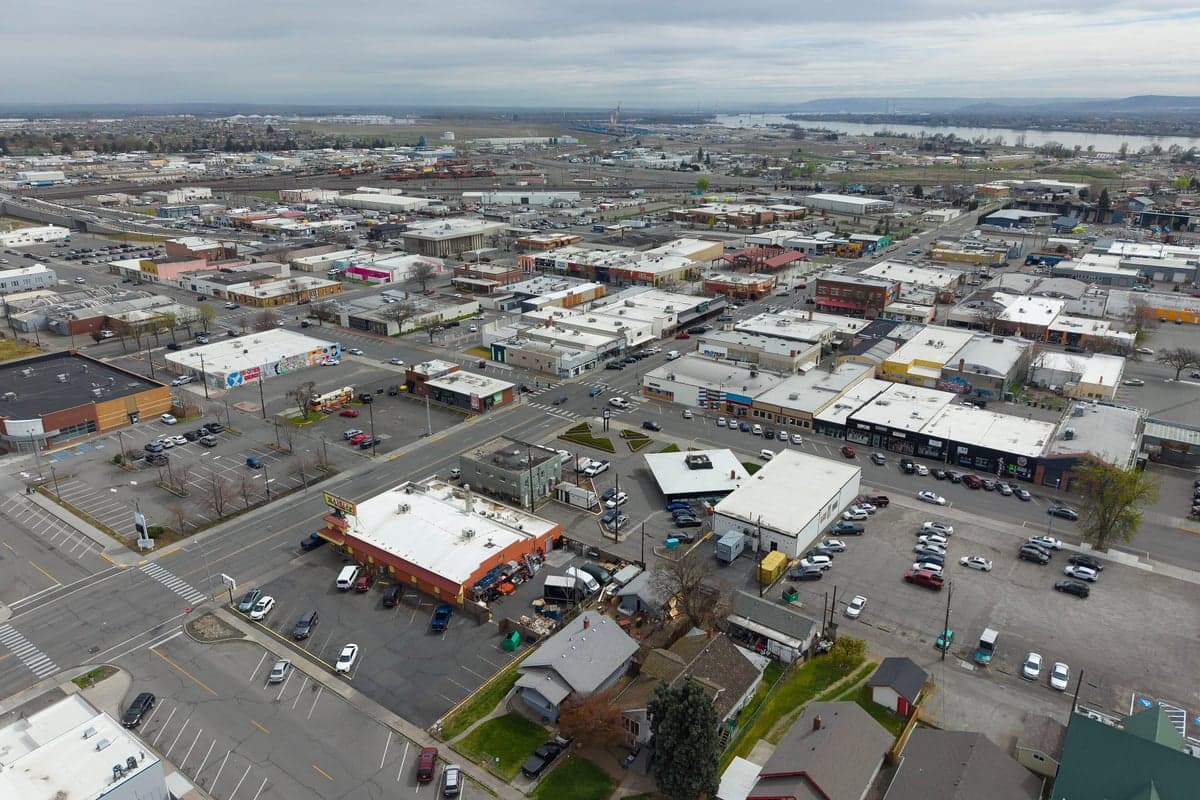
Photo: Wikipedia
Political ClimatePolitical Climate in Pasco, WA
District shown is the primary district for this city’s centroid. Cities may span multiple districts.
Local Political AnalysisPolitical Analysis of Pasco, WA
Pasco, Washington, has long been a reliably conservative stronghold in the Tri-Cities area, and that’s still the case today, though you can feel the winds shifting a bit. The Cook PVI sits at R+10, which means the district leans about ten points more Republican than the national average, and that’s a number that’s held steady for years. But if you’ve lived here as long as I have, you notice the little things—the way local city council meetings have gotten a little louder, the way some neighbors are starting to talk about “equity” initiatives in the schools. It’s not a blue wave, but it’s a slow trickle of progressive ideas that make you wonder how long the old Pasco will hold on.
How it compares
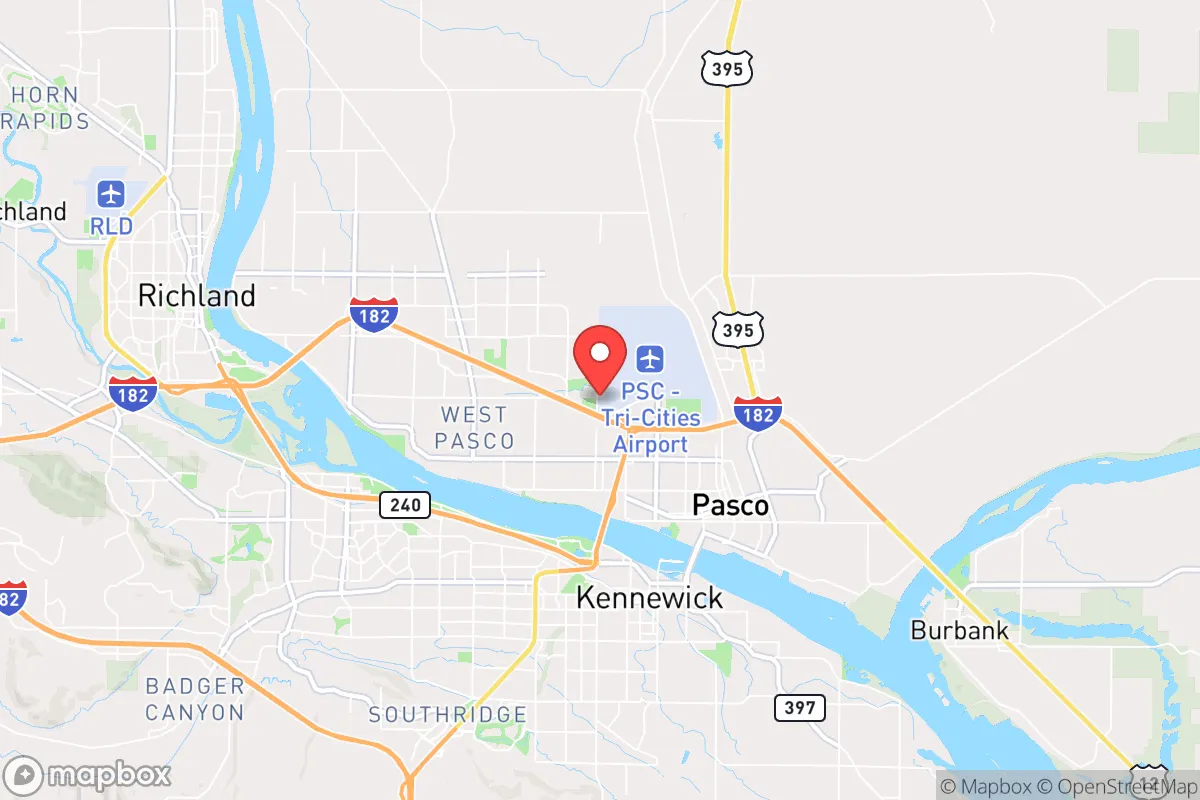
Pasco sits right in the middle of a fascinating political patchwork. Drive ten minutes west to Richland, and you’ll find a more moderate, white-collar crowd—lots of engineers from the Hanford site, a few more Democrats in the mix, and a general vibe that’s less “don’t tread on me” and more “let’s find a compromise.” Head east to Kennewick, and you’re back in solidly red territory, but even there you’ll see a younger generation pushing for bike lanes and public art. The real contrast is with the surrounding rural areas—places like Connell or Othello, where the politics are still straight-ticket Republican and the idea of a city council debating a “sanctuary city” resolution (which Pasco thankfully hasn’t) would get laughed out of the room. Pasco’s R+10 puts it squarely in the conservative camp, but it’s not as deep red as those farm towns, and that’s where the tension lives.
What this means for residents
For the average Pasco resident, the political climate means a few practical things. First, taxes stay relatively low—no city income tax, and property taxes are kept in check by a county commission that’s still majority Republican. Second, you don’t see a lot of government overreach in daily life. The local police department isn’t defunded, the schools aren’t pushing critical race theory in any serious way, and you can still buy a gun without a month-long wait. But there’s a creeping concern: the city council has been flirting with more zoning restrictions and “affordable housing” mandates that feel like a foot in the door for bigger government. If you value personal freedom—the right to do what you want with your property, your business, your family—Pasco is still a good bet, but you need to keep an eye on the ballot box. The long-term trend is toward more regulation, not less, and that’s worth watching.
One cultural distinction that sets Pasco apart is its strong agricultural roots and a large Hispanic population that’s often more socially conservative than the national average. You’ll see families at the park on Sunday, church parking lots full, and a general respect for traditional values that you don’t get in Seattle or even Spokane. But there’s a growing progressive push, especially among younger transplants and some local activists, to bring in things like “equity” training for city staff and more public funding for social programs. It’s not a crisis yet, but it’s a slow erosion. If you’re looking for a place where the government stays out of your business and the community still believes in hard work and personal responsibility, Pasco is still that place—for now. Just don’t take it for granted.

State Political ClimatePolitical Climate in Washington
State Political AnalysisPolitical Environment in the State
Washington State has shifted from a purple battleground to a solidly blue state over the past two decades, with Democrats controlling the governorship, both legislative chambers, and both U.S. Senate seats since 2012. The state’s overall partisan lean is roughly D+8 to D+10 in presidential elections, but that number masks a deep and growing urban-rural chasm. King County alone, home to Seattle, casts about one-third of all votes and reliably delivers 70-75% Democratic margins, effectively deciding statewide races before rural votes are fully counted. The trajectory since 2000 has been a steady march leftward, accelerated by tech-industry in-migration and the hollowing out of moderate Republicanism in the suburbs.
Urban vs. rural divide
The political map of Washington is a tale of two states. The I-5 corridor from Seattle through Bellevue and Redmond to Olympia is the Democratic engine room, powered by Amazon, Microsoft, and Boeing’s white-collar workforce. These areas vote 65-80% Democratic and drive nearly all statewide election outcomes. King County alone is larger than 15 states by population. Meanwhile, Eastern Washington — cities like Spokane, Yakima, and the Tri-Cities (Kennewick, Pasco, Richland) — votes reliably Republican, often 55-65% in presidential races. The rural counties east of the Cascades, such as Grant, Douglas, and Okanogan, are deep red, but their populations are too small to counterbalance Seattle’s metroplex. A notable shift: suburban Snohomish and Pierce counties, once swing areas, have moved decisively blue since 2016, with Snohomish now voting D+15 and Pierce trending that direction. The only real Republican stronghold left in Western Washington is the southwestern corner around Vancouver and Clark County, which still leans red but is being diluted by Portland-area transplants.
Policy environment
Washington’s policy environment is aggressively progressive, with a tax structure that hits high earners and businesses hard. The state has no personal income tax, but it has the highest state sales tax in the nation (6.5% base, often 9-10% with local add-ons) and a new capital gains tax on profits over $250,000, which was upheld by the state Supreme Court in 2023. Property taxes are moderate but rising. The regulatory posture is among the most stringent in the country: Washington has a state-run health insurance exchange, a strict cap-and-trade carbon market (Climate Commitment Act), and some of the nation’s strongest tenant protections, including rent control preemption bans and just-cause eviction requirements. Education policy is dominated by teachers’ unions, with per-pupil spending among the top 10 nationally but mixed outcomes. The state has universal mail-in voting, automatic voter registration, and same-day registration — election laws that conservatives view as ripe for fraud, though no major scandals have emerged. Washington also has a “sanctuary state” law (Keep Washington Working Act) that limits local law enforcement cooperation with federal immigration authorities.
Trajectory & freedom
On the freedom index, Washington is clearly trending downward for conservatives. The most visible contraction of personal liberty came in 2023 with the passage of a magazine capacity ban (10 rounds) and a ban on certain semi-automatic rifles (HB 1240), making Washington one of the strictest gun-control states in the nation. A state-level red flag law (Extreme Risk Protection Order Act) has been in place since 2016 and is aggressively used. Parental rights took a hit with the 2023 “shield law” (SB 5599) that allows minors to access gender-affirming care without parental consent, overriding parental authority. Medical autonomy was further restricted by the state’s COVID-era vaccine mandates for healthcare workers and school employees, which remain in effect for some categories. Property rights are under pressure from the state’s Growth Management Act, which limits rural development and has led to skyrocketing housing costs. On the plus side for liberty-minded residents, Washington has no state income tax, no personal property tax on vehicles, and relatively low property taxes compared to Oregon or California. But the overall trajectory is toward more regulation, higher taxes, and less individual autonomy in education and healthcare decisions.
Civil unrest & political movements
Washington has been a flashpoint for political unrest since the 2020 protests. Seattle’s Capitol Hill Autonomous Zone (CHAZ) in June 2020 was a national symbol of progressive overreach, with police effectively ceding several blocks to armed activists for two weeks. The city saw sustained property damage and arson during the George Floyd protests, with the Seattle City Council later defunding the police by about 14%. Organized activist movements are strong on both sides: the left has the Washington State Labor Council, Moms Demand Action, and Indivisible groups; the right has the Washington State Republican Party, the Second Amendment Foundation (based in Bellevue), and a growing secessionist movement in Eastern Washington called “Liberty State” or “51st State” proposals, which have gained traction in rural counties but no legislative traction. Immigration politics are tense: the Keep Washington Working Act (2019) makes the state a sanctuary jurisdiction, and King County has explicitly refused to cooperate with ICE detainers. Election integrity remains a hot-button issue: Washington’s all-mail system has been challenged by conservatives, but no major fraud has been proven. The most visible flashpoint for a new resident would be the constant presence of political signage, protests in downtown Seattle, and the stark cultural divide between the I-5 corridor and the rest of the state.
Projection
Over the next 5-10 years, Washington will likely become even more Democratic and more progressive. In-migration from California, Oregon, and other blue states is accelerating, particularly to the Seattle suburbs and the Spokane area. The tech sector continues to expand, bringing high-income, left-leaning workers. The state’s Democratic supermajority in the legislature is likely to persist, meaning more gun control, higher taxes (possibly a state income tax via a graduated wealth tax), and further erosion of parental rights. The rural-urban divide will widen, with Eastern Washington becoming more politically isolated and potentially more vocal about secession. A new resident moving in now should expect to live under a government that is increasingly hostile to traditional conservative values — expect higher taxes, more regulation on housing and business, and a culture that prizes collective action over individual liberty. The one saving grace for conservatives is the lack of a state income tax, but that could change if the capital gains tax is expanded or if a wealth tax is enacted.
Bottom line for a new resident: Washington offers stunning natural beauty and a strong economy, but the political climate is deeply blue and getting bluer. If you value low taxes and personal autonomy, you’ll find the tax structure tolerable (no income tax) but the regulatory environment suffocating. If you’re a conservative parent, be prepared for a school system that prioritizes DEI and gender ideology over academic rigor, and a legal system that may override your parental authority. The best bet for conservatives is to settle in Clark County (Vancouver area) or the Tri-Cities, where you’ll find more like-minded neighbors and a slightly more balanced political environment. But don’t expect to change the state’s trajectory — the Seattle metro will continue to dominate, and the state will keep moving left.
* Values derived from national, state, county, city and local statistics and may differ in a specific area. Last updated: 2026-04-21T11:15:38.000Z
Narrative content on this page is AI-generated and may contain mistakes. Verify any details that matter before acting on them.
ReloMaps may earn a commission from affiliate links at no extra cost to you.

