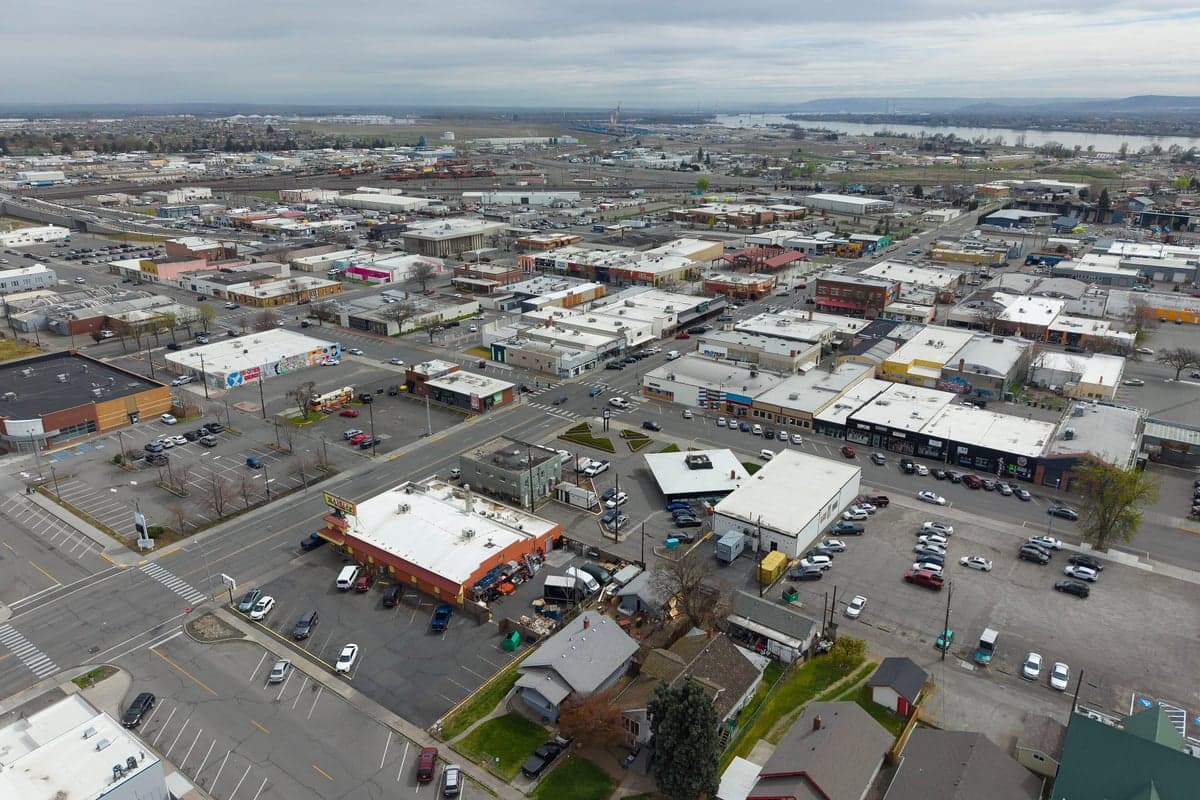
Photo: Wikipedia
Quality of Life in Pasco, WA
A high quality of life with strong walkability, manageable living costs, healthy neighborhood signals, and solid amenity access.
What does Quality of Life tell us?
Quality of Life blends cost of living, nearby amenities, socioeconomic signals, and neighborhood character. City-level scores represent the whole municipality; individual neighborhoods can differ.
What does this tell us?
Quality of Life blends cost of living, nearby amenities, socioeconomic signals, and neighborhood character. City-level scores represent the whole municipality; individual neighborhoods can differ.
Cost of Living
11% above national average
The Real Cost of Living in Pasco, WA for 2026
| Tier | Individual | Family (4) |
|---|---|---|
| Survival | $19k | $36k |
| Comfortable | $67k | $98k |
| Luxury | $125k+ | $194k+ |
| Elite (Top 5%) | $147k+ | $228k+ |
82%
The Area Signal
A metric tracking the socioeconomic signals of the area.
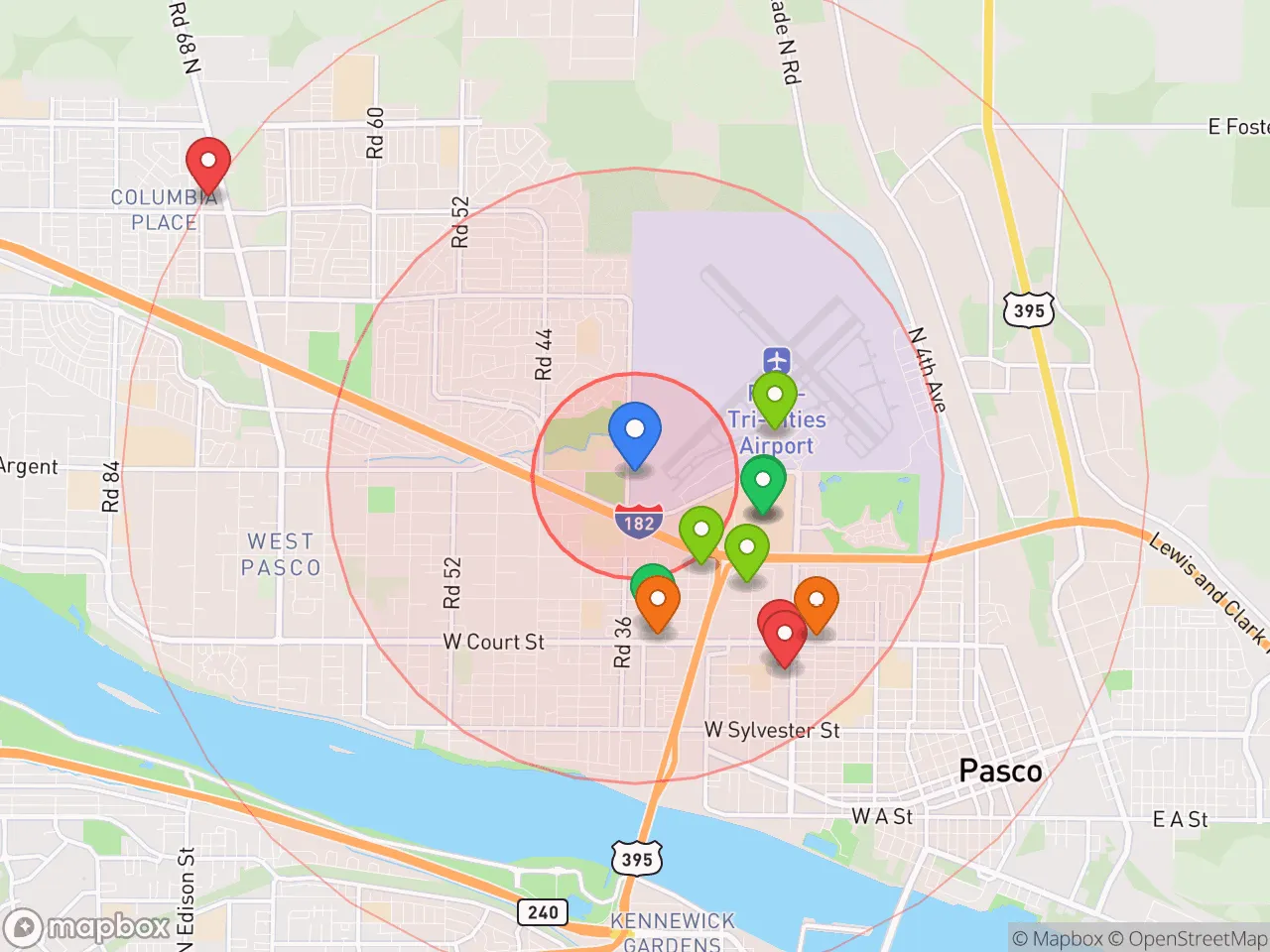
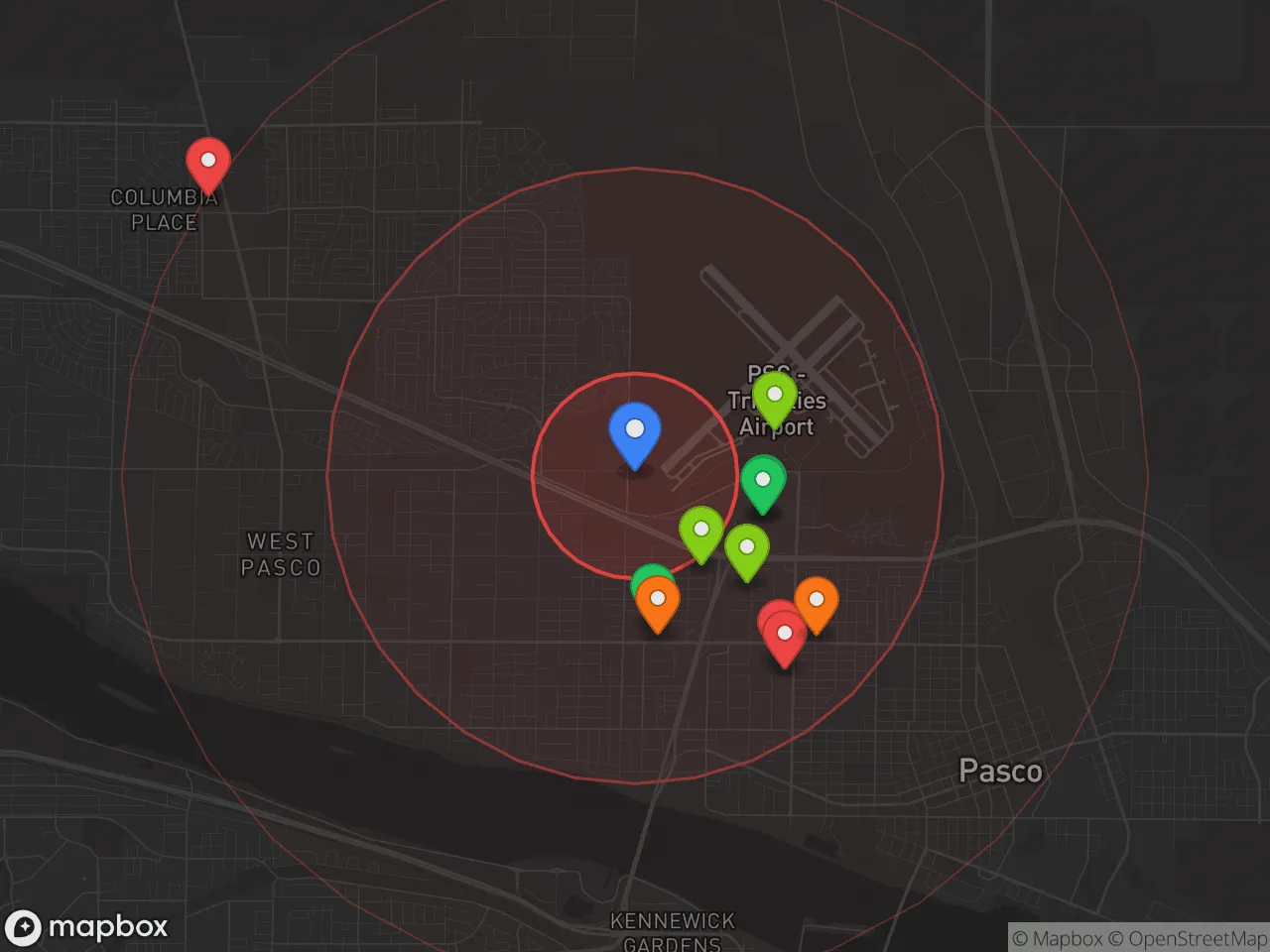
Hobbies
Explore the areaGroceries
0 within 10 miles
Gas
0 within 10 miles
Hospital
0 within 20 miles
Airport
SEA — Seattle–Tacoma International
Post Office
Critical Amenities
Quality-of-Life Analysis
Pasco, Washington, presents a quality-of-life profile that balances affordability with steady economic growth, drawing a mix of young families, agricultural workers, and professionals priced out of Seattle or Portland. The city's cost of living index of 111 (100 = U.S. average) is notably lower than the Seattle metro's 149, yet higher than rural Franklin County averages, reflecting its role as a regional employment hub. Median household income hovers around $62,000, supporting a population that is roughly 60% Hispanic or Latino, many employed in the Tri-Cities' food processing, logistics, and healthcare sectors.
Cost of living, housing, and affordability compared to nearby areas
Pasco's housing market remains one of the more accessible entry points in Washington's Columbia Basin. The median home value of $344,700 is roughly half of Seattle's median and about 15% below neighboring Richland's $405,000, though it has risen 8% year-over-year as of early 2026. Median rent of $1,201 is $300 less than the national average, making it a practical choice for renters in the Tri-Cities area. The average commute of 22 minutes is shorter than the national average of 26 minutes, thanks to Pasco's compact layout and the I-182/US-395 corridor linking it to Kennewick and Richland. Property taxes in Franklin County run about 1.1% of assessed value, lower than King County's 0.93% but higher than Benton County's 0.98%, a factor for buyers comparing across the river.
What daily life is like for families: schools, parks, and local amenities
Daily life in Pasco centers on a slower, family-oriented rhythm, with strong community ties and a growing network of parks and trails. The Pasco School District serves roughly 18,000 students, with Chiawana High School and Pasco High School both offering dual-language programs and Advanced Placement courses; the district's graduation rate of 84% trails the state average of 81% but has improved steadily since 2020. For recreation, the 40-acre Chiawana Park along the Columbia River provides soccer fields, a splash pad, and fishing access, while the Sacajawea Heritage Trail connects Pasco to Kennewick and Richland for biking and walking. Grocery costs are about 5% below the national average, with major chains like WinCo and Walmart anchoring retail corridors along Road 68. The city's farmers market, held May through October at the Pasco Farmers Market Pavilion, draws vendors selling local cherries, apples, and asparagus from the surrounding Yakima Valley farms.
Pasco is best suited for those who prioritize affordability and community over urban nightlife or high-end retail. Young families benefit from the lower housing costs and short commutes, while agricultural and logistics workers find stable employment at employers like Lamb Weston, Tyson Foods, and the Port of Pasco. Retirees on fixed incomes may appreciate the lower rent and access to Tri-Cities' medical facilities, including Kadlec Regional Medical Center in Richland. However, those seeking walkable neighborhoods, robust public transit, or a vibrant arts scene will find Pasco's suburban sprawl and car-dependent layout limiting. For residents who value space, a slower pace, and a lower cost burden than the I-5 corridor, Pasco offers a practical, grounded quality of life.

Crime in Pasco, WA
Crime rates similar to the national median for U.S. locations.
Violent CrimeViolent Crime Analysis
Property CrimeProperty Crime Analysis
Crime Analysis
Pasco, Washington, reports a violent crime rate of 332.3 incidents per 100,000 residents and a property crime rate of 1,633.5 per 100,000, placing it above national averages for both categories. These figures reflect a community where safety is a tangible concern, particularly given the broader criminal justice environment in Washington’s larger metro areas. The state’s progressive judicial policies, including lenient sentencing guidelines and district attorneys who prioritize diversion programs over incarceration, contribute to higher recidivism and more offenders remaining on the street, directly impacting public safety in Pasco.
Crime in context
Pasco’s violent crime rate of 332.3 per 100,000 is roughly 15% higher than the national average, while its property crime rate of 1,633.5 per 100,000 is about 25% above the U.S. median. These numbers are notably elevated compared to smaller, more conservative cities in eastern Washington, such as Walla Walla or Pullman, where crime rates are significantly lower. The disparity is partly attributable to Pasco’s location within the Tri-Cities metro area, which is influenced by the progressive judicial philosophies prevalent in larger Washington counties like King and Pierce. In these jurisdictions, judges and district attorneys often emphasize rehabilitation over punishment, leading to reduced incarceration rates and a higher likelihood of repeat offenses. For Pasco residents, this means a greater risk of encountering property crimes like theft and burglary, as well as violent offenses such as assault and robbery.
What residents experience
Daily life in Pasco involves navigating a community where property crime is the most common threat. Residents report frequent vehicle break-ins, package thefts, and residential burglaries, particularly in neighborhoods near major thoroughfares like Road 68 and Court Street. The city’s police department has responded with targeted patrols and community watch programs, but the underlying issue remains: a justice system that often releases offenders on minimal bail or diverts them to treatment programs without meaningful consequences. This creates a cycle where criminals are quickly back on the streets, undermining deterrence and victim confidence. For families, this translates into a need for heightened vigilance—installing security cameras, locking vehicles, and avoiding isolated areas after dark. Violent crime, while less common, is concentrated in specific pockets, such as the downtown core and areas near the Columbia River, where gang activity and drug-related incidents are more prevalent.
Neighborhood-level variation is significant in Pasco. The newer subdivisions in west Pasco, such as those near the Broadmoor area, generally experience lower crime rates due to higher property values and stronger homeowner associations. In contrast, older neighborhoods east of Highway 395, including the central business district and areas near the Pasco-Kennewick bridge, report higher incidences of both property and violent crime. Residents considering relocation should prioritize west-side neighborhoods and verify specific block-level data through local police reports or online crime mapping tools. Overall, Pasco’s safety profile is a direct reflection of the broader progressive criminal justice policies in Washington, which prioritize offender leniency over public protection, making it a location where proactive safety measures are essential.
* Values derived from national, state, county, city and local statistics and may differ in a specific area. Last updated: 2026-04-21T11:15:38.000Z
Narrative content on this page is AI-generated and may contain mistakes. Verify any details that matter before acting on them.
ReloMaps may earn a commission from affiliate links at no extra cost to you.

