 Popular
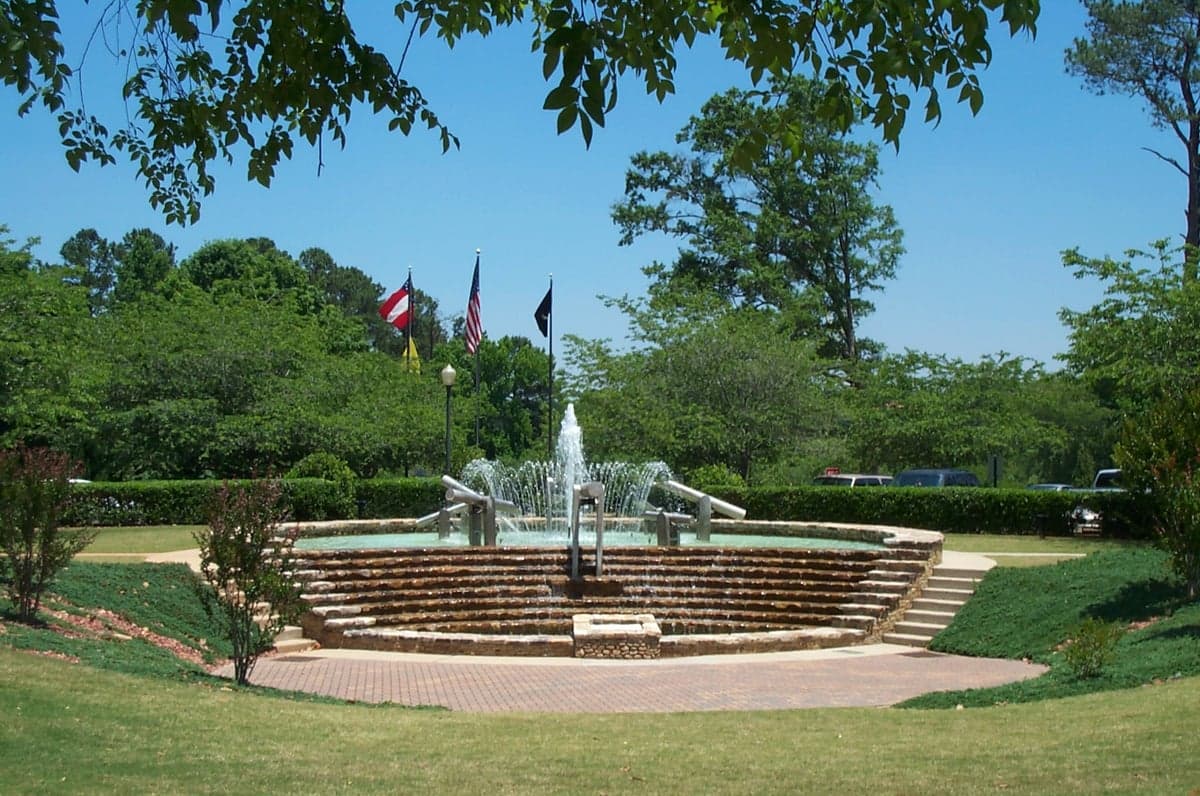
Photo: Wikipedia
Demographics of Peachtree City, GA
Affluence Level in Peachtree City, GA
An upper-middle-class area. Household wealth, education levels, and homeownership run ahead of national benchmarks.
People of Peachtree City, GA
Peachtree City, Georgia, is a planned community of 38,977 residents that remains predominantly white (69.3%) but has grown notably more diverse since 2000, with a Black population of 10.8%, a Hispanic population of 8.2%, and a combined Asian and Indian population of 8.0%. The city is defined by its extensive golf cart path system, high educational attainment (60.3% college-educated), and a strong sense of suburban order that attracts families and professionals seeking safety and top-rated schools. Its population is a blend of long-time Southern families, domestic migrants from other states, and a growing but still modest foreign-born community (8.9%).
How the city was settled and grew
Unlike most Georgia towns, Peachtree City has no antebellum or 19th-century history. It was founded from scratch in 1959 by developer Joel Cowan on former farmland in Fayette County, part of the post-World War II wave of master-planned suburbs. The original population was almost entirely white, drawn by the promise of a new, orderly community with lakes, golf courses, and a strict zoning code. The first neighborhoods—Braelinn, Kedron, and Aberdeen—were built in the 1960s and 1970s, attracting middle- and upper-middle-class families from Atlanta (30 miles north) who wanted to escape the city's congestion and racial tensions. The city's growth accelerated after the 1971 opening of the Peachtree City Industrial Park, which brought employers like NCR and Panasonic, pulling in engineers and managers from across the U.S. No significant immigrant or minority populations settled here during this era; the city was effectively a white, native-born enclave through the 1980s.
Modern era (post-1965)
The 1990s and 2000s brought the first meaningful demographic shifts. The 1996 Olympics and Atlanta's booming economy drew domestic migrants from the Northeast and Midwest, many of whom settled in newer developments like Planterra Ridge and Westpark. These neighborhoods absorbed a mix of white and Black professionals, reflecting a slow but steady increase in the Black population from under 5% in 1990 to 10.8% today. The Asian (East/Southeast Asian) population, now 5.0%, began arriving in the late 1990s, concentrated in Lake Peachtree Village and Braelinn Village, often working in tech and engineering at local firms like Siemens and TDK. The Indian subcontinent population (3.0%) grew separately, with families settling in Kedron Village and Shakerag, drawn by the city's reputation for top-tier schools and safe streets. The Hispanic population (8.2%) is the most recent wave, arriving after 2010, largely in service and construction roles, and living in apartments and townhomes near Highway 74 and Planterra Way. The foreign-born share (8.9%) remains below the national average (13.7%), indicating that Peachtree City is still primarily a destination for domestic, not international, migration.
The future
Peachtree City is not homogenizing; rather, it is tribalizing into distinct enclaves along income and ethnic lines. The older, wealthier white population is concentrated in the original golf-course neighborhoods (Braelinn, Aberdeen), while newer subdivisions (Planterra Ridge, Westpark) are more diverse but still majority-white. The Asian and Indian communities are growing slowly but steadily, with second-generation families often staying in the city, while the Hispanic population is plateauing due to limited affordable housing. The Black population is stable, with no major influx expected. Over the next 10-20 years, the city will likely become slightly more diverse but remain a majority-white, high-income suburb. The biggest demographic pressure is not immigration but aging: the median age is 42.5, and younger families are being priced out by rising home values (median home price ~$550,000).
For a conservative-leaning individual or parent moving in now, Peachtree City offers a stable, safe, and orderly environment with strong schools and a clear social structure. The city is becoming more diverse but not in a way that disrupts its core character—it remains a place where the dominant culture is white, middle-class, and family-oriented, with distinct neighborhoods that allow newcomers to choose their level of integration. The biggest risk is not demographic change but economic exclusivity, which may limit the city's ability to attract the next generation of young families.

* Values derived from national, state, county, city and local statistics and may differ in a specific area. Last updated: 2026-04-23T05:27:54.000Z
Narrative content on this page is AI-generated and may contain mistakes. Verify any details that matter before acting on them.
ReloMaps may earn a commission from affiliate links at no extra cost to you.

