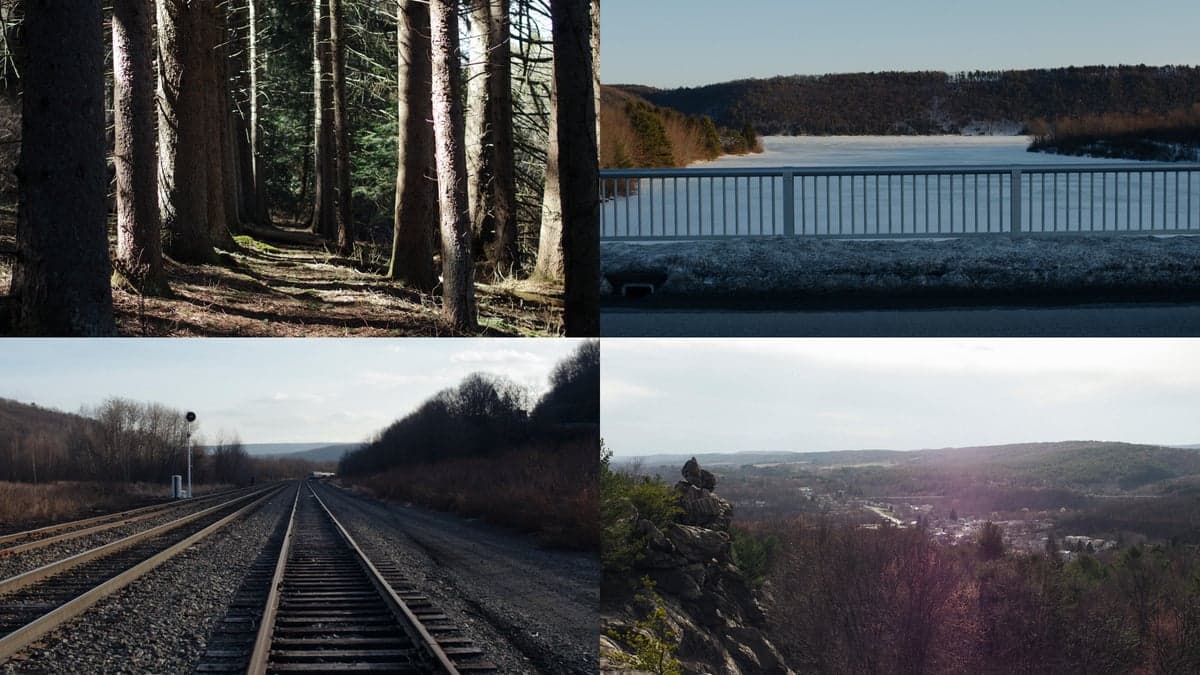
Photo: Wikipedia
Demographics of Carbon County
Affluence Level in Carbon County
A middle-class area roughly in line with national averages across income, home values, education, and employment.
People of Carbon County
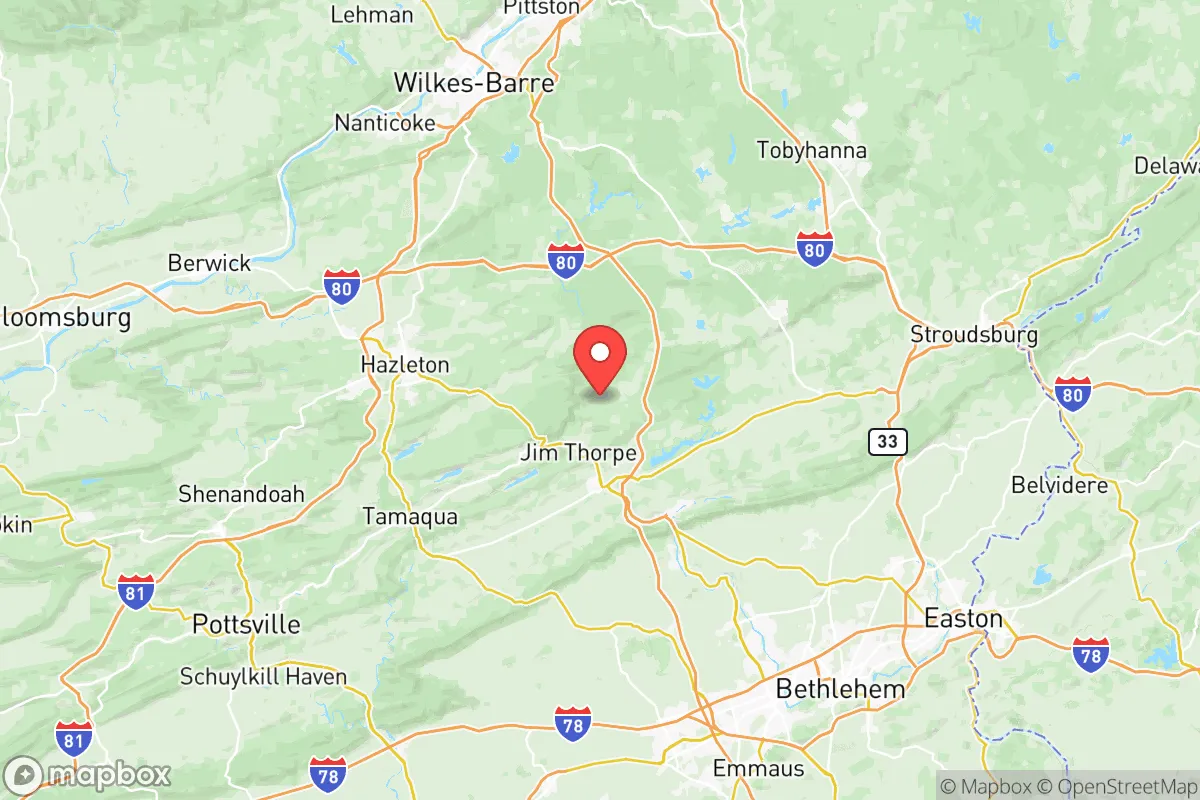
Carbon County, Pennsylvania, today is a predominantly white, working-class community of 65,191 residents, shaped by a deep history of industrial immigration and subsequent economic transition. The county is characterized by its small towns and boroughs—places like Jim Thorpe, Lehighton, and Palmerton—where a strong sense of local identity and a conservative-leaning, family-oriented culture prevail. With a foreign-born population of just 1.0% and a population that is 88.8% white, Carbon County remains one of the least ethnically diverse areas in Pennsylvania, a demographic reality rooted in its 19th-century settlement patterns and the decline of its core industries.
Settlement & growth (pre-1960)
Before European settlement, the region now known as Carbon County was the domain of the Lenape (Delaware) people, who used the Lehigh River and its tributaries for travel and fishing. The area was sparsely populated, with no permanent large villages, as the rugged terrain of the Pocono Plateau and the Lehigh Gorge made it a hunting and transit corridor rather than a center of Native life. By the mid-18th century, the Walking Purchase of 1737 had effectively forced the Lenape out, opening the land to colonial settlement.
The first European settlers were predominantly English and German farmers who arrived in the 1740s and 1750s, establishing homesteads in the fertile valleys around what is now Lehighton and Weissport. These early settlers were largely of Pennsylvania Dutch (German) stock, and their influence remains visible in the region's place names and family lineages. The real population boom, however, came with the discovery of anthracite coal in the early 19th century. The Lehigh Coal & Navigation Company, chartered in 1822, built the Lehigh Canal to transport coal to Philadelphia, transforming the county's economy and demographics.
From the 1820s through the 1880s, a massive wave of Irish and Welsh immigrants arrived to work the coal mines and build the canals and railroads. The Irish, fleeing the Great Famine, settled in company towns like Lansford, Coaldale, and Summit Hill, where they formed tight-knit Catholic communities. The Welsh, skilled in mining engineering, concentrated in areas like Mauch Chunk (now Jim Thorpe) and Nesquehoning. By the 1890s, Eastern European immigrants—Poles, Slovaks, and Hungarians—began arriving in large numbers, drawn by the expanding coal and railroad industries. They established neighborhoods in towns like Palmerton, where the New Jersey Zinc Company built a massive smelting plant, and in the Panther Valley communities of Lansford and Coaldale. These groups brought distinct Catholic and Orthodox traditions, building churches and fraternal societies that still anchor their communities today.
The peak of Carbon County's population came in 1930, with over 63,000 residents, as the coal industry reached its zenith. However, the Great Depression and the subsequent decline of anthracite coal—replaced by oil and natural gas—triggered a steady population loss. By 1960, the county's population had fallen to roughly 52,000, as young people left for industrial jobs in Allentown, Bethlehem, and Philadelphia. The remaining population was overwhelmingly white, with a strong German, Irish, and Eastern European heritage, and a culture centered on the Catholic Church, labor unions, and small-town life.
Modern era (post-1965)
The 1965 Hart-Cellar Act, which reshaped U.S. immigration, had virtually no impact on Carbon County. The county's foreign-born population today is just 1.0%, far below the national average of 13.7%, and the vast majority of those are naturalized citizens from earlier European waves. The county did not experience the post-1965 influx of Asian, Latin American, or African immigrants that transformed many other parts of Pennsylvania. Instead, the modern era has been defined by domestic out-migration and an aging population.
Since 1970, Carbon County's population has fluctuated between 50,000 and 65,000, with a modest rebound in the 1990s and 2000s driven by suburban spillover from the Lehigh Valley. Commuters from Allentown and Bethlehem, seeking lower taxes and more rural living, began moving into towns like Lehighton, Jim Thorpe, and the western townships. This influx has been predominantly white and middle-class, reinforcing the county's existing demographic profile. The Hispanic population, now at 6.4%, has grown slowly, primarily through domestic migration from other parts of Pennsylvania and New Jersey, and is concentrated in the Lehighton and Palmerton areas, working in service and light manufacturing jobs. The Black population remains very small at 1.8%, with no significant enclave, while East/Southeast Asian communities (0.3%) and Indian-subcontinent residents (0.1%) are negligible, mostly consisting of a few professionals in healthcare and education.
The most significant demographic shift has been the aging of the population. With a median age of 46.3 (compared to the national 38.8), Carbon County has one of the oldest populations in Pennsylvania. Young adults continue to leave for college and urban job markets, while retirees from New Jersey and New York are drawn to the county's lower cost of living and scenic attractions, particularly around Jim Thorpe and Lake Harmony. This has created a bifurcated housing market: affordable single-family homes in former coal towns like Lansford and Coaldale, and higher-priced vacation and retirement properties in the Pocono region.
The future
Carbon County's population is projected to remain stable or decline slightly over the next 10-20 years, as the aging cohort passes and out-migration of young adults continues. The county is not becoming more diverse in any meaningful sense; the Hispanic share may inch up to 8-9% through domestic migration, but the white population will remain above 85%. The foreign-born share is unlikely to rise above 2%, as there are no major employers or refugee resettlement programs to attract immigrants.
The cultural identity of the county is evolving from a blue-collar, union-heavy mining culture to a more mixed identity of commuters, retirees, and remote workers. Towns like Jim Thorpe are becoming tourist destinations, while Lehighton and Palmerton are seeing new residential development for Lehigh Valley commuters. However, the former coal towns of the Panther Valley—Lansford, Coaldale, and Summit Hill—continue to struggle with poverty, aging infrastructure, and population loss. The county's political character, which has shifted sharply Republican in recent elections (Trump won 67% of the vote in 2024), reflects this demographic stasis and economic anxiety.
For someone moving in now, Carbon County offers a stable, low-cost, and culturally homogeneous environment, with strong community ties in its small towns and easy access to outdoor recreation in the Poconos. The trade-off is limited economic opportunity, an aging population, and a lack of the diversity and dynamism found in growing metropolitan areas. The county is becoming a quieter, older place—a bedroom and retirement community for the Lehigh Valley and New York metro, rather than a destination for new immigrants or young families seeking career growth.

* Values derived from national, state, county, city and local statistics and may differ in a specific area. Last updated: 2026-10-20T22:11:37.000Z
Narrative content on this page is AI-generated and may contain mistakes. Verify any details that matter before acting on them.
ReloMaps may earn a commission from affiliate links at no extra cost to you.

