Photo: Wikipedia
Strategic Assessment of Carbon County
Meaningful friction. Expect exposure to either population pressure, blast zones, or natural disaster risk. Consider buying a retreat property.
What does the Strategic Assessment tell us?
Our Strategic Assessment grades tactical survivability of an area. Major population centers, military targets, fallout zones, natural disasters, and border exposure all drive risk — lower exposure means a more defensible position in a crisis.
This is heavily inspired by Joel Skousen's Strategic Relocation book. Highly recommended you checkout the book ($)What does this tell us?
Our Strategic Assessment grades tactical survivability of an area. Major population centers, military targets, fallout zones, natural disasters, and border exposure all drive risk — lower exposure means a more defensible position in a crisis.
This is heavily inspired by Joel Skousen's Strategic Relocation book. Highly recommended you checkout the book ($)Strategic Pillars
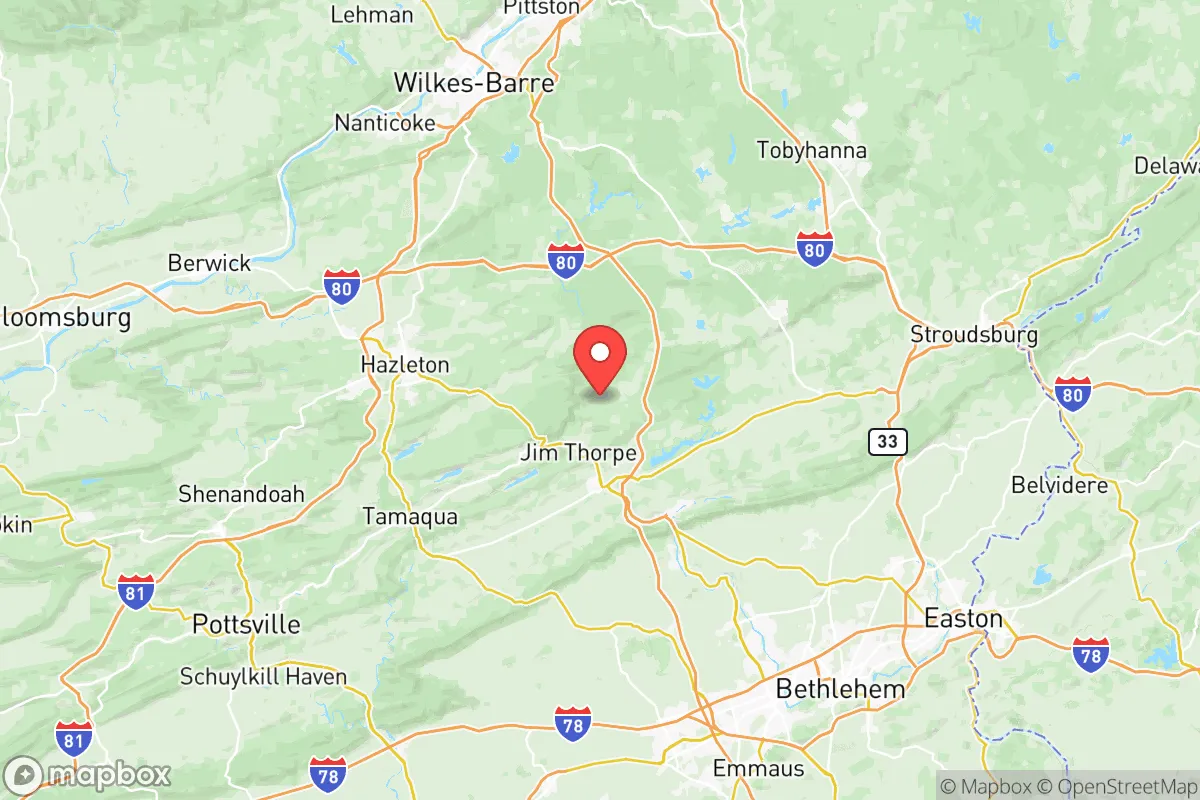
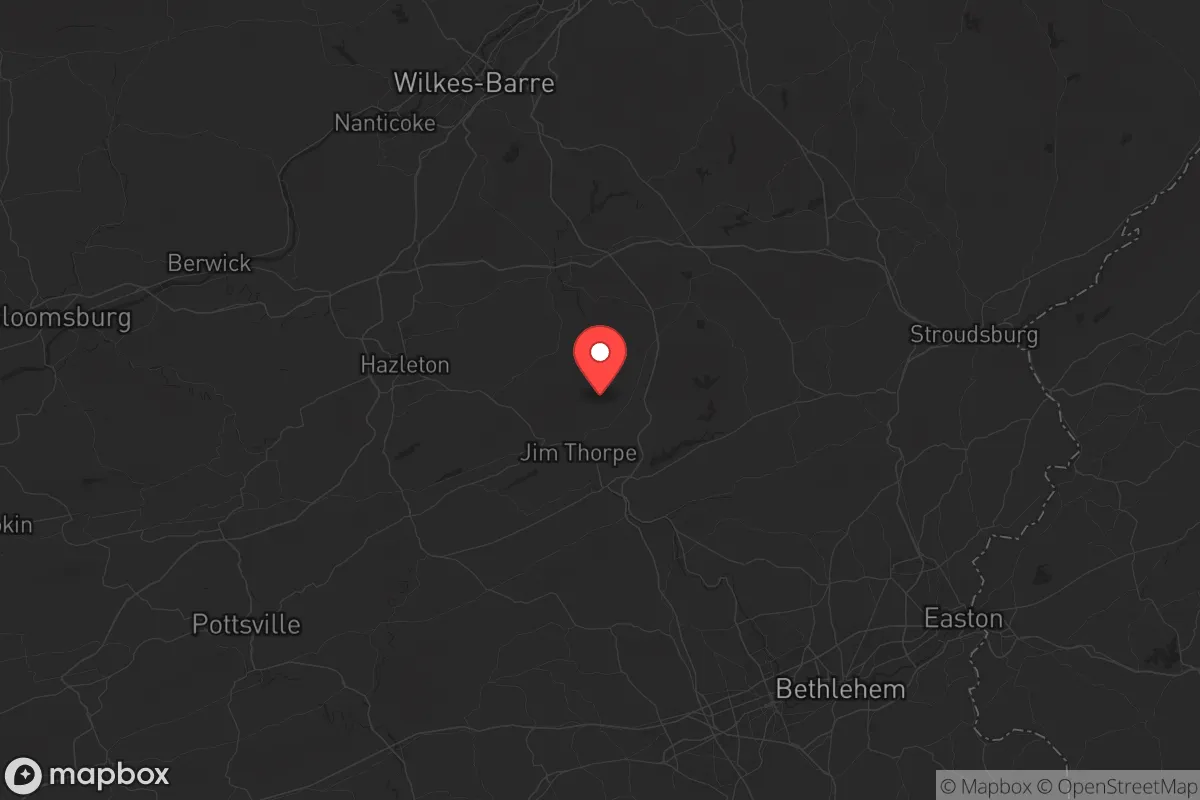
Key Distances
Strategic Assessment Analysis
Carbon County, Pennsylvania, offers a compelling strategic position for relocators prioritizing resilience and self-sufficiency, balancing rural seclusion with practical access to critical infrastructure. Nestled in the southern Poconos, the county’s rugged terrain and distance from major metropolitan centers provide a natural buffer against many cascading risks, while its location along the Lehigh River and near Interstate 476 (the Northeast Extension) ensures connectivity without the vulnerabilities of dense urban corridors. For a conservative-leaning audience focused on disaster readiness, Carbon County presents a defensible, resource-rich environment that merits serious consideration, though it is not without its own exposures.
Geographic position and natural advantages for long-term security
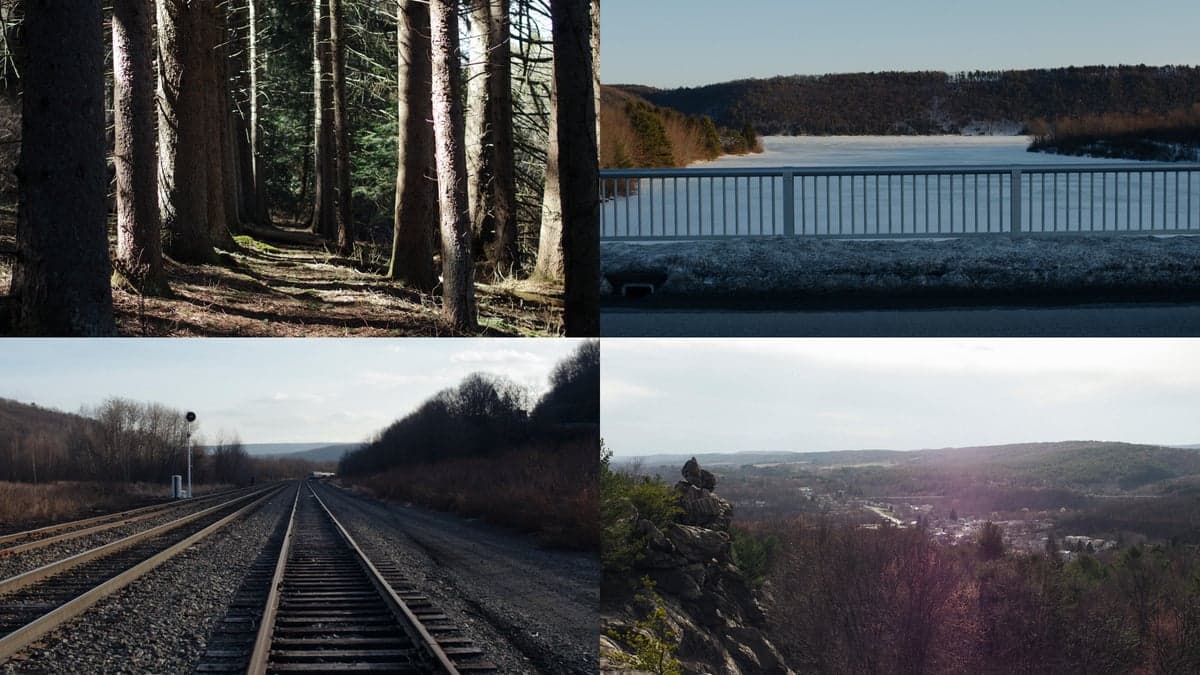
Carbon County’s geography is its primary strategic asset. The county sits within the Appalachian Mountain range, with the Pocono Plateau to the north and the Blue Mountain ridge forming a natural southern barrier. This topography offers inherent defensibility: the steep slopes and forested ridges create chokepoints and limited access routes, making the area less vulnerable to mass movement or rapid incursion during a crisis. The county seat, Jim Thorpe, is nestled in a narrow valley along the Lehigh River, while towns like Lehighton and Palmerton occupy the broader Lehigh Valley floor. The region’s elevation—much of it above 1,000 feet—reduces flood risk compared to low-lying areas, though the river valleys themselves are flood-prone. The surrounding Pocono Mountains provide abundant hardwood forests for timber, fuel, and wildlife, supporting a subsistence lifestyle if needed. Critically, Carbon County is roughly 80 miles from Philadelphia and 100 miles from New York City—close enough for occasional supply runs or medical access, but far enough to avoid the immediate fallout, civil unrest, or infrastructure collapse that would likely engulf those urban centers in a major event. The county’s position along the Lehigh River also offers a reliable water source, with the river fed by the Pocono plateau’s high rainfall and snowmelt.
Risks, exposures, and proximity to fallout-relevant landmarks
While Carbon County’s rural character is a net positive, it is not immune to man-made and natural risks. The most significant exposure is its proximity to the PPL Susquehanna Nuclear Power Plant, located just 30 miles north in Luzerne County. This boiling water reactor is one of the largest in the nation, and a major incident—whether from accident, sabotage, or EMP—could render large swaths of Carbon County uninhabitable or subject to evacuation, depending on wind patterns. The county also lies within 50 miles of the Limerick Generating Station (Montgomery County) and the Three Mile Island site (Dauphin County), though the latter is decommissioned. For a relocator focused on fallout avoidance, this nuclear cluster is a serious consideration. Additionally, the county is crisscrossed by major energy infrastructure: the Columbia Gas Transmission pipeline runs through the region, and the Pocono Raceway in nearby Long Pond is a designated FEMA staging area, which could become a target or congestion point during a national emergency. Natural risks include flash flooding in the Lehigh River valley—particularly in Jim Thorpe and Lehighton—and occasional winter storms that can isolate mountain communities for days. The county’s forested terrain also carries a moderate wildfire risk, though less severe than western states. On the positive side, Carbon County has no major military bases, refineries, or ports within its borders, reducing its attractiveness as a strategic target. The nearest major military installation is Fort Indiantown Gap (about 60 miles southwest), a National Guard training center that could become a mobilization hub but is far enough to avoid direct spillover.
Practical resilience for a relocator: food, water, energy, and defensibility
For a family or individual serious about self-sufficiency, Carbon County offers a strong baseline. Water availability is excellent: the Lehigh River and its tributaries (including Mahoning Creek and Lizard Creek) provide surface water, while the region’s fractured bedrock aquifers yield reliable well water for those outside municipal systems. Most rural properties in townships like Kidder Township or Penn Forest Township already rely on private wells, a major advantage over suburban subdivisions dependent on centralized treatment. Food production potential is high: the county has a long agricultural history, with fertile bottomlands along the Lehigh and numerous small farms. The growing season is short (roughly 150 days), but cool-weather crops like potatoes, apples, and brassicas thrive. The surrounding national forests (including portions of the Delaware State Forest) offer hunting for deer, turkey, and small game, as well as foraging for mushrooms and berries. Local food infrastructure is modest but functional: the Lehighton Farmers Market operates seasonally, and several Amish-run farm stands dot the rural roads. Energy resilience is a mixed picture: the grid is served by PPL Electric Utilities, which has a history of storm-related outages, especially in mountainous areas. However, the county’s wooded terrain makes wood heat a practical primary or backup option, and solar potential is decent (about 4.5 peak sun hours per day). Many rural properties already have propane tanks and generators, and the local culture is DIY-oriented. Defensibility is the county’s standout feature: the limited road network—primarily PA-903, PA-209, and PA-443—creates natural chokepoints. The Blue Mountain ridge to the south and the Pocono plateau to the north form a bowl-like geography that can be monitored with minimal effort. Communities like Weatherly and Bowmanstown are small, tight-knit, and suspicious of outsiders, which can be a double-edged sword for newcomers but also means strong mutual aid networks. The county’s low population density (about 100 people per square mile) reduces competition for resources in a crisis.
The overall strategic picture for Carbon County is one of qualified opportunity. Its geographic isolation, abundant water, and defensible terrain make it a strong candidate for a relocation focused on long-term resilience, particularly for those willing to invest in off-grid energy and food systems. The nuclear proximity is the single greatest risk, and any serious prepper should map fallout zones and have an evacuation plan for a northward retreat into the deeper Poconos or upstate New York. For a conservative-leaning family seeking a balance between rural self-sufficiency and reasonable access to healthcare and supplies (Lehighton has a hospital, St. Luke’s Carbon County), the county offers a realistic, grounded option—far from the chaos of the Northeast Corridor, but not so remote that daily life becomes a survivalist ordeal. The key is to choose a property on high ground, away from the river valleys and major pipeline routes, and to build community ties with the existing population rather than arriving as a lone prepper. Carbon County rewards preparation and humility; it punishes complacency and isolation.

* Values derived from national, state, county, city and local statistics and may differ in a specific area. Last updated: 2026-10-20T22:11:37.000Z
Narrative content on this page is AI-generated and may contain mistakes. Verify any details that matter before acting on them.
ReloMaps may earn a commission from affiliate links at no extra cost to you.

