Photo: Wikipedia
Demographics of York County
Affluence Level in York County
A middle-class area roughly in line with national averages across income, home values, education, and employment.
People of York County
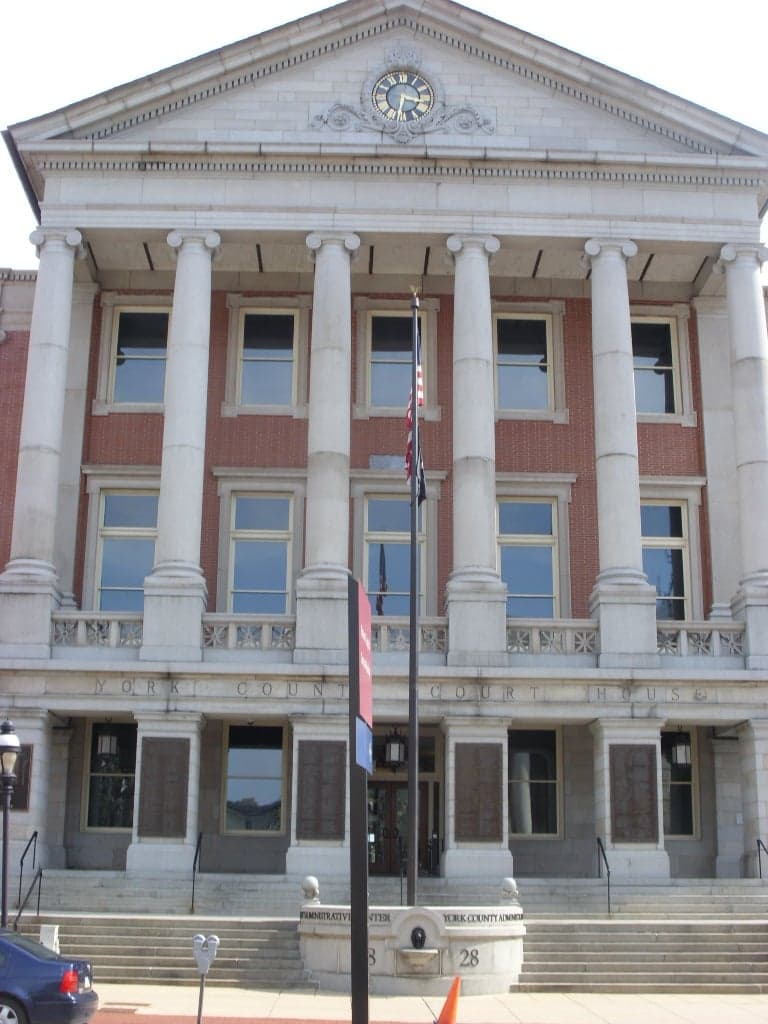
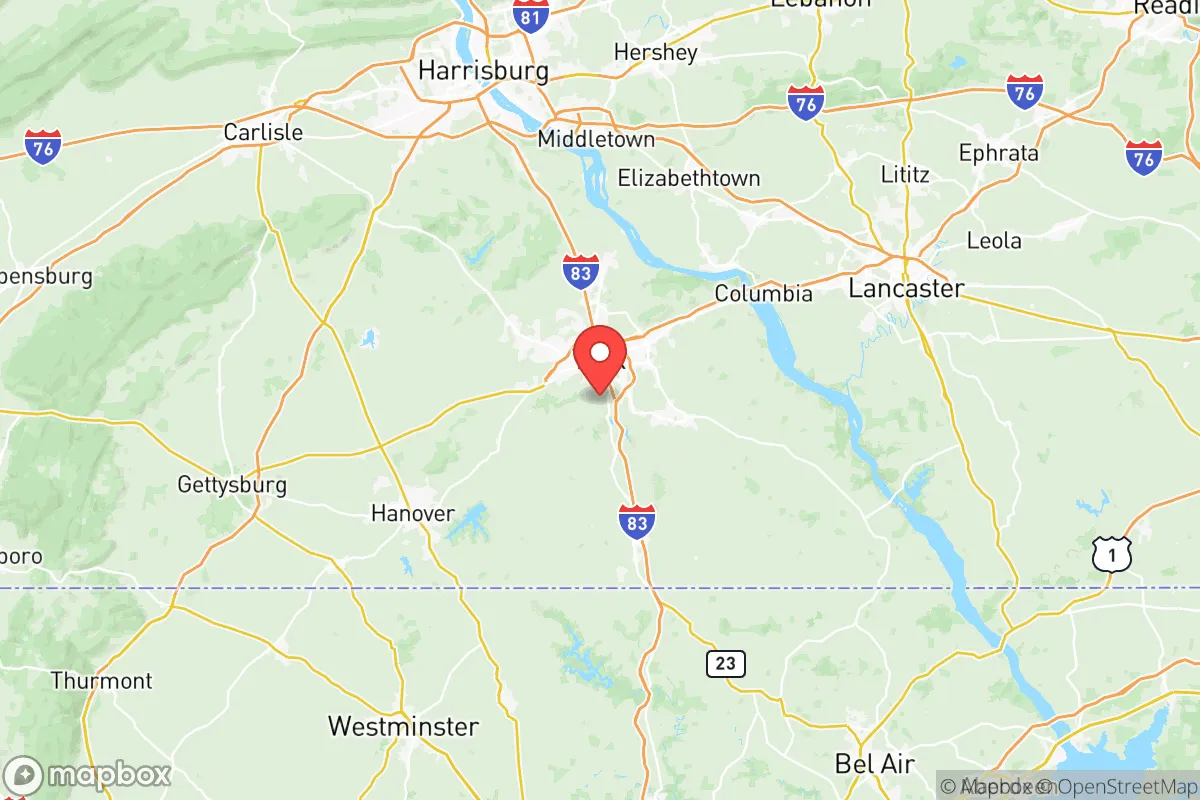
York County, Pennsylvania, is home to 459,312 residents who reflect a deeply rooted, predominantly white population with a strong German and Pennsylvania Dutch heritage, a modest but growing Hispanic community, and a very small foreign-born share of just 2.0%. The county’s identity is shaped by its historic role as a manufacturing and agricultural hub, its conservative-leaning political culture, and a population density that balances suburban growth around the city of York with rural townships. Distinctive markers include a high rate of homeownership, a strong sense of local history tied to the American Revolution and the Civil War, and a population that is less ethnically diverse than the national average but is slowly diversifying through Hispanic and Asian in-migration.
Settlement & growth (pre-1960)
Before European settlement, the area now known as York County was inhabited by the Susquehannock people, an Iroquoian-speaking tribe who controlled the lower Susquehanna River valley. By the late 1600s, disease and conflict with the Iroquois Confederacy had decimated the Susquehannock, leaving the region largely depopulated. European colonization began in earnest in the early 1700s, with the first permanent settlers being German and Swiss immigrants—often called Pennsylvania Dutch—who were drawn by William Penn’s promise of religious tolerance and fertile farmland. These settlers founded the town of York in 1741, which became the county seat and a key commercial center. The German influence remains visible today in the prevalence of Lutheran and Reformed churches, Pennsylvania Dutch dialect remnants, and traditional farming practices in towns like Dallastown and Red Lion.
During the 18th and 19th centuries, Scots-Irish immigrants arrived in smaller numbers, settling in the western and northern parts of the county, including areas around Dillsburg and Wellsville. These groups were typically Presbyterian and more frontier-oriented than the Germans. The county’s population grew steadily through the 1800s, fueled by agriculture and the rise of industry. York became a major center for manufacturing, particularly in the production of railroad equipment, agricultural machinery, and later, refrigeration units. The York Manufacturing Company and the York Ice Machinery Corporation (later York International) drew workers from the surrounding countryside and from other parts of Pennsylvania. By 1900, the county’s population had reached roughly 100,000, with a small but established Black community concentrated in the city of York, many descended from free Black families who had settled there before the Civil War.
The early 20th century brought a wave of Italian and Eastern European immigrants—primarily Poles, Slovaks, and Ukrainians—who came to work in York’s factories and foundries. These groups settled in ethnic enclaves within the city of York, particularly in the neighborhoods around the industrial corridors along the Codorus Creek. The Catholic churches they built, such as St. Mary’s and St. Joseph’s, remain landmarks. The Great Migration of Black Americans from the South also brought a significant number of African American families to York between 1910 and 1960, seeking industrial jobs. By 1960, the county’s population had grown to over 238,000, with a racial composition that was still overwhelmingly white (over 95%) but with a notable Black minority in the city proper.
Modern era (post-1965)
The 1965 Hart-Cellar Act had a relatively muted effect on York County compared to major metropolitan areas, as the county’s foreign-born population remains just 2.0% today. However, the post-1965 period did bring new immigrant groups, primarily from Latin America and Asia. The Hispanic population, now 9.1% of the county, began to grow in the 1980s and 1990s, driven by Mexican and Central American immigrants who found work in agriculture, food processing, and construction. This community is concentrated in the city of York and in the southern part of the county, particularly around Glen Rock and Shrewsbury, where mushroom farming and other agricultural operations provide employment. The Hispanic population has grown steadily, from roughly 2% in 1990 to over 9% today, and is the fastest-growing demographic group in the county.
East and Southeast Asian communities, now 1.0% of the population, arrived in smaller numbers, primarily as professionals and students associated with York College of Pennsylvania and the region’s manufacturing and healthcare sectors. Vietnamese and Korean families have established small clusters in the city of York and in the suburbs around Springettsbury Township and West Manchester Township. The Indian subcontinent population, at 0.4%, is even smaller and is largely composed of professionals in technology and medicine, with no distinct ethnic enclave. Domestic migration since 1965 has been dominated by suburbanization: white families moved from the city of York to surrounding townships like York Township, Manchester Township, and Hellam Township, creating a ring of bedroom communities. The city of York itself has seen its population decline from over 50,000 in 1960 to roughly 44,000 today, while the county’s overall population has grown through suburban and exurban expansion.
Racial and ethnic shifts have been gradual but real. The white share of the population has declined from over 95% in 1970 to 80.0% today, driven primarily by Hispanic growth and, to a lesser extent, by Black and Asian in-migration. The Black population, at 5.4%, has remained relatively stable, with a slight increase due to domestic migration from other parts of Pennsylvania and the Mid-Atlantic. The county remains less diverse than Pennsylvania as a whole, which is 75% white, but the trend toward diversification is clear. The college-educated share, at 27.2%, is below the national average of 33%, reflecting the county’s strong blue-collar manufacturing base.
The future
York County’s population is likely to continue its slow diversification over the next 10-20 years, driven primarily by Hispanic growth and, to a lesser extent, by Asian and Indian in-migration. The Hispanic population is projected to reach 12-14% by 2040, as younger families and continued immigration from Latin America offset an aging white population. The East and Southeast Asian and Indian populations will likely grow modestly, as the county’s healthcare and manufacturing sectors attract skilled professionals, but they are unlikely to form large ethnic enclaves. The white population will continue to decline as a share, but will remain the overwhelming majority, particularly in rural townships like Peach Bottom Township and Fawn Grove, where growth is minimal and the population is aging.
The county is not tribalizing into distinct ethnic enclaves in the way that larger metropolitan areas are; instead, Hispanic families are dispersing across the county, with concentrations in the city of York and southern agricultural towns but no single dominant neighborhood. Suburbanization will continue, with growth occurring along the I-83 corridor toward the Maryland border, particularly in Shrewsbury Township and New Freedom, where commuters to Baltimore and Harrisburg are driving new housing development. The cultural identity of the county is likely to remain conservative and rooted in its German and Pennsylvania Dutch heritage, but with a growing Hispanic influence in food, festivals, and religious life. For someone moving in now, York County offers a stable, family-oriented environment with a strong sense of local history, a low cost of living, and a population that is slowly becoming more diverse without losing its core character.
Bottom-line: York County is becoming a slightly more diverse, still predominantly white, and increasingly suburban place, where the pace of demographic change is slow enough that newcomers can expect a familiar, community-oriented lifestyle with a growing Hispanic presence adding new cultural dimensions. The county’s future is one of gradual diversification within a stable, conservative framework—a place where tradition and change coexist, but tradition still holds the upper hand.

* Values derived from national, state, county, city and local statistics and may differ in a specific area. Last updated: 2026-05-13T01:58:18.000Z
Narrative content on this page is AI-generated and may contain mistakes. Verify any details that matter before acting on them.
ReloMaps may earn a commission from affiliate links at no extra cost to you.

