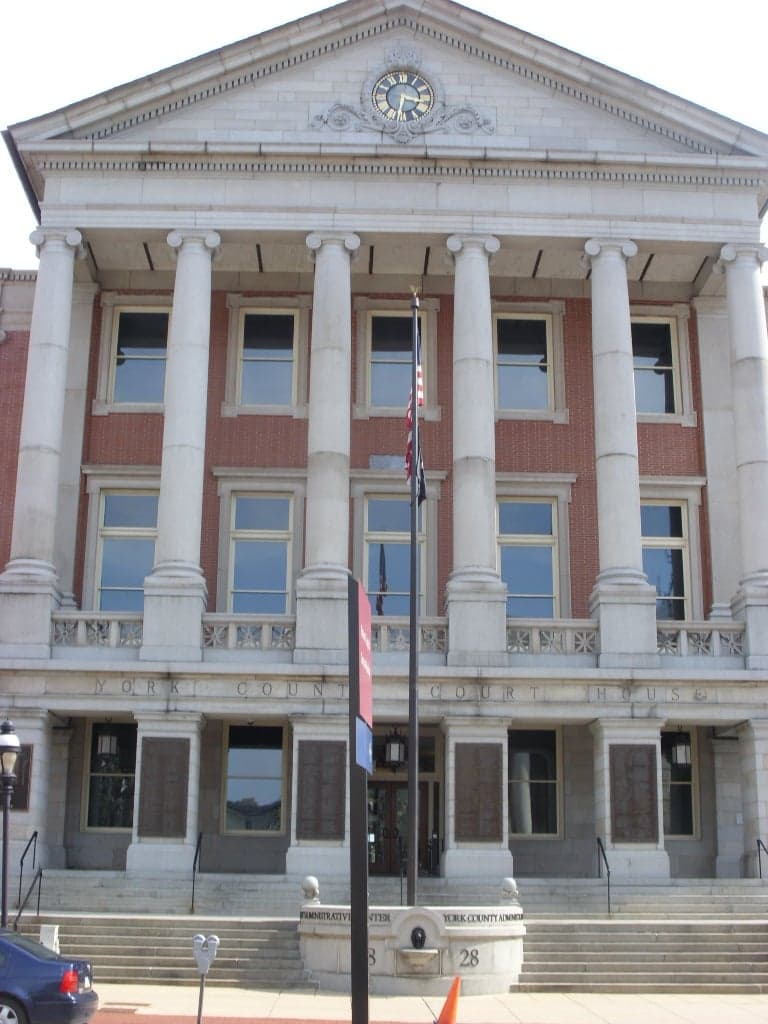
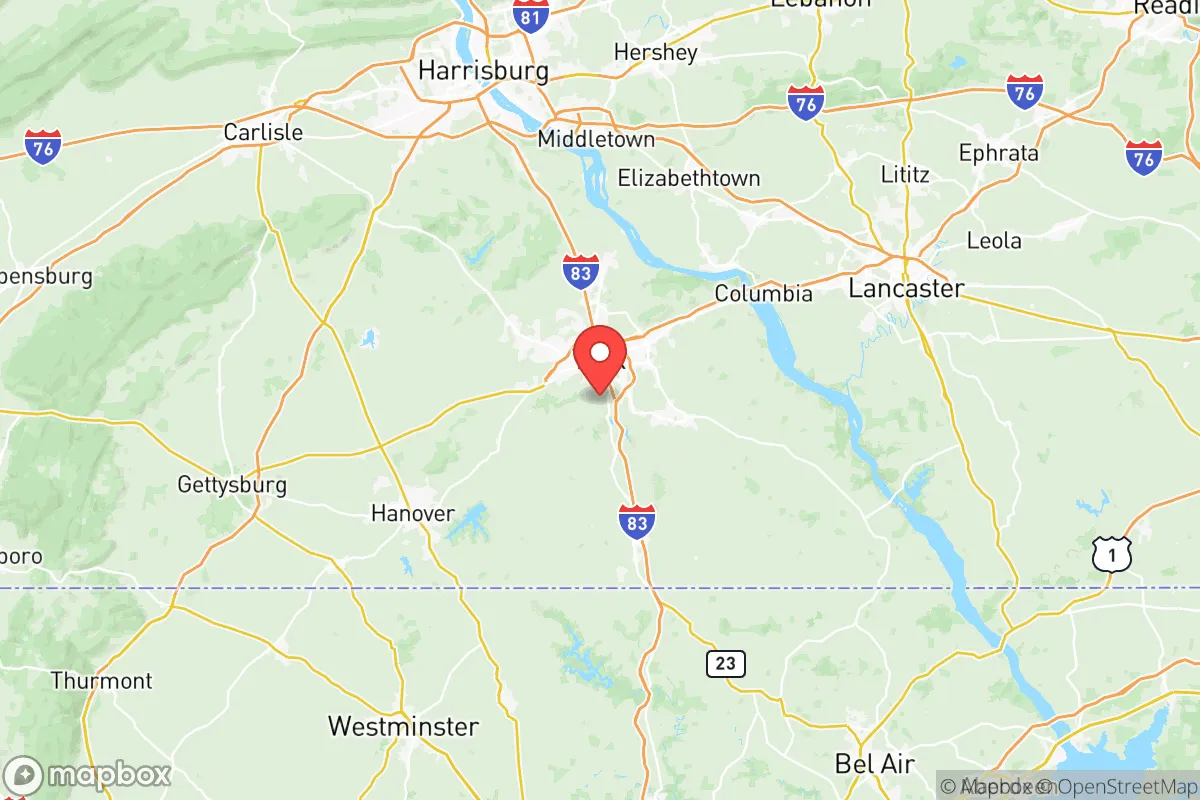
Photo: Wikipedia
Political ClimatePolitical Climate in York County
Showing district-level results — no local-only data available.
Local Political AnalysisPolitical Analysis of York County
York County has long been a conservative stronghold in Pennsylvania, and that reputation is well-earned. The Cook PVI rating of R+11 tells you a lot right off the bat — this isn't a purple county by any stretch. But if you look closer, you'll see the political landscape is shifting under our feet, and not necessarily in a way that sits well with folks who value traditional freedoms and limited government. The county has voted Republican in every presidential election since 2000, often by double digits, but the margins have been tightening in recent cycles, especially in the more populated areas around the city of York itself.
How it compares
When you stack York County up against the rest of Pennsylvania — which sits at a Cook PVI of EVEN — the difference is stark. The state as a whole is a true battleground, swinging between red and blue depending on the election. York County, though, is reliably red, but it's not a monolith. The city of York leans heavily Democratic, with precincts like those around the downtown core and the college areas consistently voting blue. Meanwhile, the rural townships — places like Shrewsbury, Glen Rock, and New Freedom in the southern end, or Dillsburg and Franklintown in the north — are deep red, often voting 70% or more Republican. The swing precincts are in the growing suburban areas like Springettsbury Township and Manchester Township, where new developments are bringing in folks from more liberal parts of the state. Those areas are where the political future of the county is being decided, and it's a bit of a mixed bag — some of those newcomers are fleeing high taxes and overreach in places like Philadelphia, but others bring their progressive ideas with them.
What this means for residents
For those of us who've been here a while, the political climate means a few things in daily life. First, you generally have more breathing room when it comes to personal freedoms — the county government has historically been hands-off on things like business regulations, property rights, and Second Amendment issues. You won't see the kind of overreach you hear about in places like Harrisburg or Philadelphia. But there's a growing concern that as the county's population diversifies and the suburbs expand, we're seeing more pressure to adopt policies that feel like they're imported from the coast. School board meetings in the Central York and Dallastown districts have gotten heated over curriculum and parental rights, and there's a real sense that the progressive agenda is trying to creep in through the back door. The county commissioners have held the line so far, but it's something to keep an eye on.
Culturally, York County still feels like a place where common sense rules. You'll see Trump signs in yards year-round, and the local gun shows are packed. But the city of York itself is a different world — it's a small urban center with a growing arts scene and a more diverse population, and it votes reliably blue. That split creates a bit of a tension, but most folks just get along. The real policy distinctions show up in things like zoning — rural townships keep things loose, while the city has more restrictive codes. If you're looking for a place where government stays out of your business and you can live your life without a lot of bureaucratic hassle, York County is still a solid bet. Just keep an eye on those suburban precincts — that's where the future is being shaped, and it's worth paying attention to who's moving in and what they're bringing with them.

State Political ClimatePolitical Climate in Pennsylvania
State Political AnalysisPolitical Environment in the State
Pennsylvania is a true battleground state, with a Cook PVI of EVEN, meaning it sits exactly at the national average in partisan lean. Over the last 10-20 years, the state has shifted from a reliably blue-leaning Rust Belt stronghold to a dead-even toss-up, driven by a massive realignment of its rural and suburban populations. The dominant coalitions are a shrinking but still potent union-and-urban Democratic base in Philadelphia and Pittsburgh, counterbalanced by a growing, energized conservative coalition in the exurbs, small towns, and the vast rural interior. The trajectory is a slow, grinding rightward shift in the middle of the state, even as the southeastern suburbs of Philadelphia become more progressive.
Urban vs. rural divide
The political map of Pennsylvania is a tale of two states. The urban cores of Philadelphia and Pittsburgh are deep blue, with Philadelphia County delivering over 80% of its vote to Democrats in recent cycles. These cities are surrounded by increasingly progressive inner-ring suburbs like Montgomery County and Delaware County, which have flipped from swing to solidly blue over the past decade. Meanwhile, the vast rural expanse—places like Tioga County, Bradford County, and Bedford County—vote Republican by margins of 70% or more. The real action is in the "collar counties" around Pittsburgh and the Lehigh Valley. Westmoreland County, once a union stronghold, has swung hard to the right, while Northampton County and Erie County remain true swing counties that decide statewide races. The divide is stark: drive 30 minutes west of Philadelphia, and you go from a city where you'll see BLM signs to a rural landscape where Trump flags fly year-round.
Policy environment
Pennsylvania's policy environment is a mixed bag that reflects its divided government. The state has a flat income tax rate of 3.07%, which is relatively low and hasn't changed much, but property taxes are among the highest in the nation, especially in the Philadelphia suburbs. There is no state sales tax on clothing or groceries, which helps families. On education, the state has a school choice program—the Educational Improvement Tax Credit (EITC)—that provides scholarships to low- and middle-income families, but it's capped and constantly under attack from the teachers' unions. Governor Josh Shapiro, a Democrat, has pushed for increased education funding and expanded Medicaid, but the Republican-controlled legislature has blocked most major tax hikes and gun control measures. Election laws are a flashpoint: the state has no-excuse mail-in voting (passed in 2019 under a bipartisan deal), but the legislature has refused to tighten voter ID requirements, leaving many conservatives uneasy about election integrity. The regulatory posture is moderate—not as business-friendly as Texas or Florida, but far less burdensome than New York or California.
Trajectory & freedom
On personal freedom, Pennsylvania is a state in flux, and the trend is concerning for conservatives. The state has seen a steady erosion of Second Amendment rights. In 2018, it passed Act 192, which allows municipalities to sue gun manufacturers, and in 2022, it enacted a "red flag" law (Act 79) allowing courts to temporarily confiscate firearms from individuals deemed a threat. These laws are deeply unpopular in rural counties, where sheriffs have declared themselves "Second Amendment sanctuaries." On medical freedom, the state imposed strict COVID-19 mandates, including school closures that lasted longer than in most neighboring states, and Governor Shapiro has maintained a heavy-handed approach to vaccine mandates for healthcare workers. Parental rights are under pressure: the state's Department of Education has pushed "equity" initiatives that many parents see as ideological indoctrination, and there is no statewide parental notification law for school medical services. On the positive side, Pennsylvania has no state income tax on retirement income (Social Security, pensions, 401(k) withdrawals), which is a major draw for retirees. Property rights are generally respected, but zoning battles in the suburbs are increasingly contentious as progressive towns try to block new development.
Civil unrest & political movements
Pennsylvania has been a hotbed of political activism on both sides. The 2020 election aftermath saw massive "Stop the Steal" rallies in Harrisburg and Gettysburg, and the state was ground zero for election integrity lawsuits. The 2021 gubernatorial race saw a hard-fought primary between conservative state senators Doug Mastriano and others, with Mastriano winning the nomination on a platform of election reform and parental rights. On the left, Philadelphia saw significant civil unrest in 2020, including looting and property destruction, which has driven many families to the suburbs. Immigration politics are less visible here than in border states, but sanctuary city policies in Philadelphia have created friction, with the state legislature repeatedly trying to pass a ban on sanctuary cities. The most visible flashpoint for a new resident would be the constant political signage: in rural areas, you'll see "Fight for Freedom" and "Defend the Second Amendment" signs; in the suburbs, it's "In This House, We Believe" yard signs. The divide is personal and visible.
Projection
Over the next 5-10 years, Pennsylvania is likely to remain a toss-up, but the demographic trends favor a slow rightward shift in the middle of the state. The Philadelphia suburbs are becoming more Democratic as they densify and attract younger, more progressive professionals. But the rural and exurban areas are growing faster, with people fleeing high-tax states like New York and New Jersey. The key battleground will be the Lehigh Valley (Allentown, Bethlehem, Easton) and the Wyoming Valley (Scranton, Wilkes-Barre), where working-class voters are trending Republican. If the state legislature can pass a voter ID law and tighten election security, Republicans could lock in a structural advantage. However, if the state continues to drift toward California-style policies on guns and education, expect more rural counties to push for secession or nullification rhetoric—there's already talk of a "Northern Pennsylvania" statehood movement. For a conservative moving in now, expect a state that is politically divided but still winnable, with a low tax burden on income but high property taxes that will only increase as school funding battles intensify.
Bottom line for a new resident: Pennsylvania offers a relatively low cost of living, no tax on retirement income, and a strong sense of local community in its rural and suburban areas. But you'll need to be politically engaged to protect your freedoms. The state is a battlefield, not a safe haven. If you're moving here, choose your county carefully—Butler County or York County will feel like a conservative haven, while Montgomery County or Allegheny County will feel like a progressive enclave. The state's future depends on which side shows up to vote.
* Values derived from national, state, county, city and local statistics and may differ in a specific area. Last updated: 2026-05-13T01:58:18.000Z
Narrative content on this page is AI-generated and may contain mistakes. Verify any details that matter before acting on them.
ReloMaps may earn a commission from affiliate links at no extra cost to you.

