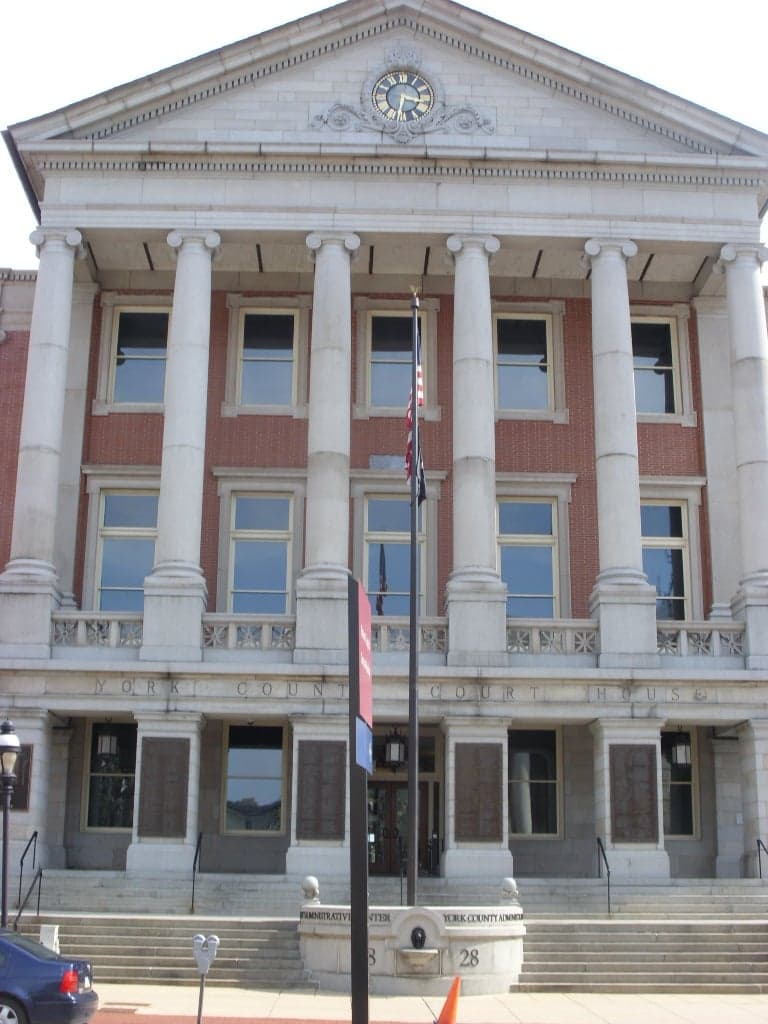
Photo: Wikipedia
Personal Sovereignty in York County
Strong independent fundamentals that actively favor personal liberty and low regulation.
What does Personal Sovereignty tell us?
Personal Sovereignty measures your capacity for self-reliance and independence with minimal government friction. Higher scores mean fewer barriers between you and the way you want to live... but it assumes you have the space you need and good neighbors.
What does this tell us?
Personal Sovereignty measures your capacity for self-reliance and independence with minimal government friction. Higher scores mean fewer barriers between you and the way you want to live... but it assumes you have the space you need and good neighbors.
State Policy
Energy independence: Net exporter (150% of energy produced in-state)
Personal Liberty
Homesteading

Personal Liberty Analysis
York County, Pennsylvania offers a notably stronger personal sovereignty environment than much of the Northeast corridor, though it is not a libertarian free-for-all. The county balances a conservative-leaning culture with Pennsylvania’s relatively restrained state-level governance, creating a zone where individual autonomy—on taxes, self-defense, property use, and family decisions—is generally respected more than in neighboring Maryland or New Jersey. For those prioritizing freedom from government overreach, York County presents a viable middle ground between the heavy regulation of the coastal states and the more permissive environments of the Deep South or rural Midwest.
Tax burden and regulatory posture: How York County compares to the Northeast
Pennsylvania’s flat state income tax rate of 3.07% is a significant advantage over progressive-rate states like New York or New Jersey, and York County keeps local taxes moderate. The county’s combined sales tax rate is 6%, with no county-level sales tax added to the state’s 6% base. Property taxes are the primary local burden, averaging around 2.5% of assessed value, but this varies sharply by municipality. York City proper carries higher millage rates and more zoning density, while townships like Dover Township and Springettsbury Township offer lower tax burdens and more permissive land-use regulations. The regulatory posture in unincorporated areas is notably lighter than in the city—fewer building permit hurdles, less restrictive noise ordinances, and minimal business licensing friction. For a prepper or homesteader, the key takeaway is that York County’s regulatory climate is business-friendly and property-rights-respecting compared to Philadelphia or Baltimore, but you must choose your township carefully to avoid municipal overreach.
Self-defense and gun law specifics: What the Second Sanctuary status means for residents
Pennsylvania is a shall-issue state for concealed carry permits, and York County’s sheriff’s office processes applications efficiently—typically within 45 days. The county has been designated a Second Amendment Sanctuary by local resolution, meaning county officials have pledged not to enforce unconstitutional federal gun restrictions. This is not just symbolic: in practice, it means no local law enforcement cooperation with ATF overreach on pistol braces, private sales, or magazine capacity limits. Open carry is legal without a permit in most of the county, though York City has a local ordinance prohibiting it during declared emergencies. Stand-your-ground laws apply statewide, with no duty to retreat in any place where you are lawfully present. For those concerned about government confiscation, York County’s sanctuary status provides a legal buffer that counties in Maryland or New Jersey simply do not offer. However, note that Pennsylvania’s Uniform Firearms Act still prohibits certain NFA items without federal stamps, so full autonomy on weaponry is not absolute.
Self-reliance and homesteading viability: Lot sizes, zoning, and off-grid feasibility
Homesteading potential in York County varies dramatically by location. In the northern and western townships—Warrington Township, Franklin Township, and Chanceford Township—agricultural zoning allows for minimum lot sizes of 2 to 5 acres, with many parcels available for under $15,000 per acre. These areas permit livestock, chicken coops, and small-scale farming without the bureaucratic hoops required in suburban subdivisions. Off-grid feasibility is moderate: Pennsylvania’s Uniform Construction Code still applies to new dwellings, but rainwater collection is legal for non-potable uses, and solar panel installation faces no county-level restrictions. Composting toilets are permitted under state alternative sewage regulations, though you must file a permit with the local municipality. York Haven and Glen Rock are specific towns where rural zoning allows for more self-sufficient living—think wood stoves, root cellars, and private wells. The catch is that York City and its immediate suburbs (like West York) have strict suburban zoning that bans livestock, limits outbuildings, and requires connection to municipal water and sewer. For true self-reliance, avoid the urbanized core and target the agricultural townships where county planning staff are accustomed to homestead applications.
Personal liberties: Parental rights, medical autonomy, speech, and property
Pennsylvania law generally respects parental rights in education and medical decisions, though it is not as strong as states like Idaho or Arizona. York County parents have the right to opt their children out of any curriculum they find objectionable under state law, and the county’s school boards—particularly in Red Lion Area School District and Dallastown Area School District—have been responsive to parental concerns about critical race theory and gender ideology in classrooms. Homeschooling is straightforward: file a notarized affidavit annually, maintain a portfolio, and have a one-time evaluation in grades 3, 5, and 8. No state approval of curriculum is required. Medical autonomy is more limited—Pennsylvania has no religious exemption for childhood vaccine mandates in schools, though philosophical exemptions are available for some requirements. Property rights are strongly protected under Pennsylvania’s Eminent Domain Code, which requires just compensation and public use justification. York County’s zoning boards are generally deferential to landowners, especially in rural townships where private property use is presumed lawful unless proven harmful. Free speech is robust: the county has no hate speech ordinances, and public comment at government meetings is typically unrestricted. For those wary of federal overreach, York County’s local officials have a track record of resisting state and federal mandates, including COVID-19 restrictions and mask mandates in 2020-2021.
Overall, York County offers a solid sovereignty profile for the Northeast—better than Maryland or New Jersey, but not as unregulated as rural Texas or Idaho. The county’s strength lies in its practical, localized resistance to overreach: sanctuary status for gun rights, permissive rural zoning, low flat taxes, and responsive school boards. The trade-offs are moderate property taxes, some state-level medical mandates, and the need to choose your township wisely. For a single individual or family seeking a strategic relocation point that balances proximity to East Coast infrastructure with genuine personal autonomy, York County is a strong contender—especially if you settle in the agricultural townships where self-reliance is not just tolerated but expected.

* Values derived from national, state, county, city and local statistics and may differ in a specific area. Last updated: 2026-05-13T01:58:18.000Z
Narrative content on this page is AI-generated and may contain mistakes. Verify any details that matter before acting on them.
ReloMaps may earn a commission from affiliate links at no extra cost to you.

