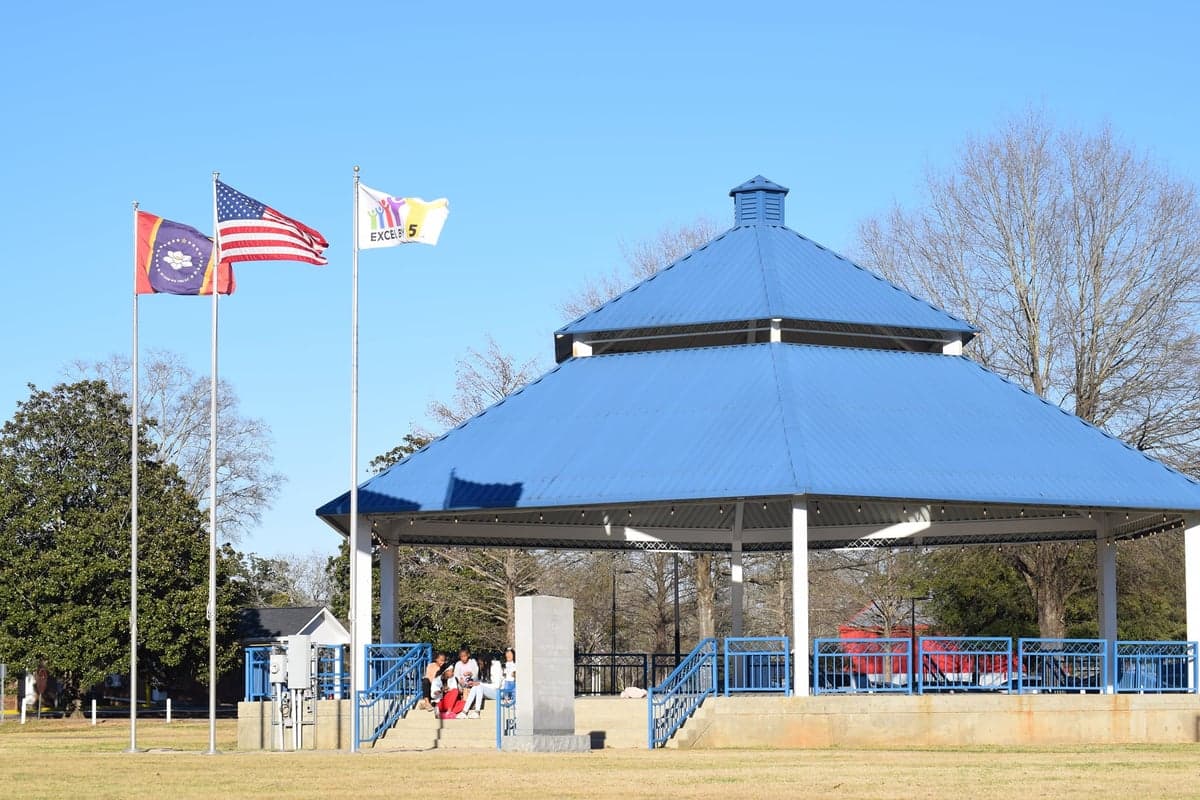
Photo: Wikipedia
Political ClimatePolitical Climate in Petal, MS
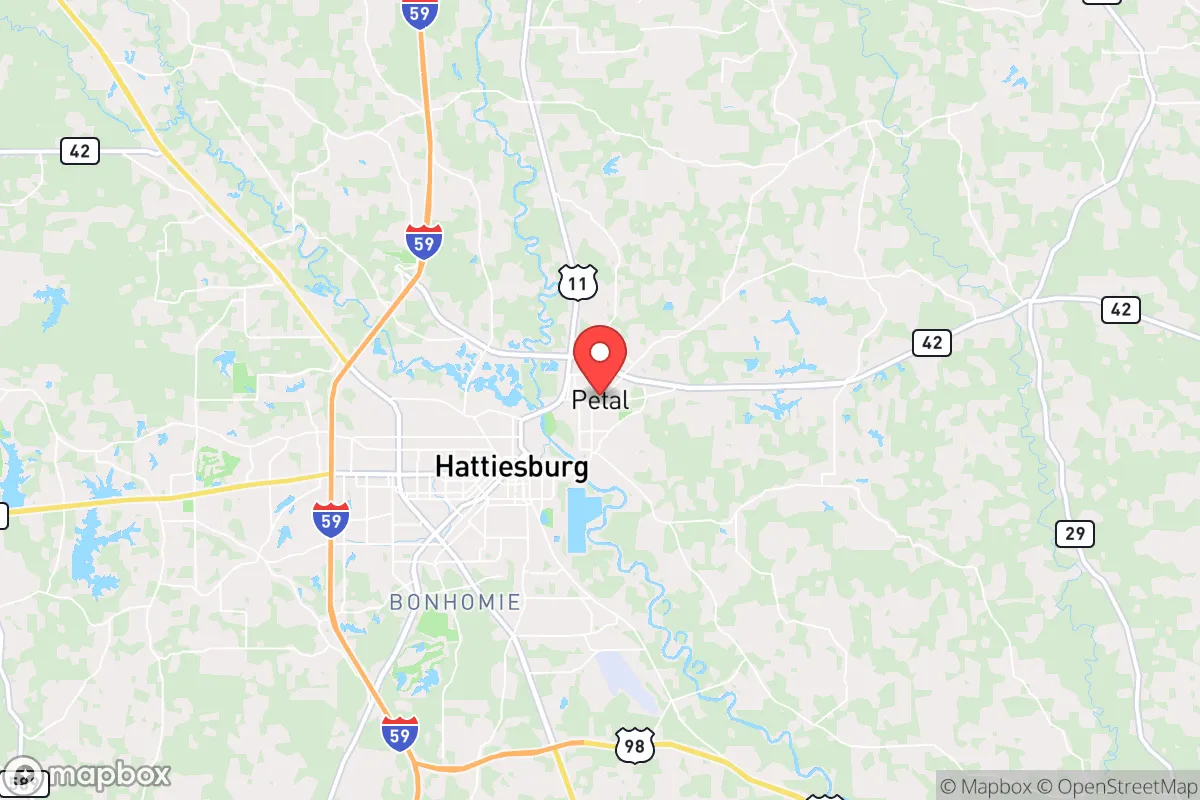
District shown is the primary district for this city’s centroid. Cities may span multiple districts.
Local Political AnalysisPolitical Analysis of Petal, MS
Petal, Mississippi, sits deep in conservative territory, with a Cook PVI of R+21 that reflects a community where traditional values and limited government are still the default. This isn’t a purple area trending blue; it’s a place where the Republican vote share has held steady for decades, and the local culture reinforces that. If you’re looking at Petal, you’re looking at a place where the political climate hasn’t shifted much since the 1990s, and that’s by design—folks here vote to keep it that way.
How it compares
Drive 15 minutes west to Hattiesburg, and you’ll hit a different world. Hattiesburg, home to the University of Southern Mississippi, leans more moderate to left-leaning, especially in city council races and local school board elections. Petal, by contrast, is the conservative counterweight—a suburb that votes as a bloc against the progressive drift you see in college towns. Surrounding Forrest County as a whole is more mixed, but Petal’s precincts routinely deliver 70-80% Republican margins. Compare that to nearby Laurel or even Collins, which are also conservative but with more economic populist streaks; Petal’s conservatism is more about personal freedom and low taxes than any particular industry loyalty. It’s a place where the county sheriff and school board are almost always Republicans, and where ballot initiatives on things like property tax increases or zoning changes face serious skepticism.
What this means for residents
For someone moving here, the political climate means you’re unlikely to see government overreach into your daily life. Petal has no city income tax, and the local government generally stays out of business regulations—you can run a home-based operation without a pile of permits. The school system, Petal School District, is one of the best in the state, and it’s run by a board that prioritizes local control over state or federal mandates. That said, if you’re worried about creeping progressive ideology—like critical race theory in classrooms or zoning laws that restrict property use—Petal is a place where those fights are still being won by conservatives. The city council has consistently rejected measures that would expand government oversight, like rental registration schemes or noise ordinances that go beyond common sense. Residents here expect to be left alone, and the voting record backs that up.
One cultural distinction worth noting: Petal is a dry city, meaning alcohol sales are restricted, which reflects the strong Baptist influence in the area. That’s a policy choice that’s held for decades, and it’s unlikely to change soon—voters have rejected wet initiatives multiple times. It’s not for everyone, but for those who value a community where moral standards align with local law, it’s a feature, not a bug. Long-term, Petal’s political trajectory looks stable. The R+21 rating isn’t slipping; if anything, as Hattiesburg gets more progressive, Petal’s role as the conservative anchor in the region will only solidify. New development is happening along Highway 42 and near the Petal Civic Center, but the newcomers tend to be families looking for the same small-town, low-regulation vibe that’s been here all along. If you’re concerned about government overreach or cultural shifts, Petal is one of those rare spots where the future looks a lot like the past—and that’s exactly how most folks here want it.

State Political ClimatePolitical Climate in Mississippi
State Political AnalysisPolitical Environment in the State
Mississippi is one of the most reliably conservative states in the nation, with a deep-rooted Republican lean that has only solidified over the past two decades. The state has not voted for a Democratic presidential candidate since 1976, and in 2024, Donald Trump carried it by over 17 points. The dominant coalition is a mix of rural, evangelical, and working-class voters, with the GOP holding supermajorities in both chambers of the state legislature and every statewide office. Over the last 10-20 years, the shift has been away from the old "Blue Dog" Democrat tradition and toward a solid, culturally conservative Republican identity, though the state’s political culture remains more about local autonomy and limited government than national partisan warfare.
Urban vs. rural divide
The political map of Mississippi is starkly divided between its few urban centers and the vast rural countryside. The Jackson metro area, including Hinds County, is the only significant Democratic stronghold, driven by a large African American population and a more progressive base in the capital city itself. However, Jackson’s influence is shrinking as the city faces population decline and fiscal crises. The Gulf Coast, anchored by Biloxi and Gulfport, leans Republican but is more moderate on economic issues due to the tourism and casino industries. The DeSoto County suburbs, just south of Memphis, are a fast-growing Republican bastion—places like Southaven and Olive Branch are filled with families fleeing Tennessee’s higher taxes while keeping a deeply conservative voting pattern. The northeastern corner, around Tupelo and Oxford, is a mix: Tupelo is reliably red, while Oxford (home to Ole Miss) has a small but vocal liberal pocket among faculty and students. The Delta region—Greenville, Clarksdale, Cleveland—remains heavily Democratic due to its majority-black population, but these areas are losing population fast. The rest of the state, from the Pine Belt to the hill country, is overwhelmingly Republican, with many counties routinely giving GOP candidates 70-80% of the vote.
Policy environment
Mississippi’s policy environment is one of the most conservative in the country, with a strong emphasis on low taxes and limited regulation. The state has a flat income tax rate of 4.7% that is being phased down to 4% by 2026, with a goal of full elimination. There is no state property tax, though local property taxes exist. The regulatory climate is business-friendly, with right-to-work laws and minimal red tape. On education, Mississippi has embraced school choice, including charter schools and a robust Education Scholarship Account program for students with disabilities. The state also passed a universal school choice bill in 2024, allowing any family to use public funds for private or homeschool expenses. Healthcare policy is more limited—Mississippi did not expand Medicaid under the ACA, and the state has some of the strictest abortion laws in the nation, with a near-total ban in effect since the Dobbs decision. Election laws are secure: voter ID is required, and the state has no widespread mail-in voting, which conservatives view as a safeguard against fraud. The Second Amendment is strongly protected, with permitless carry enacted in 2016 and no red flag laws.
Trajectory & freedom
Mississippi has been moving in the direction of more personal freedom, particularly on gun rights, parental rights, and tax relief. The 2024 universal school choice law is a major expansion of educational freedom, allowing parents to direct tax dollars to the schooling that fits their child. In 2023, the state passed a Parents’ Bill of Rights, giving parents explicit authority over their children’s medical decisions and curriculum objections. On medical freedom, Mississippi banned COVID-19 vaccine mandates for state employees and contractors in 2021, and in 2023 it prohibited mask mandates in schools. Property rights are strong, with no statewide zoning mandates and a relatively low property tax burden. However, the state still has some areas where government overreach persists—namely, the state’s alcohol laws remain restrictive in many dry counties, and the medical marijuana program, while legalized in 2022, is heavily regulated and limited. Overall, the trajectory is toward more liberty, especially in education and health choices, but the state’s poverty and infrastructure challenges mean that "freedom" often looks like being left alone rather than having robust services.
Civil unrest & political movements
Mississippi has a relatively low level of visible civil unrest compared to other states, but there are flashpoints. The most notable recent unrest was in Jackson, where water system failures in 2022 led to protests and federal intervention, though these were more about infrastructure than political ideology. The state has seen organized conservative activism through groups like the Mississippi Tea Party and local Moms for Liberty chapters, which have been effective in school board races and legislative lobbying. On the left, the NAACP and Southern Poverty Law Center remain active, particularly around voting rights and criminal justice reform. Immigration politics are less intense here than in border states, but there is a strong undercurrent of concern about illegal immigration, with the state legislature passing a bill in 2023 requiring all businesses to use E-Verify. There is no sanctuary city movement in Mississippi; in fact, the state passed a law in 2024 prohibiting any local government from adopting sanctuary policies. Election integrity is a settled issue—the state’s 2020 election was not contested, and there is broad trust in the system. The most visible political movement is the continued push for school choice and parental rights, which has broad bipartisan support among rural and suburban voters.
Projection
Over the next 5-10 years, Mississippi is likely to become even more conservative, driven by two trends: the continued exodus of Democratic-leaning populations from the Delta and Jackson, and the in-migration of conservative families from higher-tax states like California, Illinois, and New York. The DeSoto County suburbs will continue to grow, and smaller cities like Hattiesburg and Starkville are seeing an influx of remote workers who value low taxes and a slower pace of life. The state’s political leadership will likely push for full elimination of the income tax, further expansion of school choice, and additional restrictions on abortion and transgender medical procedures. The Democratic Party will become increasingly marginalized, confined to a few majority-black districts and the University of Mississippi campus in Oxford. The biggest risk is economic stagnation—if the state cannot attract enough high-skilled workers or improve its infrastructure, the freedom to be left alone may come with fewer opportunities. But for someone moving in now, the expectation should be a state that is stable, culturally conservative, and increasingly protective of individual rights, especially in education and gun ownership.
For a new resident, the bottom line is this: Mississippi offers a high degree of personal freedom, low taxes, and a government that largely stays out of your life, especially if you are a parent or a gun owner. The trade-offs are a weaker social safety net, limited healthcare access in rural areas, and a slower economy. If you value local control, school choice, and a community that shares your values, Mississippi is a solid bet. Just know that the politics here are not about flashy debates—they are about steady, quiet conservatism that has been in place for decades and is only getting stronger.
* Values derived from national, state, county, city and local statistics and may differ in a specific area. Last updated: 2026-04-19T09:41:54.000Z
Narrative content on this page is AI-generated and may contain mistakes. Verify any details that matter before acting on them.
ReloMaps may earn a commission from affiliate links at no extra cost to you.

