 Popular
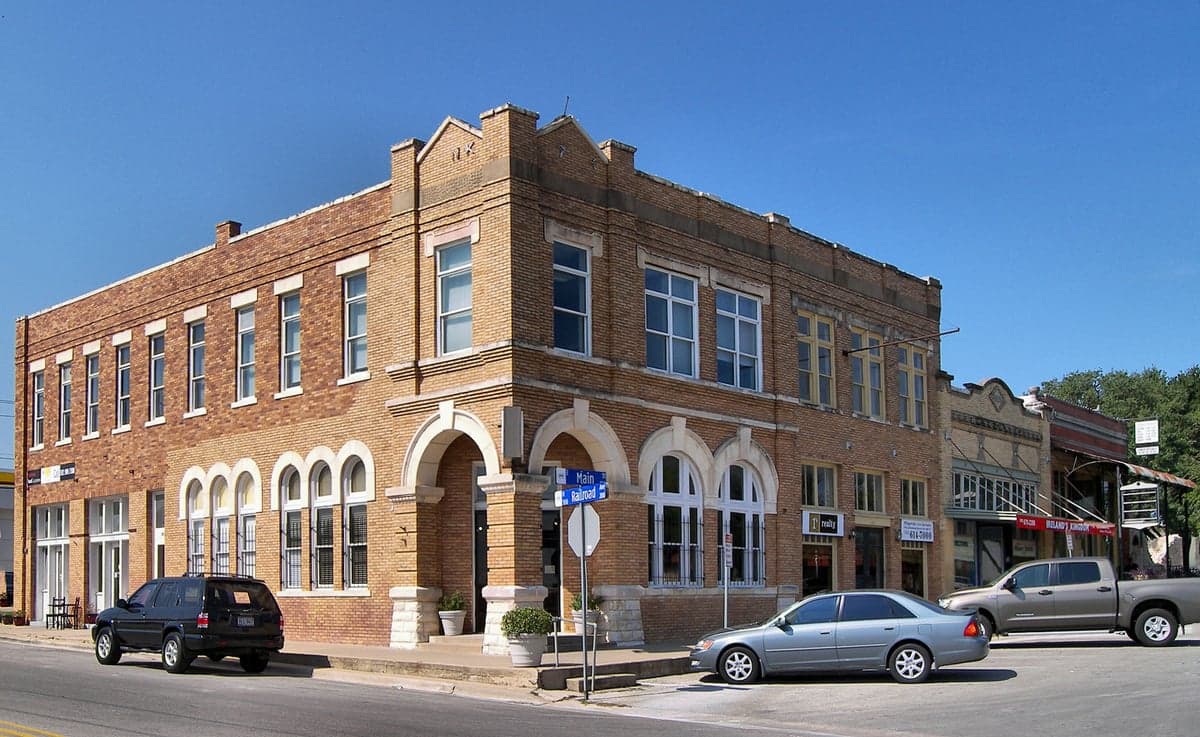
Photo: Wikipedia
Demographics of Pflugerville, TX
Affluence Level in Pflugerville, TX
A middle-class area roughly in line with national averages across income, home values, education, and employment.
People of Pflugerville, TX
Today, Pflugerville is a rapidly diversifying suburban city of 65,162 residents where no single ethnic group holds a majority. Its population is 38.3% White, 31.9% Hispanic, 16.9% Black, 3.9% East/Southeast Asian, and 3.8% Indian (subcontinent), with a foreign-born share of just 5.9% — lower than the national average but growing. The city’s character blends classic Texas suburban sprawl with a strong sense of local identity, anchored by its historic downtown and a reputation for good schools and family-oriented neighborhoods. Pflugerville’s people are increasingly young professionals and families drawn by Austin’s job market but seeking more affordable housing and lower density.
How the city was settled and grew
Pflugerville’s population history begins with German immigrant farmers in the mid-19th century. Henry Pfluger, a German settler, purchased land in 1849 and established a farming community along the banks of Gilleland Creek. The original settlers were predominantly German and Czech families who built small homesteads and farms, with the Historic Downtown Pflugerville area (around the intersection of Pecan Street and Main Street) serving as the commercial and social hub. These early residents were drawn by the fertile blackland prairie soil and the promise of land grants under the Republic of Texas. For nearly a century, Pflugerville remained a tiny, ethnically homogeneous farming hamlet — the 1900 census recorded fewer than 200 residents, nearly all of German descent. The Pflugerville Cemetery and the original Pfluger Homestead (now a museum) mark the footprint of this founding population. No major waves of non-German immigration occurred until after World War II.
Modern era (post-1965)
The modern transformation of Pflugerville’s population began in the 1970s and accelerated after 1990, driven by Austin’s tech boom and suburban expansion. The 1965 Hart-Cellar Act had little immediate effect here — the foreign-born share remained below 3% through the 1980s. Instead, domestic migration reshaped the city. White families from Austin moved north along the I-35 corridor, settling in master-planned subdivisions like Falcon Pointe (opened 2000s) and Blackhawk (opened 1990s), which offered larger lots and new schools. Hispanic families, many from Central Texas and South Texas, began arriving in the 1980s and 1990s, concentrating in the Windermere and Springbrook neighborhoods east of I-35. Black families, drawn by affordable housing and proximity to Austin’s job market, grew significantly after 2000, particularly in the Stone Hill and Pflugerville Farms areas. The East/Southeast Asian and Indian populations are newer — most arrived after 2010, attracted by tech-sector employment at companies like Samsung, Dell, and Apple in nearby Round Rock and Austin. These groups tend to settle in newer subdivisions like Rutland Crossing and Heatherwood, where home prices are higher and schools are top-rated. The city’s college-educated share now stands at 41.2%, reflecting the professional character of these recent arrivals.
The future
Pflugerville’s population is heading toward greater diversity and a continued suburbanization of Austin’s workforce. The White share has declined from roughly 55% in 2000 to 38.3% today, while Hispanic and Black shares have grown steadily. The East/Southeast Asian and Indian populations, though still small, are growing faster than any other group — each increasing by roughly 50% between 2010 and 2020. The city is not tribalizing into distinct ethnic enclaves; rather, neighborhoods like Falcon Pointe and Blackhawk are becoming more integrated, while older areas like Windermere remain predominantly Hispanic. The foreign-born share (5.9%) is likely to rise as tech companies expand in the region, but Pflugerville will remain a predominantly native-born city compared to Austin proper. The biggest demographic pressure point is housing affordability: as Austin prices push families north, Pflugerville’s population is projected to exceed 80,000 by 2035, with the fastest growth among Hispanic and Asian households.
For a conservative-leaning individual or family moving in now, Pflugerville offers a stable, family-oriented environment with good schools and a low crime rate, but it is no longer the quiet German-heritage town of the 1960s. The city is becoming a multiethnic, middle-class suburb where no single group dominates — a trend that mirrors much of suburban Texas. The key question for newcomers is not whether the city is changing, but whether they are comfortable with the pace and character of that change.

* Values derived from national, state, county, city and local statistics and may differ in a specific area. Last updated: 2026-04-19T07:22:28.000Z
Narrative content on this page is AI-generated and may contain mistakes. Verify any details that matter before acting on them.
ReloMaps may earn a commission from affiliate links at no extra cost to you.

